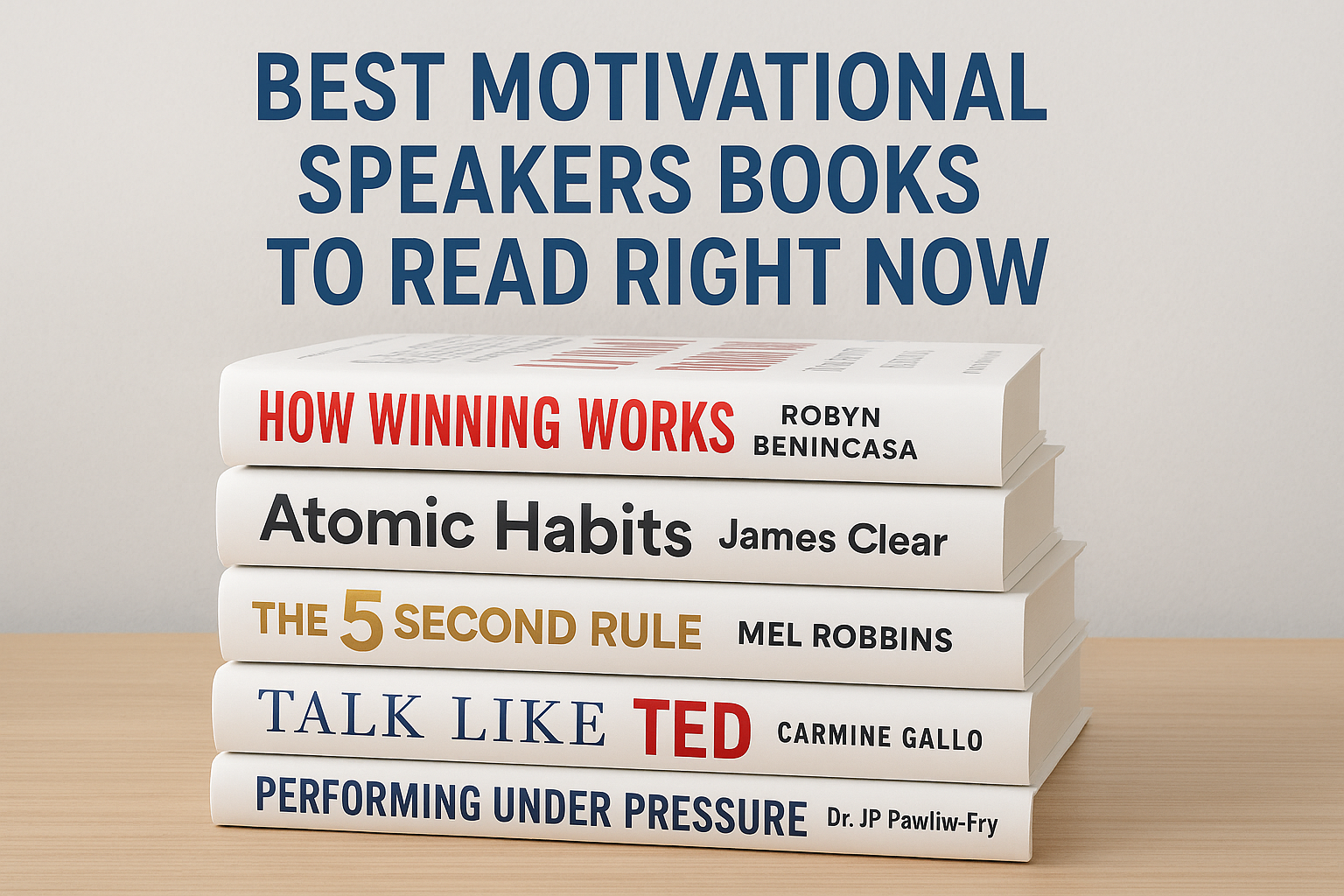
You want to speak with more impact, whether that’s on stage, in a sales meeting, or leading your own team through change. Reading the right motivational speakers books is one of the fastest ways to get there, because you learn directly from people who have already tested their ideas in front of tough rooms and tougher audiences. The trick is knowing which books actually teach something useful versus which ones just repeat the same recycled advice about positive thinking.
This list skips the fluff. Each book here comes from a speaker who built a track record of measurable results, not just a talent for sounding inspiring. You’ll find lessons on team culture, resilience under pressure, and what separates a forgettable talk from one that changes how people work together.
Below, I break down five books worth your time right now, including insights from my own book on leadership lessons drawn from elite adventure racing teams and firefighting crews. If you’re preparing a keynote, coaching your team, or just want sharper communication skills, these picks will give you real frameworks you can apply immediately, not just a temporary motivational boost.
1. How Winning Works by Robyn Benincasa
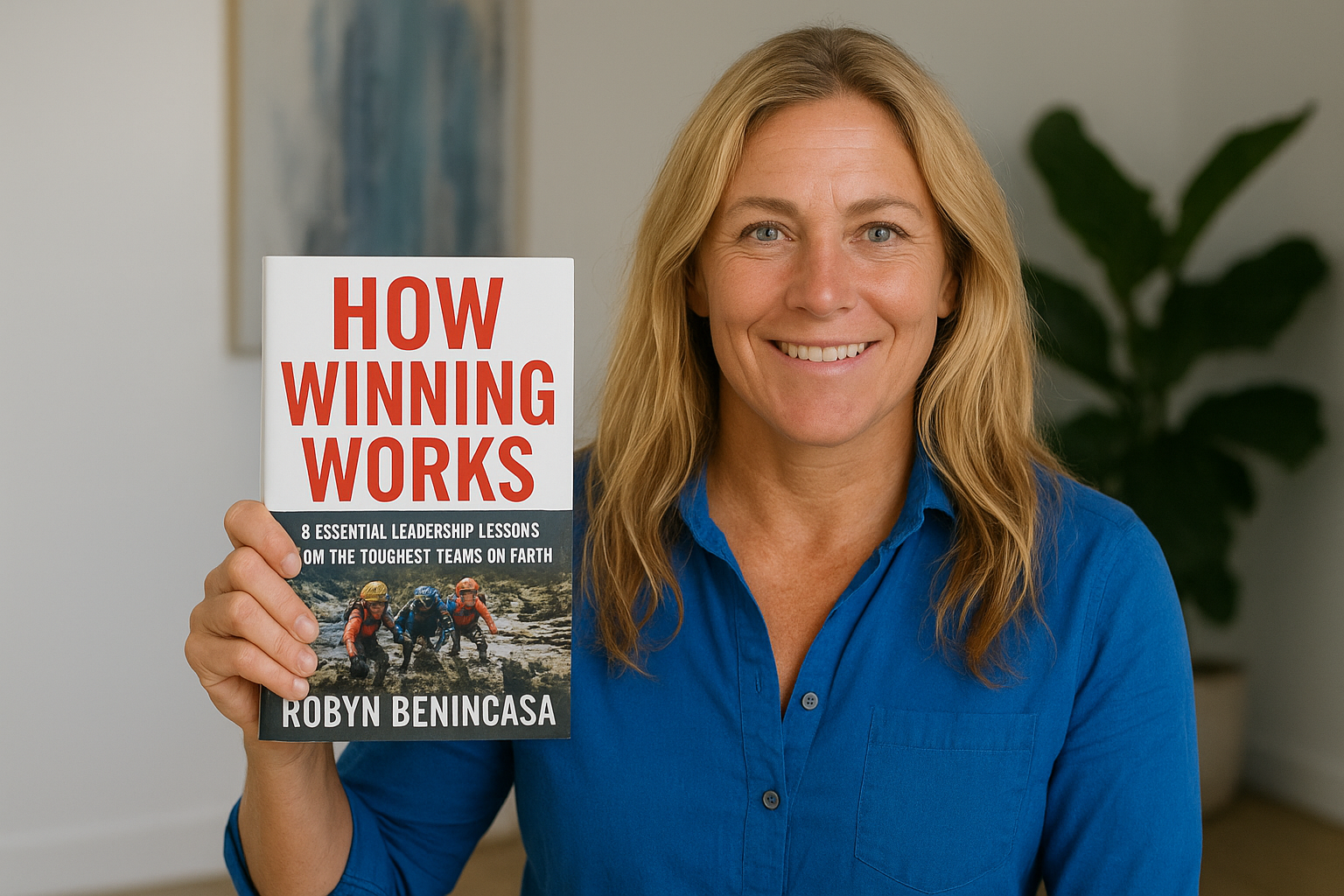
My own book, How Winning Works: 8 Essential Leadership Lessons From The Toughest Teams on Earth, grew out of fifteen years of racing multi-day expedition races across jungles, deserts, and mountain ranges with teams that had every reason to fall apart under pressure. Instead, they won. This isn’t a collection of abstract theories from a corner office. It’s a New York Times bestseller built from real moments where trust, communication, and shared purpose meant the difference between finishing first and not finishing at all.
What the book is about
The book breaks down eight leadership principles I watched play out again and again on adventure racing courses and later inside corporate teams I’ve coached. It covers how elite teams handle exhaustion, conflict, and setbacks without losing cohesion, and how those same patterns show up in sales floors, hospitals, and executive suites. Each chapter pairs a firsthand racing story with a practical takeaway you can use the next time your own team hits a wall.
Key lessons for speakers
Speakers get a blueprint for turning personal experience into a repeatable framework. You’ll see how to structure a story so the audience walks away with something they can act on immediately, not just a feel-good moment.
A story only motivates a room if it hands people a tool they can use the next morning.
Who should read it
Any speaker, HR leader, or executive trying to build a team culture that survives real pressure, not just a good quarter, will find something usable here.
How to get it
You can find the book plus a free companion guide on my books page, along with details on booking me as a leadership keynote speaker for a talk built around these same lessons.
2. Atomic Habits by James Clear
James Clear isn’t a traditional motivational speaker, but his book has shaped how thousands of speakers, coaches, and executives talk about behavior change. Atomic Habits built its reputation on one simple idea: small, consistent actions compound into results far bigger than any single burst of willpower.
What the book is about
Clear breaks down the science of habit formation into four laws: make it obvious, make it attractive, make it easy, make it satisfying. He backs each principle with research and real examples, from Olympic cyclists to everyday people rebuilding their routines after failure.
Key lessons for speakers
Speakers can borrow Clear’s structure directly. Instead of promising a big transformation, teach your audience one small, specific action they can start today, the way peak performance habits get built. That approach sticks longer than a rousing speech that fades by Monday morning.
Audiences remember what they can actually do tomorrow morning, not what impressed them tonight.
Who should read it
Anyone coaching teams through slow, steady change, especially leaders tired of quick-fix pep talks, will get real value here.
How to get it
You’ll find Atomic Habits at any major bookstore or through Penguin Random House, its publisher.
3. The 5 Second Rule by Mel Robbins
Mel Robbins built her speaking career on a single, almost embarrassingly simple technique: count down from five, then move before your brain talks you out of it. The 5 Second Rule turns hesitation into action, which matters for anyone who freezes before walking on stage or making a hard call.
What the book is about
Robbins explains how she discovered the countdown trick during a personal low point and how it interrupts the brain’s habit of overthinking. The book mixes her own story with research on procrastination and anxiety, showing why small physical actions override mental resistance faster than motivation ever could.
Key lessons for speakers
Speakers learn how vulnerability builds credibility. Robbins doesn’t hide her struggles, she leads with them, then hands the audience a practical tool they can use before she’s even finished her talk.
The fastest way to earn trust on stage is to admit where you were stuck before you show people the way out.
Who should read it
This one suits speakers and leaders who deal with chronically hesitant teams, plus anyone who freezes before big moments.
How to get it
Grab it through Hay House, its publisher, or any major bookstore.
4. Talk Like TED by Carmine Gallo
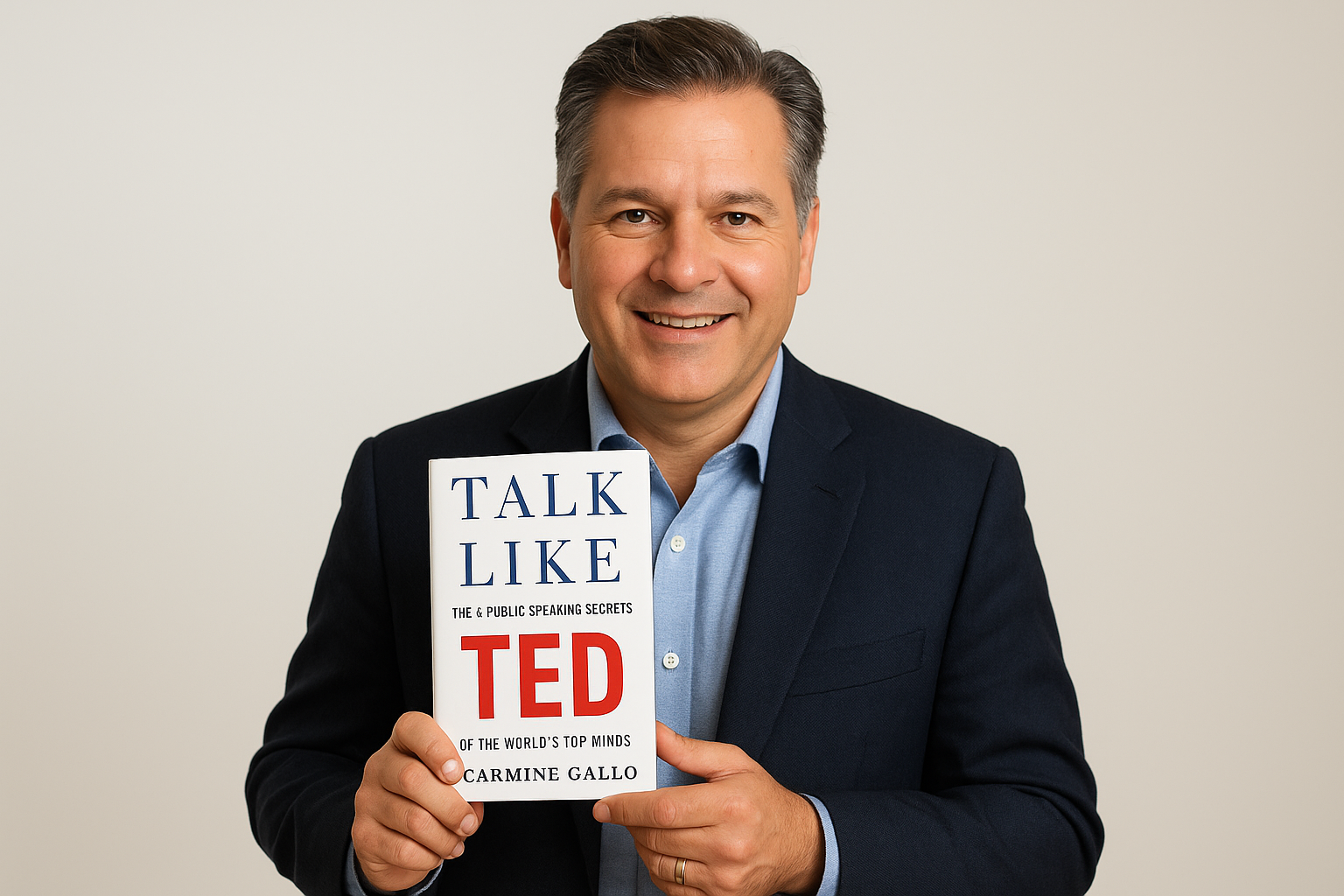
Carmine Gallo studied hundreds of the most-watched TED talks to figure out what separates a forgettable presentation from one that hits 10 million views. Talk Like TED distills that research into patterns any speaker can copy, whether you’re addressing a stadium or a conference room of twelve people.
What the book is about
Gallo identifies nine techniques shared by the most compelling TED speakers, including emotional storytelling, novel information delivery, and rehearsed spontaneity. He pulls examples from scientists, entrepreneurs, and educators, showing that stage presence is a learnable skill, not a personality trait some people are born with.
Key lessons for speakers
Speakers get concrete techniques for pacing, humor, and structuring a talk around one central idea instead of ten scattered ones. Gallo pushes for relentless editing, cutting anything that doesn’t serve the core message.
A talk built around one idea beats one crammed with ten.
Who should read it
This book suits anyone preparing a first keynote or pitch who wants a structural checklist rather than vague inspiration, especially if you’re still figuring out what a keynote speaker actually does.
How to get it
Find it through St. Martin’s Press or any major bookstore.
5. Performing Under Pressure by Dr. JP Pawliw-Fry
Dr. JP Pawliw-Fry spent two decades studying elite athletes, surgeons, and executives to answer one question: why do some people crumble under pressure while others perform their best work in it. Performing Under Pressure pulls from his research at the Institute for Health and Human Potential, backed by data from over 12,000 people across high-stakes professions.
What the book is about
Pawliw-Fry identifies the specific emotional and cognitive traps that derail performance during big moments, then offers research-backed strategies for staying composed and holding a peak performance mindset. He separates pressure from stress, showing why the two require entirely different responses on stage or in a boardroom.
Key lessons for speakers
Speakers learn to manage their own nerves before walking out, plus how to teach audiences the same skill using plain, memorable language instead of clinical jargon.
Composure under pressure isn’t a personality trait, it’s a trained response.
Who should read it
This book suits speakers, sales leaders, and executives who need to perform consistently when stakes and scrutiny are highest.
How to get it
Find it through Crown Publishing or any major bookstore.
Which book will you pick up first?
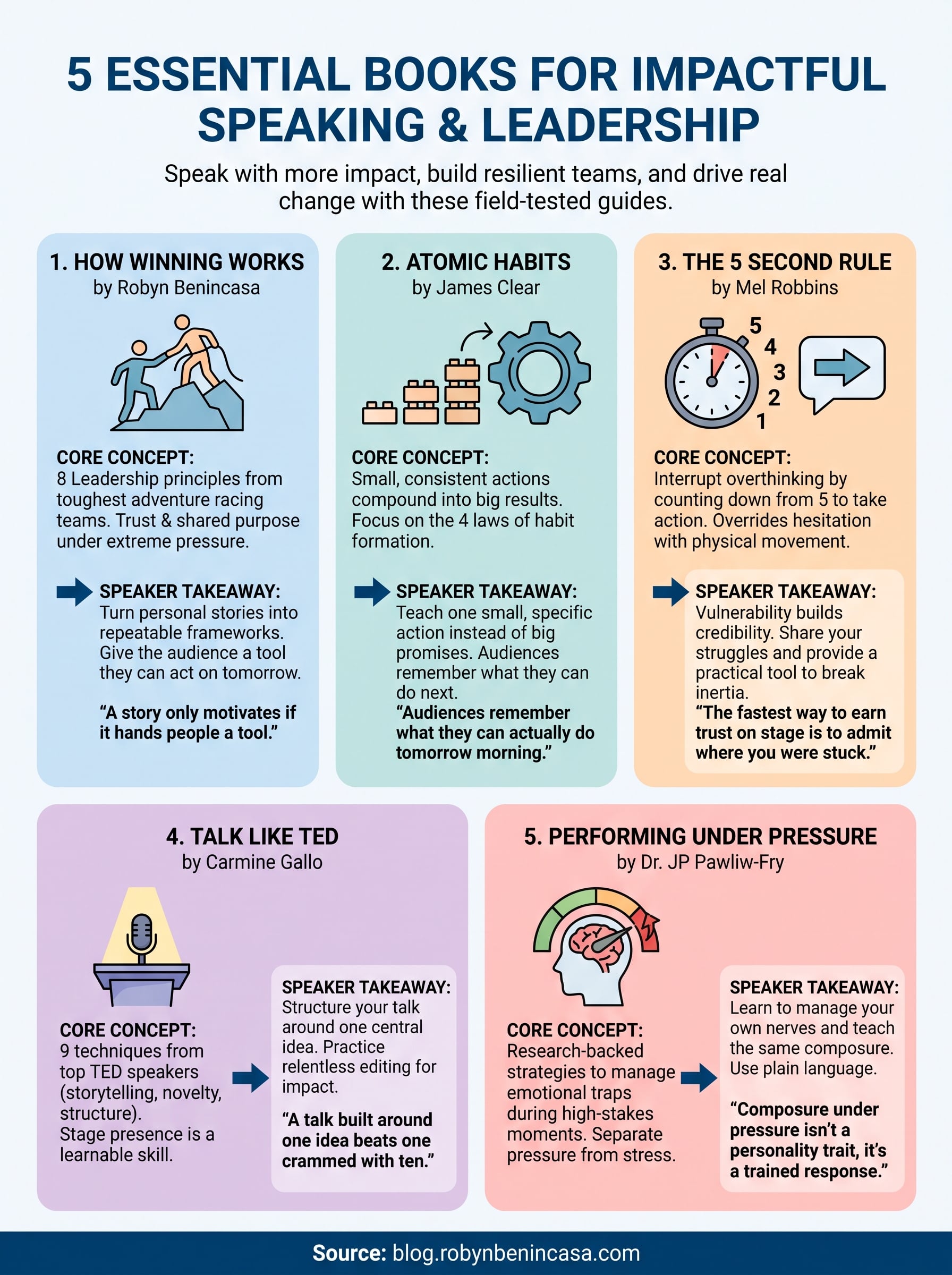
Five books, five different angles on the same goal: speaking and leading in a way that actually changes behavior. Atomic Habits teaches small steps, The 5 Second Rule teaches action over hesitation, Talk Like TED teaches structure, and Performing Under Pressure teaches composure. My own book ties these threads together with lessons pulled from real teams facing real stakes, not hypothetical scenarios dreamed up in a conference room.
Start wherever your current challenge points you. If your team is losing cohesion under pressure, start with mine. If you’re rebuilding daily habits, start with Clear’s. Either way, don’t just read and move on. Pick one framework and test it in your next meeting or talk this week.
If you want to see these leadership lessons in action, here’s how to hire a keynote speaker for your next event, plus where to grab the free guide.