Typing "leadership training programs near me" into Google gets you a list of local colleges, chambers of commerce, and generic online courses. Some are solid. Many are outdated theory with no connection to how teams actually perform under pressure. If you’re an HR leader or executive trying to fix a real problem, low morale, siloed departments, a sales team stuck in the middle of the pack, you need more than a certificate on a wall.
This guide gives you a practical framework for evaluating local and virtual leadership training options, so you can tell the difference between a program that changes behavior and one that just fills a training budget line. You’ll learn what to look for, what questions to ask providers, and which red flags mean you should keep looking.
We’ll walk through where to search, how to vet instructors and content for real-world relevance, and why the best options often blend live, in-person sessions with virtual formats to reach distributed teams. Along the way, we’ll point to what separates a memorable, results-driven keynote or training experience, the kind built on tested team dynamics rather than recycled slides, from the forgettable ones filling most search results.
1. Corporate keynote speakers and team-building workshops
When you search for leadership training programs near me, a keynote speaker booked for a corporate event, sales kickoff, or offsite is one of the fastest ways to shift how a team thinks about performance. Unlike a semester-long course, a keynote delivers a concentrated, high-energy session that reframes leadership around real-world stakes, not textbook theory.

What it offers
A strong keynote pairs a compelling personal story with a repeatable framework your team can apply immediately. Robyn Benincasa’s keynote topics, built from her years as a world champion adventure racer and San Diego firefighter, translate directly into workplace behavior: communication under pressure, trust-building, and shared accountability. Many bookings pair the keynote with a hands-on team-building workshop, so the lessons get practiced, not just heard.
Who it’s best for
This format suits organizations facing a specific cultural problem, siloed departments, low morale, or a sales team stuck mid-pack that needs a sales motivational speaker, rather than a general skills gap. It works especially well for leadership offsites, annual conferences, and sales meetings where you need to energize a room and leave people with a shared vocabulary for teamwork.
A great keynote doesn’t just inspire for an afternoon. It gives your team language and tools they’ll reference for years.
What it typically costs
What a keynote speaker costs varies widely based on speaker recognition, format, and event length.
| Format | Typical range |
|---|---|
| Virtual keynote | $5,000-$15,000 |
| In-person keynote (half-day) | $15,000-$40,000+ |
| Keynote + workshop combo | $25,000-$50,000+ |
How to book one near you
Start by identifying your core problem, then search for speakers whose track record matches it. Check testimonials from comparable industries, confirm availability for your event date, and reach out directly through the speaker’s booking page to discuss virtual or in-person formats.
2. University and college leadership certificate programs
Search "leadership training courses near me" and you’ll find local universities and community colleges offering executive education certificates. These programs sit between academic theory and corporate practice, often taught by business school faculty with real consulting experience.
What it offers
Most certificate programs run 6 to 12 weeks, covering the core topics leadership training programs are built around, like organizational behavior, conflict resolution, and strategic decision-making. You’ll get structured coursework, case studies, and a credential you can list on a resume or LinkedIn profile. Some schools, including extension programs at state universities, offer evening or weekend formats built for working professionals.
Who it’s best for
These programs suit individual managers building credentials for promotion, not teams trying to fix a specific culture problem right now. HR departments sometimes subsidize tuition as part of a broader professional development benefit.
A certificate builds individual credibility. It rarely shifts how a whole team works together.
What it typically costs
Expect $1,500 to $6,000 depending on the institution and program length, with Ivy League and top-tier business schools charging more.
How to find and enroll
Check your local university’s continuing education or executive education division, compare syllabi against your actual goals, and confirm whether the format is in-person, hybrid, or fully online before enrolling.
3. Professional association leadership development courses
Industry groups like SHRM, ATD, and local chambers of commerce run their own leadership development courses, often tied to certification tracks in your specific field. If you search for leadership development courses near you, these associations usually rank high because they host regular in-person chapter events alongside national conferences.
What it offers
Expect workshops, multi-day seminars, and sometimes year-long cohort programs built around leadership development topics for a specific professional discipline, HR, project management, sales leadership, or engineering management. Content tends to be practical and field-specific, taught by practitioners rather than academics, with networking built into every session.
Who it’s best for
Mid-level managers who want to stay current in their profession while building a peer network benefit most. It suits individuals more than intact teams looking to fix a shared culture problem.
Association courses build your professional network as much as your leadership skills.
What it typically costs
Membership dues plus course fees typically run $500 to $3,000 annually, cheaper than university programs but requiring ongoing membership.
How to find and enroll
Search your industry’s national association website, then check for a local chapter offering in-person sessions near you.
4. Corporate training and consulting firms
Search for leadership training near you and you’ll also surface regional consulting firms that build custom leadership programs for a single company rather than open-enrollment classes. These firms diagnose your specific culture or performance gap first, then design training around it.

What it offers
Consulting firms typically start with an assessment, surveys, interviews, or 360-degree reviews, before building a multi-month engagement. Expect workshops, manager coaching, and follow-up sessions designed to change behavior over time rather than in a single event.
Consulting firms sell a process, not a single day of content.
Who it’s best for
This option fits larger organizations with budget for a sustained engagement and a specific, measurable problem, like declining retention or a leadership pipeline gap.
What it typically costs
Engagements run $10,000 to $100,000+ depending on company size, scope, and duration. Most firms price by project, not by seat.
How to find and book one near you
Search "leadership consulting firm" plus your city, compare it against organizational change management consulting firms, request references from similar-sized clients, and ask for a clear measurement plan before signing a contract.
5. Online and hybrid leadership training platforms
Searching for leadership training programs near me increasingly turns up platforms that aren’t local at all, they’re digital-first courses that blend recorded lessons with live virtual coaching. These options exist because distributed teams need training that doesn’t depend on everyone being in the same building.
What it offers
Expect self-paced video modules paired with live cohort calls, discussion boards, and sometimes a virtual keynote or workshop woven into the curriculum, much like the better-known online leadership training programs. Many platforms now license content from recognized speakers and authors, giving smaller companies access to material that once required a five-figure booking fee.
Who it’s best for
This format suits remote or hybrid teams spread across multiple offices or time zones, plus companies with limited travel budgets. It works less well when your real problem is trust or communication breakdowns that need face-to-face practice to fix.
Online platforms scale content cheaply, but they can’t replicate the energy of a room that’s actually working together.
What it typically costs
Subscriptions typically run $50 to $500 per seat monthly, while cohort-based programs with live coaching cost $2,000 to $10,000 per group.
How to find and enroll
Request a demo session before committing, and confirm whether live coaching is included or sold separately.
Finding the right program for your team
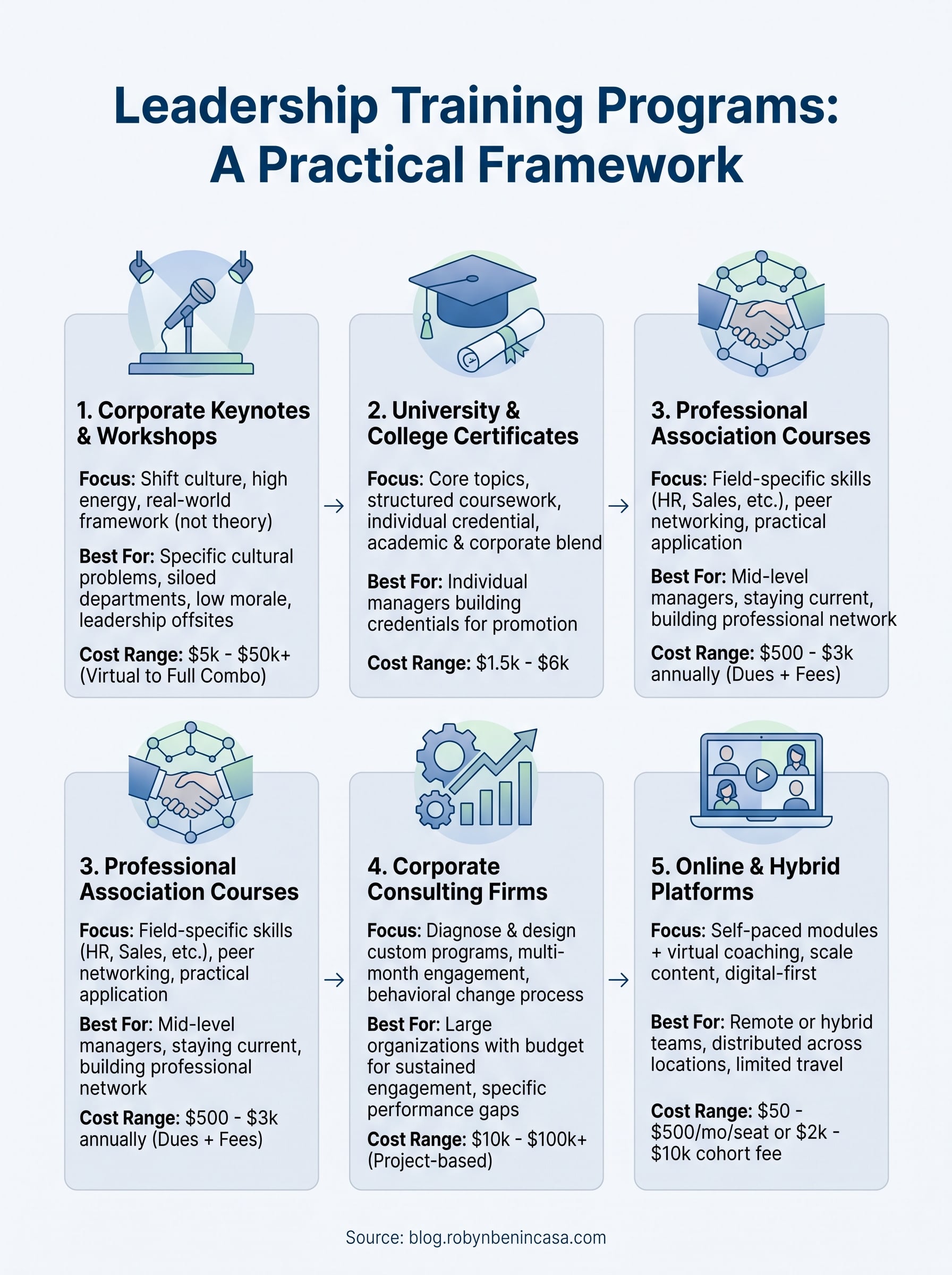
Five options, five different problems solved. Universities build individual credentials. Associations build professional networks. Consulting firms fix specific, measurable performance gaps over months. Online platforms scale content across distributed teams cheaply. None of them move a room the way a live keynote does when your real issue is culture, trust, or a team that’s stopped pulling in the same direction.
Go back to the problem you started with. If it’s a certificate you need, pick the university program. If it’s a genuine shift in how your people work together, under pressure, across silos, before the next big deadline, that’s what a results-driven keynote is built for. Robyn Benincasa has spent decades proving what actually builds winning teams, on racecourses, in firehouses, and in boardrooms.
Ready to see if she’s the right fit for your next event? See how she stacks up against the other keynote speakers near you, then book her for your team.