You’ve got a budget number in mind and a boss asking for a firm quote before the event gets approved. That’s the hard part of booking talent: keynote speaker cost doesn’t work like a price sheet at a restaurant. Rates swing from a few thousand dollars to six figures, and the reasons behind that spread rarely show up on a speaker’s website.
This article breaks down what actually drives keynote speaker rates, so you can walk into a budget conversation with real numbers instead of guesses. You’ll see how fame, travel, format, and audience size change the fee, plus where negotiation actually moves the needle and where it doesn’t.
I’ve spent 20 years building teams as a firefighter and world champion adventure racer before I stepped onto corporate stages, so I know both sides of this booking process. The goal here isn’t to sell you on a rate. It’s to give you the same pricing framework and cost breakdown that event planners at companies like Northrop Grumman and Boston Scientific use when they’re comparing proposals.
Why keynote speaker costs vary so much
Ask five event planners what a keynote speaker costs and you’ll get five different numbers, because the honest answer is "it depends on who you’re asking and when" — even before you settle what a keynote speaker actually is and does. Keynote speaker cost isn’t set by a formula. It’s shaped by supply and demand, just like airline tickets or hotel rooms during a conference week.
The four rough tiers of speaker fees
Most speakers fall into one of four pricing bands, from emerging local experts up to celebrity speakers worth booking, and knowing which tier you’re shopping in saves you from wasting time on proposals that were never going to fit your budget.
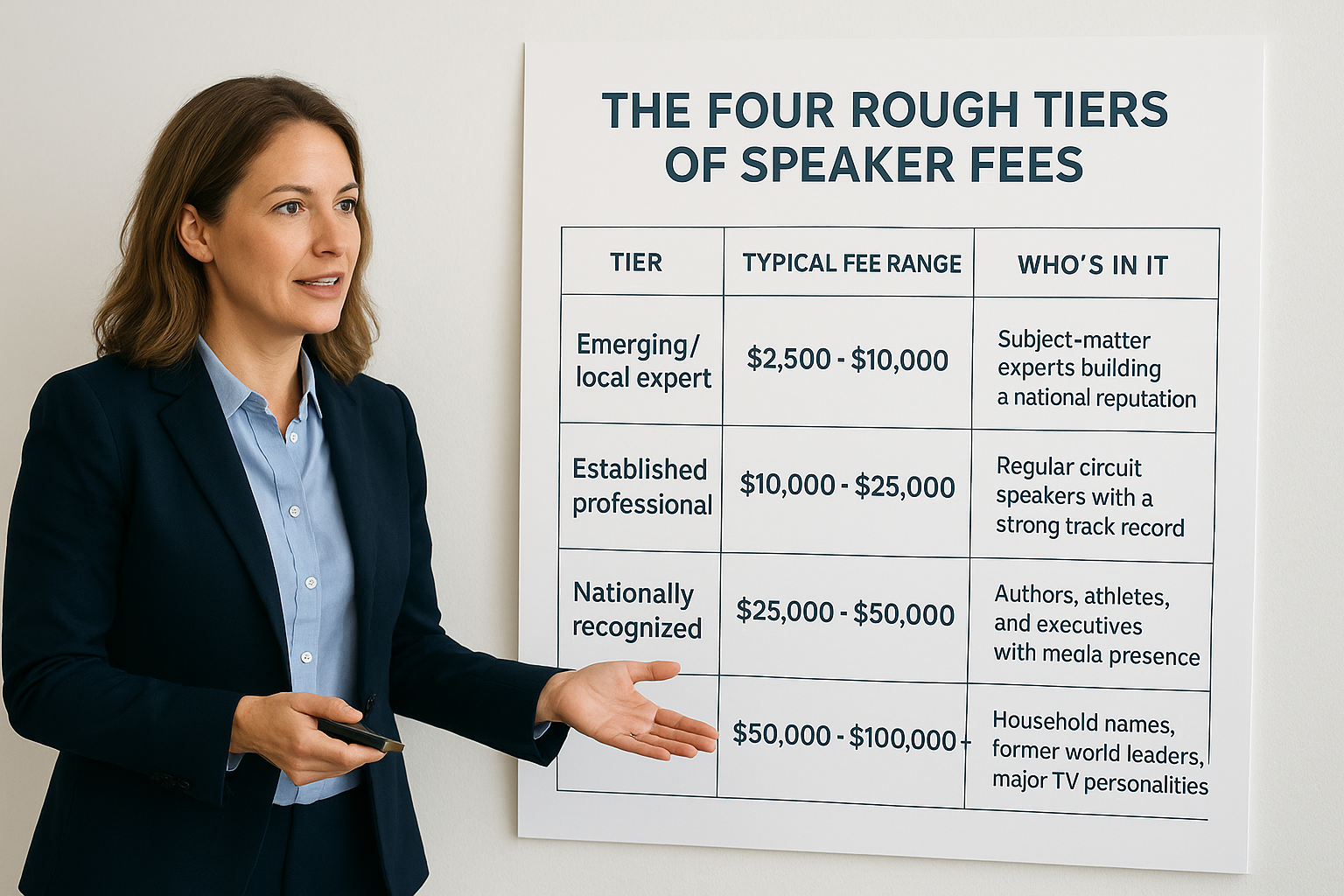
| Tier | Typical Fee Range | Who’s in it |
|---|---|---|
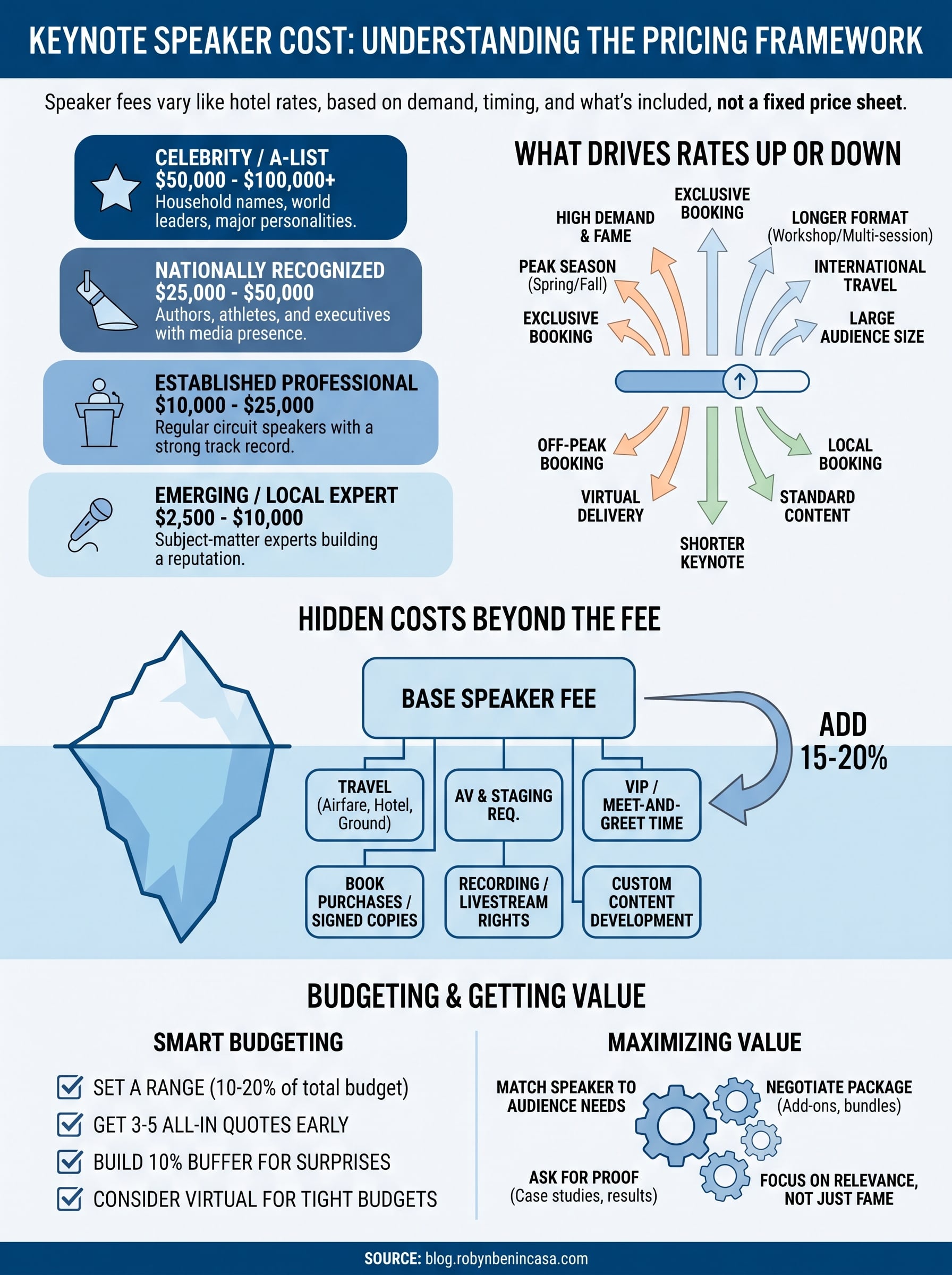
| Emerging/local expert | $2,500 – $10,000 | Subject-matter experts building a national reputation |
| Established professional | $10,000 – $25,000 | Regular circuit speakers with a strong track record |
| Nationally recognized | $25,000 – $50,000 | Authors, athletes, and executives with media presence |
| Celebrity/A-list | $50,000 – $100,000+ | Household names, former world leaders, major TV personalities |
A speaker’s fee reflects demand for their story, not the length of their talk.
Same speaker, different price tag
Booking timing matters more than most planners expect. A speaker’s calendar during peak conference season (typically spring and fall) fills up fast, and open dates in October or November often carry a premium simply because everything else is taken. Exclusivity plays a role too: some speakers charge more if you want them to skip a competitor’s event in your industry that same quarter. Finally, keynote speaker rates often reflect current visibility, meaning a speaker who just published a bestselling book or landed a viral media hit can double their fee within a single year, then settle back down once the spotlight fades.
What drives a speaker’s rate up or down
Beyond fame and timing, a handful of practical factors push a quote higher or lower, and most of them are things you control as the buyer. Format is the biggest lever: a 45-minute keynote costs less than a full-day workshop or a multi-session engagement, since you’re buying more of the speaker’s prep time and stage time. Location matters too, since flying a speaker across the country or overseas adds travel fees on top of the base rate, while a local booking can trim thousands off the total.
Audience size and exclusivity also shift the number. Speaker fees often climb when a company wants sole use of that speaker’s content in their industry that year, or when the audience is large enough that the speaker’s team needs extra prep for breakout sessions.
The format and exclusivity you ask for often move the price more than the speaker’s name does.
Common rate drivers include:
- Travel distance and logistics
- Length and number of sessions
- Custom content versus a standard talk
- Virtual versus in-person delivery, which can lower keynote speaker cost significantly
How to budget for a keynote speaker
Budgeting for a keynote speaker starts with a real number, not a wish. Pull three to five quotes from speakers in your target tier before you present a figure to leadership, and build in room for travel and add-ons so you’re not caught short after the contract is signed. Most planners underestimate keynote speaker cost by focusing only on the headline fee and forgetting everything that surrounds it.
Set a range, not a single number
Give your finance team a range instead of a flat figure, since speaker availability and travel distance can shift the final quote by thousands even after you’ve picked a name. A workable approach:
- Start with your event’s total budget and cap speaker spend at 10-20% of it
- Get written quotes early, since fees change as a speaker’s calendar fills
- Ask each speaker’s team for an all-in estimate, not just the base fee
- Build a 10% buffer for travel surprises
Budget for the whole engagement, not just the fee on the contract.
Virtual keynotes remain the easiest way to protect a tight budget, since you skip travel entirely and still get the same content and energy from the stage.
Hidden costs beyond the speaking fee
Beyond the contract number, a handful of line items catch planners off guard every year. Travel is the big one: airfare, ground transportation, and lodging for the speaker (and sometimes a producer or assistant) typically land on top of the base fee, not inside it. Keynote speaker cost estimates that skip this step tend to blow the budget by 15-20% once the final invoice arrives.
Other add-ons worth confirming before you sign:
- AV and staging requirements beyond your venue’s standard setup
- Meet-and-greet or VIP reception time, often billed separately
- Book purchases or signed copies for attendees
- Recording or livestreaming rights for internal use
- Custom content development for a highly tailored talk
The fee on the contract is rarely the full cost of the engagement.
Rights and usage matter too. If you want to repurpose a talk for training or post it internally, ask upfront, since some speakers charge extra for that license. None of this should scare you off. It just means the real keynote speaker rates conversation happens before you sign, not after.
How to get the most value for your budget
Getting real value from a keynote speaker isn’t about chasing the lowest quote. It’s about matching the speaker’s strengths to what your event actually needs, so the keynote speaker cost you pay translates into a talk people still mention six months later. A speaker who nails your industry’s specific challenges is worth more than a bigger name who delivers a generic talk, which is why planners shortlist top leadership keynote speakers by fit before they compare fees.
Ask for proof, not promises
Request case studies or client references before you commit, especially ones tied to measurable outcomes like engagement scores or sales results. A speaker with a track record of moving the needle, not just entertaining a room, justifies a higher fee.
Value comes from relevance to your audience, not from the size of the name on the contract.
Negotiate the package, not just the number
Bundle add-ons into one conversation instead of negotiating them separately:
- Ask about multi-event discounts if you’re booking for a conference series
- Request a workshop add-on at a reduced rate instead of a separate fee
- Confirm what’s included in speaker fees before you counter
A well-matched keynote, like one from a corporate culture keynote speaker built around team building principles that fit your culture, pays for itself in retention and morale long after the invoice clears.
Finding the right fit for your event
Knowing the tiers, the hidden add-ons, and the leverage points behind keynote speaker cost puts you in a stronger position than most planners walking into a budget meeting. Rates vary because demand, format, and logistics vary, not because anyone’s pulling numbers out of thin air. Once you understand that, comparing proposals gets a lot less stressful.
Remember that the fee is only worth paying if the message actually lands with your audience. Speakers who bring real, tested experience, whether that’s leading firefighting teams or winning world championships, tend to deliver the kind of stories that change what team building really means for a group long after the event ends.
If you’re planning a leadership offsite or sales kickoff and want a talk built around proven team building principles, here’s how to hire a keynote speaker for your next event and pick the one that fits your team’s next chapter.