
Talented rosters lose to average ones all the time, and it usually comes down to one thing: culture. If you coach a team that has skill but still underperforms in big moments, or players who compete hard alone but fall apart together, you’re watching a culture problem, not a talent problem. Team culture in sports is the set of shared values, habits, and unspoken rules that decide how a group behaves when nobody is watching and when everything is on the line.
This article gives you a working definition of sports team culture and breaks down what separates teams that fold under pressure from teams that find another gear. You’ll see how culture shows up in practice habits, communication, and how a team responds to a bad loss.
I spent 15 years racing on world championship adventure racing teams, where physical talent mattered far less than building team culture that held up through 24 hours of exhaustion and chaos. Below, I’ll walk through concrete strategies for building a sports team culture that actually holds up, plus real examples you can borrow from and adapt for your own team.
Why team culture matters in sports
Every coach has watched a talented team crumble in the fourth quarter while a less gifted opponent finds a way to win. That gap is culture, not talent. Sports team culture decides whether players trust each other enough to take a risk, cover for a teammate’s mistake, or speak up when the game plan isn’t working, which is why culture is important to any organization. Skill gets a team to the starting line. Culture decides who’s still standing at the finish.
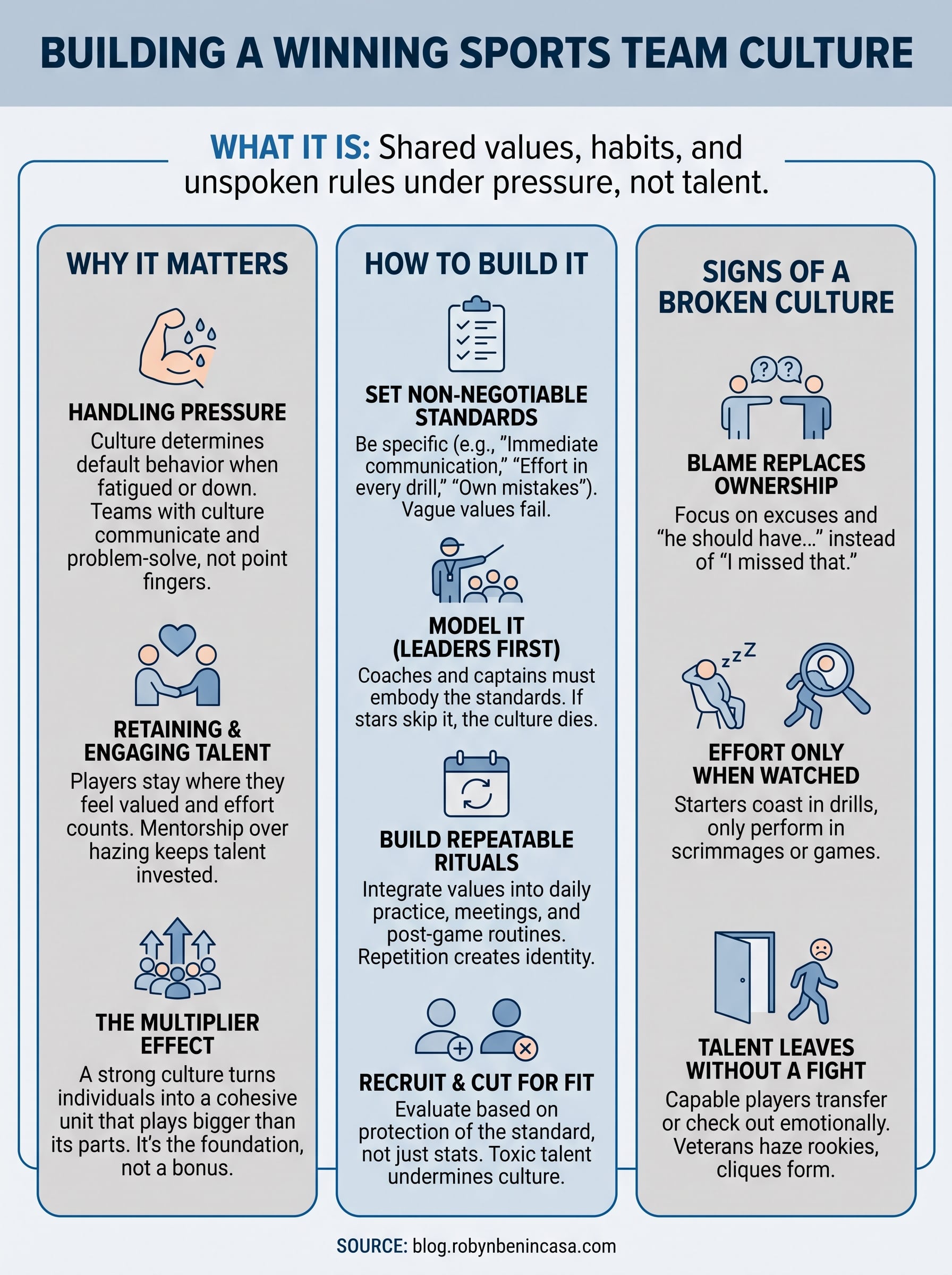
Culture determines what happens under pressure
Adrenaline and fatigue strip away everything except habit. In my years racing 24-hour adventure races, I saw teams with superior fitness fall apart at hour eighteen because they’d never done the work of building trust within a team enough to ask for help or admit they were struggling. The teams that finished strong had practiced their communication and accountability so often that it held up even when everyone was exhausted, lost, and running on no sleep. Sports teams face a smaller version of this every single game: a blown call, a missed assignment, a ten-point deficit. Team culture in sports is what a group defaults to when the stakes rise and the easy choice is to point fingers instead of solve the problem together.
A team’s culture is what shows up automatically once talent and fatigue run out.
Culture affects who stays and who performs
Players don’t just chase playing time and paychecks. They chase environments where they feel valued and where their effort actually matters to the group. Teams with a toxic or indifferent culture bleed talent, even when the X’s and O’s are sound. I’ve watched this play out in corporate sales teams too: one organization I worked with moved from 17th to 1st in national rankings, and the shift wasn’t a new product or a smarter strategy. It was a culture shift that made every rep believe the team’s success was personal, a reminder of how closely culture and performance are tied. Sports teams work the same way. A locker room where veterans mentor rookies instead of hazing them, and where players hold each other accountable instead of letting coaches do it alone, keeps talent invested season after season.
Culture is the multiplier, not the extra
Treat culture as a bonus and you’ll always be outcoached by someone who treats it as the foundation. A sport team culture built deliberately turns a roster of individuals into a unit that plays bigger than the sum of its parts. That’s the whole premise behind the T.E.A.M.W.O.R.K. framework I built after 15 years of world championship racing: the eight elements that separate teams that dominate from teams that just compete. You don’t get that multiplier by accident. It comes from coaches and captains who name their values out loud, hold everyone to them, including the stars, and repeat the same standards so often they stop feeling like rules and start feeling like identity. Once that identity is set, it survives losing streaks, injuries, and roster turnover, which is exactly when most teams without a real culture fall apart.
How to build a strong team culture in sports
Building a sports team culture isn’t a one-off speech at preseason camp. It’s a set of repeatable habits that coaches and captains reinforce until the team runs on them without thinking. Building culture in a team starts with naming what you actually stand for, then designing every practice, meeting, and postgame routine around those values.
Start with shared, non-negotiable standards
Gather your captains and coaching staff and write down three or four standards everyone must meet, regardless of talent or seniority. Vague values like "work hard" don’t hold up under pressure. Specific standards do.
- Communication: every player calls out mistakes and adjustments out loud, immediately
- Accountability: players own errors before a coach points them out, which is the heart of creating a culture of accountability
- Effort: no dogging it in drills, ever, starters included
- Support: teammates cover for each other’s weak spots without resentment
A team culture built on vague values collapses the first time it gets tested.
Model it before you demand it
Coaches and senior players set the ceiling for building athletic team culture. If a star player skips the standard and nothing happens, the standard is dead. Enforce it with your best player first, and the rest of the roster believes you’re serious.
Build rituals that repeat the culture
Repetition turns values into identity. Add a short postgame huddle where players name one teammate who lived the standard that day. Run a weekly film session where accountability, not blame, is the tone. These small rituals compound over a season the same way daily training compounds over a race.
Recruit and cut for culture fit
Talented players who undermine the standard cost you more than they contribute. When you’re building a sports team culture, evaluate recruits and even veterans on whether they’ll protect what you’ve built, not just their stat line. I break this process down further in the free team building and leadership guide available on my site, drawn from the same principles that carried my racing teams to fifteen years of world championships.
Real-world examples of team culture in sports
Abstract principles only click once you see them applied. These sports team culture examples span professional rugby, my own adventure racing career, and college athletics, and much like examples of culture inside organizations, they all prove the same point: culture is built through specific, repeatable practices, not slogans on a locker room wall.
The All Blacks and the "no dickheads" rule
New Zealand’s national rugby team, the All Blacks, runs one of the most studied team culture in sports systems in the world. Their unwritten standard, often called the "no dickheads" rule, screens out talented players who won’t put the team above their ego. Rookies sweep the locker room after wins. Veterans mentor instead of haze. The result is a program that has stayed dominant across generations of roster turnover, because the culture, not any single star, carries the standard forward.
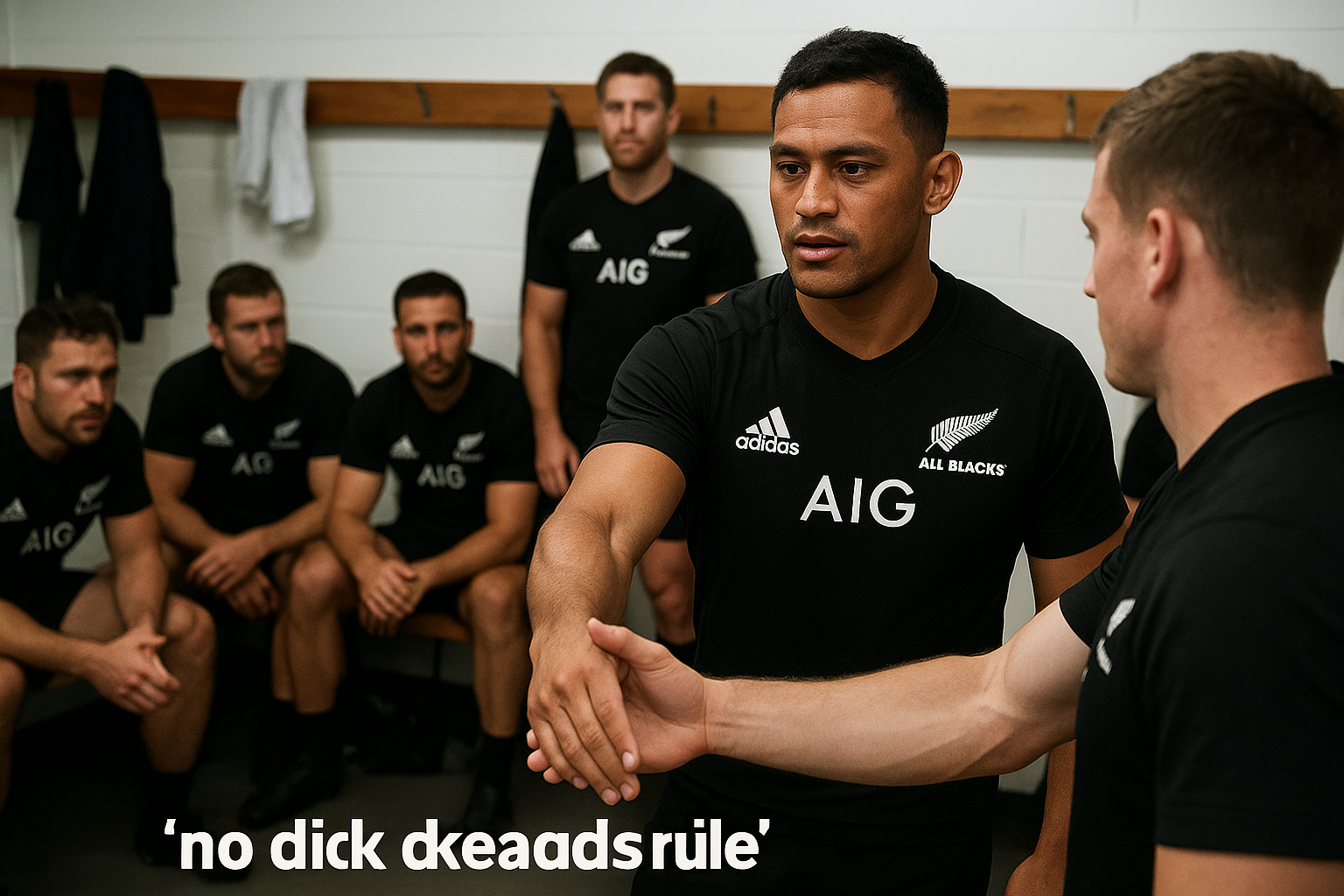
The teams that outlast their talent are the ones that never let ego outrank the standard.
My own world championship racing teams
During my fifteen years racing internationally, the strongest teams I raced with had a rule that whoever was struggling got help immediately, no exceptions, no shame. Weaker teams hid their exhaustion until it became a crisis. That single habit, built through hundreds of hours of training together, decided who finished races and who didn’t.
Comparing culture in action
| Team | Core Standard | How It Shows Up |
|---|---|---|
| All Blacks | No egos above the team | Rookies do chores, veterans mentor |
| Adventure racing crews | Ask for help immediately | Teammates flag fatigue before it becomes a crisis |
| Winning sales teams | Shared ownership of results | Reps coach each other, not just compete |
Grasping building a culture on a sports team this way makes it concrete. It’s not a poster in the gym. It’s a specific behavior, repeated until it’s automatic, that separates programs which sustain success from ones that flame out after one good season.
Signs your sports team culture needs work
Diagnosing a broken culture is harder than diagnosing a broken play, because the symptoms hide behind the box score. A team can string together wins and still run on a foundation that collapses the moment real adversity hits. If you’re serious about building a team culture in sport, learn to spot dysfunction before it costs you a season, not after.
Blame replaces ownership
Listen to how players talk after a loss. A healthy team says "I missed that assignment." A team with a culture problem says "he should have covered me." When accountability disappears from the locker room and gets replaced by finger-pointing, no talent upgrade will fix what’s broken underneath.
When players explain losses instead of owning them, the culture is already cracked.
Effort only shows up when someone’s watching
Watch a practice, not just a game. If starters coast through drills and only turn it on for scrimmages, your standard has quietly become optional. Team culture in sports reveals itself in the moments nobody’s grading, and those moments are the real scoreboard.

Talent leaves without much of a fight
Track roster turnover honestly, and ask the same kind of culture survey questions any organization uses to hear the truth. If capable players transfer, quit, or check out emotionally season after season, don’t blame recruiting first. Ask what your culture is actually rewarding, because talent doesn’t leave winning environments quietly.
Some common warning signs worth tracking on any roster:
- Veterans exclude or haze rookies instead of mentoring them
- Players celebrate individual stats over team wins
- Nobody speaks up when the game plan isn’t working
- Postgame conversations focus on excuses, not adjustments
- The locker room splits into cliques along position or seniority lines
Each one of these, left unaddressed, quietly tells the rest of the roster what actually gets tolerated.
Bringing it all together on the field
Talent wins games. Culture wins seasons. Every example in this article, from the All Blacks to my own racing teams to the sales team that jumped from 17th to 1st, points at the same truth: standards you name, model, and repeat until they’re automatic will outlast any single roster. Team culture in sports isn’t a preseason speech or a poster in the locker room. It’s what your team defaults to at hour eighteen, down ten points, when nobody’s watching.
Start small. Pick one standard, enforce it with your best player first, and build the rituals that make it stick. That’s how you turn a group of talented individuals into a team that plays bigger than the sum of its parts.
If you want the full framework behind these principles, see how to build a high performing team and grab the free team building and leadership guide I put together from fifteen years of world championship racing.