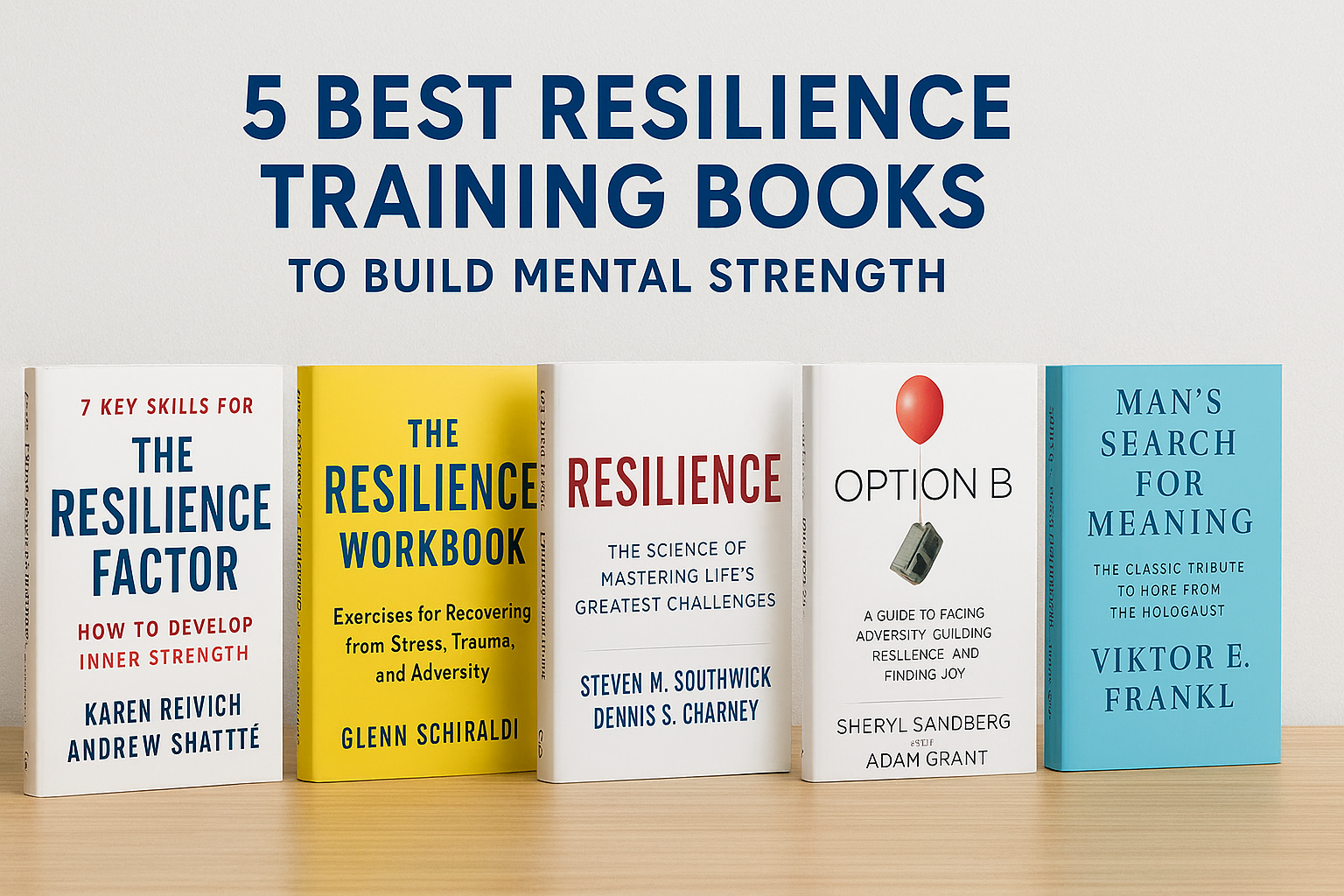
The best resilience training books teach you specific skills, not just inspiration. For a practical, skills-first approach, start with The Resilience Factor or The Resilience Workbook. If you want research and real survivor stories, read Resilience by Southwick and Charney. For loss or grief, pick Option B. If you need perspective during a long, hard stretch, read Man’s Search for Meaning.
Most people look for a resilience book after something has already gone wrong: a layoff, a failed project, a burnout, a loss. The shelf is crowded with motivational titles that feel good for a weekend and change nothing. What you need is a book that explains how people recover and gives you something to practice on Monday morning.
This list is built on that test. Robyn Benincasa spent more than 23 years as a San Diego firefighter and 17 years in world championship adventure racing. Each pick below covers what the book teaches, who it suits, and how to use it. Most are available at public libraries, so you can try one before you buy.
1. The Resilience Factor
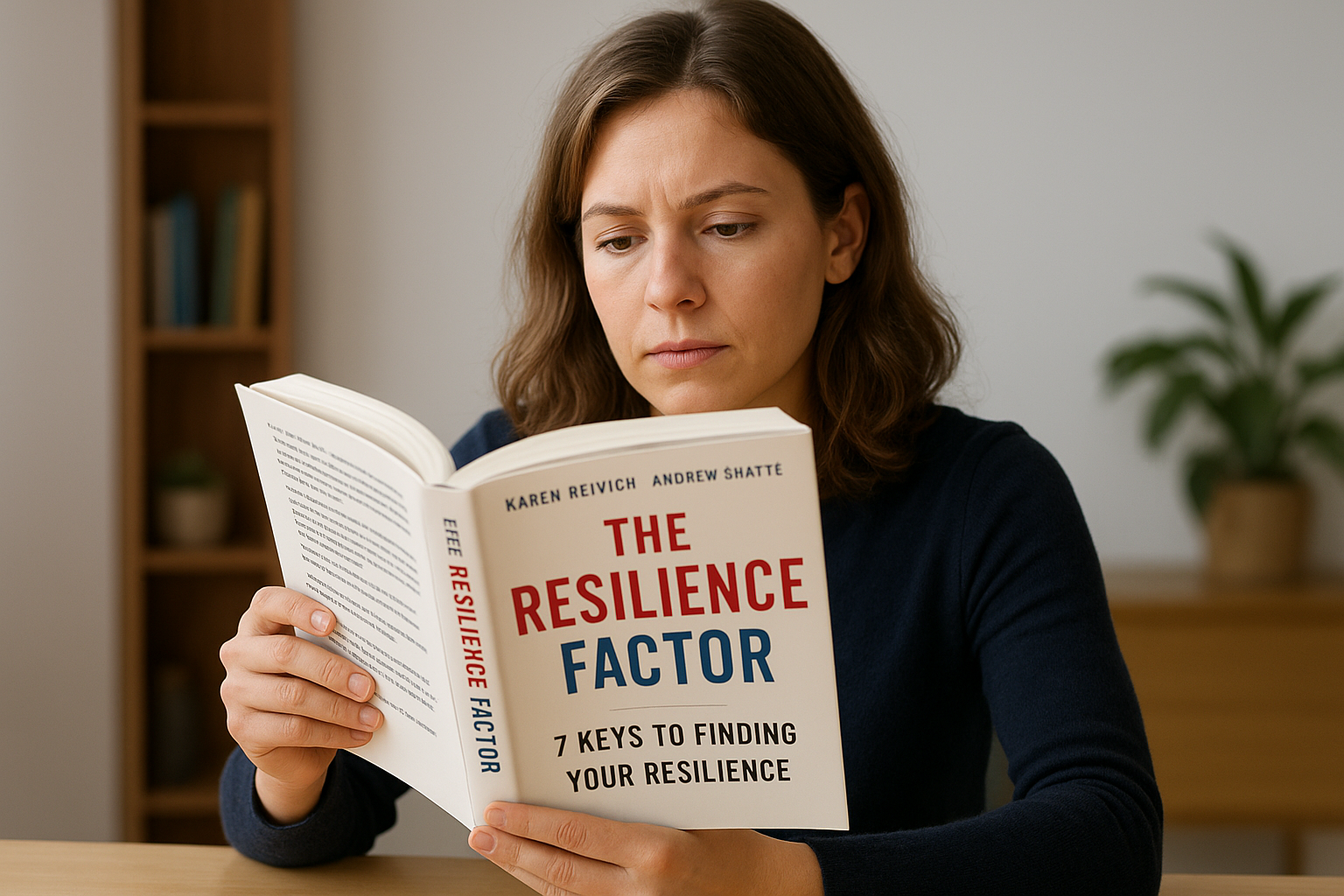
The Resilience Factor by psychologists Karen Reivich and Andrew Shatté is the best starting point if you want resilience broken into trainable skills. It treats bouncing back as a set of habits you can measure and improve.
What it teaches
The core tool is the ABC model: an adversity happens, you hold a belief about it, and that belief, not the event, drives the consequence. The book then builds seven skills:
- Emotion regulation
- Impulse control
- Optimism
- Causal analysis (finding the real cause of a problem)
- Self-efficacy
- Empathy
- Reaching out
It opens with a self-test so you can see which skills are weakest.
Resilience gets easier to build once you know which skill is actually weak.
Who it suits
It fits managers and professionals who want a framework they can apply to work setbacks, because the examples reach beyond personal crises. Skip it if you want memoir-style storytelling. The tone is instructional.
How to use it
Take the self-test first and pick your single weakest skill. Practice that skill on one real situation per week for a month. Write down the belief behind your reaction each time, then test whether it is accurate.
2. The Resilience Workbook
The Resilience Workbook: Essential Skills to Recover from Stress, Trauma, and Adversity by Glenn Schiraldi is the strongest choice if you learn by doing. As a workbook, it asks you to write, reflect, and practice on the page.
What it teaches
Schiraldi, who also wrote The Self-Esteem Workbook, focuses on skills for recovering from stress, trauma, and adversity. The format matters more than any single idea here. You work through exercises instead of only reading about them, which is how skills actually stick.
A workbook only works if you do the exercises, so choose it only if you will.
Who it suits
It suits people in or just past a hard period who want structure and a steady pace. It is also useful for team leaders who want exercises to adapt. If you are dealing with severe trauma, treat the book as a companion to professional support, not a replacement.
How to use it
Set a fixed slot, such as 15 minutes before work, and complete one exercise per sitting. Keep a single notebook for all answers. Reread your earlier entries after three weeks to see what has shifted.
3. Resilience: The Science of Mastering Life’s Greatest Challenges
Resilience by psychiatrists Steven Southwick and Dennis Charney is the best pick if you want evidence behind the advice. It draws on research and on interviews with people who came through severe trauma, including former prisoners of war. A second edition appeared in 2018.
What it teaches
The authors identify ten resilience factors:
- Realistic optimism
- Facing fear
- A moral compass
- Religion or spirituality
- Social support
- Role models
- Physical fitness
- Brain fitness
- Cognitive and emotional flexibility
- Meaning and purpose
You do not need all ten. The point is that resilient people tend to draw on several of them.
Resilience rarely rests on one trait, so build several small supports instead.
Who it suits
It suits readers who trust research and want to see how people survive the worst. It is denser than the other picks, so it is a poor fit if you want quick tips.
How to use it
Rate yourself on each factor, then choose two to strengthen this quarter. Social support and physical fitness are easy to act on because you can schedule them. Revisit your ratings every few months.
4. Option B
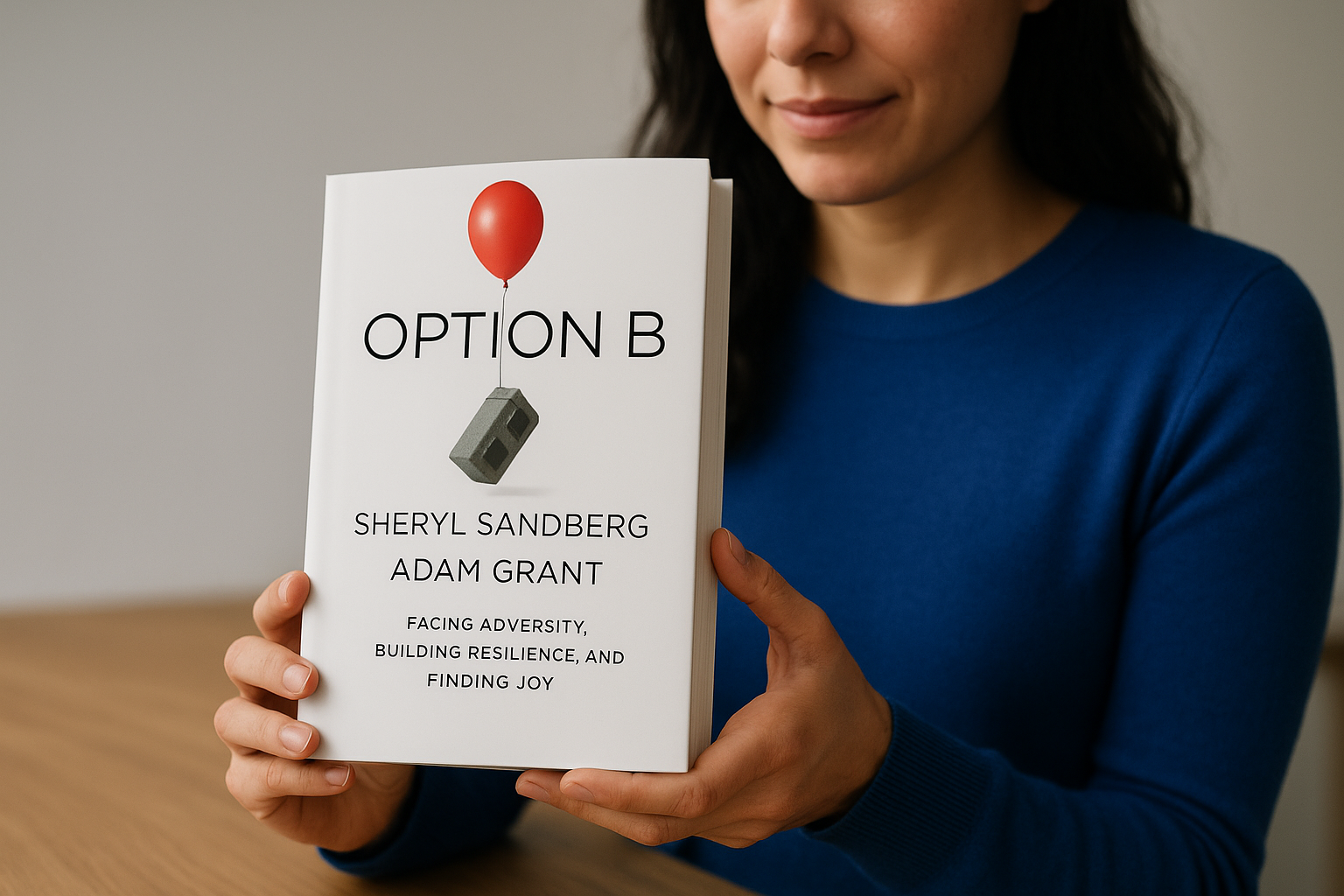
Option B by Sheryl Sandberg and psychologist Adam Grant is the best resilience book for grief, loss, and helping others through it. Sandberg wrote it after her husband died suddenly in 2015, and Grant adds the research.
What it teaches
The book draws on Martin Seligman’s three Ps of how people interpret setbacks: personalization (it’s my fault), pervasiveness (it affects everything), and permanence (it will last forever). It also covers post-traumatic growth, practical ways to support a grieving colleague or friend, and Sandberg’s habit of writing down good moments each day.
You recover faster when you stop believing a setback is your fault, everywhere, and forever.
Who it suits
It suits anyone facing a death, divorce, job loss, or illness, and leaders who want to support their people better. If you want a step-by-step training program, it is lighter on exercises than the first two picks.
How to use it
After your next setback, ask three questions: Is this my fault? Does it touch everything? Will it last? Write short answers. Then try the daily good-moments habit for two weeks.
5. Man’s Search for Meaning
Viktor Frankl’s Man’s Search for Meaning, first published in 1946, is the classic to read when the hardship is long and the answer is perspective. It is not a training manual, and it works best alongside one of the skills books above.
What it teaches
Frankl, a Viennese psychiatrist, survived Nazi concentration camps and wrote about what separated people who endured from people who gave up. His argument is that meaning gives suffering a purpose, and that you keep one freedom no matter the circumstances: choosing your response. The book is short, and its second half outlines his approach, logotherapy.
When you cannot change the situation, you can still choose your stance toward it.
Who it suits
It suits readers in a prolonged or seemingly hopeless stretch who need perspective more than technique. It is also a good pick for leaders guiding teams through a bad year. The subject is heavy, so read it when you have the energy.
How to use it
Read a few pages at a time instead of rushing. Pause after each section and write one sentence about what matters to you right now. Use those sentences to choose one small action this week that serves it.
Where to start with resilience training books
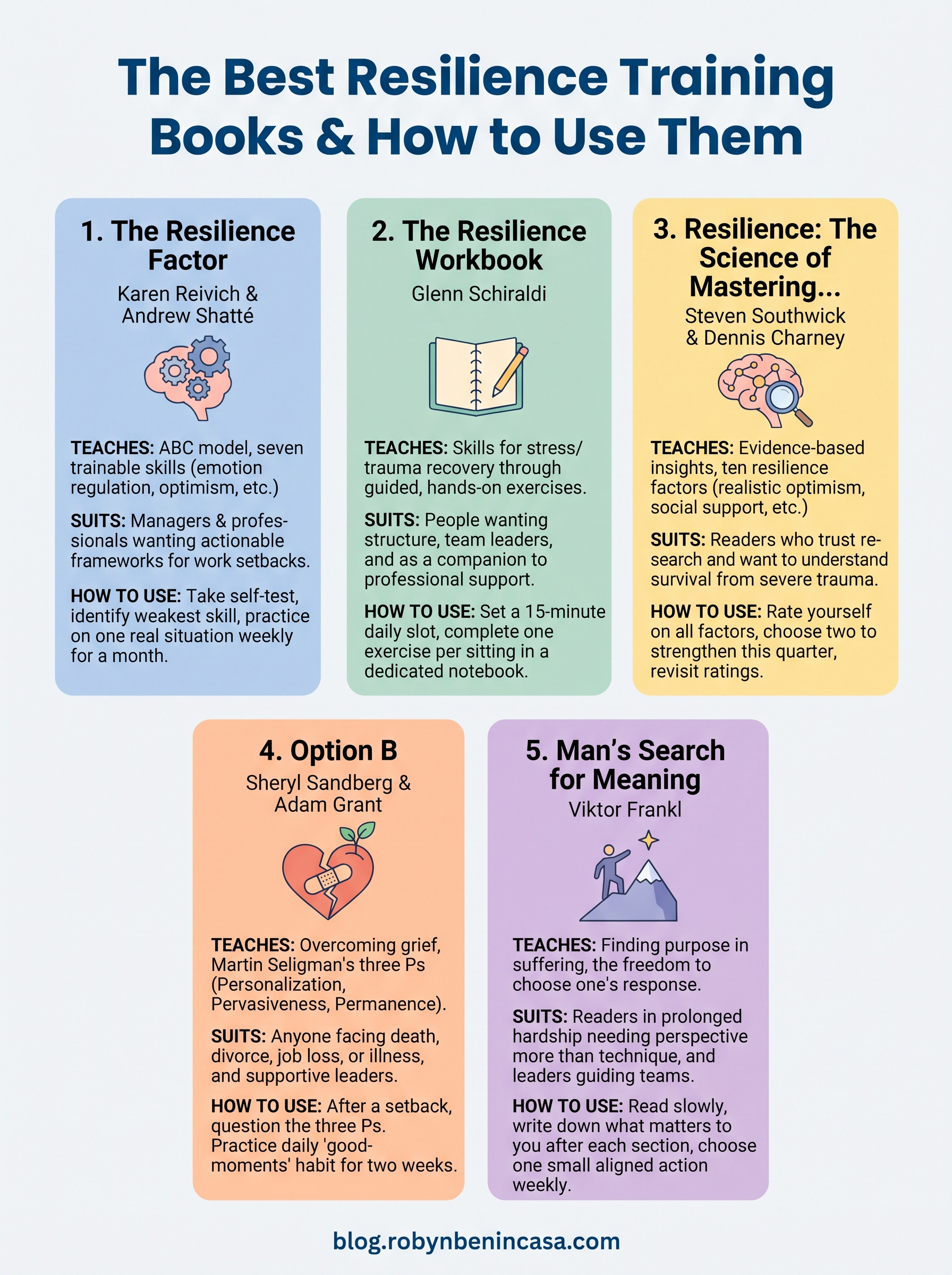
Pick one book that matches your situation. Choose The Resilience Factor for skills, The Resilience Workbook for guided practice, Resilience for evidence, Option B for loss, and Man’s Search for Meaning for perspective. Then practice one idea at a time, because a book only builds mental strength when you apply it.
Resilience also grows in teams, where people carry each other through hard years. Robyn’s keynote Inspiring Greatness through G.R.I.T. is built for that situation, running 45 to 60 minutes for teams facing adversity or stretch goals. For more on building strength together, explore Robyn Benincasa’s blog on team resilience and leadership.