Category: Uncategorized

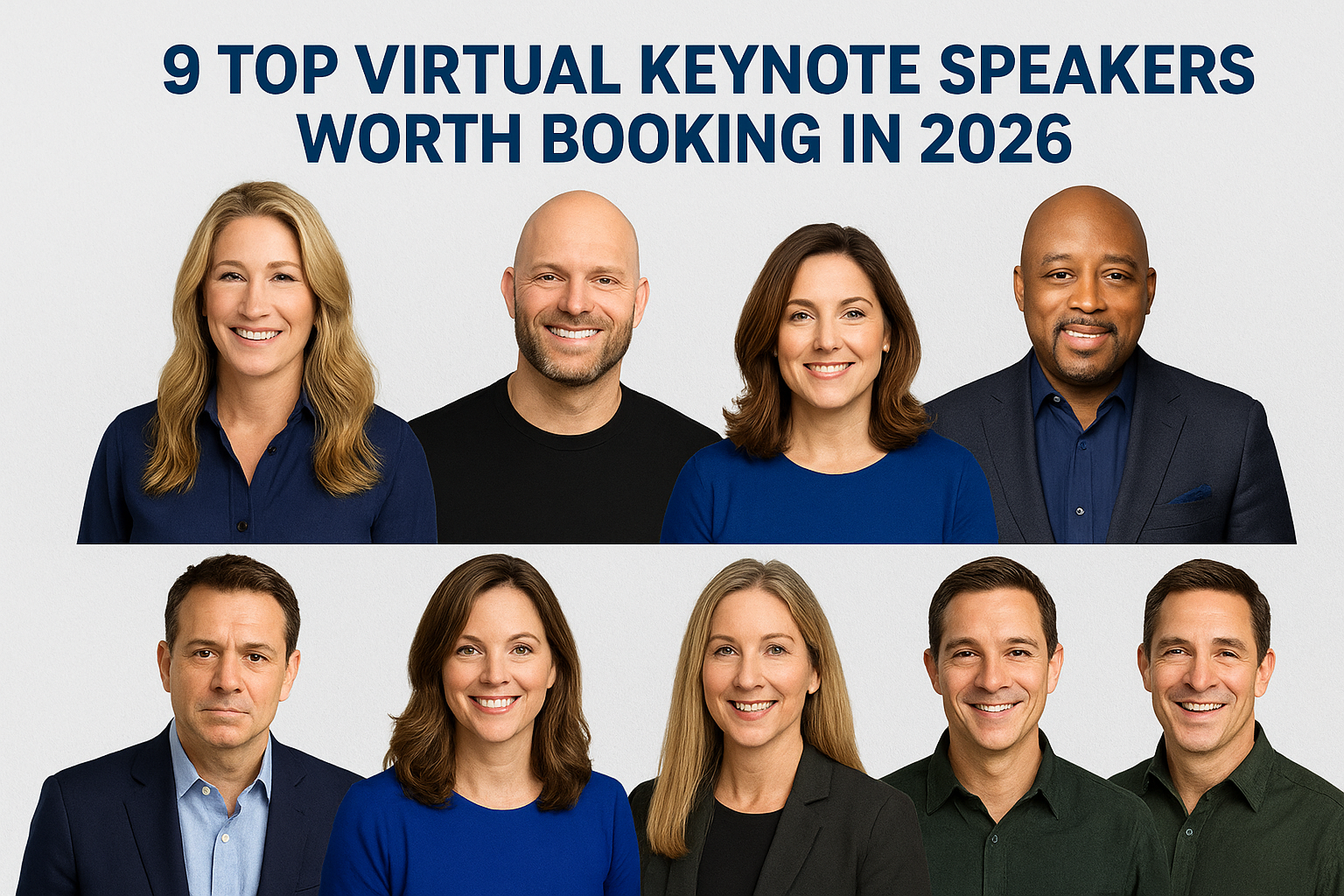
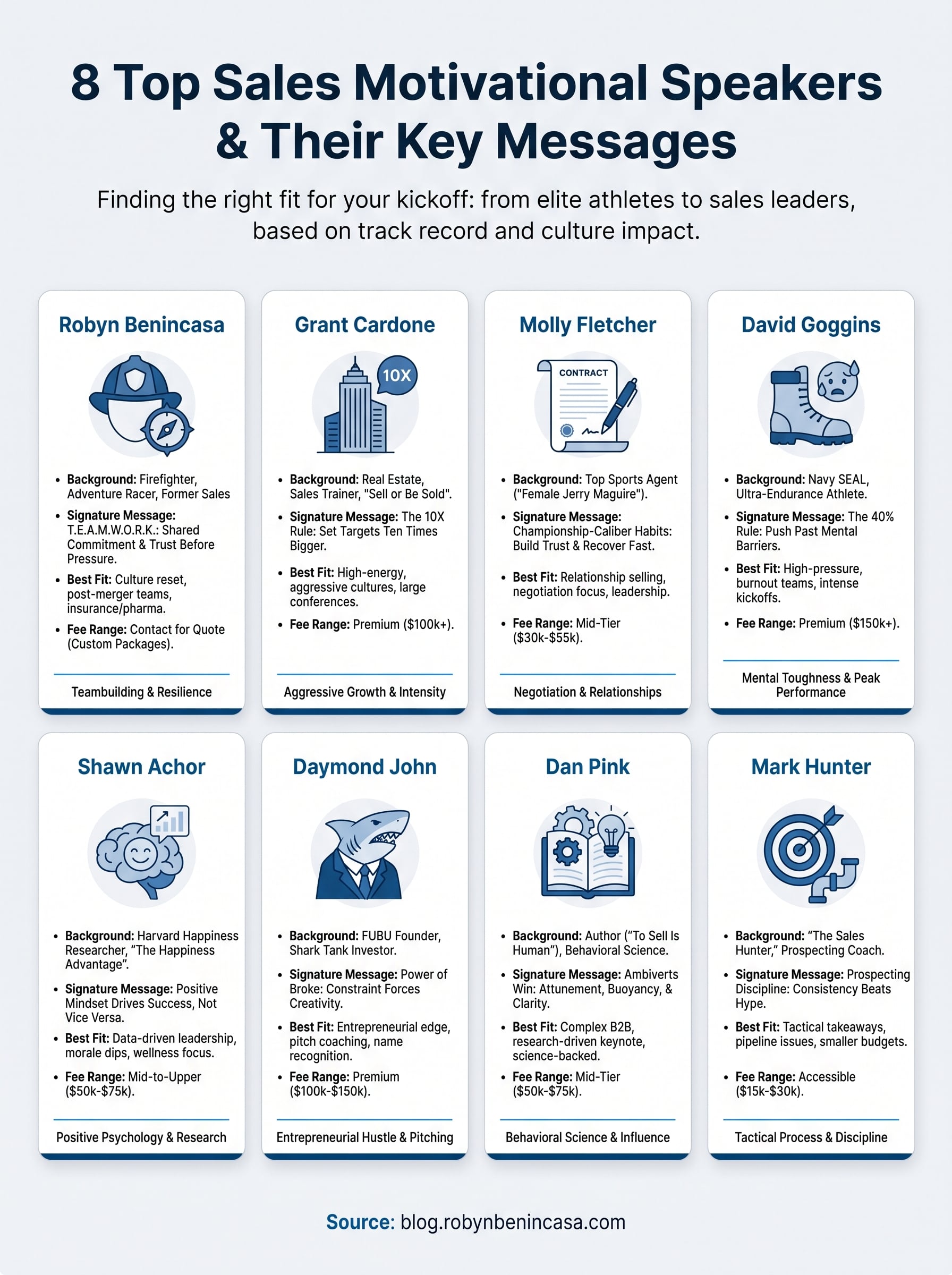
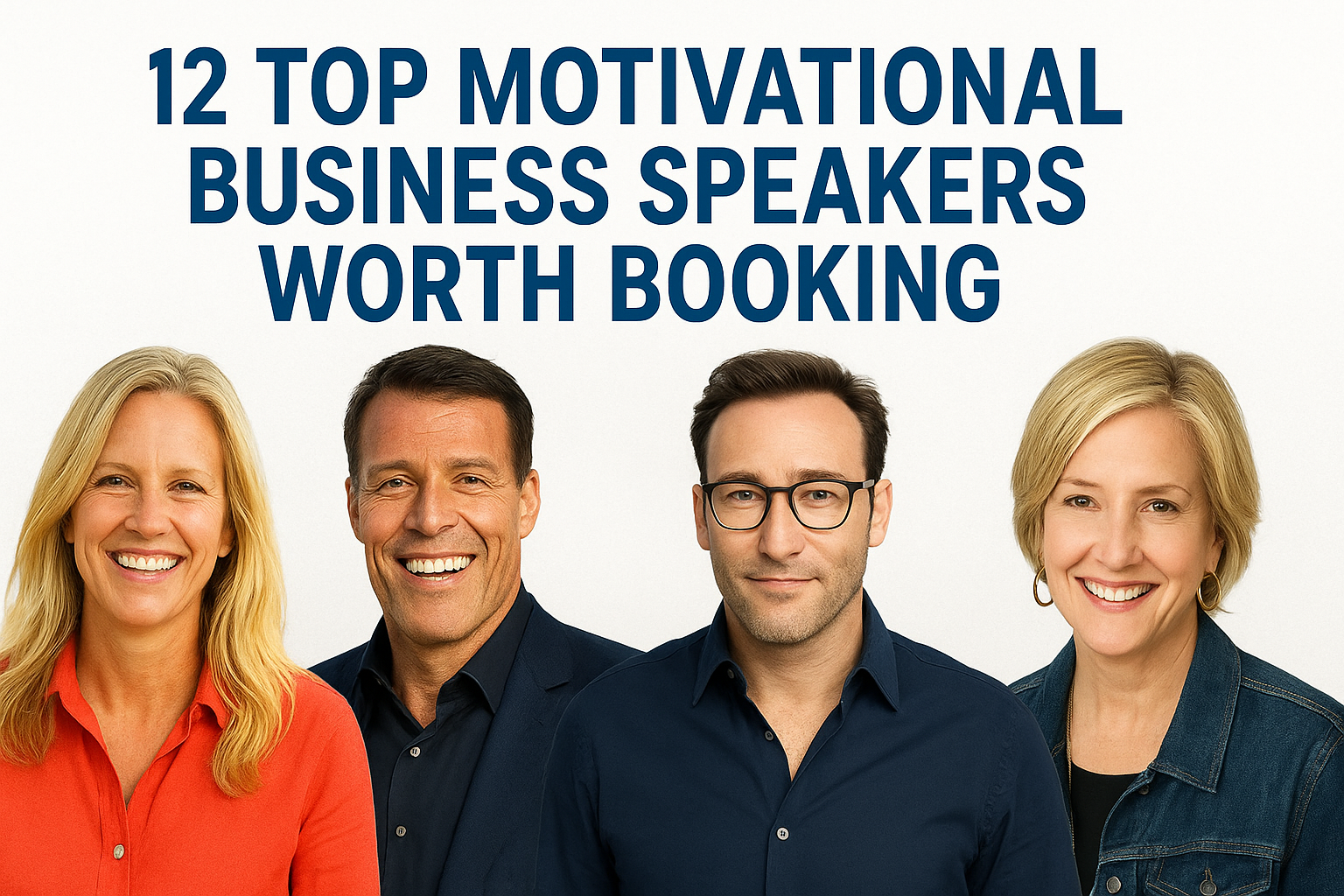
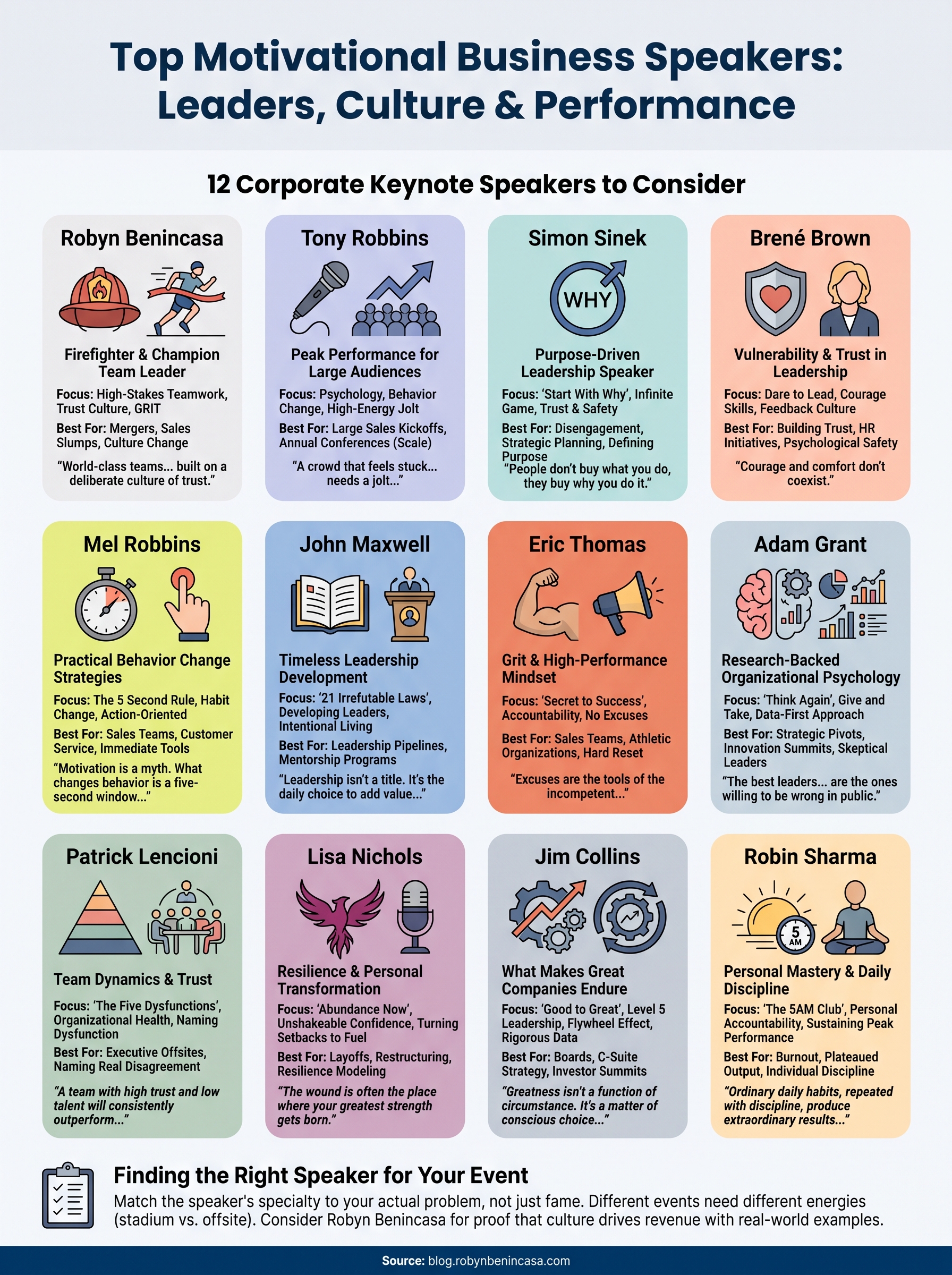
  • Best Keynote Speaker For Corporate Event: 12 Top Picks

    Choosing the best keynote speaker for corporate event planning is one of those decisions that can either electrify your entire organization or leave 500 people checking their phones during the opening session. The stakes are real, your budget, your reputation as an event planner, and your team’s momentum all ride on getting this right.

    We know this firsthand. As a keynote speaking and leadership consulting business, Robyn Benincasa has spent years on both sides of the stage, delivering high-impact presentations to companies like Allstate, Northrop Grumman, and Boston Scientific, and watching what separates speakers who genuinely move an audience from those who simply fill a time slot. That experience shaped this list.

    Below, you’ll find 12 keynote speakers who consistently deliver for corporate audiences across leadership, motivation, teamwork, and business strategy. Each pick includes what they’re known for, who they’re best suited for, and what makes their message stick long after the event ends. Whether you’re planning an annual sales kickoff or a company-wide leadership summit, this guide will help you narrow the field and book with confidence.

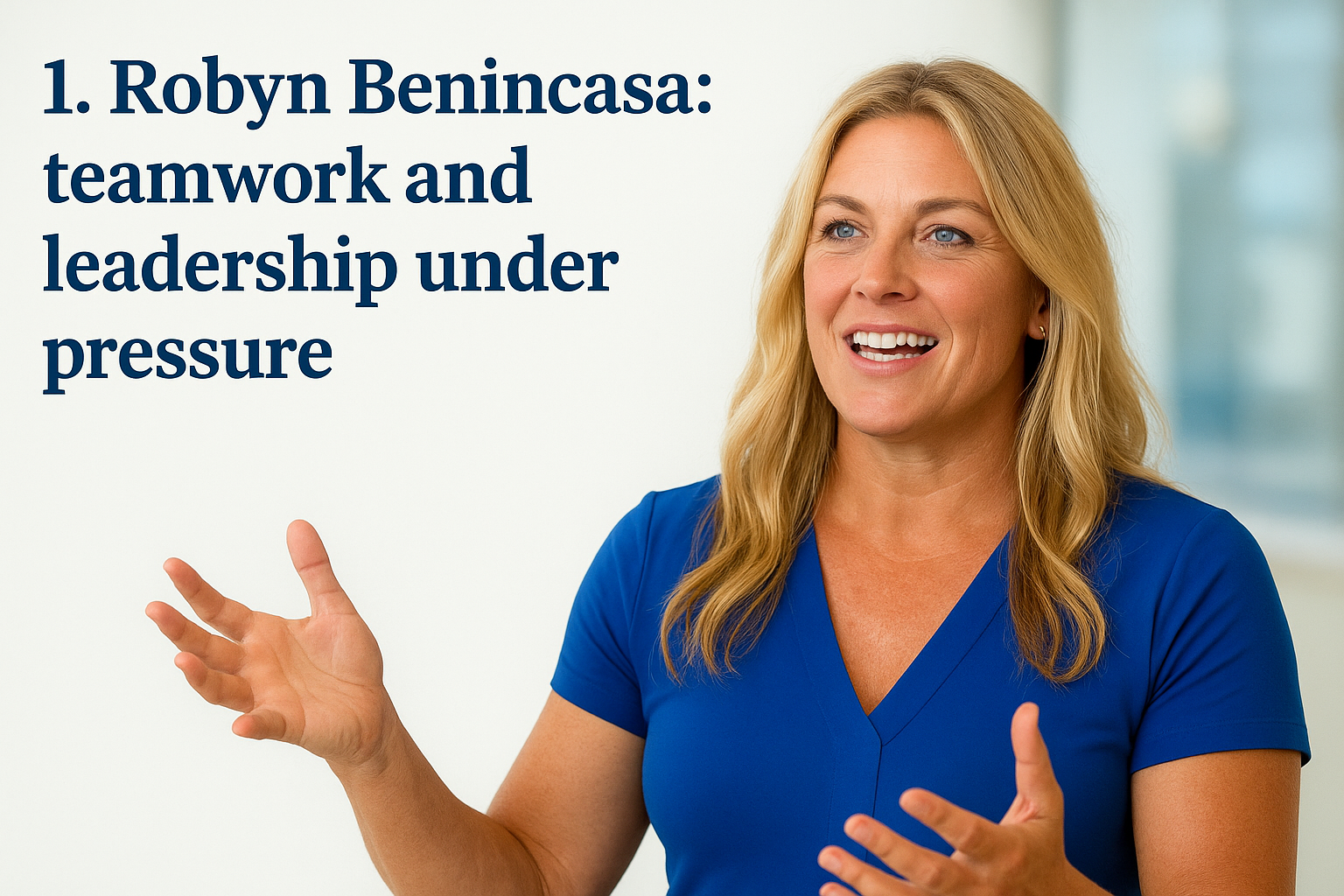
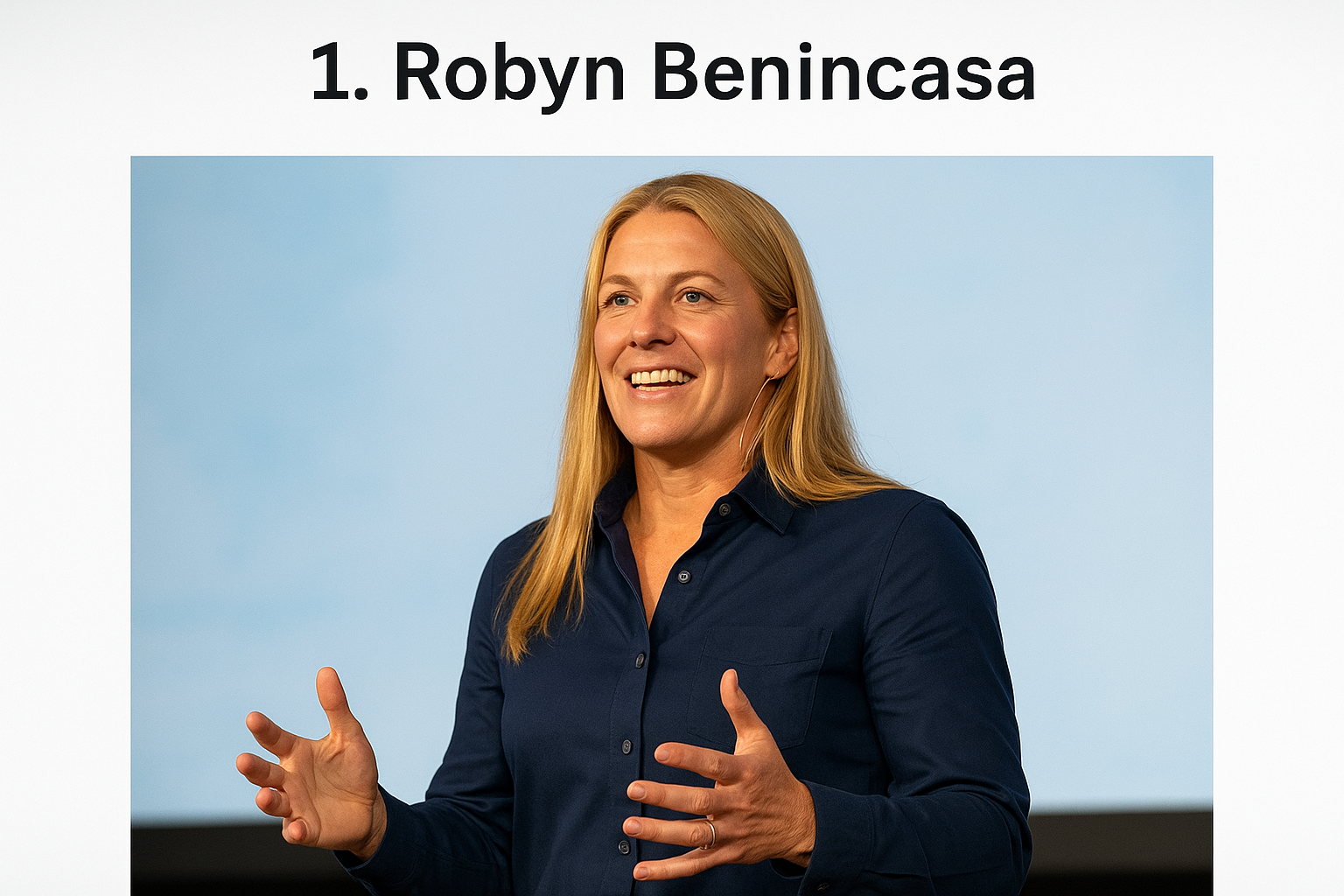
    1. Robyn Benincasa

    Robyn Benincasa is a world champion adventure racer, veteran San Diego firefighter, and New York Times bestselling author who has spent decades translating extreme team performance into practical tools for the corporate world. She has delivered programs to Fortune 500 companies including Allstate, Northrop Grumman, and Boston Scientific, and founded the Project Athena Foundation to help people overcome life’s toughest obstacles.

    Signature keynote themes

    Robyn’s programs center on teamwork, leadership under pressure, and building a culture where individuals genuinely carry each other. Her core frameworks include:

    • T.E.A.M.W.O.R.K. – Eight essential elements of high-performance teams
    • Win As One – Breaking down silos and driving real collaboration
    • Inspiring Greatness Through G.R.I.T. – Perseverance and resilience under pressure
    • Why Winners Win – The mindset behind elite performance

    Each program draws directly from her experiences racing 900-mile courses through jungles, deserts, and mountain ranges.

    What makes her different on a corporate stage

    Most leadership speakers draw from boardroom experience. Robyn draws from extreme endurance races and working inside burning buildings. That combination gives her stories a level of physical stakes and authenticity that business audiences rarely encounter from a stage. She doesn’t describe teamwork as a concept; she has depended on it in conditions where a poor decision ends a race or costs a life.

    The lessons that hold up at 14,000 feet in the Andes hold up in a merger, a market downturn, or a team that has lost trust in its leadership.

    Her delivery is high-energy and story-driven, but every narrative connects back to a specific, actionable takeaway your team can apply the following Monday.

    Best audience fit

    Robyn is a strong pick as the best keynote speaker for corporate event formats that require both inspiration and immediate application. She performs especially well for sales organizations, leadership conferences, and teams navigating significant change such as mergers, restructuring, or rapid growth. Her content lands hardest when an organization wants its people to stop operating as individual contributors and start functioning as a unified team.

    Typical fee range and booking considerations

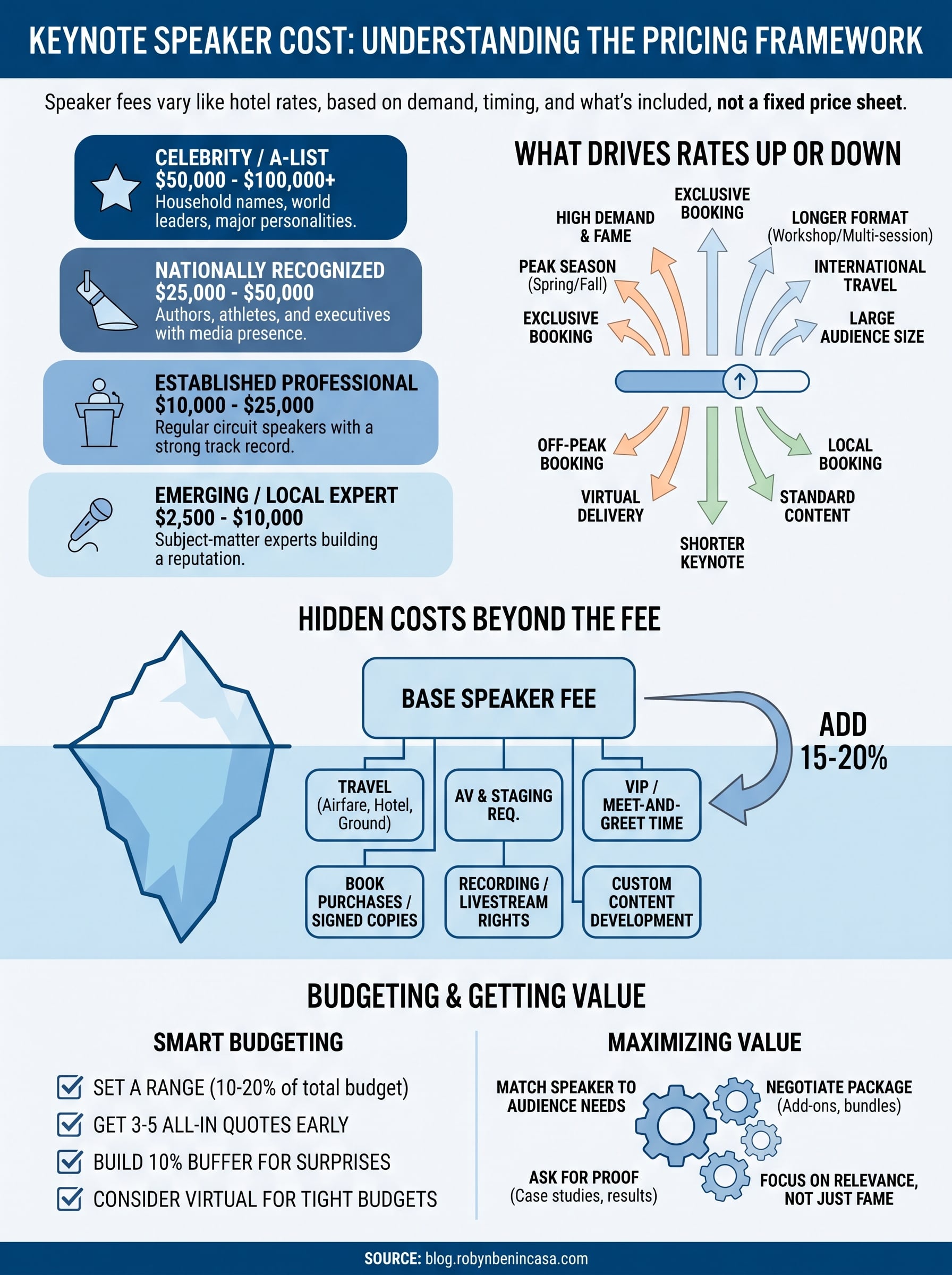
    Robyn’s keynote fees typically fall in the $30,000 to $50,000 range for live events, with virtual options available at adjusted rates. A lead time of 60 to 90 days is standard for custom program development. Post-event implementation guides are available to extend the impact beyond the event itself.

    Questions to ask before you book

    Before finalizing, ask Robyn’s team how much the program can be tailored to your specific industry and challenge. Request references from companies in a comparable situation to yours, and confirm whether post-event resources such as downloadable guides or follow-up sessions are included in the fee.

    2. Simon Sinek

    Simon Sinek is a leadership author and organizational consultant best known for his concept of "Start With Why," which originated in one of the most-watched TED Talks of all time. He has advised leaders at organizations including the United Nations, the U.S. military, and major multinational corporations.

    Signature keynote themes

    Simon’s work focuses on purpose-driven leadership, organizational trust, and the mindset shift required to build lasting teams. His most requested programs draw from his books "Start With Why," "Leaders Eat Last," and "The Infinite Game," each of which challenges the short-term thinking that undercuts most corporate cultures.

    What makes him different on a corporate stage

    Simon delivers conceptual frameworks that feel immediately intuitive, which is a rare skill on a corporate stage. He takes ideas that executives have sensed for years but never articulated and gives them a clear language. His "Why, How, What" Golden Circle model is something your team can apply to sales, culture, and communication the same week.

    When a speaker can name the problem you’ve been living with for three years, the whole room leans in.

    Best audience fit

    Simon works best for leadership-focused events where the goal is shifting how executives and managers think about their role. He is a strong pick as the best keynote speaker for corporate event agendas built around cultural transformation or long-term strategic alignment rather than short-term skill-building.

    Typical fee range and booking considerations

    Simon’s fees typically run $100,000 or above for live keynotes, with limited availability due to high demand. Book at least six months in advance to secure a date.

    Questions to ask before you book

    Ask whether Simon will customize his talk to your company’s specific cultural challenges, and confirm whether a Q&A session is included in the standard fee.

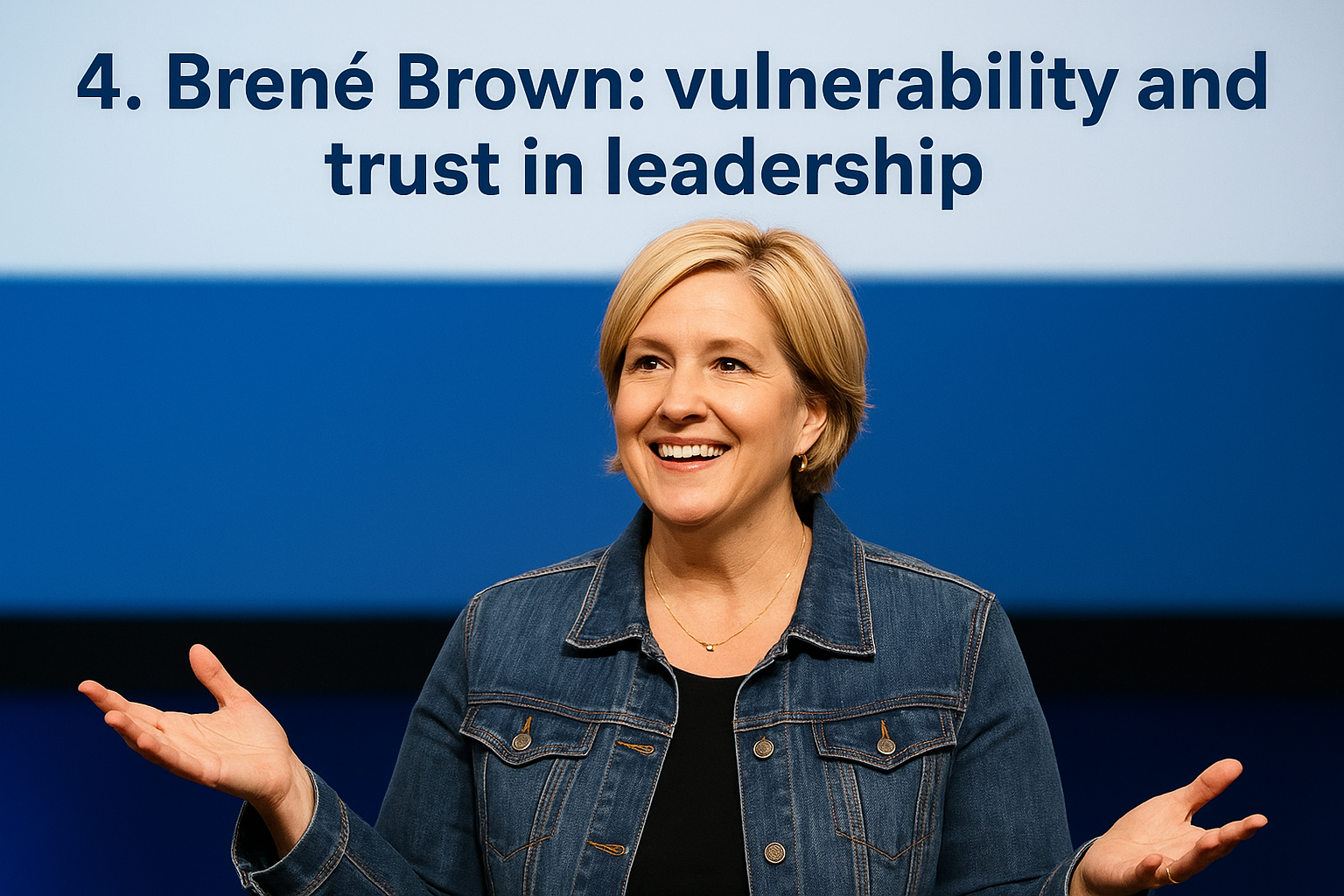
    3. Brené Brown

    Brené Brown is a research professor at the University of Houston and one of the most recognized voices on leadership, vulnerability, and organizational courage. Her TED Talk on vulnerability has surpassed 60 million views, and her books, including "Dare to Lead" and "Daring Greatly," are standard reading for executives at companies worldwide.

    Signature keynote themes

    Brené’s corporate programs focus on courageous leadership, psychological safety, and building teams where people feel safe to take risks and own mistakes. Her most requested programs pull directly from her research on shame, empathy, and what she calls "rumbling with vulnerability" as a leadership skill.

    • Dare to Lead – Practical tools for leaders who want to build brave, trusting cultures
    • The Anatomy of Trust – How to earn and sustain trust across teams
    • Empathy and Connection – The emotional foundation of high-performing organizations

    What makes her different on a corporate stage

    Brené grounds every concept in peer-reviewed research, which gives her content a credibility that purely anecdotal speakers cannot match. She also speaks with a candor and self-deprecating humor that disarms even the most skeptical executive in the room.

    When a speaker can make a room full of senior leaders admit they are afraid of failure, that is a transformational moment.

    Best audience fit

    She is a strong candidate as the best keynote speaker for corporate event agendas centered on culture change, manager development, or rebuilding trust after a period of organizational disruption. Her content resonates most with HR leaders, people managers, and executive teams who recognize that culture is driving or limiting their results.

    Typical fee range and booking considerations

    Brené’s fees generally fall above $100,000 for live engagements, with significant lead time required. Plan to start conversations at least six to nine months ahead of your event date.

    Questions to ask before you book

    Confirm whether Brené will tailor her research examples to your industry, and ask whether her team offers any pre-event or post-event resources to help managers apply the frameworks with their direct reports.

    4. Adam Grant

    Adam Grant is an organizational psychologist at the Wharton School and one of the most cited management thinkers working today. He has written bestselling books including "Think Again," "Give and Take," and "Originals," and his WorkLife podcast explores the science behind how people work, lead, and collaborate at scale.

    Signature keynote themes

    His presentations pull from decades of research on motivation, generosity, and rethinking assumptions in the workplace. His most requested corporate programs cover:

    • Give and Take – Why helping others drives long-term career success
    • Think Again – Building cultures where people challenge their own assumptions
    • Originals – How organizations can surface and act on creative ideas
    • Rethinking Performance – Using behavioral science to drive better team outcomes

    What makes him different on a corporate stage

    Adam translates peer-reviewed research into concrete workplace tools in a way that very few academics can pull off live. His delivery is sharp and counterintuitive, and it regularly challenges assumptions your leadership team has held for years without ever questioning them.

    If your goal is to get your senior team to genuinely reconsider how they lead, Adam Grant has few peers on a corporate stage.

    Best audience fit

    He is a strong pick as the best keynote speaker for corporate event agendas focused on innovation, talent development, or building a learning culture. His content connects most with senior leaders, HR teams, and managers who want research-backed tools rather than purely motivational stories.

    Typical fee range and booking considerations

    Adam’s fees typically run above $100,000 for live engagements. Book at least six months out, as his calendar fills quickly given his public profile and media commitments.

    Questions to ask before you book

    Ask whether Adam will customize his research examples to your specific industry, and confirm whether his team provides follow-up materials for managers to use with their direct reports after the event.

    5. Dan Pink

    Dan Pink is a bestselling author and speaker whose work focuses on the science of human motivation, persuasion, and timing. His books "Drive," "To Sell Is Human," and "When" have each reshaped how organizations think about what actually moves people to perform and make decisions at work.

    Signature keynote themes

    Dan’s corporate programs draw directly from behavioral research and social science, covering the topics that most affect day-to-day performance. His most requested programs include:

    • Drive – Why traditional carrot-and-stick motivation fails and what replaces it
    • To Sell Is Human – How every employee in your organization is in the business of persuasion
    • When – The science of timing and how it affects decision-making, energy, and team output

    What makes him different on a corporate stage

    Dan takes counterintuitive research findings and makes them practical for managers within the span of a single session. His style is conversational rather than theatrical, which means the ideas carry more weight and feel applicable rather than inspirational in a forgettable way.

    When a speaker can show your sales team that timing a negotiation correctly matters as much as the pitch itself, that changes how they work every single week.

    Best audience fit

    He is a strong choice as the best keynote speaker for corporate event programs focused on sales culture, performance management, or workforce motivation. His content works especially well for HR leaders and managers who are looking for research-backed answers rather than general encouragement.

    Typical fee range and booking considerations

    Dan’s fees typically fall in the $75,000 to $100,000 range for live events. Plan to book at least four to six months in advance to secure availability.

    Questions to ask before you book

    Ask whether Dan will connect his research directly to your industry’s specific performance challenges, and confirm whether his team provides any post-event tools for managers to reinforce the concepts with their teams.

    6. Carla Harris

    Carla Harris is a senior client advisor at Morgan Stanley, bestselling author, and one of the most in-demand voices on leadership and career advancement in corporate America. She spent over three decades navigating Wall Street at the highest levels and brings that direct experience to every stage she takes.

    Signature keynote themes

    Carla’s programs center on authentic leadership, inclusion, and what she calls "pearls", the hard-won strategies she used to rise through one of the most competitive industries in the world. Her most requested programs cover sponsorship versus mentorship, managing perception, and building the personal currency that drives career growth across all levels of an organization.

    What makes her different on a corporate stage

    Carla combines Wall Street credibility with genuine storytelling in a way that cuts through corporate audiences fast. She is also a classically trained gospel and R&B vocalist, and she occasionally opens or closes with a performance that shifts the energy in a room in a way no slide deck can replicate.

    When a speaker can demonstrate leadership principles through decades of real high-stakes decisions, the room responds differently than it does to theory.

    Best audience fit

    She is a strong pick as the best keynote speaker for corporate event formats focused on leadership development, diversity and inclusion, or empowering high-potential talent. Her content connects most with professional development conferences, employee resource groups, and leadership summits where the goal is to help individuals own their trajectory.

    Typical fee range and booking considerations

    Carla’s fees typically fall in the $75,000 to $100,000 range for live keynotes. Book at least four to six months in advance, as her schedule fills quickly given her active client responsibilities at Morgan Stanley.

    Questions to ask before you book

    Confirm whether Carla will customize her "pearls" framework to your industry, and ask whether her team offers post-event resources your managers can share with their direct reports.

    7. Stanley McChrystal

    Stanley McChrystal is a retired four-star U.S. Army General and the former commander of Joint Special Operations Command and U.S. and coalition forces in Afghanistan. He is the author of "Team of Teams" and the founder of the McChrystal Group, where he now advises organizations on leadership and adaptive strategy.

    Signature keynote themes

    Stanley’s programs draw directly from his military command experience and his research on how large organizations can move faster without losing cohesion. His most requested programs cover:

    • Team of Teams – Restructuring for speed and adaptability in complex environments
    • Leaders: Myth and Reality – What history’s most effective leaders actually did differently
    • Organizational Agility – Building systems that respond quickly under pressure

    What makes him different on a corporate stage

    Stanley speaks from decades of real command decisions made under conditions where the cost of failure was measured in lives. That weight shows up in his delivery, which is direct, measured, and free of any performance. He doesn’t tell you what good leadership looks like in theory; he shows you what it produced in some of the most complex operational environments in modern history.

    When a speaker has actually rebuilt an organization’s entire command structure mid-conflict to outpace a faster enemy, the lessons carry a different authority.

    Best audience fit

    He is a strong pick as the best keynote speaker for corporate event agendas centered on organizational change, adaptive leadership, or building high-trust teams across large, complex structures. His content lands best with senior executives and operations leaders who are navigating rapid change or scaling across multiple divisions.

    Typical fee range and booking considerations

    Stanley’s fees typically run above $100,000 for live keynotes. Book at least six months in advance given his consulting commitments and high demand on the speaking circuit.

    Questions to ask before you book

    Ask whether Stanley will connect his operational frameworks directly to your industry’s specific leadership challenges, and confirm whether his team provides any post-event tools your managers can use to apply the Team of Teams model inside your organization.

    8. Liz Wiseman

    Liz Wiseman is a researcher, executive advisor, and bestselling author best known for her book "Multipliers: How the Best Leaders Make Everyone Smarter." She spent 17 years at Oracle Corporation as a vice president and chief of Oracle University before launching the Wiseman Group, where she now researches leadership and teaches at organizations including Apple, Disney, and Salesforce.

    Signature keynote themes

    Her programs focus on leadership impact and how managers either multiply or diminish the intelligence of the people around them. Her most requested programs include:

    • Multipliers – How the best leaders draw out more from their teams than they put in
    • Rookie Smarts – Why approaching challenges with a beginner’s mindset produces better results
    • Impact Players – How top contributors think and behave differently under pressure

    What makes her different on a corporate stage

    Liz builds every presentation on original research conducted across hundreds of organizations and thousands of leaders, which gives her frameworks a rigor that purely experience-based speakers cannot match. Her core concept, the difference between a Multiplier and a Diminisher, is something most managers recognize immediately because they have worked for both types and felt the difference.

    When a speaker can show your managers that their best intentions might be actively shrinking their team’s output, that single insight shifts how they lead the next day.

    Best audience fit

    She is a strong pick as the best keynote speaker for corporate event agendas built around manager development or talent retention. Her content connects most with people managers, HR leaders, and senior teams who want a research-backed framework for getting substantially more from the talent they already have on board.

    Typical fee range and booking considerations

    Liz’s fees typically fall in the $50,000 to $75,000 range for live keynotes. Secure your date at least four to six months in advance to guarantee availability.

    Questions to ask before you book

    Ask whether Liz will customize her Multipliers framework to your specific industry and management challenges, and confirm whether her team provides assessment tools or post-event resources your managers can use to measure their own leadership impact after the session closes.

    9. Patrick Lencioni

    Patrick Lencioni is the founder of The Table Group and the author of more than a dozen business books, most notably "The Five Dysfunctions of a Team," one of the best-selling leadership books of the past two decades. His work has shaped how thousands of organizations think about team cohesion, executive alignment, and organizational health.

    Signature keynote themes

    Patrick’s programs focus on team dysfunction, leadership clarity, and what he calls organizational health, the idea that a team’s internal alignment matters more than its strategy. His most requested programs pull from his books and include frameworks for building trust, eliminating politics, and creating accountability structures that actually hold.

    What makes him different on a corporate stage

    Patrick delivers his content through business fables and narrative, a format that makes complex organizational dynamics feel immediate and recognizable rather than abstract. He has a direct, conversational style that cuts through the usual corporate presentation format.

    When a speaker can put the exact dysfunction your leadership team has been living with into a story, the room stops defending itself and starts listening.

    His model of five specific, sequenced dysfunctions gives teams a clear diagnostic they can apply to their own situation before they leave the room.

    Best audience fit

    He is a strong pick as the best keynote speaker for corporate event agendas focused on executive alignment or rebuilding team trust. His content resonates most with senior leadership teams and C-suite groups who need a shared framework for diagnosing what is slowing them down.

    Typical fee range and booking considerations

    Patrick’s fees typically fall in the $50,000 to $75,000 range for live engagements. Book at least three to four months in advance to secure your preferred date.

    Questions to ask before you book

    Confirm whether Patrick will tailor his dysfunction framework to your organization’s specific team structure, and ask whether his team offers post-event workshops to help your leaders apply the model with their direct reports.

    10. Kindra Hall

    Kindra Hall is a bestselling author and strategic storytelling expert whose work focuses on how organizations use narrative to drive sales, build culture, and communicate change. Her book "Stories That Stick" is a widely adopted resource for sales and marketing teams, and she has spoken for companies including Salesforce, Johnson & Johnson, and Target.

    Signature keynote themes

    Kindra’s programs center on storytelling as a repeatable business skill, not as a creative talent. Her most requested programs include:

    • Stories That Stick – Four specific story types that drive sales, shift behavior, and build trust
    • Choose Your Story, Change Your Life – How internal narratives shape performance and how to rewrite them
    • The Story Edge – Building a storytelling culture across sales and leadership teams

    What makes her different on a corporate stage

    Kindra brings a journalism background and original research into what makes stories work in a business context, which separates her from speakers who rely purely on personal anecdotes. Your team walks away with a practical storytelling framework they can apply in their next sales call, investor presentation, or leadership conversation.

    When a speaker hands your sales team a story structure they actually use the following week, the return on that session becomes measurable.

    Best audience fit

    She is a strong pick as the best keynote speaker for corporate event programs built around sales performance, brand communication, or internal alignment. Her content connects most with sales organizations, marketing teams, and executives who need their message to cut through in a crowded market.

    Typical fee range and booking considerations

    Kindra’s fees typically fall in the $50,000 to $75,000 range for live keynotes. Book at least three to four months in advance to secure your preferred date.

    Questions to ask before you book

    Ask whether Kindra will customize her story frameworks to your specific product or industry, and confirm whether her team provides post-event coaching tools your managers can use to reinforce storytelling skills with their direct reports.

    11. David Goggins

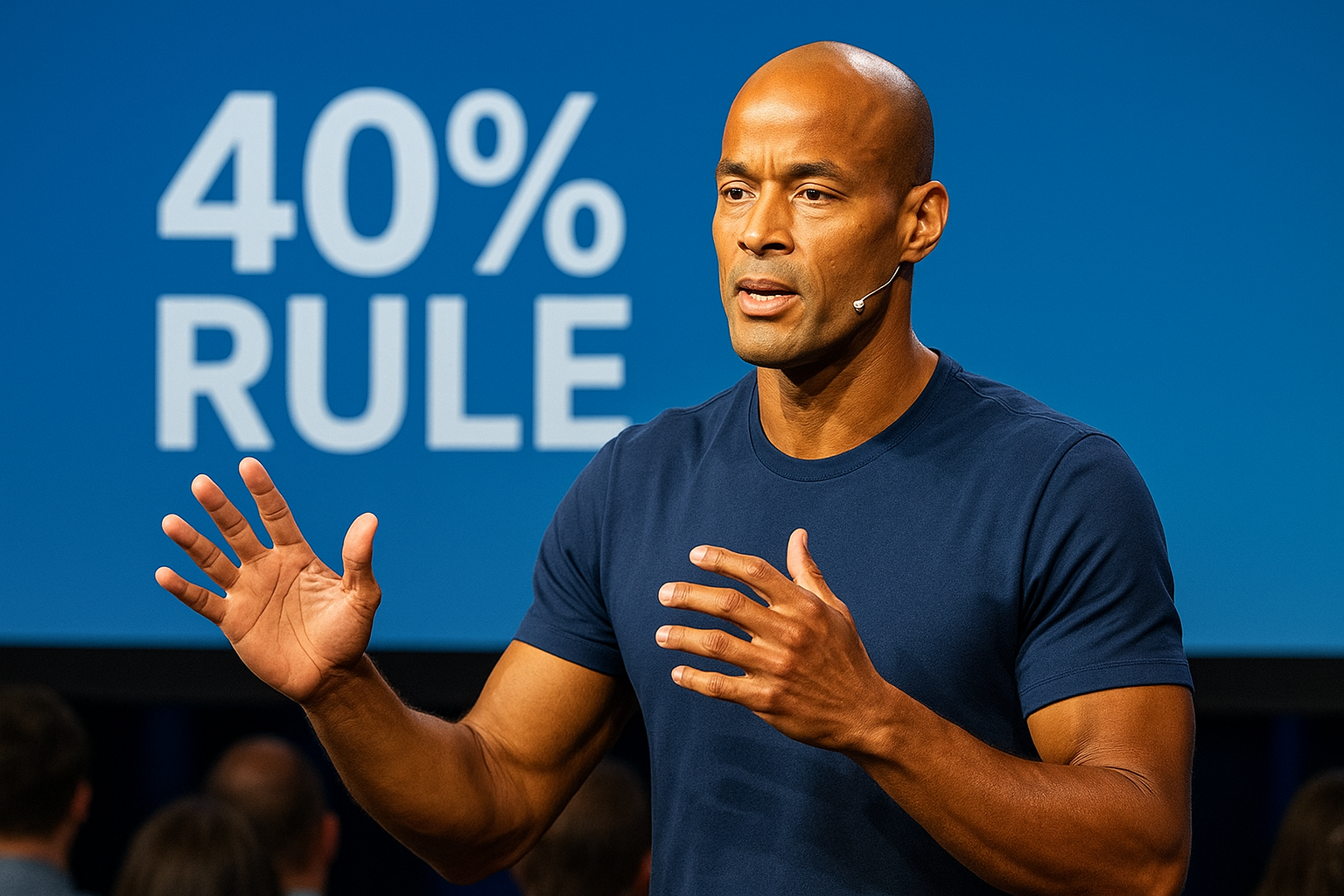
    David Goggins is a retired Navy SEAL, ultramarathon runner, and author of "Can’t Hurt Me," one of the best-selling self-improvement books of the past decade. He holds a Guinness World Record for pull-ups and has completed more than 60 ultra-distance races. His story of overcoming poverty, abuse, and obesity to become one of the most decorated endurance athletes alive gives him a credibility on stage that no coaching credential can replicate.

    Signature keynote themes

    Goggins’s programs focus on mental toughness, self-discipline, and what he calls the 40% rule, the idea that when your mind tells you to quit, you have only used 40% of your actual capacity. His presentations push audiences to confront the mental limits they have accepted as fixed and to build the habits that consistently break through them.

    What makes him different on a corporate stage

    Goggins does not polish his delivery for a corporate audience, and that is precisely what makes him effective. His raw, unfiltered storytelling about physical and psychological suffering creates a contrast that makes most workplace challenges feel genuinely manageable. No slide framework or polished narrative structure drives that shift the way a real account of extreme suffering does.

    When a speaker’s lowest point makes your team’s hardest quarter look survivable, you have changed how they think about pressure permanently.

    Best audience fit

    He is a strong pick as the best keynote speaker for corporate event agendas built around resilience, performance culture, or sales motivation. His content hits hardest with high-performance sales teams and leadership groups who respond to direct, unvarnished honesty over polished theoretical frameworks.

    Typical fee range and booking considerations

    Goggins’s fees typically fall above $100,000 for live events. Book at least six months in advance given his limited availability and consistently high demand across both corporate and military event circuits.

    Questions to ask before you book

    Confirm whether the content is appropriate for your specific audience composition, particularly in mixed-seniority or sensitive cultural environments. Ask whether his team provides any post-event resources to help your managers sustain the momentum his session generates before it fades.

    12. John C. Maxwell

    John C. Maxwell is a leadership author, speaker, and pastor who has written more than 100 books, including "The 21 Irrefutable Laws of Leadership," which has sold millions of copies worldwide. He founded the John Maxwell Company and the John Maxwell Team, and his work has reached organizations across more than 170 countries.

    Signature keynote themes

    Maxwell’s programs center on leadership development at every level of an organization. His most requested programs cover the 21 laws of leadership, how to develop the leaders around you, and building awareness of what he calls the leadership lid, the concept that an organization’s potential is capped by the leadership capacity of its people at every layer.

    What makes him different on a corporate stage

    Maxwell brings decades of refined teaching experience and an accessible, story-driven delivery that makes complex leadership principles land quickly across mixed-seniority audiences. He has delivered his frameworks across thousands of live events, which shows in how cleanly each concept connects to a real workplace situation your managers can act on immediately.

    When a speaker has spent 50 years distilling leadership into repeatable laws, your managers leave with a framework they can teach their own teams the following week.

    Best audience fit

    He is a strong pick as the best keynote speaker for corporate event formats where the goal is foundational leadership development across multiple layers of management. His content works especially well for organizations that want a shared leadership language to move consistently through every level of the business.

    Typical fee range and booking considerations

    Maxwell’s fees typically fall around $100,000 for live keynotes. Book at least four to six months in advance to account for his active schedule across corporate and nonprofit engagements worldwide.

    Questions to ask before you book

    Confirm whether Maxwell’s team will customize his laws framework to your specific industry context, and ask whether post-event licensing for his training materials is available to extend the impact across your management layers after the session closes.

    Next steps

    Every speaker on this list delivers real value, but the best keynote speaker for corporate event success is the one whose message connects directly to the challenge your organization is trying to solve right now. Before you reach out to a single speaker bureau, write down the one behavioral shift you need your audience to walk away with. That clarity will cut your shortlist in half before you make a single call.

    If your organization needs to build a high-performance team culture, push through a period of significant change, or transform individual contributors into a unit that carries each other, Robyn Benincasa’s programs are built exactly for that. Her frameworks come from environments where teamwork was not optional, and they translate directly into Monday morning decisions your managers can act on.

    Start the conversation and explore what a customized program looks like for your team at robynbenincasa.com.

  • 15 Best Corporate Event Speakers for Leadership in 2026

    Choosing the best corporate event speakers can make or break your next leadership summit, sales kickoff, or annual conference. The right speaker doesn’t just fill a time slot, they shift how your team thinks, communicates, and performs long after the event wraps. The wrong one? That’s an expensive hour of people checking their phones.

    We know this firsthand. As a company built around Robyn Benincasa’s decades of experience as a world champion adventure racer, San Diego firefighter, and New York Times best-selling author, we’ve seen what happens when a speaker truly connects with an audience. Teams walk out with a shared language, renewed commitment, and practical strategies they actually use on Monday morning. That’s the standard every speaker on this list meets.

    To build this guide, we looked at speakers who do more than motivate, they deliver frameworks corporate leaders can implement. We evaluated track records with Fortune 500 organizations, audience feedback, topic relevance for 2026 priorities like cross-functional collaboration and resilience, and whether each speaker brings genuine real-world credibility to the stage (not just polished slides).

    Whether you’re an event planner scouting talent, an HR director planning a leadership development day, or a CEO who wants to ignite a culture shift, this list of 15 top corporate event speakers gives you a strong starting point. Here’s who’s worth your budget, and your audience’s attention, heading into 2026.

    1. Robyn Benincasa

    Robyn Benincasa sits at the top of this list for a reason. She is a world champion adventure racer, a veteran San Diego firefighter, and the author of the New York Times best-selling book How Winning Works. She has spent over two decades translating lessons from some of the most physically and mentally demanding team environments on earth into practical frameworks that corporate teams can use immediately. If you want a speaker who can talk about real stakes, Robyn has lived them.

    What they deliver on stage

    Her sessions center on Human Synergy, the force that emerges when a team operates as one committed unit rather than a collection of capable individuals. Her flagship frameworks, including T.E.A.M.W.O.R.K. (eight essential elements of high-performance collaboration), Win As One, and Inspiring Greatness Through G.R.I.T., give your audience specific, actionable tools rather than vague inspiration. She draws on race footage, firefighting scenarios, and real client results to illustrate each point, keeping the content grounded in evidence rather than theory.

    Audiences walk out with a shared language and a concrete system they can put to work the following week, not just a feeling.

    Each program is customized to your organization’s context. Whether your team is navigating a merger, breaking down departmental silos, or chasing an aggressive growth target, Robyn maps her content directly to your specific challenge before she steps on stage.

    When they fit best

    Robyn works best for organizations at a critical inflection point, where the team needs to move from individual performance to collective execution. She is a strong fit for:

    • Leadership summits and sales kickoffs where you need both energy and substance
    • Culture transformation initiatives tied to mergers, restructuring, or rapid growth
    • Diversity and inclusion events where a female world champion athlete and firefighter brings visible credibility
    • Annual conferences where you want a headliner who has genuinely earned the spot

    Typical fee range and booking notes

    Speaking fees for Robyn typically fall in the $30,000 to $50,000 range for a keynote, though final pricing depends on event format, customization scope, and travel. She delivers both in-person and virtual programs, and her team works directly with corporate event planners to align content with your event goals before the booking is finalized.

    If you are searching for the best corporate event speakers who bring genuine field-tested credibility alongside a repeatable leadership system, Robyn belongs on your shortlist. You can explore her programs and check availability at robynbenincasa.com.

    2. Simon Sinek

    Simon Sinek is a bestselling author and organizational theorist best known for his concept of "Start With Why", which has become a foundational framework in modern leadership development. His TED Talk on the subject ranks among the most-watched of all time, and his books, including Leaders Eat Last and The Infinite Game, are standard reading in executive development programs worldwide.

    What they deliver on stage

    Sinek’s keynotes focus on the "why" behind human motivation, helping leaders understand how to inspire action rather than demand it. He draws on biology, organizational behavior, and real corporate case studies to show why purpose-driven leadership produces more durable results than performance pressure alone. His delivery is conversational and accessible, which makes complex ideas land with mixed audiences that include both frontline managers and C-suite executives.

    His central argument is that people don’t buy what you do, they buy why you do it, and that principle applies directly to how leaders build loyal, committed teams.

    When they fit best

    Among the best corporate event speakers for purpose-driven content, Sinek is a strong match for organizations where leadership culture and employee engagement are the core issues on the table. He works well for:

    • Culture and values alignment events following periods of organizational change
    • Leadership development conferences targeting mid-level and senior managers
    • All-hands meetings where you need to reconnect people to a shared organizational purpose

    Typical fee range and booking notes

    His fees typically fall between $100,000 and $200,000 for a keynote engagement. He is represented by major speakers bureaus, and booking timelines of six to twelve months in advance are common for high-demand dates. Virtual options are available.

    3. Adam Grant

    Adam Grant is an organizational psychologist at the Wharton School of the University of Pennsylvania and one of the most-cited researchers in his field. His books, including Give and Take, Originals, and Think Again, have shaped how organizations approach motivation, creativity, and team learning. He brings something most speakers can’t offer: peer-reviewed research translated into immediately usable leadership strategies.

    What they deliver on stage

    Grant’s keynotes draw directly from his academic research and field studies with real organizations. He covers topics like rethinking entrenched assumptions, building cultures of psychological safety, and unlocking hidden potential across teams. His presentations are data-rich but highly accessible, which means your audience walks away with both the evidence behind each idea and a clear path to applying it.

    His central argument is that the most effective leaders and teams are those willing to question what they think they already know.

    When they fit best

    Among the best corporate event speakers for research-backed content, Grant is a strong fit for organizations where innovation and organizational learning are strategic priorities. He works well at:

    • Leadership and talent development summits focused on growth mindset and reskilling
    • Research-driven industries like pharma, finance, and technology where evidence-based content resonates most
    • HR and culture conferences where teams are working to shift deeply embedded behaviors

    Typical fee range and booking notes

    His fees typically fall between $100,000 and $150,000 for a keynote engagement. Grant is represented through major speakers bureaus, and advance booking of six or more months is strongly recommended for high-demand conference dates.

    4. Brené Brown

    Brené Brown is a research professor at the University of Houston and a five-time New York Times bestselling author whose work on vulnerability, courage, and shame has reached tens of millions of people through her books, TED Talks, and Netflix special. Her research spans more than two decades, and she has built a body of work that applies directly to how leaders build trust, navigate difficult conversations, and create psychologically safe workplaces.

    What they deliver on stage

    Her keynotes translate years of qualitative research into a practical leadership language that sticks with your audience long after the event ends. Brown covers topics like daring leadership, shame resilience, and the role vulnerability plays in high-trust team cultures. She challenges the widespread assumption that strong leadership means projecting certainty, and she backs that challenge with data from thousands of interviews with leaders across industries. Audiences leave with a clearer understanding of why trust breaks down and what they can do about it immediately.

    Her core message is that courage in leadership is not the absence of fear, it is the willingness to show up and act when you cannot control the outcome.

    When they fit best

    For event planners searching for the best corporate event speakers on trust and culture, Brown is the right choice when leadership trust and psychological safety are your top priorities. She works well at:

    • Leadership development programs targeting people managers and senior leaders
    • Culture transformation events following significant organizational disruption
    • Women’s leadership conferences and diversity-focused summits

    Typical fee range and booking notes

    Her fees typically fall between $100,000 and $200,000 for a keynote engagement. Brown books well in advance, so planning six to twelve months ahead is essential to secure her for your preferred event date.

    5. Stanley McChrystal

    Stanley McChrystal is a retired four-star U.S. Army General who commanded the Joint Special Operations Command (JSOC) and U.S. and coalition forces in Afghanistan. After leaving the military, he founded the McChrystal Group, a leadership consultancy, and co-authored Team of Teams, a widely read book on how complex organizations can restructure themselves for speed and adaptability. His career spans some of the most high-pressure operational environments in recent history.

    What they deliver on stage

    McChrystal’s keynotes center on organizational agility and what it takes to lead effectively when conditions change faster than traditional hierarchies can respond. He draws on real military operations to show corporate leaders how decentralized decision-making and shared consciousness can replace slow, top-down command structures. His content is direct, credible, and built from experience in environments where the cost of poor coordination was not a missed quarter but lives on the line.

    His core argument is that modern organizations fail not because of bad people, but because of outdated structures that prevent fast, coordinated action.

    When they fit best

    McChrystal ranks among the best corporate event speakers for organizations dealing with complexity, rapid change, or the challenge of getting large teams to move with speed and alignment. He works well at:

    • Executive leadership summits focused on organizational design and strategic agility
    • Operations and technology conferences where cross-functional coordination is a pressing challenge
    • Post-merger integration events where new structures need to be built quickly

    Typical fee range and booking notes

    His fees typically fall between $100,000 and $150,000 for a keynote. He is represented through major speakers bureaus, and booking several months in advance is standard for premium conference dates.

    6. Liz Wiseman

    Liz Wiseman is a researcher and executive advisor who spent 17 years at Oracle Corporation before devoting her career to studying what separates leaders who amplify the intelligence of their teams from those who unintentionally suppress it. Her book Multipliers: How the Best Leaders Make Everyone Smarter has sold over a million copies and is used in leadership development programs at Fortune 100 companies and military academies alike.

    What they deliver on stage

    Her keynotes focus on the "Multiplier" framework, which distinguishes leaders who extract full capability from their teams from those who, despite strong intentions, create dependence and reduce collective output. Wiseman draws on research spanning 150 organizations across 35 countries to show your audience how specific behavioral shifts produce measurable results. Her delivery is direct and data-grounded, giving leaders concrete patterns to recognize and change in their own approach.

    Her central insight is that the most effective leaders tend to ask more questions than they answer, and that shift alone changes what teams produce.

    When they fit best

    Wiseman ranks among the best corporate event speakers for organizations where leadership capacity and talent utilization are the primary concerns. She works well at:

    • Leadership development programs focused on manager effectiveness and coaching skills
    • High-growth organizations where senior leaders need to scale impact without burning people out
    • Succession planning events preparing the next generation of decision-makers

    Typical fee range and booking notes

    Her fees typically fall between $50,000 and $80,000 for a keynote engagement. She books through major speakers bureaus, and securing your date three to six months in advance is advisable for large conferences.

    Virtual and hybrid formats are available, and her team will customize content to match your organization’s specific leadership priorities before the event.

    7. Daniel Pink

    Daniel Pink is a bestselling author and behavioral science researcher whose books, including Drive, To Sell Is Human, and When, have fundamentally changed how organizations think about human motivation, performance timing, and persuasion. His work draws on decades of social science research to challenge long-held assumptions about what actually makes people work harder and smarter, and his ideas are in active use at companies across nearly every major industry.

    What they deliver on stage

    Pink’s keynotes translate research-backed insights on motivation and behavior into strategies that leaders and managers can apply immediately. His Drive framework dismantles the myth that financial incentives are the primary driver of sustained performance, replacing it with a model built on autonomy, mastery, and purpose. He also covers the science of timing, showing teams how to structure their days and major initiatives around natural performance rhythms that most organizations completely ignore.

    His core argument is that the motivation strategies most companies rely on are not just ineffective, they often actively reduce the performance they are meant to improve.

    When they fit best

    Pink ranks among the best corporate event speakers for organizations that want to rethink how they drive performance without burning people out. He fits well at:

    • Sales conferences where motivation strategy and persuasion are central themes
    • HR and talent leadership summits focused on retention and long-term engagement
    • Innovation offsites where teams need new frameworks for sustainable output

    Typical fee range and booking notes

    His fees typically fall between $75,000 and $100,000 for a keynote engagement. Pink books through major speakers bureaus, and securing your date four to six months in advance is strongly advisable for large-scale conferences.

    8. Indra Nooyi

    Indra Nooyi served as CEO of PepsiCo for twelve years, steering the company through significant transformation while growing annual revenue to nearly $64 billion. She is one of the most recognized corporate leaders of the last two decades, widely known for her "Performance with Purpose" strategy that linked business growth directly to social responsibility. Her track record at the top of a major global organization gives her a perspective on leadership that very few speakers can offer.

    What they deliver on stage

    Her keynotes focus on long-term strategic leadership and what it takes to guide a global organization through constant market disruption while keeping company culture intact. Nooyi covers topics including purpose-driven business strategy, leading large diverse teams, and building executive resilience under sustained pressure. Her delivery is direct and grounded in real decisions she made with real consequences, not hypothetical frameworks built in a classroom.

    Her core message is that durable business performance requires leaders who think in decades, not quarters.

    When they fit best

    Nooyi ranks among the best corporate event speakers for audiences that include senior leaders and C-suite executives managing scale and complexity. She is a strong match for:

    • Executive leadership conferences focused on long-term strategy and organizational resilience
    • Diversity and inclusion summits where her career as a trailblazing global executive carries genuine weight
    • Industry transformation events in consumer goods, retail, or global operations

    Typical fee range and booking notes

    Her fees typically fall between $100,000 and $200,000 for a keynote engagement. Booking through a major speakers bureau with at least six months of lead time is strongly recommended to secure your preferred date.

    9. Carla Harris

    Carla Harris is a senior client advisor at Morgan Stanley with over 35 years of experience on Wall Street, including oversight of some of the largest equity transactions in recent financial history. She has written multiple books on career advancement and executive success, and her TED Talk on career positioning has reached millions of viewers worldwide. She combines genuine boardroom credibility with the kind of stage energy that keeps large audiences locked in.

    What they deliver on stage

    Harris builds her keynotes around practical frameworks for leadership and career acceleration that she developed from real experience at the top of a major financial institution. She covers how to cultivate sponsors rather than just mentors, how to build authentic personal positioning, and what it takes to lead through ambiguity when the direction forward is unclear. Her delivery is direct and high-energy, making her content land equally well for frontline managers and senior executives sitting in the same room.

    Her core message is that the leaders who advance fastest are those who invest intentionally in relationships and positioning, not just performance.

    When they fit best

    For event planners searching for the best corporate event speakers on inclusion and career advancement, Harris is a strong choice. She works well at:

    • Diversity, equity, and inclusion conferences where authentic executive representation carries real weight
    • Financial services and professional services events where her Wall Street experience resonates directly
    • Women’s leadership summits focused on executive presence and career acceleration

    Typical fee range and booking notes

    Her fees typically fall between $50,000 and $100,000 for a keynote engagement. She books through major speakers bureaus, and planning three to six months ahead is advisable to secure your preferred date.

    10. Erica Dhawan

    Erica Dhawan is a keynote speaker and author best known for her research on connectional intelligence and digital body language. Her book Digital Body Language addresses one of the most pressing communication challenges facing modern organizations: how to build trust, clarity, and collaboration across remote, hybrid, and in-person teams. She has worked with clients including Deloitte, Goldman Sachs, and Cisco, and her ideas have been featured in publications like the Harvard Business Review.

    What they deliver on stage

    Her keynotes focus on how miscommunication in digital environments quietly erodes team performance and what leaders can do to fix it. Dhawan breaks down the signals people send through emails, messages, and video calls, then shows your audience how to replace ambiguity with intentional, high-trust communication habits. Her frameworks are practical and immediately applicable, giving your teams specific changes they can make before their next meeting.

    Her core insight is that the rules of communication have changed completely, but most leaders are still operating on habits built for a workplace that no longer exists.

    When they fit best

    Dhawan ranks among the best corporate event speakers for organizations managing distributed or hybrid workforces where communication breakdowns are creating friction and slowing execution. She works well at:

    • Technology and operations conferences focused on collaboration and team effectiveness
    • HR and people leadership summits addressing remote culture and hybrid work strategy
    • Sales team events where clarity in digital communication directly impacts revenue outcomes

    Typical fee range and booking notes

    Her fees typically fall between $50,000 and $75,000 for a keynote engagement. Dhawan books through major speakers bureaus, and securing your date two to four months in advance is advisable for large corporate events.

    Both in-person and virtual formats are available, and her team customizes content to match your organization’s specific collaboration and communication challenges ahead of the event.

    11. Vernice Armour

    Vernice Armour became the first African American female combat pilot in U.S. military history, completing two combat tours in Iraq as a United States Marine Corps officer. She later transitioned into professional speaking and authored Zero to Breakthrough, a framework for eliminating barriers and executing bold action in both personal and organizational contexts. Her path from the cockpit to the keynote stage gives her a level of firsthand credibility that very few speakers can match.

    What they deliver on stage

    Her keynotes focus on breaking through self-imposed and organizational barriers to drive faster, more decisive action. Armour draws on real combat experience and the mental discipline required to fly under fire to show corporate audiences how to stop over-analyzing and start executing. She gives your team specific tools to identify what is holding them back and commit to forward movement with clarity and confidence.

    Her core message is that breakthrough performance does not come from waiting for perfect conditions but from building the discipline to act before you feel fully ready.

    When they fit best

    Armour ranks among the best corporate event speakers for organizations where urgency, bold decision-making, and diverse representation are top priorities. She fits well at:

    • Sales and performance kickoffs where teams need to shift from hesitation to execution
    • Diversity and inclusion events where her trailblazing military career provides powerful, real-world representation
    • Leadership development programs focused on accountability and decisive action

    Typical fee range and booking notes

    Her fees typically fall between $30,000 and $50,000 for a keynote engagement. She books through major speakers bureaus, and planning two to four months ahead is advisable to secure your preferred date.

    12. Marc Randolph

    Marc Randolph is the co-founder and first CEO of Netflix, the company he helped build from a DVD-by-mail startup into a global entertainment business before it became the streaming giant it is today. Beyond Netflix, he has founded and co-founded multiple successful technology companies, and he now spends a significant portion of his time mentoring entrepreneurs and speaking to corporate audiences about what it actually takes to test bold ideas in the real world.

    What they deliver on stage

    His keynotes focus on entrepreneurial thinking and the discipline of experimentation, showing corporate teams how to generate and pressure-test ideas rather than falling in love with concepts before they have any evidence. Randolph draws on real decisions he made building Netflix from the ground up, including the ones that failed, to show your audience how iteration and honest self-assessment produce better outcomes than polished strategy documents.

    His core message is that most great ideas look like bad ideas at first, and the leaders who succeed are the ones who build a process for finding out fast.

    When they fit best

    He works best for organizations where innovation, calculated risk-taking, and entrepreneurial culture are the focus. Randolph fits well at:

    • Innovation and strategy offsites where teams need a practical framework for testing new ideas
    • Technology and startup-adjacent industries where the Netflix origin story carries direct relevance
    • Leadership kickoffs designed to challenge complacency and encourage bold thinking

    Typical fee range and booking notes

    His fees typically fall between $50,000 and $75,000 for a keynote engagement. Booking two to four months in advance is advisable for large corporate events.

    13. Chris Voss

    Chris Voss spent 24 years with the FBI, culminating in his role as the bureau’s lead international kidnapping negotiator. He has negotiated in life-or-death situations across multiple continents, and he now runs the Black Swan Group, a negotiation consulting firm that works with corporations, law enforcement, and government agencies. His book Never Split the Difference has become required reading in business schools and sales organizations worldwide.

    What they deliver on stage

    His keynotes center on tactical negotiation skills that your team can use in any high-stakes conversation, from closing deals to resolving internal conflict. Voss breaks down the specific verbal and psychological techniques he used in actual hostage negotiations, then shows how the same tools apply directly to sales, leadership, and cross-functional alignment. He often runs live demonstrations with audience members, which makes the techniques immediately memorable and far more sticky than a standard slide-driven presentation.

    His core insight is that negotiation is not about argument or pressure but about making the other person feel genuinely heard.

    When they fit best

    Voss ranks among the best corporate event speakers for organizations where influence, negotiation, and high-stakes communication sit at the center of daily performance. He works well at:

    • Sales kickoffs and revenue team events where closing skills and persuasion matter directly
    • Leadership conferences focused on conflict resolution and difficult conversations
    • Customer success and procurement events where negotiation is a constant reality

    Typical fee range and booking notes

    His fees typically fall between $75,000 and $100,000 for a keynote engagement. Booking two to four months in advance is advisable for major corporate events, and both in-person and virtual formats are available.

    14. Rita McGrath

    Rita McGrath is a professor at Columbia Business School and one of the most recognized voices on competitive strategy in volatile, fast-changing markets. Her book The End of Competitive Advantage challenged the notion that companies can build lasting strategic moats, arguing instead that leaders must build organizations capable of continuously reconfiguring themselves as conditions shift. Thinkers50 has named her among the top global management thinkers, and her research is in active use at major corporations navigating structural market disruption.

    What they deliver on stage

    Her keynotes focus on strategy and decision-making in uncertain environments, giving leaders a concrete framework for navigating markets where yesterday’s advantages evaporate quickly. McGrath draws on deep original research and real corporate case studies to show your leadership team how to build discovery-driven planning habits that allow them to test, adapt, and commit resources more intelligently rather than locking into strategies that may be obsolete before they launch.

    Her core argument is that organizations best positioned for the future are not those with the strongest defenses but those with the fastest learning cycles.

    When they fit best

    McGrath ranks among the best corporate event speakers for organizations actively questioning whether their current strategy will hold over the next three to five years. She fits well at:

    • Executive strategy offsites focused on competitive positioning and long-range planning
    • Industries facing structural disruption such as financial services, healthcare, and technology
    • Senior leadership conferences where your team needs a research-backed framework for faster, smarter decision-making

    Typical fee range and booking notes

    Her fees typically fall between $50,000 and $75,000 for a keynote engagement. She books through major speakers bureaus, and planning two to four months in advance is advisable to secure your preferred date and allow adequate time for content customization.

    15. Gary Vaynerchuk

    Gary Vaynerchuk is a serial entrepreneur and CEO of VaynerMedia, a global advertising agency that works with some of the world’s largest consumer brands. He built his public profile through early investments in companies like Facebook, Twitter, and Uber, and through relentless direct-to-audience content that made him one of the most recognizable business voices of the last decade. His stage presence is deliberately unfiltered, which is exactly what some corporate audiences need after a lineup of polished presentations.

    What they deliver on stage

    His keynotes center on entrepreneurial mindset, personal branding, and the kind of radical honesty that most organizations actively avoid in their internal conversations. Vaynerchuk challenges leaders to stop optimizing for comfort and start making faster, more decisive bets on people and ideas. He draws on his own track record building businesses from scratch to show audiences what long-term patience combined with short-term execution intensity actually looks like in practice.

    His core message is that most organizations underinvest in authenticity and overinvest in processes that protect the status quo.

    When they fit best

    He is one of the best corporate event speakers for younger, growth-oriented audiences that respond to high energy and directness. He fits well at:

    • Marketing, sales, and brand strategy conferences where digital-first thinking is a priority
    • Entrepreneurship and innovation summits focused on speed and bold risk-taking
    • Leadership kickoffs where you want to disrupt complacency in the room

    Typical fee range and booking notes

    His fees typically fall between $100,000 and $200,000 for a keynote engagement. Booking several months in advance through his agency or a major speakers bureau is essential to secure his availability for your preferred event date.

    Next steps for booking the right speaker

    Every name on this list of the best corporate event speakers brings something distinct to the stage, but the right choice depends on what your team actually needs to move forward. Start by getting clear on your specific outcome: are you rebuilding trust after a difficult year, reigniting a sales team, or equipping leaders with tools for a major transition? That answer should drive your speaker decision, not budget alone or name recognition.

    Once you know your goal, match it to the speaker whose real-world experience aligns most directly with your challenge. For organizations that need a speaker who combines genuine field credibility with immediately actionable frameworks, Robyn Benincasa delivers both at a level few others can match. Her programs are built around the work your team is already doing, not generic inspiration. To explore her keynote programs and check availability for your next event, visit Robyn Benincasa’s official speaker page.

  • Association Of Change Management Professionals: ACMP Guide

    Change hits every organization eventually, a merger, a restructuring, a complete overhaul of how teams operate. The difference between companies that survive these shifts and those that thrive through them often comes down to one thing: how deliberately they manage the transition. That’s exactly where the Association of Change Management Professionals (ACMP) comes in. It’s the go-to professional body for people who make organizational change their craft, offering structure, standards, and community to a discipline that too many companies still try to wing.

    At Robyn Benincasa’s core, our work is about helping teams perform under pressure and navigate the kind of high-stakes transitions that can either break an organization or bond it together. We’ve seen firsthand, through adventure racing, firefighting, and thousands of corporate engagements, that change without a framework is just chaos. ACMP provides that framework on an industry-wide scale, and understanding what it offers is a smart move for any leader serious about getting change right.

    This guide covers everything you need to know about ACMP: what the organization does, how membership works, what its local chapters offer, and whether pursuing the Certified Change Management Professional (CCMP) credential is worth your time. Whether you’re an HR director building a change-ready culture or a C-suite executive steering your company through a major pivot, this is the resource to help you decide your next step.

    What ACMP is and what it does

    The Association of Change Management Professionals is a global nonprofit founded in 2011 with a singular focus: building a credible, consistent discipline around organizational change management. Before ACMP existed, change management was largely informal, something companies treated as a project management add-on or left entirely to HR to figure out on their own. ACMP changed that by establishing a recognized body of knowledge, a professional certification, and a global community that practitioners could actually rely on for guidance and peer support.

    The Mission Behind the Organization

    ACMP’s mission is to advance the discipline of change management so that individuals and organizations can achieve real results through effective transitions. That sounds straightforward, but it represents a meaningful shift in how the business world approaches organizational change. Most companies historically treated change as an event to get through, not a discipline to master. ACMP pushes against that pattern by giving practitioners shared language, standards, and structured tools they can apply consistently, regardless of industry or company size.

    When change management is treated as a professional discipline rather than an afterthought, organizations see better adoption rates, faster results, and far less resistance from the people doing the actual work.

    What ACMP Actually Produces

    Beyond advocacy and community, ACMP delivers concrete resources that practitioners use on the job. The centerpiece is the Standard for Change Management, a peer-reviewed framework that defines what effective change management looks like in practice. It covers key areas including stakeholder engagement, communication planning, organizational readiness, and measurement, giving you a structured blueprint that applies whether you’re implementing new software, navigating a merger, or rebuilding a department’s operating model.

    ACMP also produces ongoing research, practical toolkits, and guidance publications that members can draw on immediately. The organization hosts an annual global conference, supports a growing network of local chapters, and administers the Certified Change Management Professional (CCMP) credential, which has become the most widely recognized credential in the field. Whether you formally carry the title of change manager or lead people through transitions as part of a broader leadership role, ACMP gives you the infrastructure to do that work with greater consistency and credibility.

    Why ACMP matters for change leaders

    If you lead people through change, you already know the gap between announcing a shift and actually landing it. Most change initiatives fail not because the strategy was wrong, but because execution lacked structure and people weren’t brought along properly. The association of change management professionals exists specifically to close that gap, giving leaders the tools, vocabulary, and peer network to drive change that actually sticks.

    It Gives You a Common Language Across Your Organization

    One of the biggest friction points in organizational change is that different leaders interpret it differently. One department treats it as a communication exercise. Another sees it purely as project management. That inconsistency creates confusion and resistance at every level. ACMP’s Standard for Change Management gives your organization a shared framework that everyone can orient around, so conversations about readiness, adoption, and stakeholder impact actually go somewhere productive rather than circling back to the same disagreements.

    When your leadership team operates from the same change management framework, you cut down the internal negotiation and spend more energy on moving the work forward.

    It Raises Your Credibility as a Change Agent

    Whether you’re a dedicated change practitioner or a senior leader who owns major initiatives, being connected to ACMP signals something concrete. It tells peers, executives, and direct reports that you take this discipline seriously and that you’re working from evidence-based methods rather than gut instinct and improvisation. That credibility matters when you’re asking people to trust a process that may disrupt how they’ve operated for years. People follow leaders who demonstrate they have a real system, not just confidence.

    ACMP membership, benefits, and who should join

    ACMP offers individual membership open to anyone working in or alongside change management, whether that’s your primary role or a core part of your leadership work. Membership runs on an annual subscription basis, with pricing that varies depending on whether you join as an individual professional, a student, or through a corporate group arrangement. The association of change management professionals also provides tiered access so that what you invest reflects what you actually need at your career stage.

    Who should consider joining

    You don’t need to carry the official title of "change manager" to get real value here. If your work involves moving people in a new direction and holding that momentum past the kickoff meeting, you belong in this community. The following professionals consistently find ACMP membership worth pursuing:

    • HR directors and organizational development leads designing culture change programs
    • Project managers who own the people-side of large implementations
    • Senior executives steering companies through mergers, restructurings, or strategy pivots
    • Consultants who need credible frameworks to guide client engagements

    What membership gives you

    Members get full access to the Standard for Change Management, ACMP’s research library, and discounted rates on both conferences and certification exams. These aren’t perks tucked behind another paywall; they’re practical tools you can apply to your next project immediately.

    Membership isn’t just access to documents; it’s access to a global community of people solving the same problems you are, and solving them well.

    Beyond the core resources, membership connects you to peer networks, webinars, and published case studies drawn from real organizational transformations, giving you context and evidence to back the decisions you bring to leadership.

    Local chapters, events, and community options

    ACMP’s value doesn’t stop at downloadable resources and online access. The association of change management professionals runs a network of local chapters across the globe, giving you direct access to practitioners in your region who are dealing with the same organizational challenges you face. These chapters hold regular meetups, workshops, and discussions that keep your skills sharp and your network relevant.

    What local chapters offer

    Local chapters are where the community gets tangible. Each chapter organizes its own programming, which typically includes in-person and virtual events, peer roundtables, and guest presentations from experienced change leaders. If you’re newer to the field, chapter meetings give you a lower-stakes environment to ask hard questions and work through real challenges before you bring them to a client or executive team.

    • Monthly or quarterly meetups in major metro areas
    • Regional workshops tied to current change management research
    • Peer mentoring and study groups for CCMP candidates

    The annual ACMP Global Conference

    ACMP’s flagship event is its Global Conference, held annually and drawing change professionals from across industries and countries. The sessions cover applied practice, research, and emerging trends, giving you both conceptual grounding and practical techniques you can use immediately. It’s also one of the strongest networking opportunities in the profession, and you leave with connections to people who genuinely understand what your work demands.

    If you’ve never attended a change management-specific conference, the ACMP Global Conference is the fastest way to close skill gaps and build relationships that matter.

    Beyond the main sessions, pre-conference workshops offer deeper dives into specific methods, and the virtual attendance option means geography doesn’t have to be a barrier to participating in the conversation.

    CCMP certification, requirements, and costs

    The Certified Change Management Professional (CCMP) is the credential administered by the association of change management professionals and is the most widely recognized certification in this field. It signals to employers, clients, and colleagues that you’ve committed to a rigorous, standardized approach to managing change, not just picking up techniques as you go.

    What the CCMP requires

    To qualify for the CCMP, you need to meet specific experience and education thresholds before you’re eligible to sit for the exam. The application process includes documenting your change management work history and completing a defined number of hours applying change management practices in real organizational settings.

    The requirements break down as follows:

    • Education requirement: A bachelor’s degree or higher, plus 3 years (4,500 hours) of change management experience within the last 7 years, OR a high school diploma with 5 years (7,500 hours) of experience in the same window
    • Training requirement: 21 hours of change management-specific professional development training
    • Application: Documented work history submitted and approved before you can schedule the exam

    What the CCMP costs

    Exam fees vary based on your membership status with ACMP. Members pay a reduced rate, which is a direct financial benefit of maintaining your membership before you sit for the exam. Non-members pay a higher fee, which in many cases exceeds the annual cost of joining ACMP, making membership the more practical path financially.

    Earning the CCMP requires real documented experience, not just study hours, which means the credential carries genuine weight with the organizations that recognize it.

    Once certified, you maintain your CCMP through continuing education credits on a three-year renewal cycle, keeping your skills current and your credential active.

    Final Takeaways

    The association of change management professionals gives practitioners and leaders something most organizations lack: a structured, credible discipline built specifically around navigating organizational transitions. Whether you’re evaluating membership, exploring local chapters, or considering the CCMP credential, each decision moves you closer to running change initiatives that actually land, not just launch.

    What you take away from this guide should be practical. ACMP’s Standard for Change Management gives you a framework grounded in evidence. Its community gives you access to peers solving the same problems you face. The CCMP signals to every stakeholder around you that you operate from a real system, not improvisation.

    Change management done well is what separates teams that survive disruption from those that grow through it. If you’re ready to build that kind of resilient, high-performing culture inside your organization, explore Robyn Benincasa’s leadership programs and see how her approach translates world-class performance into lasting team results.

  • How To Build A High Performing Team: A Proven Framework

    Most teams don’t fail because they lack talent. They fail because talented people never learn to operate as a unit. After two decades of racing through jungles, deserts, and mountains with teams whose survival depended on each other, and 20 years as a San Diego firefighter walking into burning buildings, I’ve seen what separates groups that crumble under pressure from those that perform at extraordinary levels. The question of how to build a high performing team isn’t academic for me. It’s been a matter of finishing or failing, and sometimes living or dying.

    What I’ve learned is this: high performance isn’t a personality trait that some teams are born with. It’s an operating system, a set of deliberate choices about trust, communication, shared goals, and mutual accountability that any organization can install. The framework I teach to Fortune 500 companies, from Allstate to Northrop Grumman, grew directly from world championship adventure racing courses where sleep-deprived, physically broken teammates had to find ways to keep moving forward together.

    This guide breaks down that framework into concrete, actionable steps you can apply to your own team, whether you’re leading a sales floor, navigating a merger, or trying to break down silos between departments. You’ll walk away with a clear blueprint for building the kind of team that doesn’t just hit targets but sustains peak performance over time. No theory for theory’s sake. Just field-tested principles that work when the stakes are real.

    What makes a team truly high-performing

    Before you can figure out how to build a high-performing team, you need a precise definition of what you’re actually building toward. Most leaders describe their goal as "better teamwork" or "stronger culture," but those are feelings, not outcomes. High-performing teams produce measurable, consistent results under pressure, not just good chemistry when conditions are comfortable. That distinction changes what you prioritize as a leader and where you spend your energy.

    The five markers that separate great teams from average ones

    Research backs this up. Google’s Project Aristotle, one of the most rigorous studies on team effectiveness ever conducted, found that psychological safety was the single biggest predictor of team performance, far outranking individual skill levels or raw intelligence. What that means in practice: the best teams aren’t necessarily made up of the best individual performers. They’re made up of people who feel safe enough to take risks, admit mistakes, and ask for help without fear of judgment or punishment.

    The teams that win aren’t always the most talented. They’re the ones who trust each other enough to be honest when things are going wrong.

    Here are the five markers that consistently show up in high-performing teams, whether on a mountain in Patagonia or in a corporate boardroom:

    Marker What it looks like in practice
    Psychological safety Team members speak up, challenge ideas, and admit mistakes openly
    Shared mission Everyone can articulate the goal and why it matters to the larger organization
    Clear roles Each person knows their lane and respects everyone else’s
    Mutual accountability Performance standards are upheld by the team, not just the manager
    Resilience under pressure The team adapts and keeps moving when plans fall apart

    Why individual talent isn’t the deciding factor

    In adventure racing, my teams competed against squads filled with Olympic athletes and professional endurance competitors. We beat many of them, not because we were faster individually, but because we moved together. The slowest teammate sets the team’s pace, and a team that protects and lifts its weakest link at any given moment will cover far more ground than a collection of stars who sprint ahead alone.

    That same dynamic plays out in every organization I’ve worked with. A sales team loaded with top individual performers can still miss its quarterly targets if those people aren’t sharing intelligence, covering for each other during difficult stretches, or communicating about what’s actually working. Talent sets the ceiling. How you build trust, clarity, and shared commitment determines whether your team ever gets close to it. The steps that follow show you exactly how to get there.

    Step 1. Set the mission, outcomes, and roles

    High-performing teams don’t drift into clarity. You have to engineer it deliberately, and that starts before your team executes a single task. In adventure racing, we spent hours before a race studying the map, assigning navigation duties, and agreeing on what "winning" looked like for our specific team composition. Organizations that skip this step spend enormous energy on activity rather than progress, and those two things are not the same.

    Define the mission in one clear sentence

    Most teams operate under a vague mandate like "grow revenue" or "improve customer experience." Those aren’t missions. A real mission tells your team what to achieve, why it matters, and what success looks like by when. Part of knowing how to build a high-performing team is recognizing that ambiguity kills momentum faster than any external obstacle will.

    If your team can’t recite the mission in one sentence, they’re not aligned around it.

    Use this template to sharpen your mission statement before your next team meeting:

    • What we do: [specific outcome your team produces]
    • For whom: [the stakeholder or customer who benefits]
    • By when: [the time-bound target]
    • Why it matters: [connection to the larger organizational goal]

    Example: "Our team delivers 15% year-over-year revenue growth in the enterprise segment by Q4 by converting high-value prospects that other channels can’t reach."

    Assign roles with a simple responsibility matrix

    Once the mission is clear, every team member needs to know their specific lane. Confusion about who owns what leads to duplicated effort, dropped tasks, and blame when things go wrong. A simple RACI matrix (Responsible, Accountable, Consulted, Informed) forces you to make ownership explicit for every major function.

    Task Responsible Accountable Consulted Informed
    Weekly reporting Analyst Sales Director Finance Exec team
    Client escalations Account Manager VP Legal Director
    Forecast modeling Analyst Sales Director Finance CEO

    Assign one owner per task, and review the matrix with your full team so there are no surprises about who carries what before work begins.

    Step 2. Build trust and psychological safety fast

    Trust isn’t built through team-building retreats or motivational posters. It’s built through small, repeated behaviors that signal to your teammates: "I have your back, and you can count on me." In adventure racing, you earn trust by doing what you say you’ll do when conditions are brutal and excuses would be easy. In a corporate setting, the standard is exactly the same. How you build a high-performing team depends far more on consistent micro-behaviors than on any single grand gesture, so the goal in this step is to make those behaviors deliberate.

    Make vulnerability normal before it’s necessary

    The fastest way to build psychological safety is to model the behavior you want first. If you’re the leader, go first. Share a recent mistake you made and what you learned from it. Acknowledge openly when you don’t have the answer. Teams take their cues from the person at the top, and when that person demonstrates intellectual honesty without defensiveness, others follow quickly.

    The team that can say "I don’t know" or "I was wrong" in a meeting is the team that solves problems before they become crises.

    Use this simple protocol at your next team meeting to start normalizing vulnerability:

    • One win: What worked well this week and why
    • One miss: What you personally got wrong or underestimated
    • One ask: Something specific you need from the team to perform better

    Rotate this through the full team, not just leadership. When every person takes a turn, the act of sharing stops feeling like exposure and starts feeling like standard operating procedure.

    Set explicit norms for how the team operates

    Psychological safety doesn’t emerge on its own. You have to make the unwritten rules written. Sit down with your team and co-create a short list of operating norms: how you disagree respectfully, how you escalate problems without blame, and how you give direct feedback. When everyone helps write the rules, everyone is far more likely to follow them.

    Keep the list to five to seven norms, post them somewhere visible, and revisit them quarterly.

    Step 3. Create team rhythms that drive execution

    Even a team with crystal-clear roles and strong trust will stall without a consistent operating cadence. Rhythm is what converts alignment into action. When your team meets regularly with a defined purpose, problems surface early, decisions happen faster, and accountability becomes structural rather than something you have to enforce manually. This is one of the most practical levers in how to build a high performing team, and most leaders underinvest in it.

    Build a meeting cadence that matches your team’s pace

    Not every meeting needs to be the same frequency or format. What matters is that each meeting has a distinct purpose and that the cadence matches the speed at which your team’s work actually moves. A weekly check-in for a fast-moving sales team serves a different function than a monthly strategic review for a leadership group.

    Meetings without a clear purpose don’t just waste time, they erode trust in leadership.

    Here’s a simple cadence structure you can adapt to your team:

    Meeting type Frequency Purpose Time limit
    Daily standup Daily (async or live) Surface blockers, align priorities 10-15 min
    Team sync Weekly Review progress, solve short-term problems 30-45 min
    Performance review Monthly Track metrics, adjust execution, recognize wins 60 min
    Strategic reset Quarterly Reassess goals, roles, and team dynamics Half day

    Pick the format that fits your environment and protect it. Canceled meetings signal that execution isn’t a priority, and your team will notice.

    Run every team sync with a repeatable structure

    Consistency inside each meeting matters as much as the cadence itself. Use this four-part template for your weekly team sync:

    1. Wins (5 min): What moved forward since last week
    2. Blockers (10 min): What is slowing progress and who owns removing it
    3. Priorities (10 min): The two or three things the team must complete before the next sync
    4. Decisions (5 min): Any open calls that need a resolution today

    Running every sync through this same structure means your team spends less time orienting and more time solving, which compounds into measurable execution gains over weeks and months.

    Step 4. Coach for growth, conflict, and resilience

    Execution breaks down when leaders treat problems as interruptions rather than data. Conflict, stalled growth, and pressure-induced friction are not signs that your team is broken. They’re signals that something needs attention, and the leader who responds to those signals systematically is the one who keeps high performance from eroding over time. Understanding how to build a high performing team means understanding that coaching is not a corrective measure. It’s a continuous practice.

    Address conflict before it becomes corrosive

    Most teams avoid direct conflict until tension has quietly poisoned the working relationships underneath it. Unresolved friction compounds, and by the time it surfaces visibly, it has already cost you weeks of reduced collaboration and misaligned effort. Your job as a leader is to surface disagreements early, name them clearly, and create a structured path to resolution.

    Conflict avoided is just conflict deferred with interest.

    Use this three-step framework the moment you detect tension between team members:

    1. Name it privately first: Speak with each person individually to understand their perspective without an audience
    2. Bring it to the table: Facilitate a direct conversation focused on the behavior or decision, not the person’s character
    3. Agree on a behavioral change: Leave with a specific, observable commitment from both parties, not a general promise to "do better"

    Build resilience through deliberate debrief

    Resilient teams don’t just recover from setbacks faster. They extract usable intelligence from every failure and apply it before the next high-pressure moment arrives. The tool that makes this repeatable is a structured debrief, run consistently after any major project, missed target, or unexpected disruption.

    Run a short debrief using these four questions after every significant event:

    • What did we intend to happen?
    • What actually happened?
    • What caused the gap between the two?
    • What will we do differently next time?

    Keep the debrief focused on systems and decisions, not individual blame. When your team learns to treat failure as a feedback loop rather than a verdict, resilience stops being a personality trait and becomes a team habit.

    Bring it to your team this week

    You now have a complete picture of how to build a high performing team: clarity on mission and roles, psychological safety built through consistent behavior, a rhythm that drives execution, and a coaching system that turns setbacks into fuel. The gap between knowing this and doing it closes only when you take the first concrete action, and that action doesn’t have to be large to matter.

    Pick one step from this framework and apply it before your next team meeting. Run the win-miss-ask protocol, lock in your meeting cadence, or schedule a debrief after your most recent project. One deliberate move, done consistently, is what separates teams that talk about high performance from teams that actually produce it.

    If you want expert guidance on building a high-performing team culture inside your organization, that work starts with a conversation.

  • Change Management for Leaders: A Practical How-To Guide

    Every major organizational shift, a merger, a restructuring, a pivot in strategy, lives or dies on one thing: how well leaders guide their people through it. Yet most initiatives still fail, not because the strategy is wrong, but because the human side of change management for leaders gets treated as an afterthought. People resist what they don’t understand, and they disengage when they don’t feel led.

    Robyn Benincasa has seen this dynamic play out in the most extreme environments on the planet. As a world champion adventure racer and veteran firefighter, she’s led teams through conditions where change isn’t a quarterly initiative, it’s a moment-by-moment reality that determines whether everyone makes it home. The lesson she’s carried into boardrooms and keynote stages for organizations like Allstate, Northrop Grumman, and Boston Scientific is this: teams don’t fail during change because the challenge is too hard. They fail because leadership doesn’t give them a reason to move forward together.

    This guide breaks down the practical side of leading through transition. You’ll find proven frameworks, specific competencies, and actionable steps you can apply whether you’re navigating a company-wide transformation or rebuilding team culture from the ground up. No theory for theory’s sake, just what actually works when the stakes are real and your people are looking to you for direction.

    What change management means for leaders

    Most people treat change management as a project management discipline focused on timelines, deliverables, and rollout plans. Leaders who think this way consistently underperform during transitions. Change management, when you’re the one leading it, is fundamentally about moving people from a current state to a future state while keeping performance, morale, and trust intact along the way. That distinction changes everything about how you approach your role during a major organizational shift.

    It’s a people problem, not a process problem

    Your org chart doesn’t resist change. People do. They resist it because the future feels uncertain, because they worry about their own relevance, or because no one has taken the time to make a clear case for why the shift is even necessary. As the leader, your job isn’t to manage the change itself. Your job is to manage the human response to it, which is messier, slower, and far more important than any project timeline.

    The organizations that navigate change well don’t have better processes. They have leaders who treat people’s concerns as data, not obstacles.

    Research from McKinsey consistently shows that roughly 70% of change initiatives fail to meet their objectives, and the root cause is almost always resistance and lack of leadership alignment, not a flawed underlying strategy. When you understand that your behavior as a leader sets the emotional tone for the entire organization during a transition, you stop focusing solely on execution tasks and start investing in the conversations, visibility, and clarity that actually move people forward. Practical change management for leaders starts with that shift in mindset.

    The frameworks leaders actually use

    Several structured models exist to give leaders a repeatable approach to change rather than guessing their way through it. The most widely applied is Kotter’s 8-Step Process for Leading Change, which organizes leadership action into a logical sequence, from creating urgency all the way through anchoring new behaviors into culture. Another common framework is Prosci’s ADKAR model, which works at the individual level and tracks five building blocks: Awareness, Desire, Knowledge, Ability, and Reinforcement.

    Both frameworks share a core assumption: sustained effort beats a single announcement every time. Change management isn’t a town hall you schedule, it’s a campaign of communication, coalition-building, and course correction that runs parallel to the operational work of implementation. Knowing which framework fits your context matters less than applying one with discipline and consistency. You need a repeatable structure, because improvising your way through a major organizational shift almost always produces confusion and burnout at every level of the team.

    Step 1. Diagnose the change and set the direction

    Before you build a plan, you need to know exactly what you’re dealing with. Many leaders jump straight into execution mode without taking time to accurately diagnose the nature of the change and clearly define where the organization needs to land. This is where most change management for leaders breaks down before it even starts.

    Understand what type of change you’re facing

    Not every organizational shift requires the same response. A technology rollout demands different leadership energy than a cultural transformation or a post-merger integration. Categorizing the change helps you calibrate your resources, communication strategy, and timeline from the outset. Use the table below as a quick diagnostic tool:

    Change Type Primary Driver Key Leadership Focus
    Structural (e.g., reorg) Efficiency or growth Role clarity and communication
    Cultural Values or behavior shift Modeling and reinforcement
    Technology adoption New systems or tools Training and resistance management
    Strategic pivot Market or competitive pressure Urgency and vision alignment

    Once you know the type of change you’re navigating, you can match your approach to the actual challenge rather than applying a generic playbook that fits no situation perfectly.

    Set a clear and specific direction

    Vague direction is one of the most damaging things you can produce during a transition. Your people need to understand exactly where they’re going and why the destination matters to them personally. Write a direction statement that answers three questions: What is changing? Why now? What does success look like in 90 days?

    If your team can’t explain the goal of the change in one sentence, you haven’t made the direction clear enough yet.

    Use this simple template: "We are [changing X] because [reason], and we will know we’ve succeeded when [measurable outcome]." Post this statement visibly, open every change-related meeting with it, and require your managers to repeat it consistently at every level of the organization so the message stays tight and coherent.

    Step 2. Build sponsorship and a coalition to lead

    No leader carries a major organizational shift alone. The organizations that sustain change over time build a visible coalition of sponsors and advocates who actively model and reinforce the new direction at every level. Without this network, your message loses power the further it travels from your desk, and middle managers fill the silence with uncertainty.

    The strength of your coalition determines how far your change initiative can actually reach inside the organization.

    Identify and secure your executive sponsors

    Your first move is identifying which senior leaders hold the most credibility with the people most affected by this change. These aren’t necessarily the highest-ranking people in the room. They’re the ones your teams actually listen to. Approach each sponsor with a specific, structured ask rather than a general call for support. Use this template to frame the conversation:

    • What you need: Visible, consistent endorsement in team meetings, one-on-ones, and written communications
    • Why it matters: Employees look to their direct leadership chain to gauge whether the change is real or just talk
    • Time commitment: One standing check-in per month and attendance at key milestone communications

    Build your change coalition at every level

    Once you have executive-level sponsorship secured, you need advocates sitting inside the teams doing the actual work. This is where change management for leaders often stalls. Leaders lock in top-level buy-in and assume it filters down automatically. It doesn’t.

    Identify two to three influential team members per department, specifically people their peers trust and respect, not just managers with formal authority. Give these advocates early access to information, a clear role in communicating updates, and a direct line to escalate friction they’re observing on the ground. When people who hold no formal title reinforce the message, it carries a different kind of weight than anything coming from the top. Peer credibility is one of the most underused assets available to you during a transition.

    Step 3. Communicate, involve, and manage resistance

    Communication during a major transition isn’t a one-time announcement or a single all-hands meeting. Effective change management for leaders requires a sustained, structured communication rhythm that keeps people informed and moving forward without leaving critical gaps in understanding.

    Build a communication cadence that runs the length of the change

    Your goal is to create a predictable schedule of touchpoints so your people always know when the next update is coming. Silence breeds speculation, and speculation during transitions almost always trends negative. Use the cadence template below to organize your communication across three levels:

    Audience Frequency Format Owner
    Executive team Weekly Standing sync Change sponsor
    Managers Bi-weekly Briefing email + Q&A call HR and project lead
    Frontline employees Monthly Town hall or recorded update Senior leader

    Keep each message anchored to the direction statement you set in Step 1. People need to hear a consistent message multiple times before it registers, especially during periods of uncertainty when they’re processing a lot of competing information. Repeat it deliberately at every level.

    Turn resistance into a signal, not a problem

    Resistance is the most useful data your people can give you during a change initiative. When someone pushes back, they’re telling you something specific: they’re uncertain, they feel excluded, or they don’t yet see a clear benefit. Your job is to diagnose the source rather than dismiss the behavior.

    Resistance that goes unaddressed doesn’t disappear. It moves underground and becomes harder to detect and manage.

    Use one-on-one conversations to surface the specific concern driving the friction. Ask direct questions: "What feels unclear to you about where we’re headed?" or "What would need to be true for you to feel confident moving forward?" Then close the loop visibly by communicating back to the broader team what you heard and what you’re doing about it. This single practice builds trust during a transition faster than almost anything else available to you as a leader.

    Step 4. Execute, measure progress, and sustain the change

    Execution without measurement is how organizations declare victory too early and watch hard-won gains quietly disappear. Effective change management for leaders requires you to build clear metrics into the launch and review them on a fixed schedule so you catch drift before it becomes backsliding. The moment you stop actively measuring, the change starts competing with business-as-usual priorities and losing.

    Track progress with measurable milestones

    Your first task is converting the direction statement from Step 1 into specific, time-bound milestones that your team can track every month. Each milestone needs a responsible owner, a target date, and a binary status: complete or not. Use the tracking template below to structure your reviews:

    Milestone Owner Target Date Status Notes
    All managers briefed on new process HR Lead Week 2 Complete
    80% of staff completed training L&D Manager Week 6 In Progress
    First performance data collected Analytics Lead Week 8 Not Started
    90-day outcome review held Change Sponsor Day 90 Not Started

    What you measure signals to your team what you actually consider important, so measure the behaviors and outcomes that define the change, not just activity.

    Run a standing 30-minute progress review every two weeks with your coalition. Keep the agenda tight: review milestone status, surface blockers, and assign next actions before the meeting ends. This rhythm prevents the initiative from stalling in the middle phase, which is where most change efforts lose momentum.

    Reinforce and anchor the change into culture

    Sustaining change means embedding new behaviors into the everyday systems your organization already uses, including performance reviews, onboarding, and team rituals. Identify three specific behaviors that define the future state and build each one into a formal recognition or evaluation process within 90 days of launch.

    Publicly recognize individuals and teams who model the new behaviors in all-hands meetings and written communications. When people see that living the change carries real recognition, adoption accelerates without requiring constant top-down pressure.

    Wrap-up and next steps

    Leading people through major transitions demands more than a project plan. Effective change management for leaders combines clear direction, a strong coalition, consistent communication, and measurable milestones you review on a fixed schedule. When you apply each of these four steps with discipline, you give your team a real reason to move forward together instead of waiting for the uncertainty to resolve on its own.

    The work doesn’t end when the rollout is complete. Sustaining the change means building new behaviors into your existing systems and publicly recognizing the people who model them. Start with Step 1 this week: write your direction statement, share it with your leadership team, and test whether they can repeat it back accurately.

    If you want a framework for turning high-stakes challenges into lasting team performance, explore Robyn Benincasa’s leadership keynotes and programs to see how these principles apply directly inside your organization.

  • 16 Team Building Activities For Remote Teams That Work

    Here’s the truth about most team building activities for remote teams: they feel forced, people half-participate with cameras off, and everyone forgets about them by the next morning. That’s not team building. That’s a calendar event nobody asked for.

    But remote teams still need real connection. When people work from separate locations, trust doesn’t build itself. Communication gaps widen. Collaboration becomes transactional. And over time, a group of talented individuals starts performing well below what they’re capable of together. I’ve seen this pattern in every high-stakes environment I’ve operated in, from adventure racing in the jungles of Borneo to firehouses in San Diego. The teams that win aren’t the ones with the most talent. They’re the ones with the strongest bonds.

    That’s what drives everything we do at Robyn Benincasa, helping organizations build the kind of trust and cohesion that turns coworkers into true teammates. And yes, that applies whether your team shares a building or shares a time zone across six states.

    This article breaks down 16 remote team building activities that actually work, activities that build trust, spark genuine interaction, and create the kind of shared experiences that hold distributed teams together. No awkward icebreakers. No forced fun. Just practical, tested ideas you can run with your team this week.

    1. Run a T.E.A.M.W.O.R.K. remote huddle

    The T.E.A.M.W.O.R.K. framework is built around eight core elements that drive high-performing teams: Trust, Energy, Attitude, Mental Toughness, Winning Behaviors, Ownership, Relationships, and Kindness. Running a structured remote huddle around one of these elements gives your team a shared language and focus that most virtual meetings never establish.

    Why it works for remote teams

    Remote teams lose context fast. Without hallway conversations or shared physical spaces, people operate in silos without realizing it. A T.E.A.M.W.O.R.K. huddle interrupts that drift by putting one specific element of collaboration on the table and asking everyone to engage with it directly. Each element surfaces a different layer of how your team operates, and naming those layers out loud is where real cohesion starts to build.

    The teams that outperform don’t have more talent. They have more clarity about how they show up for each other.

    How to run it in 10–20 minutes

    Start by picking one letter from T.E.A.M.W.O.R.K. for the session. Open the call with a 60-second framing of what that element means in the context of your current project or challenge. Then ask each person to share one specific example of when they saw that element show up on your team recently, or one place where it’s missing. Close with a single group commitment: what will the team do differently this week to strengthen that element?

    Best for

    This huddle works best for teams navigating a major shift, whether that’s a new quarter, a leadership change, a merger, or a period of high pressure. You can also use it as a recurring reset for teams where communication has gone flat or people feel disconnected from the bigger picture. Run it as a standalone session or rotate it as a structured opening for your weekly call.

    Tools and setup

    All you need is a video call platform (Zoom, Microsoft Teams, or Google Meet) and a shared document where someone captures the commitments made at the end. A virtual whiteboard tool like Google Jamboard or Microsoft Whiteboard adds value if you want people to post their examples visually before discussion starts.

    Common pitfalls to avoid

    The biggest mistake teams make is treating this like a passive listening exercise. If your facilitator does all the talking, you’ve lost the point entirely. Push for equal participation by going around the group rather than waiting for volunteers. Also, never skip the commitment step. Without it, the conversation stays surface-level and changes nothing by the following week.

    2. Do a rose, thorn, bud check-in

    Rose, thorn, bud is a structured check-in format that gives every person on your remote team a simple three-part prompt: share something that went well (rose), something that has been a challenge (thorn), and something you’re looking forward to or developing (bud). It’s one of the most low-friction team building activities for remote teams that consistently produces genuine conversation in under 15 minutes.

    Why it works for remote teams

    Remote workers often feel invisible when things get hard. This format normalizes struggle by building it directly into the structure, so people don’t have to choose between honesty and looking capable. When your team hears each other’s thorns regularly, it builds shared awareness and reduces the isolation that quietly kills remote collaboration over time.

    When people feel safe naming what’s hard, they stop hiding problems that affect the whole team.

    How to run it in 10–20 minutes

    Send the three prompts in the chat before anyone speaks so people can prepare. Go in order, one person at a time, and keep each response to 90 seconds. Resist the urge to problem-solve thorns on the spot. The goal is awareness, not immediate fixes.

    Best for

    Teams that have weekly syncs but rarely talk about how people are actually doing. It also fits naturally into retrospectives or end-of-sprint check-ins.

    Tools and setup

    Run it on any video call platform. A shared doc or async thread works well if your team spans multiple time zones and you need to run it asynchronously.

    Common pitfalls to avoid

    Don’t let people skip the thorn. If everyone only shares roses and buds, you’ve turned an honest check-in into a performance and lost the whole point.

    3. Play two truths and a lie with a safe prompt

    Two truths and a lie is one of those deceptively simple team building activities for remote teams that works because it requires people to actually think about each other. The "safe prompt" version adds one rule: each statement must come from a specific category your facilitator sets in advance, like travel, hobbies, or childhood experiences. That constraint removes the pressure of coming up with something clever and makes participation easier for everyone.

    Why it works for remote teams

    Remote teammates often know each other’s job titles but almost nothing else. This activity closes that gap quickly by revealing personal details in a format that feels like a game rather than an interview. People stay engaged because they’re trying to figure out who’s lying, which means real attention happens without you having to ask for it.

    The more your team knows about each other outside of work, the more trust they carry into the work itself.

    How to run it in 10–20 minutes

    Have each person submit their three statements in the chat before the call starts. Read them aloud one at a time and let the group vote on which one is the lie before the person reveals the answer.

    Best for

    New teams or recently merged groups where people need low-pressure ways to start learning about each other without it feeling like a formal exercise.

    Tools and setup

    Run it on any video call platform. Use a polling feature built into Zoom or Microsoft Teams to collect votes quickly without breaking the flow of the activity.

    Common pitfalls to avoid

    Skip sessions with no category guidance at all. Without a prompt, some people share too little while others overshare, which creates uneven participation and an awkward dynamic across the group.

    4. Run a lightning-round this or that

    Lightning-round "this or that" is one of the fastest team building activities for remote teams in this list. You give participants a rapid series of binary choices, coffee or tea, mountains or beach, early bird or night owl, and they call out their answer instantly. No explanation required, no right answer. The whole round takes five minutes or less and leaves people smiling.

    Why it works for remote teams

    Speed is the secret ingredient here. Because people respond without overthinking, you get authentic reactions rather than carefully curated answers. That authenticity is exactly what builds familiarity across distributed teams. When your team moves fast together, even in a silly game, they start to feel like a unit rather than a list of usernames.

    Familiarity is not a soft outcome. It is the foundation that makes every hard conversation easier later.

    How to run it in 10–20 minutes

    Prepare 15 to 20 pairs before the call and paste them into the chat one at a time. Ask participants to type their answer the moment they see the prompt. Keep the pace brisk so no one has time to second-guess. Close with one question the group chooses together to end on a collaborative note.

    Best for

    Teams that need a quick energy boost at the start of a long meeting or a recharge mid-session. Works especially well for larger groups where longer formats create dead air.

    Tools and setup

    Any video call platform works. A shared chat window handles all the responses without extra software.

    Common pitfalls to avoid

    Don’t slow it down by asking people to explain their choices. The moment this turns into a discussion, you lose the energy that makes it work.

    5. Do an emoji-only status check

    An emoji-only status check asks each person on your team to respond to a single prompt using only one emoji. No words, no explanation required unless they choose to add one. It sounds minimal, but that simplicity is exactly what makes it one of the most effective team building activities for remote teams when you need a fast read on how people are actually doing.

    Why it works for remote teams

    Remote teams rely heavily on written communication, which strips out tone, expression, and all the non-verbal signals that help people read each other. Emoji fill that gap faster than words can. When someone drops a tired face or a fire symbol into the thread, the team gets real information about that person’s state without requiring anyone to write a paragraph about their morning.

    When people see each other’s honest responses, even in emoji form, they start paying attention to each other in a way that flat status reports never produce.

    How to run it in 10–20 minutes

    Post a single open-ended prompt in your team’s chat channel before the meeting starts, something like "How are you walking into this call today?" Ask everyone to reply with one emoji only. Spend the first two minutes of the call letting people react to what they see, no agenda, just a quick human moment before the work starts.

    Best for

    Teams with tight schedules who still want a consistent pulse check without adding another agenda item that runs long.

    Tools and setup

    Run it inside Slack, Microsoft Teams, or whichever chat tool your team already uses daily. No extra setup required.

    Common pitfalls to avoid

    Don’t turn it into a mandatory explanation round. The moment you ask everyone to justify their emoji, you remove the low-friction quality that makes this check-in worth running.

    6. Rotate five-minute show and tell

    Rotating show and tell gives each person on your team a five-minute window to share something from their world, a book they’re reading, a hobby project, a photo from a recent trip, or even their home office setup. It is one of the simplest team building activities for remote teams because it requires zero prep from the facilitator and produces genuine conversation every single time.

    Why it works for remote teams

    Remote work strips away the ambient details people normally pick up in a shared office. Show and tell puts those details back by giving each person a moment to be seen as a full human being rather than just a name on a screen. When your team regularly sees what matters to each other outside of work, trust accumulates naturally over time.

    People collaborate better with teammates they actually know, not just work with.

    How to run it in 10–20 minutes

    Assign one person per meeting to bring something they care about. Give them five minutes to share and open two to three minutes for questions from the group. Rotate the slot on a set schedule so everyone knows when their turn is coming and no one feels put on the spot.

    Best for

    Teams with recurring weekly meetings where you want a consistent human moment built into the structure without extending the overall run time.

    Tools and setup

    Any video call platform works. No additional tools required.

    Common pitfalls to avoid

    Don’t make the topic work-related. The moment show and tell becomes a project update, you lose the connection-building value it was designed to create.

    7. Run a five-minute virtual scavenger hunt

    A five-minute virtual scavenger hunt sends each person on your remote team scrambling through their home or workspace to find a specific item based on a prompt your facilitator calls out. The items are deliberately everyday and accessible, things like something blue, something older than you, or something that makes a sound. Fast, physical, and genuinely energizing.

    Why it works for remote teams

    This is one of the few team building activities for remote teams that gets people out of their chairs and moving. That physical break does more than just shift energy. It creates a shared experience across distance that you simply cannot replicate through a discussion prompt or a poll. When everyone holds up their found item on camera, real laughter and curiosity follow naturally.

    Movement changes state, and a team that changes state together resets faster than one that stays stuck behind their screens.

    How to run it in 10–20 minutes

    Prepare five to eight prompts before the call and reveal them one at a time. Give everyone 60 seconds per item, then ask participants to hold their find up to the camera. Move through the list quickly and let the group react as items appear on screen.

    Best for

    Teams that need a quick energy reset mid-meeting or a fun opener before a heavy agenda. It also works well for onboarding new hires who have not yet built any rapport with the group.

    Tools and setup

    Any video call platform works here. No additional software is required, which makes this one of the easiest activities to run without any prep on the technology side.

    Common pitfalls to avoid

    Avoid prompts that require specific equipment or materials not everyone has at home. Keep items broad and accessible so no one feels excluded before the activity even starts.

    8. Try back-to-back drawing on a shared whiteboard

    Back-to-back drawing is one of the more revealing team building activities for remote teams you can run. One person describes an image or shape without naming it directly, and their partner tries to draw exactly what they hear in real time on a shared digital canvas. No peeking, no hints, just communication.

    Why it works for remote teams

    Clear communication is the thing most remote teams struggle with but rarely discuss openly. This activity forces it into plain view by making your team’s communication gaps immediately visible on screen. When the drawing matches the original, your team learns something real about how well they listen and explain. When it doesn’t, that gap becomes a productive conversation to have before it shows up in an actual project handoff.

    The quality of your team’s output is a direct reflection of the quality of their communication.

    How to run it in 10–20 minutes

    Pair people up and assign one person as the describer and one as the drawer. Give the describer a simple image, a geometric shape, a basic scene, or a rough diagram. Set a three-minute timer and let the drawer work only from verbal instructions. Reveal both images at the end and debrief on what landed and what got lost in translation.

    Best for

    Teams working on cross-functional projects where clear handoffs and precise communication matter most. It also fits well when onboarding newer employees who need to practice articulating technical concepts to people without their background.

    Tools and setup

    Use Microsoft Whiteboard or Google Jamboard as your shared canvas. Any standard video call platform handles the verbal instructions between partners.

    Common pitfalls to avoid

    Don’t let the describer reveal their image before the timer ends. That single shortcut removes the entire value of the exercise and turns a genuine communication challenge into a low-stakes copying task.

    9. Solve a mini escape-room puzzle together

    A mini escape-room puzzle gives your team a shared problem with a clock running. You find pre-built virtual escape rooms online, or build a simple one yourself using a sequence of riddles, codes, and clues delivered through a shared document. The team works together in real time to crack each layer before the timer runs out.

    Why it works for remote teams

    Escape rooms work because they make collaboration non-optional. No single person can solve every clue alone, which means your team has to communicate fast, delegate naturally, and trust each other’s instincts under pressure. These are exactly the dynamics that separate high-performing remote teams from groups that just happen to share a calendar.

    The way your team solves a puzzle under pressure tells you more about their collaboration style than any survey ever will.

    How to run it in 10–20 minutes

    Choose a short, pre-built virtual escape room designed for 15 minutes or less. Share the link and a start time, then let the group self-organize. Assign one person to track clues and answers in a shared doc so nothing gets lost in the chat. Debrief for three minutes after the timer stops regardless of whether they finish.

    Best for

    Teams that respond well to friendly competition and need a higher-energy format than a standard check-in. It also works well as one of your rotating team building activities for remote teams during quarterly off-sites or onboarding weeks.

    Tools and setup

    Platforms like Google Slides or Notion let you build your own puzzle sequence without extra software. Several free options also exist through a basic web search.

    Common pitfalls to avoid

    Avoid puzzles that require specialized knowledge one person has and others don’t. That turns a team activity into a solo performance with an audience, which defeats the purpose entirely.

    10. Set up meeting roulette coffee chats

    Meeting roulette coffee chats pair two people from your team at random for a short, unstructured one-on-one conversation. No agenda, no deliverables, just 15 to 20 minutes of talking about whatever comes up. It is one of the most underrated team building activities for remote teams because it replicates the kind of informal relationship-building that happens naturally in an office but disappears entirely in a distributed environment.

    Why it works for remote teams

    Remote work creates invisible walls between people who never have a reason to interact outside their immediate project group. Randomized pairings break those patterns deliberately and force cross-functional connections that would never form on their own. Over time, a team that runs this consistently builds a web of relationships across the entire organization rather than a handful of siloed clusters.

    The strength of a team is often determined not by how well people work within their group, but by how well they connect across it.

    How to run it in 10–20 minutes

    Set up a rotating pairing schedule at the start of each month and send calendar invites directly so no one has to coordinate. Keep the call to 20 minutes maximum and give participants one optional conversation starter in the invite so there is no awkward silence at the top.

    Best for

    Teams that are spread across multiple departments or time zones and rarely interact outside of structured meetings.

    Tools and setup

    Use Slack’s built-in Donut app or a simple random pairing spreadsheet to generate matches each cycle without manual effort.

    Common pitfalls to avoid

    Don’t make these chats optional in name only by scheduling them and then letting them get cancelled repeatedly. If leadership models the behavior by showing up consistently, the rest of the team will follow.

    11. Start a kudos cascade in Slack or Teams

    A kudos cascade is a structured recognition practice where one person publicly calls out a teammate for something specific they did, then that teammate calls out someone else, and the chain continues until everyone has been recognized. It is one of the highest-return team building activities for remote teams because it costs nothing to run but produces a measurable shift in how your team sees each other.

    Why it works for remote teams

    Recognition disappears quickly in remote environments. Without a manager walking the floor or a colleague stopping by your desk, positive contributions go unacknowledged far more often than anyone realizes. A kudos cascade fixes that by making peer recognition public, structured, and routine rather than something that only happens when someone thinks to send a message.

    When people feel seen for what they contribute, they show up more fully for the people around them.

    How to run it in 10–20 minutes

    Start by asking one person to post a specific shout-out in your team channel, tagging a colleague and naming exactly what they did well. That colleague then tags the next person within 24 hours. Set a clear rule: each post must name a specific action, not just a general compliment.

    Best for

    Teams that have worked together for at least a few weeks and have concrete examples of collaboration to draw from rather than vague general goodwill.

    Tools and setup

    Run it inside Slack or Microsoft Teams using a dedicated recognition channel like #kudos or #wins. No additional software or setup required.

    Common pitfalls to avoid

    Avoid vague recognition like "great job this week." Generic praise teaches people that recognition is performative rather than meaningful, which undermines the trust-building effect the cascade was designed to create.

    12. Host a meme caption contest

    A meme caption contest gives your team a shared image and asks each person to write the funniest caption they can in a set time window. It is one of the most surprisingly effective team building activities for remote teams because it requires almost zero prep and produces genuine group laughter within minutes of starting.

    Why it works for remote teams

    Humor is one of the fastest trust-building tools available, and remote teams rarely get enough of it. When people laugh together, they drop their professional guard just enough to actually connect. A caption contest channels that humor into a structured, low-risk format where no one needs to be naturally funny to participate.

    A team that laughs together regularly handles hard conversations more easily than one that only meets to solve problems.

    How to run it in 10–20 minutes

    Post one image in your team channel and give everyone five minutes to submit their caption. Collect submissions anonymously, then read them aloud on your video call and let the group vote for their favorite. Keep the whole round to 15 minutes maximum so energy stays high.

    Best for

    Teams that already have some rapport built and need a lighter format to maintain connection during high-pressure periods or long sprint cycles.

    Tools and setup

    Run it inside Slack or Microsoft Teams using the polling feature to collect votes. No additional software is required.

    Common pitfalls to avoid

    Always choose workplace-appropriate images before the call starts. Leaving image selection to chance or last-minute searching risks surfacing something that makes people uncomfortable and shuts down participation immediately.

    13. Build a team playlist relay

    A team playlist relay turns music into a collaborative building exercise. Each person on your remote team adds one song to a shared playlist based on a theme your facilitator sets in advance, something like "songs that got you through a tough week" or "songs that describe your work style." The relay builds asynchronously over several days, and the finished playlist becomes a shared artifact your team actually listens to together.

    Why it works for remote teams

    Music is one of the most personal and universal forms of self-expression available, which makes it ideal for distributed teams. Unlike many team building activities for remote teams that require everyone online simultaneously, this one respects different schedules and time zones while still producing a genuine group outcome. When your team listens to the finished playlist together, they hear something real about each other that a standard check-in never surfaces.

    What people choose to share through music tells you more about them than a formal introduction ever will.

    How to run it in 10–20 minutes

    Set a clear theme at the start of the week and post it in your team channel. Give everyone 48 hours to add their one song and write a single sentence explaining their choice. Play a few tracks during your next meeting and let people guess who added which song before the reveal.

    Best for

    Teams that need a low-pressure async activity that builds personality and culture without requiring a dedicated live session from everyone.

    Tools and setup

    Use Spotify or Apple Music to build and share the collaborative playlist. Post the link and the theme directly in your existing team chat channel.

    Common pitfalls to avoid

    Never skip the brief written explanation requirement. Without it, the playlist becomes a random collection rather than a genuine window into your teammates that sparks real conversation.

    14. Run an async photo prompt wall

    An async photo prompt wall is a running channel thread or shared document where your team posts photos in response to a weekly rotating prompt. The facilitator drops a question like "show us the view from where you work" or "share something that made you smile this week," and teammates contribute on their own schedule throughout the week.

    Why it works for remote teams

    This is one of the most time zone-friendly team building activities for remote teams because it requires no one to be online at the same moment. Photos communicate more personality in a single glance than most written check-ins deliver in ten lines, and that visual layer of connection builds familiarity steadily without adding any meeting overhead to your team’s week.

    When your team sees each other’s actual worlds, they stop being usernames and start being people.

    How to run it in 10–20 minutes

    Post a new prompt every Monday and give people until Thursday to respond. Keep prompts specific rather than open-ended. Here are a few that consistently generate strong participation:

    • "Show us the view from where you work today."
    • "Share something you learned this week that surprised you."
    • "Post something currently on your desk that isn’t work-related."

    Best for

    Teams that span multiple time zones or run flexible async-heavy schedules where real-time participation is consistently low or unpredictable.

    Tools and setup

    Run it inside Slack or Microsoft Teams using a pinned thread or dedicated channel. No extra software or setup required beyond what your team already uses daily.

    Common pitfalls to avoid

    Avoid prompts that feel too personal too fast, like asking about family situations before real trust exists. Start with environment and interest-based prompts and let depth develop naturally over several weeks of consistent participation.

    15. Swap personal user manuals

    A personal user manual is a short document each team member writes about themselves, covering how they prefer to communicate, what drains their energy, when they do their best work, and how they want to receive feedback. Swapping these documents is one of the most practical team building activities for remote teams because it turns self-awareness into a shared resource the whole team can use.

    Why it works for remote teams

    Remote work hides the context people normally pick up in person. A user manual fills that gap by giving each person on your team a structured way to communicate their working style before friction builds. When teammates understand each other’s preferences upfront, misreads become rarer and collaboration improves without anyone needing a difficult conversation first.

    Understanding how someone works best costs nothing and changes how effectively your team operates together.

    How to run it in 10–20 minutes

    Share a simple template with five to seven prompts one week before your next team call. Ask each person to complete it and post it in a shared folder before the session. Spend the first 15 minutes with each person giving a 60-second walkthrough of their own manual.

    Best for

    Teams that have recently added new members or are entering a period of high collaboration where working-style differences could quietly slow things down.

    Tools and setup

    Use Google Docs or Notion to host each manual in a shared folder your whole team can reference throughout the year.

    Common pitfalls to avoid

    Don’t let manuals become a one-time artifact nobody reads again. Pin them somewhere visible and encourage teammates to reference them actively when starting a new project together.

    16. Play a values bracket game

    A values bracket game presents your team with a tournament-style bracket filled with competing values, things like "accountability vs. creativity" or "speed vs. quality," and asks each person to choose which value matters more at each round until one winner remains. It is one of the most conversation-rich team building activities for remote teams because it reveals where your team’s priorities actually align and where real disagreements exist beneath the surface.

    Why it works for remote teams

    Remote teams often operate under assumed shared values that nobody has ever explicitly tested. This game makes those assumptions visible by forcing each person to make a real choice rather than agreeing with whatever sounds good in a survey. When your team sees that two people picked opposite values at the same decision point, that gap becomes a productive conversation instead of a silent driver of friction.

    The teams that build the strongest cultures are the ones willing to have honest conversations about what they actually stand for.

    How to run it in 10–20 minutes

    Build a simple bracket in a shared document with eight to twelve values before the call. Ask each person to work through their bracket independently for five minutes, then compare results as a group. Focus discussion on rounds where choices diverged most rather than trying to cover every pick.

    Best for

    Teams entering strategic planning cycles or periods of significant change where shared values need to be named explicitly rather than assumed.

    Tools and setup

    Use Google Slides or Microsoft PowerPoint to build the bracket visually. Share your screen during the debrief so the group can track each person’s path through the bracket in real time.

    Common pitfalls to avoid

    Don’t frame the outcome as finding one correct answer for the whole team. The point is surfacing honest differences, not manufacturing false consensus that dissolves the moment real decisions need to be made.

    Bring it back to the work

    None of the team building activities for remote teams in this list exist for their own sake. They exist because connection drives performance, and performance is the whole point. When your team trusts each other, communicates clearly, and actually knows the people behind the usernames, the quality of their work reflects that. The activities here are tools, not checkboxes. Pick two or three that fit your team’s current reality, run them consistently, and pay attention to what changes.

    Real teamwork is not something that happens by accident. It is something your team builds deliberately, one shared experience at a time. If you want a deeper framework for how to develop the kind of cohesion that holds up under pressure and produces results that matter, explore what Robyn Benincasa’s programs can do for your team. The habits you build now will determine how your team performs when it counts most.

  • Change Management Training for Managers: The Complete Guide

    Most organizational changes fail not because the strategy is wrong, but because the people leading the change aren’t equipped to carry it through. That’s exactly why change management training for managers matters, it closes the gap between a leadership team’s vision and what actually happens on the ground when employees are asked to adapt, shift, and perform under new conditions.

    Here’s what I’ve learned from decades of world-championship adventure racing and 20 years as a San Diego firefighter: change hits hardest at the team level. The manager is the person standing between a corporate directive and the humans who have to execute it. Without the right tools, frameworks, communication skills, emotional intelligence, even the most capable managers will struggle to maintain trust and momentum during a transition. It’s the same dynamic I’ve seen on expedition teams navigating brutal terrain: the leader in the middle determines whether the team moves forward or falls apart.

    This guide breaks down everything you need to know about change management training for managers, from core frameworks and certifications to the specific skills that separate leaders who drive successful transitions from those who simply announce them. Whether you’re evaluating programs for yourself or building out training for your organization, you’ll walk away with a clear picture of what effective change leadership development looks like and how to pursue it.

    Why managers need change management training

    Most managers step into change initiatives with strong functional expertise but no formal training in the psychological, structural, and communicative demands that transformation creates. They know their jobs. They know their teams. But change management is a distinct discipline, one that requires specific frameworks and practiced skills that don’t automatically come with a promotion or years on the job. That gap shows up fast when the pressure increases.

    The gap between announcing change and leading it

    There’s a significant difference between a manager who delivers the news about an organizational change and one who actually leads people through it. The first is a messenger. The second is a guide. When you receive a directive from senior leadership and pass it down without the tools to manage resistance, address fear, or sustain momentum, you become a bottleneck instead of a bridge.

    The manager’s role during change isn’t to explain the strategy once. It’s to hold the team’s confidence and performance together while the strategy takes shape around them.

    Training gives you the language, structure, and situational awareness to move from passive announcer to active leader during transitions. Without it, the space between what leadership intends and what employees experience widens quickly, usually quietly, until the problem is too large to ignore.

    What the research says about why changes fail

    McKinsey research consistently shows that roughly 70% of organizational change efforts fail to meet their intended objectives. The most common root cause isn’t a flawed strategic plan. It’s poor people management during the transition itself. Employees disengage, productivity drops, and high performers leave when they feel unsupported, uninformed, or disconnected from the purpose behind the change.

    Your team doesn’t need a perfect roadmap to stay engaged. They need a manager who can hold the line when uncertainty peaks, communicate honestly when clear answers aren’t yet available, and keep the group oriented toward a shared goal. Those are learnable skills, not innate personality traits. That distinction matters because it means training can genuinely move the needle.

    The specific pressure managers absorb during change

    Managers sit at the hardest intersection in any organization during a transition: accountable to leadership for execution results while simultaneously responsible for your team’s psychological safety and daily output. Change management training for managers addresses both sides of that equation directly, rather than leaving you to navigate it under pressure without a framework.

    Without training, most managers default to one of two patterns: over-reassuring the team with optimism that loses credibility when reality doesn’t match the message, or retreating entirely into task management while ignoring the human dynamics. Both approaches accelerate resistance rather than reduce it.

    Frameworks like Kotter’s 8-Step Model or Prosci’s ADKAR give you a structured way to diagnose exactly where your team is struggling and which intervention will actually move things forward. Training doesn’t just hand you a checklist; it teaches you how to read what’s happening in real time and respond deliberately rather than reactively. That capacity is what separates managers who survive organizational change from those who genuinely lead their teams through it.

    What change management training for managers includes

    Strong programs don’t just teach theory. Change management training for managers covers a specific set of competencies built to prepare you for the actual conditions of leading transitions. The best programs blend conceptual frameworks with applied practice, so you leave with skills you can use immediately rather than abstract concepts you’ll struggle to translate when the pressure is on.

    Core frameworks and models

    Every credible training program grounds you in at least one established change model. The most widely referenced include Kotter’s 8-Step Process, which focuses on building urgency and sustaining momentum through coalition, and Prosci’s ADKAR model, which breaks change down into five individual-level stages: Awareness, Desire, Knowledge, Ability, and Reinforcement. Understanding these models lets you diagnose exactly where your team is in the change process and apply the right intervention at the right time rather than guessing.

    Knowing which framework fits your situation is more valuable than memorizing every model that exists.

    Communication skills for uncertain situations

    Most managers underestimate how much communication strategy drives team performance during change. Training covers how to deliver difficult messages without triggering unnecessary panic, how to respond to resistance constructively, and how to keep your team oriented toward the goal when clear answers aren’t yet available. These are precision tools that directly determine whether your team stays engaged or quietly checks out.

    You’ll also work through real scenarios that teach you to separate resistance that signals a genuine problem from resistance that’s simply a normal part of adjustment. That distinction changes both how you respond and how much trust you maintain with your team throughout the transition process.

    Stakeholder management and alignment

    Managers don’t only lead downward. You’re also managing expectations from senior leadership, peers, and cross-functional partners while keeping your team stable under pressure. Training programs teach you how to map stakeholder influence, identify where pushback is most likely to form, and build alignment across groups with competing priorities. One of the most practical outputs of structured training is developing the ability to hold multiple relationships and agendas simultaneously without losing clarity on what your team actually needs from you in that moment.

    How to choose change management training

    Not every training program is built for the same situation. Before you invest time or budget, you need to evaluate a few critical dimensions: your current skill gaps, the complexity of the change initiatives your organization runs, and the format that fits your actual schedule. The market includes everything from half-day workshops to multi-month certifications, and the right choice depends on your specific context, not the most prestigious name on a certificate.

    Match the format to your constraints

    Formal certifications like Prosci’s Change Management Certification or the ACMP’s Certified Change Management Professional (CCMP) provide structured, globally recognized credentials that carry weight with senior leadership and HR. They require a real time commitment but deliver comprehensive frameworks you can apply across any change scenario your organization encounters. If you’re regularly leading large-scale, complex transformations, that depth is worth the investment.

    If you’re leading one specific transition and need practical tools now, a targeted course or workshop will serve you better than a multi-month certification program.

    Shorter, applied programs through platforms like LinkedIn Learning work well when you need focused skill-building without a heavy time or cost commitment. These options often cover specific models like ADKAR or Kotter’s framework in digestible modules you can apply immediately rather than months from now.

    Evaluate what the program actually teaches

    The content structure of any change management training for managers program matters more than its length or price. Look for programs that spend meaningful time on stakeholder communication and resistance management, not just framework theory. If the curriculum is primarily about organizational strategy with little emphasis on human dynamics, it won’t prepare you for what you’ll actually face at the team level.

    Ask for a syllabus or module breakdown before you commit. Strong programs include real scenario practice, feedback mechanisms, and facilitator interaction rather than just recorded lectures. You want to leave with skills you’ve actually rehearsed under realistic conditions. The difference between a manager who has absorbed a framework intellectually and one who has practiced applying it under pressure is exactly the difference your team will feel when the next major transition arrives.

    How managers apply training during real change

    Training only earns its value when you put it to work in actual conditions. The frameworks, communication tools, and stakeholder strategies you build through change management training for managers don’t apply themselves. What separates managers who get results from those who struggle is the deliberate decision to use structured approaches from the first day of a transition, not after things start to unravel.

    Start with diagnosis, not action

    The first move most undertrained managers make during a change initiative is to jump straight into execution. That instinct is understandable, but it skips a critical step: understanding where each member of your team actually stands before you ask them to move. Using a model like ADKAR, you can quickly assess whether your team lacks awareness of why the change is happening, or whether they understand the reasons but don’t yet have the knowledge or ability to perform differently. Those are entirely different problems that require different responses.

    Run a quick informal check-in at the start of any major transition. Ask your team:

    • What do you understand about why this change is happening?
    • What feels unclear or uncertain right now?
    • What do you need from me to stay productive through this?

    The answers will tell you exactly where to focus your energy first.

    Hold the communication cadence

    Once you’ve diagnosed where your team stands, consistent communication becomes your most important management tool. One announcement at the beginning of a transition is not a communication strategy. You need to establish a regular rhythm of updates that keep your team informed even when the full picture isn’t yet clear. That cadence builds trust precisely because it shows up whether the news is good or complicated.

    Silence from a manager during a major transition reads as uncertainty, not professionalism.

    Your team will fill the information gap with speculation, and speculation almost always trends negative. A weekly touchpoint, even a brief one, keeps the narrative in your hands and prevents the anxiety that compounds when people feel left out.

    Reinforce progress visibly

    Progress during change often goes unacknowledged because managers are focused on what still needs to happen. That’s a costly oversight. When you name specific milestones your team has cleared, you reinforce that the transition is moving and that their effort is contributing to a real outcome. Recognition doesn’t require a formal system; it requires attention and consistency from you as the person leading the work.

    Smaller, specific acknowledgments throughout the transition signal to your team that you’re paying attention and that their daily effort is registering. That consistency compounds over time and makes the larger goal feel reachable rather than abstract.

    Common mistakes managers make during change

    Even managers who invest in change management training for managers can slip into patterns that undermine their team’s performance when transitions get difficult. Most of these mistakes don’t come from bad intentions. They come from instincts that work well in stable conditions but produce the wrong results under pressure. Recognizing them before they take hold gives you a real advantage.

    Treating communication as a one-time event

    Many managers deliver an initial announcement about an organizational change and then shift their attention entirely toward execution. That approach leaves your team in a vacuum for days or weeks, and people don’t stay neutral in a vacuum. They speculate, and speculation almost always trends toward the worst-case interpretation of what’s happening.

    Frequent, honest updates during a transition build more trust than a single polished message ever will.

    Effective communication during change requires a sustained cadence, not a launch event. Even brief weekly touchpoints that acknowledge uncertainty and share whatever clarity is currently available keep your team oriented and reduce the anxiety that compounds when they feel left out of the picture.

    Avoiding the hard conversations

    When resistance surfaces, some managers step back from it rather than addressing it directly. They delay difficult feedback, soften messages to the point of vagueness, or route around conflict instead of walking into it. That avoidance creates a secondary problem: your team starts reading your hesitation as a signal that something is seriously wrong, which amplifies the very tension you’re trying to reduce.

    Addressing resistance directly doesn’t mean you need every answer. It means you acknowledge what’s real, name the concern your team is raising, and clarify what you know and what you’re still working through. That transparency holds more credibility than artificial confidence, and it keeps the trust you’ve built intact through the harder parts of the transition.

    Measuring success only through output

    Tracking task completion during a change initiative is necessary, but it’s an incomplete picture. Managers who focus exclusively on deliverables often miss early signs of disengagement, burnout, or quiet resistance until the problem is too large to address quickly. Your team’s daily performance and visible energy levels are real-time indicators that something needs attention, and monitoring them costs nothing but consistent observation.

    Wrap-up and take action

    Change management training for managers closes the gap between a leadership directive and what your team actually experiences during a transition. The frameworks, communication strategies, and diagnostic tools covered in this guide give you a concrete foundation to lead people through uncertainty rather than simply manage tasks around it. The difference your team feels between a manager who has trained for this and one who hasn’t is immediate and significant.

    Your next step doesn’t have to be a six-month certification. It can be a single conversation with your team this week that uses the ADKAR model to assess where they actually stand. Start there, then build from it. If you’re ready to take your leadership approach further and explore how world-class teamwork principles translate directly into organizational performance, connect with Robyn Benincasa to learn what that looks like for your team.

  • Prosci Change Management: Methodology, ADKAR, Certification

    Every organizational change, whether it’s a merger, a restructuring, or a new technology rollout, ultimately succeeds or fails based on how well people move through it together. That’s something I’ve seen firsthand, both on adventure racing courses where teams either adapt or break down, and inside the corporations I work with as a leadership consultant. Prosci change management is one of the most widely adopted methodologies for getting that human side of change right, and understanding it gives leaders a serious edge when the stakes are high.

    At its core, Prosci offers a structured, research-based approach to moving individuals and teams from where they are to where the organization needs them to be. Its centerpiece, the ADKAR model, breaks change down into five concrete milestones that map directly to what people actually experience during a transition. For leaders responsible for team output, morale, and culture, this framework turns an abstract challenge into something measurable and actionable.

    This article walks through the full Prosci methodology, explains how ADKAR works in practice, and covers the certification and training options available for professionals who want to build change management into their skill set. Whether you’re navigating a company-wide transformation or trying to get a single department aligned around a new initiative, what follows will give you a clear picture of the tools Prosci puts on the table.

    What Prosci change management is

    Prosci is a research-based change management firm founded in 1994 that has spent decades studying what separates successful organizational transitions from failed ones. The company built its methodology by analyzing data from thousands of change projects across industries and geographies, turning those findings into a repeatable system that practitioners can apply to real initiatives. When people refer to prosci change management, they’re referring to that full system, which combines models, tools, assessments, and training into one integrated approach.

    The organization behind the methodology

    Prosci operates as both a training and certification provider and a research organization. The company publishes regular benchmarking reports on change management trends, giving practitioners access to data that helps them build a business case for structured change efforts. That research foundation is a key reason the methodology carries credibility in enterprise settings, where leaders need more than theory to justify investment in a formal change management process.

    The core focus: people, not processes

    Most change projects fail not because the technical solution is wrong, but because people don’t adopt it. Prosci’s methodology centers entirely on closing that gap. Rather than focusing on project management timelines or deliverable checklists, it asks a specific question: what does each individual impacted by this change need in order to shift their own behavior?

    The fundamental assumption of Prosci is that organizational change only happens when enough individuals successfully make their own personal transitions.

    That individual-first lens shapes every tool in the framework, from the ADKAR model to the structured role definitions Prosci assigns to sponsors, managers, and change practitioners throughout the project lifecycle.

    Why Prosci matters for change outcomes

    When organizations skip structured change management, they pay for it in adoption failures, lost productivity, and expensive rework. The question for leaders isn’t whether to manage the human side of change, but whether to do it systematically or reactively. Prosci gives you a repeatable structure that removes the guesswork and puts the right actions in front of the right people at the right time.

    The cost of unmanaged change

    Prosci’s own research consistently shows that projects with excellent change management are significantly more likely to meet objectives, timelines, and budgets compared to those with poor or no change management. That gap isn’t marginal. It’s often the difference between a transformation that sticks and one that quietly unravels six months after launch.

    When people don’t understand why a change is happening, resistance fills the vacuum that clarity should have occupied.

    What structured change management delivers

    With prosci change management, your teams move through transitions with a clear roadmap instead of reacting to confusion. Leaders can identify where resistance is forming before it spreads, address barriers at the individual level, and build committed adoption that sustains results long after the project closes.

    How the Prosci methodology fits together

    The full prosci change management system combines three core components that work in sequence: the PCT Model (Project Change Triangle), the Prosci 3-Phase Process, and the ADKAR model. Understanding how these pieces connect helps you see why the methodology produces more consistent results than unstructured approaches to managing change.

    The three-phase process

    Prosci structures practitioner work into three distinct phases: Prepare Approach, Manage Change, and Sustain Outcomes. Each phase builds on the previous one, so you’re not jumping straight into communications planning before you understand the scope of impact the change will have on specific roles and groups within your organization.

    Skipping the preparation phase is one of the most common reasons change management efforts stall before they gain real traction.

    The Project Change Triangle

    The PCT Model places your change initiative inside a triangle defined by leadership, project management, and change management. All three must stay aligned for a project to reach its intended outcomes. When one side weakens, the whole structure loses stability, and you start seeing the adoption gaps that drag results down and erode the return on your investment.

    How the ADKAR model drives individual adoption

    ADKAR is the backbone of prosci change management, and it gives you a precise way to diagnose where any individual is struggling during a transition. The model defines five sequential milestones that every person must reach before a change genuinely takes hold: Awareness, Desire, Knowledge, Ability, and Reinforcement.

    ADKAR works because it treats each milestone as a barrier point, so you can pinpoint exactly where support is needed instead of applying generic solutions.

    The five ADKAR milestones

    Each milestone builds directly on the previous one, which means a gap at any point blocks everything that follows. You cannot develop Knowledge in someone who has not yet built Desire, and you cannot expect sustained Ability without deliberate Reinforcement afterward.

    Milestone What it addresses
    Awareness Why the change is necessary
    Desire Personal motivation to participate
    Knowledge How to change
    Ability Putting new skills into practice
    Reinforcement Keeping the change in place

    Using ADKAR as a diagnostic tool

    When adoption stalls, ADKAR tells you exactly which milestone broke down. That precision lets you target coaching conversations and communications at the actual barrier rather than applying broad interventions that miss the real problem an individual is facing.

    How to apply Prosci on a real initiative

    Applying prosci change management starts before you write a single communication or build a training plan. Run an impact assessment first to identify which groups are affected, how deeply, and what barriers are likely to appear for each one. That foundation shapes every decision you make downstream.

    Starting with impact assessment rather than communications planning separates a strategic change effort from a reactive one.

    Start with sponsor alignment

    Your executive sponsor carries more influence over adoption than any change practitioner can. Before you touch ADKAR assessments or resistance plans, confirm that your sponsor understands their active and visible role throughout the full initiative lifecycle, not just at kickoff. A sponsor who goes quiet after launch creates an adoption gap that no training budget will close.

    Build your coaching network

    Managers and supervisors are the front-line coaches for individual transitions. Train them to use ADKAR as a conversation framework with their direct reports, not as a reporting tool. When managers know which milestone each person is stuck on, they can address resistance at the source before it spreads. Focus your coaching network on three actions:

    • Identify each person’s current ADKAR milestone
    • Hold targeted conversations to address specific barriers
    • Escalate resistance patterns to the change team early

    What to know about Prosci certification and training

    If you want to apply prosci change management with consistency and credibility, formal training gives you the structured foundation to do it right. Prosci offers multiple certification paths depending on your role and experience level, and most programs combine framework instruction with hands-on application so you leave with tools you can use immediately.

    Prosci Change Management Certification

    The Prosci Certified Change Practitioner program is the flagship credential. It runs over three days and covers the full methodology through instruction, exercises, and applied work on an actual change project you bring to the training. Completing it earns you a credential that is widely recognized in enterprise environments across a broad range of industries, from healthcare and finance to aerospace and technology.

    Bringing a live project to the certification program compresses the gap between learning the framework and applying it under real conditions.

    Expanding Your Team’s Capability

    Prosci also offers role-based training programs designed for sponsors and managers who need targeted skills without full practitioner certification. These shorter formats let organizations build change management capability across an entire leadership layer without requiring every person to complete the three-day practitioner course.

    Next steps

    Prosci change management gives you a concrete system for turning organizational transitions into outcomes that actually stick. You now have a clear view of how the methodology fits together, how ADKAR targets individual adoption, and what certification paths are available to build your credibility as a practitioner. The next move is to pick one initiative you’re currently running and apply the impact assessment framework before you send another communication or schedule another training session.

    Real change doesn’t happen through announcements. It happens when every person impacted understands why the change is necessary, wants to participate, and has the skills and support to follow through. Pair the Prosci framework with strong leadership and a committed sponsor, and you create the conditions for transitions that hold.

    If you want to build the kind of team that moves through change together instead of fracturing under pressure, explore Robyn Benincasa’s leadership programs and see how those principles apply directly to your organization.

  • 12 Change Management Keynote Speaker Picks To Hire in 2026

    Organizations don’t fail at change because they lack a plan. They fail because their people aren’t aligned, bought in, or equipped to move through uncertainty together. That’s exactly why hiring the right change management keynote speaker can shift an entire event from "another corporate meeting" to a genuine turning point. The right speaker doesn’t just talk about change, they give your team a framework to actually execute it.

    A strong change management keynote does something a slide deck never will: it creates a shared emotional experience that rewires how your people think about disruption. The best speakers in this space have lived through high-stakes transformation themselves, whether in boardrooms, on battlefields, or, in our case, across some of the most punishing terrain on the planet. At Robyn Benincasa’s speaking practice, we’ve spent decades translating lessons from world-champion adventure racing and frontline firefighting into actionable team performance strategies that help organizations navigate mergers, restructures, and market pivots.

    Below, we’ve put together 12 change management keynote speakers worth hiring in 2026, each bringing a distinct perspective on how to lead people through transition. Whether you’re planning a national sales kickoff, a post-merger integration summit, or a leadership retreat, this list will help you find a speaker who fits your audience, your goals, and the specific type of change your organization is facing.

    1. Robyn Benincasa

    Robyn Benincasa is a World Champion adventure racer, a veteran San Diego firefighter, and a New York Times best-selling author of How Winning Works. She built her speaking practice around one core truth: the conditions that forge championship teams across six continents of extreme terrain are the same ones that separate thriving organizations from struggling ones. Her keynotes pull from real, high-stakes experience alongside corporate clients navigating their own version of impossible terrain every day.

    What she speaks about on change

    Robyn approaches change through the lens of team performance under pressure. Her flagship program, Win As One, shows audiences how to maintain cohesion, trust, and forward momentum when the ground shifts beneath them. She also delivers Inspiring Greatness Through G.R.I.T., a framework built on perseverance and shared commitment that gives teams a practical operating system for navigating restructures, mergers, and market disruptions rather than just surviving them.

    When your team faces an impossible goal, the question isn’t whether they have individual talent. It’s whether they have the collective will and shared language to get there together.
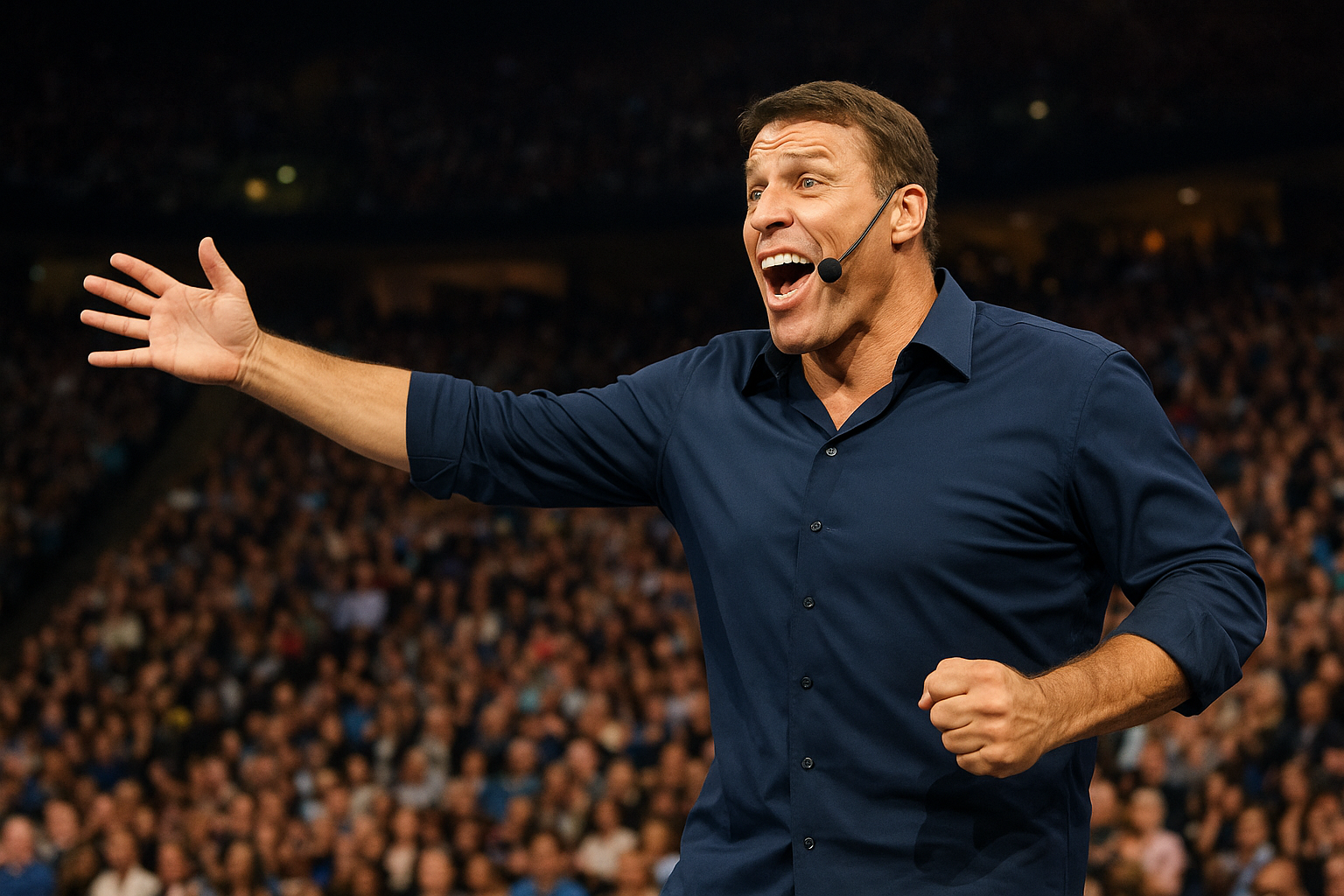
    Best fit for your event

    Robyn is the right change management keynote speaker for events where your audience needs more than theory. She fits best with:

    • National sales kickoffs facing a pivot in strategy or territory structure
    • Post-merger integration summits where two cultures need to find common ground fast
    • Leadership retreats focused on resilience and sustained high performance
    • Pharmaceutical, aerospace, and financial services organizations with complex transformation agendas

    Her style is high-energy and story-driven, which lands especially well for large audiences of 500 or more who need to leave the room feeling unified rather than just informed.

    What it costs and how booking works

    Robyn’s speaking fee falls in the $30,000 to $50,000 range for a standard keynote engagement. You can start a booking inquiry directly through her website, where her team walks you through program customization, event logistics, and scheduling.

    Questions to ask before you hire

    Before you sign any contract, get clear answers to these:

    • What specific change challenge is the keynote designed to address for your audience?
    • Will Robyn conduct a pre-event discovery call to tailor content to your industry?
    • What materials come with the engagement, such as implementation guides or team workbooks?
    • How does she handle virtual or hybrid formats if your team is geographically distributed?

    2. John Kotter

    John Kotter is a professor emeritus at Harvard Business School and the creator of the 8-Step Process for Leading Change, one of the most widely referenced change frameworks in organizational history. His decades of research on why transformation efforts fail have made him one of the most cited voices in this space.

    What he speaks about on change

    Kotter’s keynotes center on his 8-step model, which walks organizations through creating urgency, building coalitions, and sustaining momentum over time. His more recent work on the "dual operating system" explores how companies can run their core business while simultaneously accelerating transformation, a concept he introduced in his book Accelerate.

    The most common mistake organizations make is treating change as a project with a finish line rather than a continuous capability to build.

    Best fit for your event

    Kotter fits best with C-suite and senior leadership audiences who need a rigorous, research-backed framework. He works well for enterprise restructuring programs, large strategy conferences, and transformation summits where analytical depth matters as much as motivation.

    What it costs and how booking works

    His speaking fee typically falls in the $100,000+ range. You can reach his team through Kotter International to start the booking process and discuss how the keynote can be shaped around your specific transformation agenda.

    Questions to ask before you book

    Before you hire Kotter as your change management keynote speaker, get clear answers to these:

    • Does the content address your specific stage in the change process?
    • Will his team tailor examples to your industry and organizational context?
    • What pre-event preparation does the engagement require from your leadership team?

    3. Chip and Dan Heath

    Chip and Dan Heath are brothers, bestselling authors, and researchers whose work sits at the intersection of behavioral science and practical change leadership. Their book Switch: How to Change Things When Change Is Hard became a go-to resource for leaders trying to move organizations through transformation without burning people out in the process.

    What they speak about on change

    The Heath brothers built their keynote around a central metaphor from Switch: the rider, the elephant, and the path. The rider represents rational thinking, the elephant represents emotion, and the path is the environment you shape to make change easier. Their core argument is that most change efforts fail because leaders only appeal to logic and ignore the emotional side of adoption. Their talks give audiences concrete tools to address both.
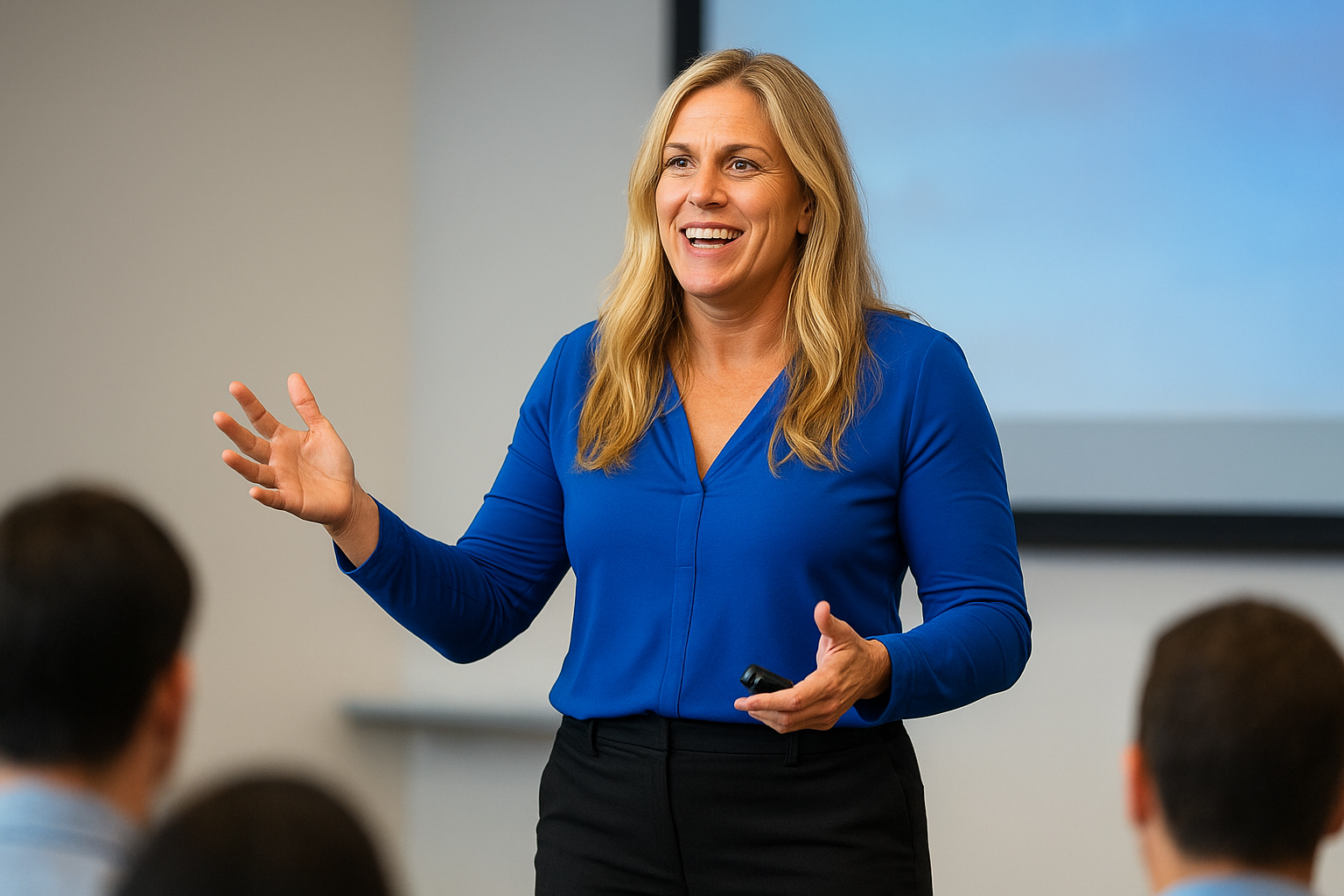
    Change doesn’t stick because people are resistant. It often stalls because the path forward isn’t clear enough to follow without friction.

    Best fit for your event

    They work well for HR leadership teams, learning and development conferences, and organizations rolling out new processes or technology where adoption rates matter. If your audience includes middle managers responsible for driving change on the ground, this keynote gives them an immediately usable toolkit.

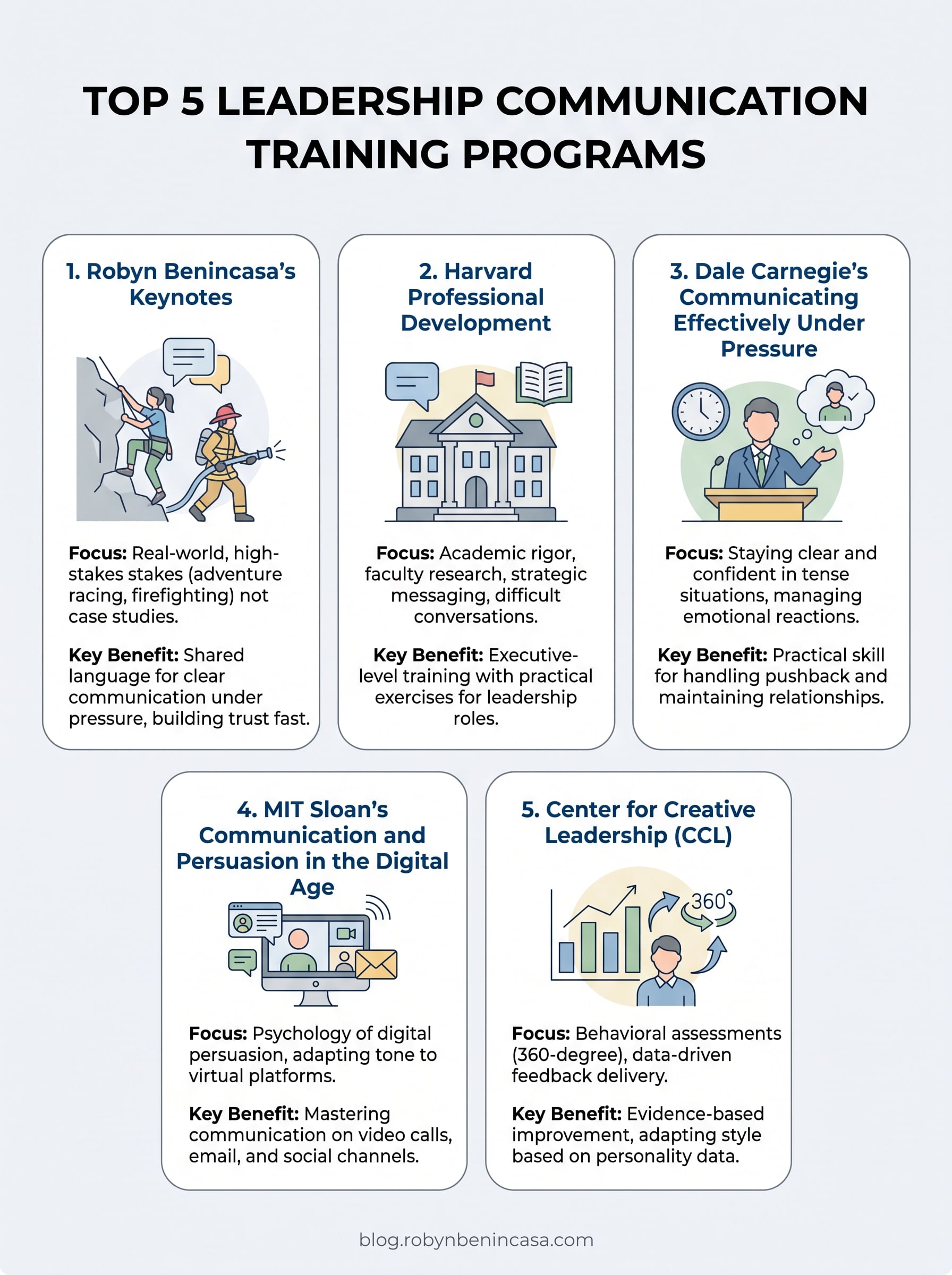
    What it costs and how booking works

    Fees for Chip and Dan Heath typically range from $50,000 to $75,000 per engagement. You can inquire through major speakers’ bureaus or contact their teams directly through their official channels.

    Questions to ask before you hire

    Before booking them as your change management keynote speaker, ask:

    • Will they tailor the Switch framework to your specific change initiative?
    • Can they provide post-keynote resources to reinforce the content with your teams?

    4. Marshall Goldsmith

    Marshall Goldsmith is an executive coach and author whose work focuses on one of the most overlooked barriers to change: the behaviors of the leaders who are supposed to drive it. His best-selling book What Got You Here Won’t Get You There laid out a direct argument that the habits that produce individual success often become the biggest obstacles to organizational transformation.

    What he speaks about on change

    Goldsmith’s keynotes zero in on behavioral change at the leadership level. His central thesis is that organizations can’t expect their people to adapt if their leaders keep defaulting to the same patterns under pressure. He gives audiences a concrete framework for identifying and breaking the habits that block forward progress, making him one of the more behaviorally focused voices in the change management space.

    The biggest obstacle to your next phase of growth is usually the mindset that produced your last phase of success.

    Best fit for your event

    He is the right change management keynote speaker for events where senior leaders are the primary audience. His content lands especially well at executive leadership summits, C-suite offsites, and programs designed to shift leadership culture as part of a broader transformation effort.

    What it costs and how booking works

    Marshall Goldsmith’s fee typically falls in the $100,000+ range. You can reach his team directly through his official website to discuss availability and how the keynote aligns with your leadership development goals.

    Questions to ask before you hire

    Before booking, ask these:

    • Will the content address the specific behavioral patterns your leadership team needs to change?
    • What pre-event diagnostic work, if any, does his team conduct with your organization?
    • How does he handle follow-up if your team wants to sustain the momentum after the event?

    5. Daniel Pink

    Daniel Pink is a bestselling author and researcher whose work on human motivation, persuasion, and timing has shaped how organizations approach behavior change at scale. His books, including Drive, To Sell Is Human, and When, have collectively sold millions of copies and been translated into dozens of languages, making him one of the most broadly read voices in applied behavioral science.

    What he speaks about on change

    Pink’s keynotes connect the science of motivation to the practical challenge of moving people through organizational change. His framework from Drive argues that autonomy, mastery, and purpose are the three core drivers of sustained human behavior, not rewards and penalties. That insight has direct relevance for leaders trying to get their teams to adopt new strategies or systems without resorting to top-down mandates.

    If your people don’t understand why the change matters to them personally, no amount of process design will make it stick.

    Best fit for your event

    He fits best at sales conferences, leadership summits, and HR-focused events where the change agenda ties directly to employee engagement, motivation, or performance. Pink is a strong change management keynote speaker for organizations rolling out new compensation structures, performance models, or culture-shifting initiatives.

    What it costs and how booking works

    His fee typically falls in the $75,000 to $100,000 range. You can reach his booking team through major speakers’ bureaus to check his availability and discuss customization options for your event format and audience.

    Questions to ask before you hire

    Before you commit, ask:

    • Will he tailor the motivation framework to your specific transformation initiative?
    • Can he connect his research directly to your industry context and audience size?

    6. Gary Hamel

    Gary Hamel is a management thinker, author, and co-founder of the Management Lab whose work challenges organizations to reinvent the way they operate from the inside out. His books, including Competing for the Future and Humanocracy, argue that most companies are constrained not by market conditions but by outdated management structures that make genuine adaptation nearly impossible.

    What he speaks about on change

    Hamel’s keynotes push past surface-level change initiatives and go straight to the structural and cultural root causes of organizational stagnation. His core argument is that bureaucracy itself is the enemy of transformation, and that companies need to rebuild their operating models around human capability rather than hierarchical control. He gives audiences a clear diagnosis of why top-down change programs consistently underperform and a framework for building organizations that can adapt continuously.

    Most change programs fail not because the strategy was wrong, but because the management model was never redesigned to support it.

    Best fit for your event

    Hamel works best for senior leadership and strategy-focused events where your audience has real decision-making authority over how the organization is structured and run. He is the right change management keynote speaker for executive summits tied to digital transformation, organizational redesign, or cultural overhaul programs.

    What it costs and how booking works

    His fee typically falls in the $75,000 to $100,000 range. You can reach his booking team through major speakers’ bureaus to confirm availability and discuss how his content maps to your event goals.

    Questions to ask before you hire

    Before you finalize a contract, ask:

    • Will he connect his management innovation framework directly to your transformation context?
    • What pre-event prep does his team require to customize the keynote?

    7. Patrick Lencioni

    Patrick Lencioni is a bestselling author and founder of The Table Group, a management consulting firm focused on organizational health. His book The Five Dysfunctions of a Team has become required reading in leadership development programs across industries, and his fable-based storytelling style makes complex team dynamics immediately accessible to audiences at every level.

    What he speaks about on change

    Lencioni’s keynotes connect organizational health directly to an organization’s capacity for change. His central argument is that dysfunction within teams, particularly around trust, conflict avoidance, and lack of commitment, is the root cause of most failed transformation efforts. He gives audiences a clear model for diagnosing those dysfunctions and rebuilding the team culture needed to move forward.

    If your team can’t have honest conversations about hard topics, no change initiative will survive contact with reality.

    Best fit for your event

    He works best for leadership retreats, executive team offsites, and culture-focused summits where the audience needs to confront internal friction before tackling an external change agenda. As a change management keynote speaker, Lencioni is especially effective when team trust and alignment are the core obstacles to transformation.

    What it costs and how booking works

    His fee typically falls in the $75,000 to $100,000 range. You can reach his team through The Table Group’s official website to discuss availability and event customization.

    Questions to ask before you hire

    Before signing, ask:

    • Will he tailor the five dysfunctions model to your specific team challenges?
    • What pre-event assessment tools, if any, does his team provide to prepare your audience?

    8. Liz Wiseman

    Liz Wiseman is a researcher, executive advisor, and bestselling author of Multipliers: How the Best Leaders Make Everyone Smarter. As president of the Wiseman Group, she studies how leaders either amplify or shrink the collective intelligence of their organizations, a dynamic that becomes especially consequential when companies are navigating major transitions.

    What she speaks about on change

    Wiseman’s keynotes focus on the leadership behaviors that either accelerate or derail transformation. Her core argument is that change stalls when leaders assume they need to have all the answers rather than activating the capability already present in their teams. She gives audiences a practical framework for shifting from a "Diminisher" mindset to a "Multiplier" approach that draws out full team contribution during high-pressure change moments.

    The leaders who navigate change best aren’t the ones with the smartest answers. They’re the ones who ask the questions that unlock everyone else.

    Best fit for your event

    She is the right change management keynote speaker for leadership conferences, manager development programs, and transformation summits where middle and senior leaders make up the primary audience. Her content lands especially well when your organization is asking people managers to drive change at the team level rather than waiting for top-down directives.

    What it costs and how booking works

    Wiseman’s fee typically falls in the $50,000 to $75,000 range. You can reach her team through major speakers’ bureaus or directly through the Wiseman Group’s official website to confirm availability and discuss event customization.

    Questions to ask before you hire

    Before you finalize the contract, ask:

    • Will she connect the Multipliers framework directly to your specific change initiative?
    • What pre-event customization does her team offer for industry-specific audiences?

    9. Lisa Bodell

    Lisa Bodell is a futurist, author, and founder of futurethink, a global innovation and simplification firm. Her books, Kill the Company and Why Simple Wins, make the case that complexity is the single biggest barrier to organizational change, and that most companies are drowning in rules, processes, and meetings that make transformation structurally impossible before it even starts.

    What she speaks about on change

    Bodell’s keynotes focus on eliminating the organizational drag that prevents change from taking hold. Rather than adding new frameworks on top of broken systems, she teaches audiences how to identify and remove the processes, approvals, and bureaucratic habits that slow everything down. Her content gives leaders a practical method for simplifying how work gets done so that transformation has real room to move.

    If your people are spending more time navigating internal complexity than serving customers or executing strategy, your change initiative is already fighting an uphill battle.

    Best fit for your event

    She is the right change management keynote speaker for innovation summits, operations-focused leadership events, and digital transformation conferences where the audience needs to think differently about how work is structured. Her content hits hardest when your organization is stalled not by a lack of strategy but by an overload of internal friction.

    What it costs and how booking works

    Her fee typically falls in the $50,000 to $75,000 range. You can reach her team through major speakers’ bureaus or directly through futurethink’s official website.

    Questions to ask before you hire

    Before you finalize the contract, ask:

    • Will she tailor the simplification framework to your specific transformation blockers?
    • What pre-event customization does her team offer for your industry and audience size?

    10. Simon Sinek

    Simon Sinek is a speaker, optimist, and bestselling author best known for popularizing the concept of "Start With Why." His work explores how leaders and organizations can build movements around shared purpose, making him a recognizable name in nearly every industry vertical.

    What he speaks about on change

    Sinek’s keynotes connect purpose-driven leadership to an organization’s ability to navigate uncertainty. His core argument is that people don’t resist change itself, they resist change they don’t believe in. He gives audiences a framework for building the kind of "why" clarity that makes transformation feel like a direction rather than a disruption.

    When your people understand the purpose behind the change, they stop waiting to be convinced and start choosing to move forward.

    Best fit for your event

    He works well for culture-focused conferences, leadership summits, and company-wide kickoff events where your audience spans multiple levels of the organization. As a change management keynote speaker, Sinek is most effective when your transformation agenda requires genuine emotional buy-in rather than just process adoption.

    What it costs and how booking works

    His fee typically falls in the $100,000+ range. You can reach his booking team through major speakers’ bureaus to confirm availability and discuss how the keynote maps to your event objectives.

    Questions to ask before you hire

    Before signing, ask:

    • Will he connect the "Start With Why" framework to your specific change initiative and industry?
    • What pre-event customization does his team offer to align the content with your organizational context?

    11. Cassandra Worthy

    Cassandra Worthy is a speaker, author, and founder of Change Enthusiasm Global, whose work focuses on the emotional side of organizational transformation. After navigating a major acquisition at Procter & Gamble, she developed a methodology called Change Enthusiasm that teaches people to harness the energy of disruption rather than push against it.

    What she speaks about on change

    Worthy’s keynotes center on reframing the anxiety and frustration that typically accompany major transitions. Her core argument is that negative emotions during change signal that people actually care about the outcome, and that leaders who learn to channel those signals build stronger, faster-moving organizations. She gives audiences a practical toolkit for converting emotional resistance into forward momentum.

    The emotions your team feels during a transition aren’t obstacles to change. They’re the fuel for it.

    Best fit for your event

    She works well for post-acquisition integration events, culture transformation summits, and leadership development programs where the emotional dimension of change is the primary barrier to progress. As a change management keynote speaker, Worthy is especially effective when your audience includes people managers who are absorbing both their own change anxiety and their team’s at the same time.

    What it costs and how booking works

    Her fee typically falls in the $30,000 to $50,000 range. You can reach her team through major speakers’ bureaus or directly through Change Enthusiasm Global’s official website to confirm availability and discuss event customization.

    Questions to ask before you hire

    Before you finalize the contract, ask:

    • Will she tailor the Change Enthusiasm framework to your specific transformation context and industry?
    • What post-event resources does her team provide to help your managers sustain the mindset shift after the keynote?

    12. Jennifer Brown

    Jennifer Brown is a speaker, author, and founder of Jennifer Brown Consulting, whose work sits at the intersection of inclusion, leadership, and organizational transformation. Her books, including How to Be an Inclusive Leader and Inclusion, give leaders a practical roadmap for building cultures where every person has the capacity and the confidence to contribute fully through periods of major change.

    What she speaks about on change

    Brown’s keynotes connect inclusive leadership directly to an organization’s ability to drive lasting transformation. Her core argument is that change initiatives consistently underperform when large segments of the workforce feel excluded from the process or invisible to the people leading it. She gives audiences a concrete framework for building psychological safety and belonging that makes transformation efforts more durable and more broadly adopted across every level of the organization.

    The organizations that navigate change most effectively are the ones where every person feels invested in the outcome, not just the ones at the top of the org chart.

    Best fit for your event

    She is the right change management keynote speaker for diversity and inclusion summits, culture transformation programs, and leadership development events where equity is embedded in the broader change agenda. Her content resonates strongly when your organization is managing demographic or generational workforce shifts alongside structural transformation.

    What it costs and how booking works

    Her fee typically falls in the $30,000 to $50,000 range. You can reach her team directly through Jennifer Brown Consulting’s official website to confirm availability and discuss customization options.

    Questions to ask before you hire

    Before signing, ask:

    • Will she connect the inclusive leadership framework to your specific transformation initiative and workforce demographics?
    • What post-event tools or resources does her team provide to help managers sustain the culture shift after the keynote?

    Next steps for booking the right speaker

    Every speaker on this list brings something distinct to the stage, but the right change management keynote speaker for your event depends on three things: your audience, your specific transformation challenge, and the outcome you need people to walk away with. Before you reach out to any bureau or booking team, get clear on what behavior or mindset shift you want your event to produce, and use that as your filter.

    If your organization is navigating a merger, a market pivot, or a cultural overhaul and you need a speaker who has actually performed under those conditions rather than just studied them, Robyn Benincasa is the place to start. Her frameworks come from world-champion adventure racing and decades of frontline firefighting, and they translate directly into team performance strategies your people can use immediately. Reach out to Robyn’s team to check availability and start building the right program for your event.

  • Prosci ADKAR Model: A Practical Guide To The 5 Stages

    Most organizational changes don’t fail because of bad strategy. They fail because the people expected to carry them out weren’t brought along for the ride. The Prosci ADKAR model addresses this head-on by breaking individual change into five sequential building blocks: Awareness, Desire, Knowledge, Ability, and Reinforcement.

    Having spent decades leading teams through extreme conditions, from world-championship adventure races to structural fires, I’ve seen firsthand what happens when people are asked to perform without genuine buy-in or preparation. The human side of change isn’t a soft skill. It’s the operational foundation that determines whether a new initiative actually sticks or quietly falls apart. That’s a core principle behind everything we teach at Robyn Benincasa, whether through keynote programs like T.E.A.M.W.O.R.K. or hands-on leadership consulting for organizations navigating mergers, restructuring, or cultural shifts.

    This guide walks you through each stage of the ADKAR framework, explains why the sequence matters, and gives you practical ways to apply it inside your organization. Whether you’re leading a small department or steering a company-wide transformation, understanding this model will help you move your people from resistance to results.

    What the Prosci ADKAR model is

    The Prosci ADKAR model is a goal-oriented change management framework built around five sequential milestones that every individual must reach before a change can take hold. The acronym stands for Awareness, Desire, Knowledge, Ability, and Reinforcement. Each element represents a specific outcome, not a vague phase or a checkbox on a project plan. You can’t skip stages or assume people will fill in the gaps on their own. When one milestone is missing, the change stalls at that exact point, and that’s where most organizations lose traction.

    Change doesn’t fail at the organizational level. It fails at the individual level, one person at a time.

    Where ADKAR comes from

    Jeff Hiatt, the founder of Prosci, developed this framework in the late 1990s after studying hundreds of organizational change efforts across multiple industries. His research kept surfacing the same pattern: technical plans were sound, timelines were reasonable, budgets were allocated, and yet changes still failed to deliver results. The consistent culprit was the human side of the transition. Hiatt built ADKAR to give leaders a structured, measurable way to address exactly that gap. Prosci has since grown into one of the most widely used change management research organizations in the world, and ADKAR has become the backbone of their methodology.

    The five elements in brief

    Each of the five ADKAR elements represents a distinct psychological and behavioral milestone that a person must reach before they can move to the next. Think of them as steps on a ladder rather than ingredients in a recipe. You can’t mix them together and hope something useful comes out.

    Here is what each element covers:

    • Awareness: The person understands why the change is happening and why it’s necessary now.
    • Desire: The person actively chooses to support and participate in the change, rather than just tolerating it.
    • Knowledge: The person knows how to change, meaning they have the training, information, and context they need.
    • Ability: The person can demonstrate the new behaviors or skills in practice, not just in theory.
    • Reinforcement: The person continues the new behaviors over time because systems, recognition, and accountability are in place to support them.

    Why the sequence is non-negotiable

    Jumping straight to Knowledge when someone still lacks Awareness is one of the most common and costly mistakes in change management. You can run the most thorough training program your organization has ever produced, and it will still fail if the person sitting in that training room doesn’t understand why the change is happening. The order of ADKAR mirrors how human beings actually process and adopt change, which is why respecting the sequence is the starting point for everything that follows.

    Why ADKAR works for organizational change

    Most change frameworks focus on project milestones, budgets, and timelines. They treat people as resources to be reallocated rather than human beings who need a reason to act differently. The prosci adkar model works because it inverts that logic. It starts with the individual and works outward, which is precisely where the success or failure of any change actually lives.

    It targets the individual, not just the initiative

    Every organizational change is really a collection of individual changes happening simultaneously. A company-wide system rollout doesn’t succeed because the technology is solid. It succeeds because hundreds of individual employees each reach a point where they understand, want, know how, can demonstrate, and continue using that system. ADKAR gives you a framework to track and support each person’s progress through that journey, rather than assuming the organization will change as a single unit.

    When you treat organizational change as a sum of individual changes, you stop being surprised by resistance and start being equipped to address it.

    It tells you exactly where to intervene

    One of ADKAR’s most practical strengths is its diagnostic precision. When a change effort stalls, most leaders don’t know where to look. They respond with more communication, more training, or more pressure, often applying the wrong solution to the wrong problem. ADKAR gives you a clear map. If someone has Awareness but no Desire, adding more information won’t move them. You need to address motivation directly. If someone has Knowledge but lacks Ability, sending them back to training isn’t the answer. They need coaching, practice, and time to build real competency. That specificity is what separates ADKAR from frameworks that describe change without actually helping you manage it at the point where it breaks down.

    The five stages of ADKAR explained

    The prosci adkar model breaks change into five distinct milestones, each building directly on the last. Understanding what each stage actually demands from people, not just what it’s called, is what lets you use this framework as a real management tool rather than a theoretical reference.

    The first two stages: Awareness and Desire

    Awareness is not about broadcasting information. It means the individual understands why the change is necessary and what the organization risks if it doesn’t happen. People who lack awareness don’t resist change because they’re difficult. They resist because no one has given them a credible, specific reason to act differently. Your communication has to answer that question before anything else.

    Desire goes deeper than awareness. You can fully understand why a change is coming and still choose not to support it. Desire is about personal motivation, the point where someone moves from "I see why this matters" to "I’m willing to be part of it." Managers who skip this stage often mistake compliance for commitment, then wonder why performance drops the moment they stop watching.

    Desire cannot be manufactured through pressure. It has to be earned through trust, transparency, and a genuine answer to the question "what’s in it for me?"

    The final three stages: Knowledge, Ability, and Reinforcement

    Knowledge covers what a person needs to know in order to change. This includes training, context, and the specific skills or processes the new state requires. Ability is where knowledge becomes action. It’s the gap between understanding something in a classroom and executing it consistently under real working conditions. Coaching and practice time close that gap. Training alone rarely does.

    Reinforcement is the stage most organizations skip entirely. Without recognition, accountability, and structural support, people drift back to familiar behaviors even after successfully adopting the change. Reinforcement is what converts a temporary adjustment into a lasting shift in how your team actually operates day to day.

    How to apply ADKAR step by step

    Knowing the five stages is useful. Applying them systematically is what actually moves your team through a change. The prosci adkar model works best when you treat it as an active diagnostic tool rather than a reference framework you consult once and shelve. Start with your people, not your project plan.

    Start with a change readiness assessment

    Before you build any communication or training plan, assess where each person currently sits on the ADKAR scale. You can do this through direct conversations, structured surveys, or simple one-on-one check-ins with frontline managers. The goal is to identify the lowest-scoring element for each individual or group, because that’s the stage blocking their progress. Skipping this step means you’ll invest time and budget in solutions that address the wrong problem.

    The single most valuable thing you can do before launching a change initiative is find out exactly where your people are stuck, not where you assume they are.

    Build a targeted plan for each stage

    Once you know where people are, match your interventions to their specific gaps. For Awareness gaps, focus on honest, direct communication that explains the business rationale clearly. For Desire gaps, involve managers in personal conversations rather than sending another company-wide email. Training programs belong at the Knowledge stage, not before it, because people won’t absorb instruction until they’ve already committed to the change.

    For Ability gaps, create structured practice opportunities with genuine feedback loops. Coaching, peer learning, and side-by-side support close that gap more effectively than additional classroom time. For Reinforcement gaps, build recognition and accountability mechanisms into your normal management routines. Schedule follow-up touchpoints at 30, 60, and 90 days post-launch to catch people who’ve started drifting back to old behaviors. Each stage requires a different response, and that specificity is exactly what makes this framework work.

    Metrics and checkpoints for each stage

    The prosci adkar model only delivers results when you treat each stage as something measurable, not just conceptual. Without specific checkpoints built into your change plan, you have no reliable way to know whether your people are actually progressing or simply appearing to move forward while privately disengaging. Measurement doesn’t need to be complicated, but it does need to be consistent and tied directly to each specific stage.

    Checkpoints for Awareness, Desire, and Knowledge

    Awareness is measurable through targeted surveys that ask employees to explain the reason for the change in their own words, not just confirm they received a communication. If someone can’t articulate the "why" clearly, your awareness efforts haven’t landed yet. Desire surfaces in manager conversations, voluntary participation rates in change-related activities, and adoption patterns that weren’t mandated. Low voluntary engagement is a reliable signal that Desire is the actual barrier, not a lack of information.

    Knowledge is the most familiar stage to measure because it maps directly to training completion rates, assessment scores, and knowledge checks built into your formal learning programs. Track what people can actually do with the information they’ve received, not just whether they attended a session.

    The gap between completing training and demonstrating knowledge on the job is where most organizations stop measuring, and where the real risk lives.

    Checkpoints for Ability and Reinforcement

    Ability requires direct observation rather than self-reporting. Work with managers to build structured performance checkpoints at 30 and 60 days post-training, where they assess whether employees are applying new behaviors on the job. Specific coaching conversations tied to these dates close gaps faster than generic feedback or additional classroom time.

    Reinforcement is measured by tracking reversion rates, meaning how frequently people slip back into old behaviors over time. Audit your processes at 90 days and six months post-launch. If reversion is climbing, your reinforcement mechanisms need strengthening before the change erodes entirely.

    Next steps for your change effort

    The prosci adkar model gives you a precise, person-by-person map for navigating change that actually lasts. Start by identifying the lowest ADKAR stage across your current change effort, whether that’s a team that lacks Desire or a group that has Knowledge but can’t yet demonstrate Ability on the job. That single diagnosis tells you exactly where to focus your resources instead of spreading effort evenly across all five stages and diluting your impact.

    From there, build your checkpoints before the change launches, not after resistance surfaces and momentum stalls. Managers are your most critical lever at every stage, especially Desire and Reinforcement, because no company-wide message substitutes for a direct, honest conversation between someone and their direct leader. If you want to build the kind of change-ready, high-performance team culture that sustains results through real pressure, explore the leadership programs at Robyn Benincasa to see how we help organizations turn strategy into lasting performance.