
A good global speaker bureau has speakers who live in the regions your audience lives in, a clear process for building a shortlist, and a straight answer on total cost. For an international event that needs culturally varied talent, start with Global Speakers Bureau. For events across several regions, the Global Speaker Bureau network of regional bureaus fits better. If you want a guided, phone-led search, look at GSA/NSB or Leading Authorities. If you already know who you want on stage, booking the speaker directly is faster.
The trouble starts with the names. "Global Speakers Bureau," "Global Speaker Bureau," and "Global Speakers Agency" are separate sites with near-identical names, and Google shows them side by side. A speaker bureau is an agency that represents speakers and matches them to events. Its fee is typically built into the speaker’s quoted price. Planners often compare these agencies as if they were one company, or land on the wrong site entirely.
This article compares four bureaus based on what each says publicly about how it works. It then adds a fifth option, booking a speaker directly. Because this blog belongs to keynote speaker Robyn Benincasa, we say plainly when the direct route beats a bureau. Every option gets the same three checks: how it works, who it suits, and what to confirm before you sign.
1. Global Speakers Bureau
Global Speakers Bureau is the best first stop when the event itself is international. It is the agency most people mean when they search this exact name.

How it works
It describes itself as an international speakers bureau with speakers based in the USA, Europe, Latin America and other regions. You share your event details and it selects the speaker it believes fits. Its roster is described as internationally recognized, award-winning people from different professions, so expect more than classic motivational names. Its YouTube channel holds hundreds of videos, which lets you preview delivery before you shortlist.
Who it suits
It fits planners whose audience crosses borders. Typical cases:
- International or multi-country conferences
- Audiences that need culturally diverse, globally relevant talent
- Planners who want speakers from outside the usual business circuit
What to check before booking
Ask where each shortlisted speaker lives. A speaker based near your event saves travel cost and time-zone friction, and that is the real payoff of a global roster. Then confirm whether the quoted fee includes travel and whether the talk can be delivered in your audience’s language.
A bureau earns the word "global" when its speakers live where your audience does.
2. Global Speaker Bureau
Global Speaker Bureau (note the missing "s") is a network, not a single roster. It is the right pick when your event spans several markets.
How it works
The site calls itself the world’s most comprehensive speaker network, uniting more than 30 specialist regional bureaus under one roof. In practice, you search one network that draws on bureaus with local knowledge of their own regions. That helps when you need a speaker who understands a specific market.
Who it suits
It suits planners running a multi-region summit or a series of events in different countries. It also suits anyone who wants regional specialists instead of one generalist agency. If your event is in a single country, a smaller bureau may move faster.
What to check before booking
With a network, the key question is who holds the contract. Ask which regional bureau represents the speaker, who negotiates the fee, and who you call if the date changes. Also confirm that fees are quoted in one currency. Clear contract ownership prevents most surprises later.
In a network of bureaus, the first question is always who signs the contract.
3. GSA/NSB (National Speakers Bureau and Global Speakers Agency)
GSA/NSB pairs two brands on one site and suits planners who want to talk to a person rather than browse a database.

How it works
The site says it connects you with keynote speakers who inform, inspire and engage, and it leads with a toll-free phone number. That signals a phone-led process. You describe the event, the audience and the outcome you want, and the team recommends speakers.
Who it suits
It works for corporate and association events that need a keynote and a bit of guidance. It is a good fit if you have a date and a budget but no names yet. Planners who prefer a conversation to filtering profiles will like the approach.
What to check before booking
Ask for a shortlist of three to five speakers with video, not a list of twenty. Then request the all-in cost, because bureau fees are typically built into the speaker’s quote. A clear total beats a low base fee that grows with extras. Finally, confirm which of the two brands signs your agreement.
Ask for a total price in writing, not a base fee.
4. Leading Authorities
Leading Authorities is a keynote-focused bureau that pairs browsing with a phone call to an advisor.
How it works
It describes itself as a global keynote speakers bureau. You can discover and reserve top motivational and keynote speakers, and it invites you to call and talk with an event expert. So you can start online and finish with a person, which suits planners who like both.
Who it suits
It suits corporate planners who want to browse first and then get a recommendation. It is also useful when you need a motivational or keynote speaker and want someone to filter the options against your audience and budget.
What to check before booking
Because the site talks about reserving speakers, ask exactly how a hold works. How long is a date held, and what happens if you pass? Ask what the bureau does if the speaker cancels. A written replacement policy matters more than the roster’s star power.
The best bureau is the one that tells you what happens when something goes wrong.
5. Booking a speaker directly
If you already know the topic you need, you may not need a bureau at all. Here the direct route is Robyn Benincasa, a keynote speaker on leadership, teamwork and culture.
How it works
Robyn is a New York Times bestselling author of Make Winning Inevitable, a former San Diego firefighter and a world championship adventure racer. She has worked with Fortune 1000 organizations for two decades, and Boston Scientific and Addepar are among her clients. You book by emailing bookrobyn@worldclassteams.com. Her four keynotes are:
| Keynote | Length | Built for |
|---|---|---|
| Extreme T.E.A.M.W.O.R.K. | 45–60 min | Organizations facing next-level challenges that need a connected culture |
| Adapt, Overcome, and Win as One | 45–60 min | AI transformation, industry disruption, culture resets |
| Why Winners Win | 30–60 min | Sales meetings, revenue kickoffs, competitive teams |
| Inspiring Greatness through G.R.I.T. | 45–60 min | Teams facing adversity, tough years, stretch goals |
Who it suits
It suits HR leaders, executives and sales leaders who want one speaker on team culture and have a date in mind. It is not a roster. If you need a comedian, a scientist or five options to compare, use a bureau.
What to check before booking
Match the keynote to your problem, not to the title. Ask whether you need an in-person or virtual format and how long your slot is, since each talk has a range. Confirm what is included in the fee, in writing, before you hold the date.
Book direct when you know the topic, and use a bureau when you only know the problem.
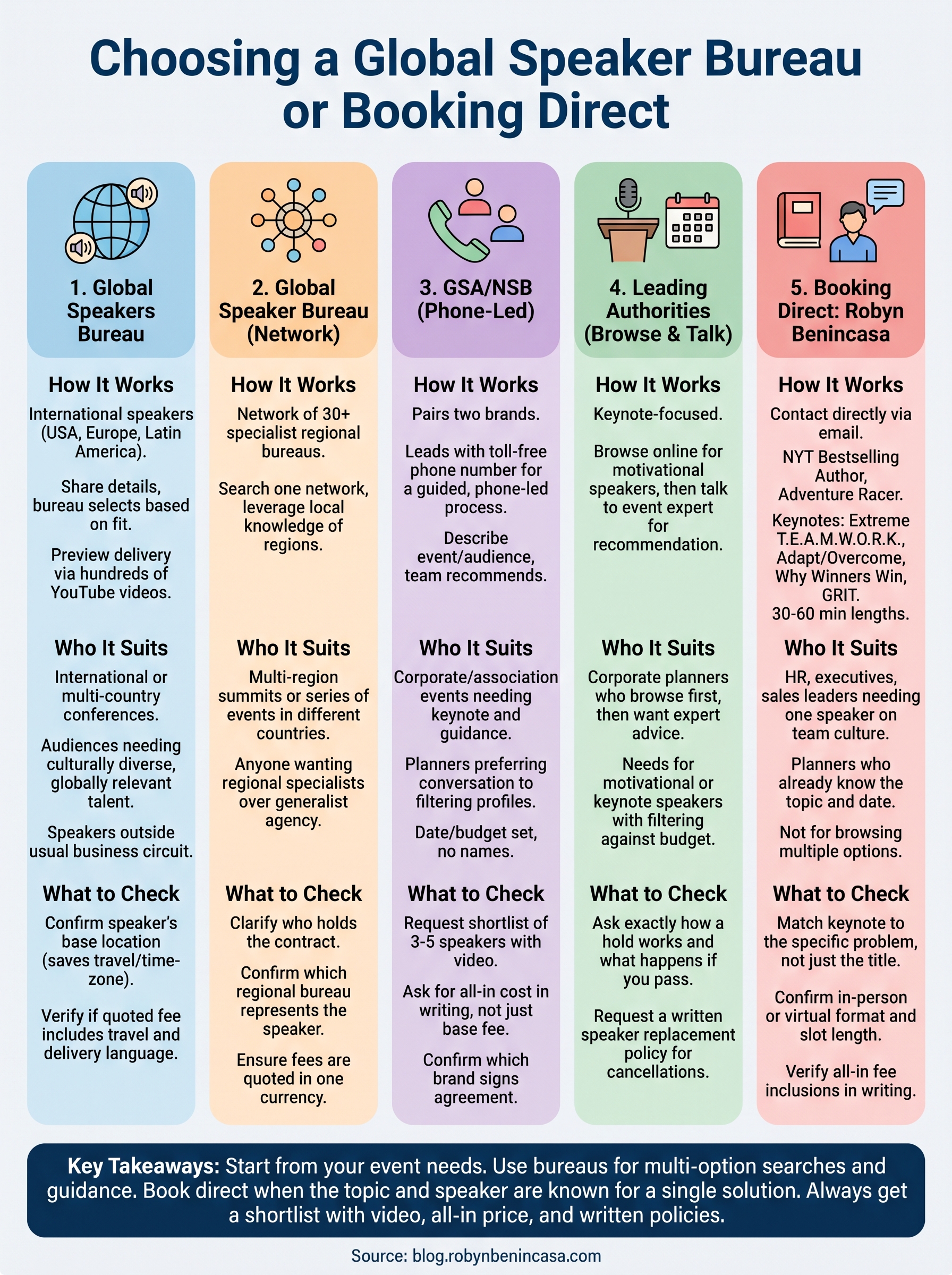
Choosing the right fit
Start from your event, not the bureau’s brand. International audience, go to Global Speakers Bureau. Several regional markets, try the Global Speaker Bureau network. If you want a person to guide you, call GSA/NSB or Leading Authorities. Whichever you pick, ask for a shortlist with video, an all-in price and a written cancellation policy.
If your goal is a stronger team culture and you want one clear answer, skip the shortlist stage. You can read more about building winning team cultures on Robyn’s blog and then email to check her availability for your date.