You’ve got a conference on the calendar and a blank line where the opening act should be. Everyone from your CEO to your sales VP has an opinion about who should fill it, but few people can actually explain what a keynote speaker is supposed to do beyond "open the show" or "be inspiring." That vague brief is exactly how planning committees end up with a forgettable speech and a room checking their phones by minute ten.
A real keynote speaker sets the tone, frames the meeting’s purpose, and gives attendees a shared idea to carry into every breakout session that follows. Whether you’re comparing a good keynote speaker against a dozen bios or trying to define the role for your first event, the job comes down to three things: credibility, a clear message, and the ability to move a room emotionally, not just entertain it.
This article breaks down what a keynote speaker for events actually does, why the right one changes the entire trajectory of your conference, and how to vet, negotiate, and book a keynote speaker event organizers and attendees will still be talking about months later.
Why a keynote speaker matters to your conference’s success
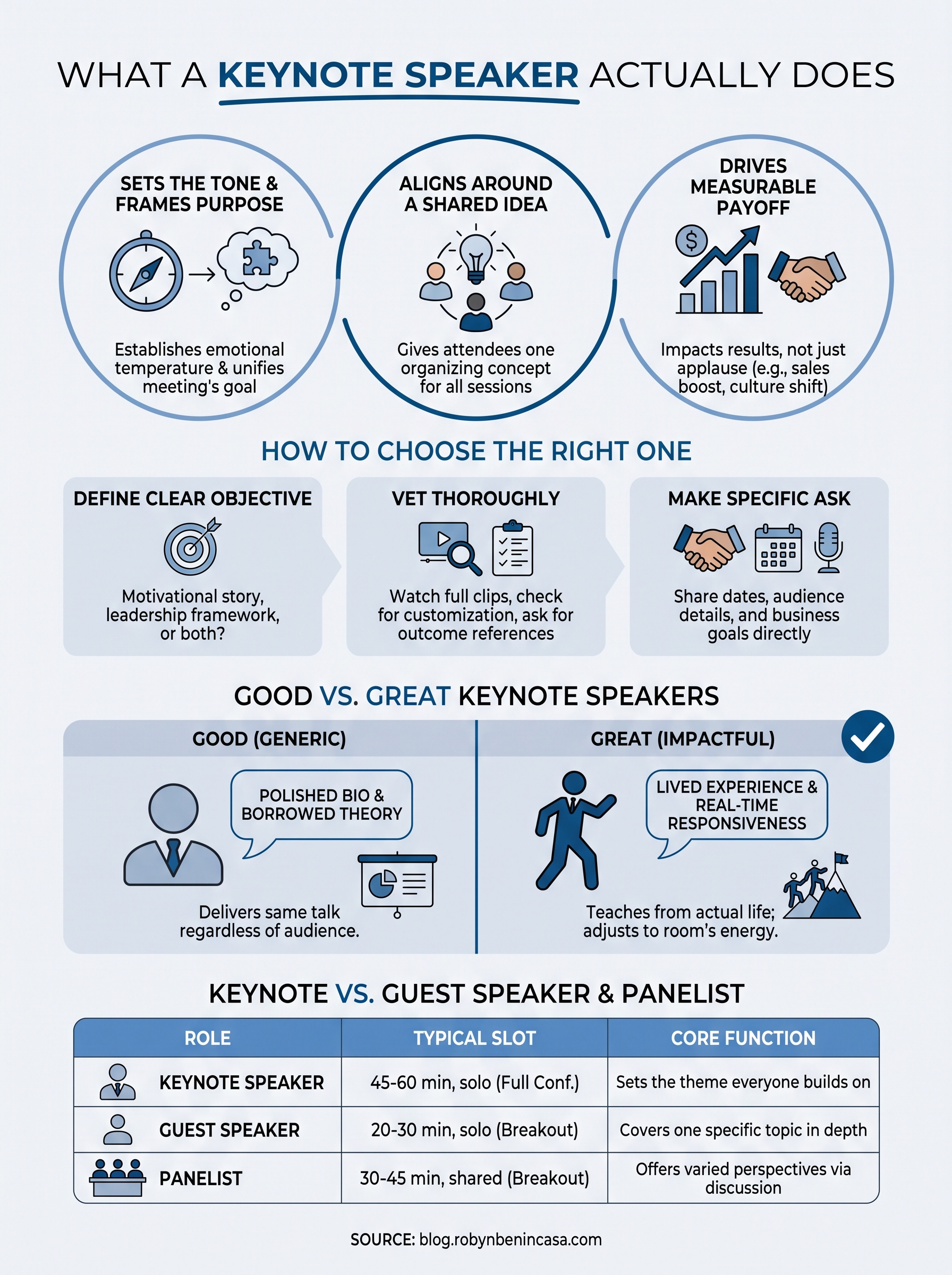
Ask any event planner what makes or breaks a conference, and the honest ones will point straight to the opening keynote. That first hour sets the emotional temperature for everything after it. A flat opener leaves attendees skimming their phones during breakouts; a strong one gives them a lens to filter every session, panel, and hallway conversation that follows. This is the real function of a keynote speaker at conference events: not filling a time slot, but building the frame everyone else works inside.
Setting the tone from minute one
Before a single breakout begins, attendees are already deciding whether this event was worth their travel budget and their time out of the office. A speaker who opens with a personal, high-stakes story, like leading a team through a multi-day expedition race or a life-threatening rescue, does more than entertain. Shared vocabulary emerges almost immediately: phrases like "win as one" or "eight essential elements" become shorthand your VP of sales can reference in a hallway conversation three sessions later. That’s the tone-setting job a generic icebreaker or a slide-heavy executive update simply can’t do.
Aligning hundreds of people around one idea
Conferences bring together people who rarely sit in the same room: regional sales reps, home-office analysts, executives who’ve never met the frontline team. A capable keynote speaker gives that mixed audience one shared idea to organize around, whether it’s a framework from a corporate culture keynote speaker or a hard lesson from a race gone wrong. Cross-departmental buy-in happens faster when everyone heard the same story at the same time, rather than getting the message filtered through six different manager summaries after the fact.
A conference without a strong keynote is just a schedule of meetings; a strong keynote turns it into a shared experience.
The measurable payoff of getting it right
Organizations that hunt for the best keynote speaker for a corporate event, rather than defaulting to whoever’s available, tend to see it show up in numbers, not just applause. Robyn Benincasa’s clients have reported sales teams jumping from 17th to 1st nationally after a keynote reframed how they defined teamwork. Results like that don’t come from charisma alone; they come from a message built around the audience’s actual business challenges. If you’re weighing options for a keynote speaker for events, look past the highlight reel and ask what changed inside organizations that hired them before, using client stories like the ones on Robyn’s testimonials page as your benchmark for what a well-matched keynote can actually deliver.
How to choose and book the right keynote speaker
Booking a speaker on gut feeling alone is how committees end up with a polished bio and a flat room. Start with the outcome you actually want: is this event about rebuilding trust after layoffs, energizing a sales force with one of the top sales motivational speakers, or aligning departments before a merger? A clear objective narrows your search fast, because it tells you whether you need a motivational story, a leadership framework, or both. Matching that objective to a keynote speaker’s actual track record, not just their speaking topic list, is what separates a good match from an expensive gamble.
Vet before you book
Work through a short list before signing anything:
- Watch full clips, not highlight reels. A two-minute sizzle video hides pacing problems and weak audience engagement.
- Ask for outcome-based references. Request two or three past clients who booked this speaker for a similar business challenge.
- Confirm content customization. Will they weave in your industry, your goals, your internal language, or deliver the same talk everywhere?
- Check format flexibility. Can they deliver the same impact live and as a virtual keynote speaker, in case travel plans change?
- Review logistics early. Travel requirements, AV needs, and rehearsal time all affect your timeline and what a keynote speaker costs.
The right keynote speaker fits your business problem first and your event budget second, never the other way around.
Making the ask
Once you’ve narrowed your list, reach out directly with your dates, audience size, and business goal rather than a vague inquiry. Robyn Benincasa’s booking page is built for exactly this kind of specific request, and most credible speakers or their teams will respond with clarifying questions about your audience before quoting a fee. Specificity at this stage saves weeks of back-and-forth later, and it signals to the speaker’s team that you’re planning a real partnership, not just filling a slot on the agenda.
What separates a good keynote speaker from a great one
Plenty of speakers can hold a microphone and tell a decent story, but a good keynote speaker and a great one part ways on execution, not charisma. The difference shows up in the details: whether the content ties back to your specific business challenge, whether the delivery adjusts to the room’s actual energy, and whether attendees are still repeating the message weeks later. Genuine substance beats a polished stage presence every time, because a room full of executives can tell within five minutes if a talk is generic filler dressed up with good lighting.
First-hand experience over borrowed theory
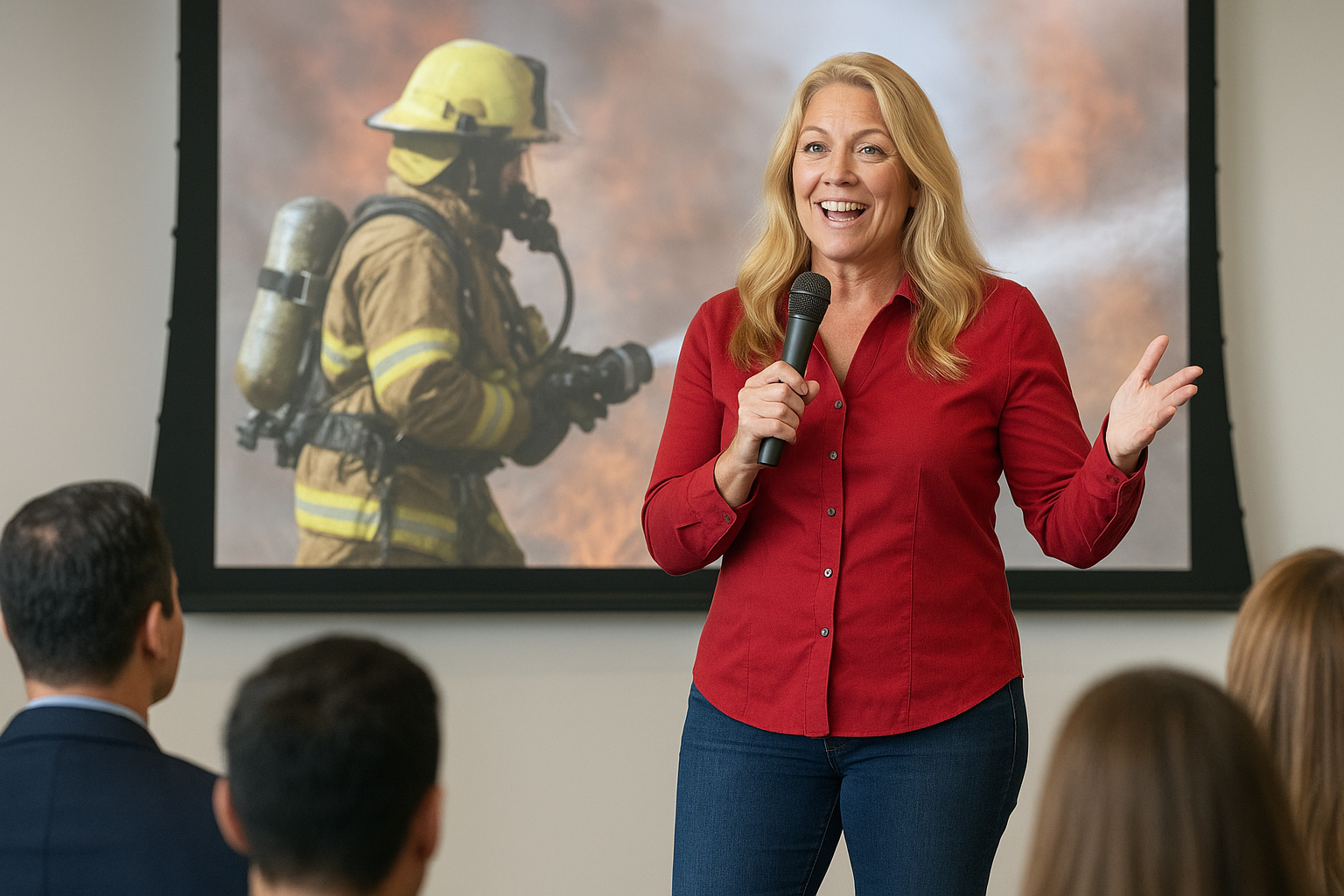
Great speakers teach from what they’ve actually lived, not from a slide deck of secondhand research. Robyn Benincasa’s material on team culture, drawn from 20 years as a San Diego firefighter and 15 years leading world championship adventure racing teams, works because every lesson traces back to a real situation with real stakes. Lived credibility like that is what makes a framework like T.E.A.M.W.O.R.K. land differently than a consultant’s borrowed case study.
A great keynote speaker doesn’t just perform for a room; they leave the room with something it didn’t have before.
Reading and adjusting to the room
A merely good speaker delivers the same talk regardless of audience. A great one notices when a sales team just missed quarterly numbers, or when a room is still processing a layoff, and adjusts tone and emphasis accordingly. Real-time responsiveness separates a memorable keynote from one that technically hit its time slot but missed the mood entirely. That flexibility, more than any single joke or story, is what turns polite applause into an audience still quoting the talk at next year’s kickoff meeting.
Keynote speaker vs. guest speaker and panelist
Confusing these three roles is how planning committees end up budgeting for a panelist’s fee and expecting keynote-level impact, so it pays to understand how keynote speakers differ from other speakers. A keynote speaker at conference events typically opens or closes the event, sets the overarching theme, and speaks solo for 45 to 60 minutes with a single, structured message. A guest speaker usually fills a shorter breakout slot on one specific topic, often without the mandate to frame the whole event. A panelist shares the stage with three or four others, trading brief answers in a moderated discussion rather than building one sustained argument.
Distinguishing the roles matters because each one serves a different planning goal, not because one is inherently better than the other.
| Role | Typical slot | Audience size | Core function |
|---|---|---|---|
| Keynote speaker | 45-60 min, solo | Full conference | Sets the theme everyone else builds on |
| Guest speaker | 20-30 min, solo | Breakout or track | Covers one specific topic in depth |
| Panelist | 30-45 min, shared | Breakout or track | Offers varied perspectives via discussion |
Why the distinction affects your budget and agenda
Misreading these roles skews your entire event budget. Booking a panelist’s fee expecting a keynote speaker event experience leaves you short on the unifying message a real keynote provides. Planners who understand the difference build their agenda in order: keynote first to set the frame, then breakouts and panels that dig into pieces of that same idea.
A keynote sets the destination; guest speakers and panelists fill in the map.
Organizations booking a keynote speaker for events should treat that slot as the anchor investment, since everything else on the agenda gets read through the lens that opening talk creates.
Setting the stage for your next event
Booking a keynote speaker at conference events isn’t about filling a slot on the agenda. It’s about deciding what your entire event stands for before a single breakout begins. The right speaker gives your audience a shared story, a shared vocabulary, and a reason to walk into every session that follows with a clearer sense of purpose. The wrong one leaves you with polite applause and a room that forgets the message by lunch.
Use the vetting steps above, watch full clips, check for real customization, ask for outcome-based references, and you’ll avoid the expensive gamble of booking on charisma alone. A good keynote speaker earns that title through lived experience and real-time responsiveness, not stage presence.
If you’re ready to anchor your next conference around a message your teams will still be quoting next year, walk through how to hire a keynote speaker for your next event and start the conversation today.