The best resilience training online free options combine short video lessons, practical exercises you can use the same day, and a provider you recognize. Five qualify. Alison’s Introduction to Resilience Training suits you if you want a full beginner course with an optional certificate. Harvard Online’s anxiety-focused course suits you if you want research-backed skills. The UC Davis course on Coursera fits professionals dealing with change. Creighton University’s six short videos work for busy healthcare workers, teachers, and parents. The Resilience Tools for Free course is the lightest way to start.
Most people search for this after a hard stretch: a layoff, a burnout spell, a family crisis, or a year of constant pressure. You need something you can start tonight, without a credit card or a six-month commitment. The problem is that "free" often means a teaser with the useful part locked away. Some of the courses below are also built for narrow audiences, so a poor fit wastes your time.
Robyn Benincasa spends her career teaching teams to perform under pressure, and personal resilience is where that work starts. This article covers what each course teaches, how long it takes, what it costs, and who it fits. It ends with a table, a four-week plan, and the limits of free training.
1. Alison Introduction to Resilience Training
Alison’s Introduction to Resilience Training is the best free pick if you want a complete, structured course with a credential at the end. It is a beginner-level, video-based course published by Course Cloud. It runs about 3 to 4 hours and is CPD-accredited.
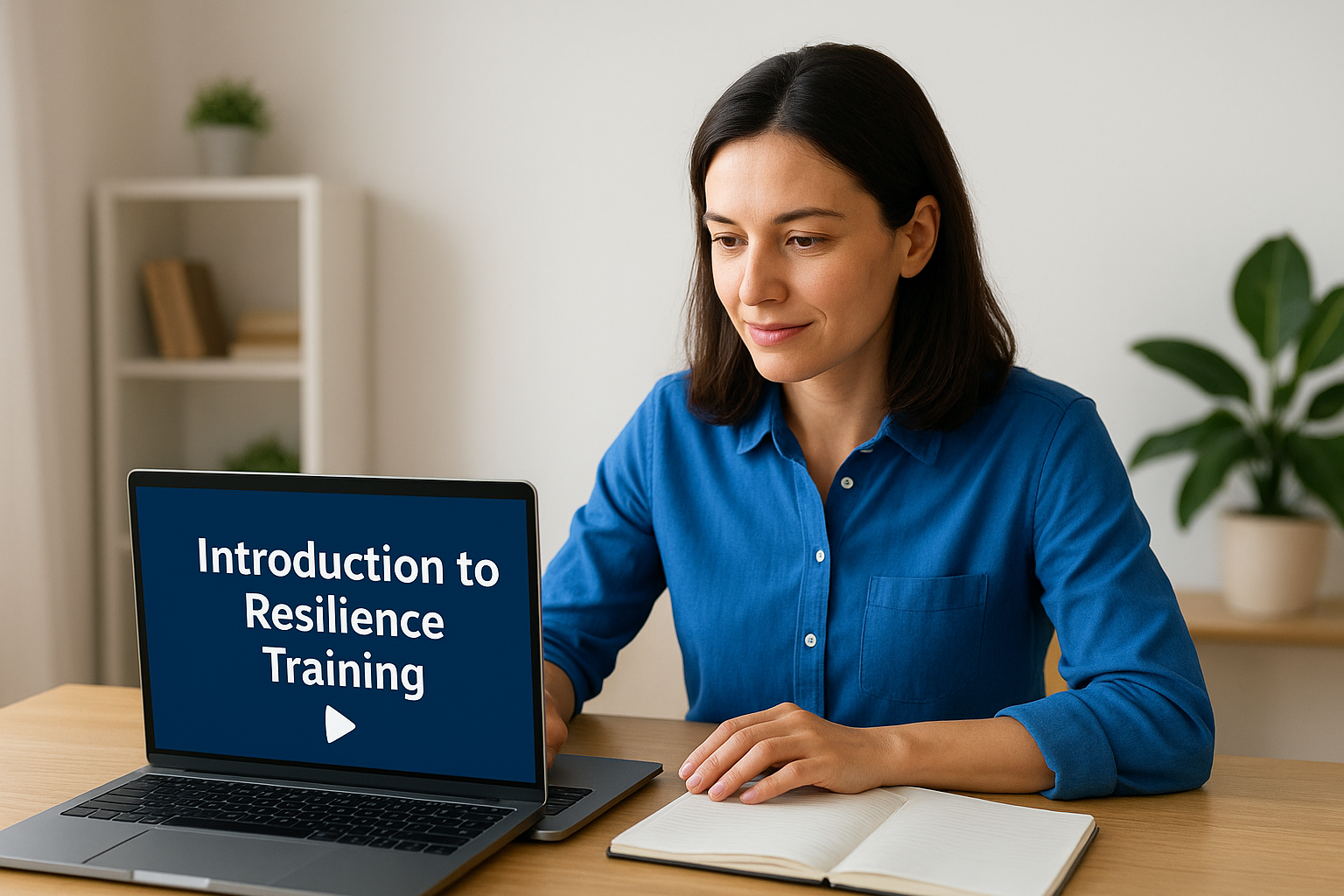
Choose Alison when you want a finished course with a credential, not a handful of loose videos.
What you learn
The course is more academic than most free options. It explains why resilience works before it tells you what to do, which helps if you learn better from the reasoning. The topics include:
- The six pillars of resilience and the qualities they build
- Positive psychology and post-traumatic growth
- The neurobiology of resilience and the acute stress response
- Using nature to build resilience
- Cognitive-affective stress management training (CASMT)
- Guidelines for mental toughness
Cost, time, and who it suits
The course itself is free. You can start the lessons without paying, and you finish with an assessment. The certificate is a separate, optional step. Alison sells certificates, so check the current price before you plan on one for your CV.
Alison suits you if you are new to the subject and want a clear path from start to finish. It is also a good fit for students and job seekers who want a CPD-accredited certificate to list on a profile. If you only want quick tips for tonight, the theory will feel slow.
2. Harvard Online Building Personal Resilience
Harvard Online’s Building Personal Resilience: Managing Anxiety and Mental Health is the strongest pick if you want skills from a research-driven source. It is taught by Harvard Medical School faculty member Dr. Luana Marques, who uses applied psychology to teach five science-driven skills.
Pick the Harvard course when anxiety, not just general stress, is what knocks you off balance.
What you learn
The course ties resilience directly to anxiety management. That focus is useful because anxiety is often what makes a setback feel unrecoverable. Expect these elements:
- An applied psychology approach rather than abstract theory
- Five skills for building personal resilience
- A specific focus on managing anxiety and protecting mental health
- Instruction from Harvard Medical School faculty
Cost, time, and who it suits
Harvard Online runs this course on its own platform, and it is the one people most often search for by name alongside "free." Confirm the current enrollment terms on the course page before you start. Check any certificate fee at the same time, since those terms can change.
This course fits adults who feel stress mainly as worry and racing thoughts. It also suits readers who trust academic sources over motivational content. A certificate from a Harvard program carries weight on a CV, if one is offered when you enroll. The trade-off is that it is narrower than a general resilience course.
3. Coursera Adaptability and Resiliency (UC Davis)
The University of California, Davis offers Adaptability and Resiliency on Coursera. It is the best free choice if your stress comes from change at work. It is self-paced and focuses on assessing challenges, shifting perspective, and responding well in an unstable environment.
Take the UC Davis course when the thing you need to survive is change, not a single crisis.
What you learn
The course teaches practical tools for both professional and personal life. Think of it as resilience for people whose circumstances keep moving. You work through:
- How to assess a challenge before you react to it
- How to shift your perspective when plans collapse
- How to respond effectively to unexpected change
- How to apply these tools at home and at work
Cost, time, and who it suits
Coursera lets you start learning resilience courses for free, which generally covers video lessons and readings. A certificate is usually a paid add-on, so decide upfront whether you need one. If you do not, the free route gives you the teaching without the credential.
This course suits professionals facing reorganizations, new roles, or industry disruption. It also suits anyone who likes a university-style format with graded work. Searching Coursera for "resilience" turns up other courses, so you can compare syllabi before you commit.
4. Creighton University Resilience in Uncertain Times
Creighton University’s free video series is the fastest credible option, at six 10-minute videos, or about one hour in total. It was created by Thomas Lenz, PhD, who directs Creighton’s Master of Science in Integrative Health and Wellness program.
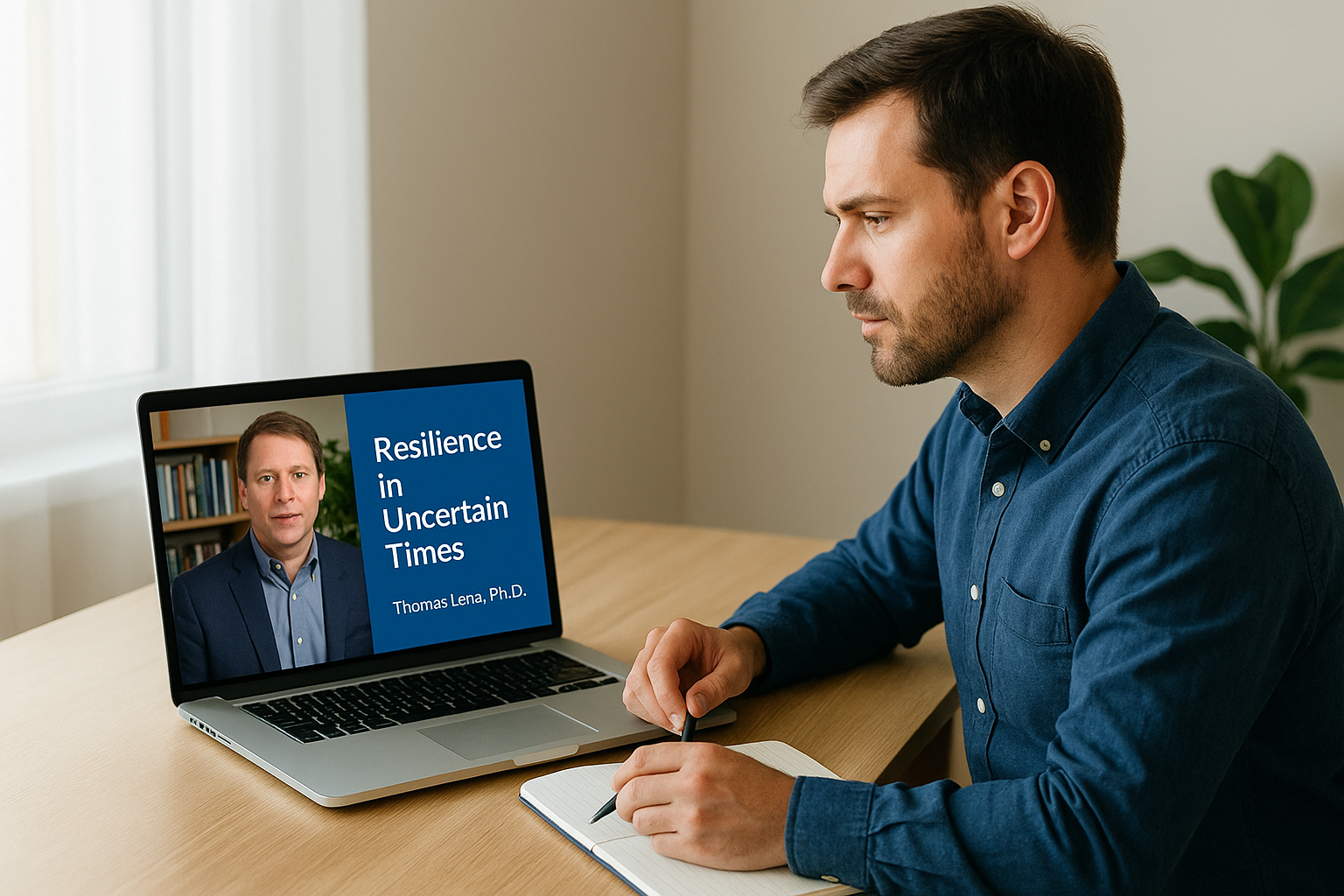
If you have one hour and no spare energy, this series gives you the most for the least effort.
What you learn
The videos cover six topics, one per video:
- What is resiliency
- Chronic stress
- Connectedness
- Stillness
- Gratitude and generosity
- Wholeness
Cost, time, and who it suits
The series is free. You register with your contact information to access the videos. No certificate is advertised, so treat this as learning for yourself rather than a credential. The intro refers to the pandemic, but the content on stress, connection, and stillness applies at any time.
Creighton designed the series for physicians, nurses, EMS, healthcare workers, teachers, and parents. If you work in one of those roles, it speaks directly to your days. One 10-minute video each day takes a single work week, which makes it easy to finish.
5. Resilience Tools for Free
Resilience Tools for Free is the simplest way to try resilience training before you commit to a longer course. It is a free, video-based online course from the College of Wellbeing. It introduces practical tools for facing and responding to challenging situations, and there is a promo video you can watch before you enroll.
A short, practical course lowers the cost of finding out whether this kind of training works for you.
What you learn
The course is built around usable tools rather than theory. It frames resilience as something you do in a hard moment. You can expect the following:
- Practical strategies for difficult situations
- Insights on responding rather than reacting
- Video lessons you can watch at your own pace
Cost, time, and who it suits
Enrollment is free, and you can watch the promo first to judge the teaching style. The course page does not advertise a certificate, so do not choose it if you need a credential. Check the course page for the current lesson count and length.
This course suits anyone going through a rough patch who wants tools now. It is also a good first step for skeptics. Finish it, and you will know whether you want the depth of Alison or Harvard.
How to choose, and what free courses will not do
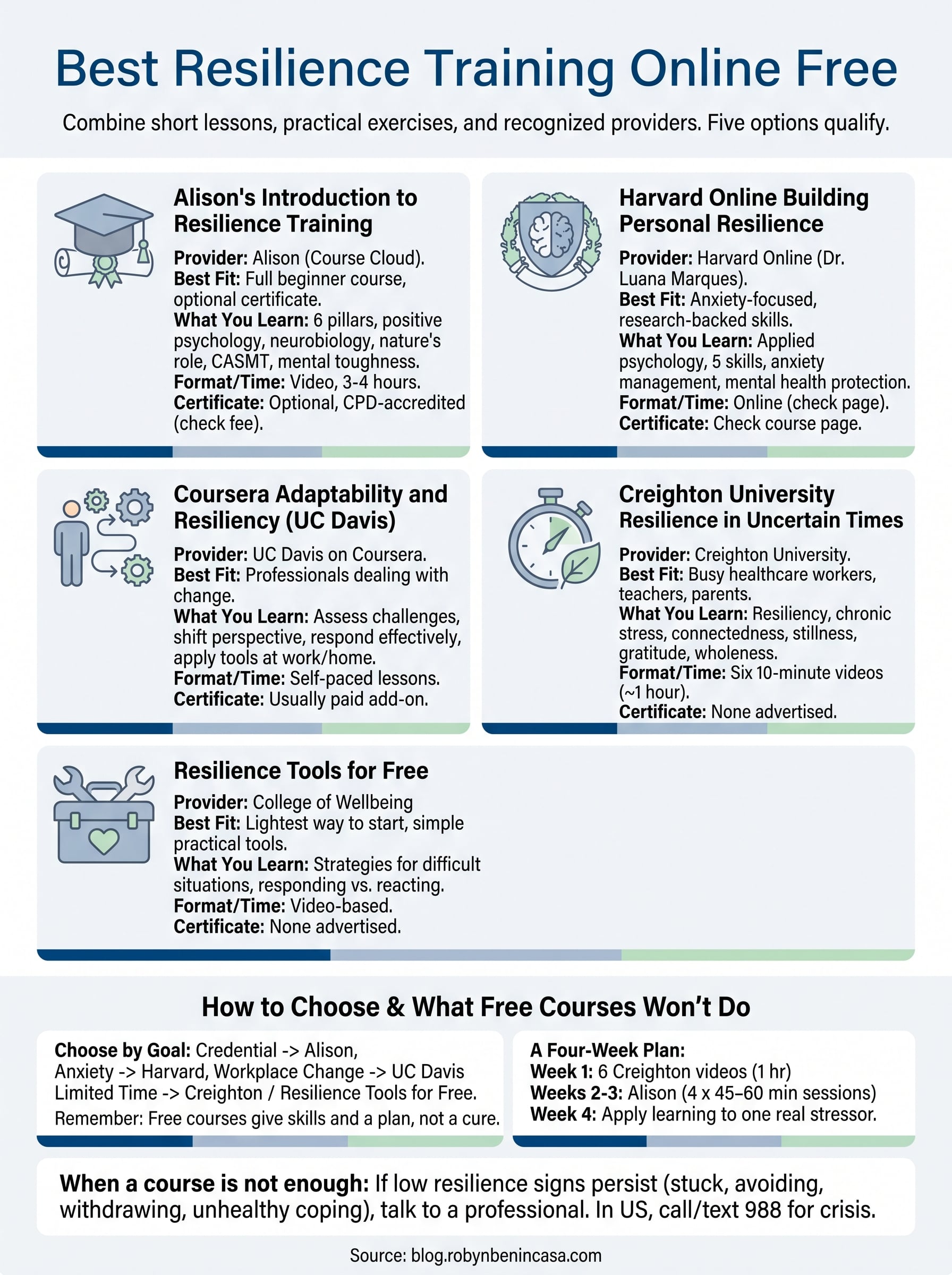
Choose by your goal: a credential points to Alison, anxiety to Harvard, workplace change to UC Davis, and limited time to Creighton or Resilience Tools for Free. Keep expectations realistic, because a free course gives you skills and a plan, not a cure.
The five courses side by side
| Course | Provider | Format and time | Certificate |
|---|---|---|---|
| Introduction to Resilience Training | Alison (Course Cloud) | Video, 3 to 4 hours | Optional, CPD-accredited, check fee |
| Building Personal Resilience | Harvard Online | Online, see course page | Check course page |
| Adaptability and Resiliency | UC Davis on Coursera | Self-paced lessons | Usually a paid add-on |
| Resilience in Uncertain Times | Creighton University | Six 10-minute videos | None advertised |
| Resilience Tools for Free | College of Wellbeing | Video-based | None advertised |
Two other free programs serve narrow groups. Military OneSource offers free online resilience courses for service members and providers, built around major life changes. Christian Family Solutions runs a free, faith-based Resilience Project online course on emotional resilience and stress.
A four-week plan that fits a busy schedule
Finishing beats collecting, so pick two courses and sequence them. In week one, watch the six Creighton videos, one a day, for about 60 minutes in total. In weeks two and three, work through Alison in four sessions of 45 to 60 minutes, which covers the 3 to 4 hours. In week four, use what you learned on one real stressor. That totals about 4 to 5 hours of study.
When a course is not enough
Common signs of low resilience include staying stuck on a setback for days, avoiding challenges, and withdrawing from people. Another sign is relying on unhealthy habits to cope. If these persist, talk to a doctor or licensed therapist. If you ever feel unsafe, call or text 988, the Suicide & Crisis Lifeline in the US.
If you lead a team, remember that culture is shared. Robyn’s Inspiring Greatness through G.R.I.T. keynote runs 45 to 60 minutes and is built for teams navigating adversity, tough years, or stretch goals.
Ready to build resilience, one lesson at a time
Free resilience training works when you match the course to your problem and finish it. Start with Alison for a credential, Harvard for anxiety, UC Davis for change at work, Creighton for a one-hour reset, or Resilience Tools for Free for a low-risk first step.
Pick one today and block time for the first lesson. Resilience also grows through connection, so share what you learn with someone you trust. For more on resilience, leadership, and strong team cultures, read the Robyn Benincasa blog or bring the Inspiring Greatness through G.R.I.T. keynote to your team.