
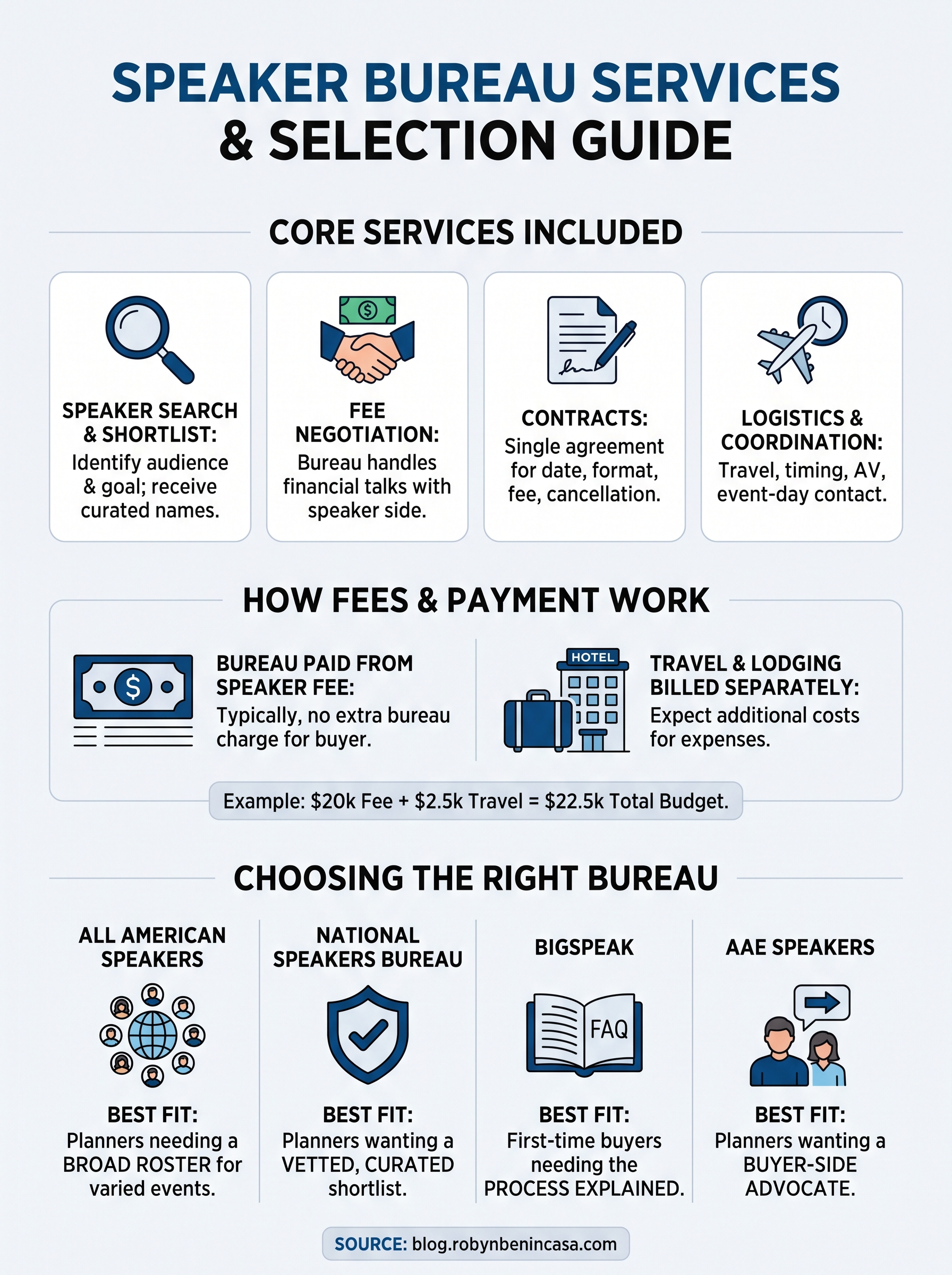
Speaker bureau services cover everything between "we need a keynote" and the speaker leaving the stage: shortlisting speakers, negotiating the fee, drafting the contract, and coordinating logistics. Four bureaus are worth a first call for most corporate events. All American Speakers suits planners who want a broad roster. National Speakers Bureau suits those who want a vetted, curated one. BigSpeak suits first-time buyers who want the process explained. AAE Speakers suits planners who want an agent on the buyer’s side.
The problem is that every bureau calls itself top-rated, and their websites rarely show what you actually get. You can spend a week comparing rosters and still not know who pays the bureau, what happens if the date moves, or whether you need a bureau at all.
This article explains what a bureau does, how it gets paid, and what a keynote costs. Then it compares the four bureaus with the same two checks each. This blog belongs to keynote speaker Robyn Benincasa, so the advice comes from the side of the stage where bookings land.
What speaker bureau services include
A speakers bureau is an agency that connects event organizers with professional speakers and manages the booking from first inquiry to final invoice. You can use one from anywhere, because bureaus work by phone and email and speakers travel or join virtually.
What a bureau does for you
The core services are search, negotiation, paperwork, and logistics. Here is what each one means in practice.

| Service | What it means for you |
|---|---|
| Speaker search and shortlist | You describe your audience, budget, and goal. The bureau proposes a few names. |
| Fee negotiation | The bureau handles the money conversation with the speaker’s side. |
| Contracts | One agreement covers date, format, fee, and cancellation terms. |
| Logistics | Travel, lodging, timing, and communication between speaker and client. |
| Event coordination | Advance calls, AV requirements, and a contact for event day. |
Don’t confuse these with pharmaceutical speaker bureau programs. Those manage healthcare-professional speakers for drug makers, with compliance and payment reporting. They are a different service.
How fees work and what to expect to pay
A bureau is usually paid from the speaker’s fee, so you typically pay the quoted fee, not a bureau charge on top. Confirm that in writing. Fees run from a few thousand dollars for emerging or regional speakers to tens of thousands for established keynoters, and far more for celebrities. Travel and lodging are usually billed separately.
As an illustration, a speaker quoted at $20,000 plus about $2,500 in travel means a budget of $22,500. Ask for the fee and the expenses as separate lines so you can compare quotes fairly.
A bureau is paid out of the speaker’s fee, so the real cost question is what is included, not what the bureau charges.
When booking direct makes sense
If you already know the speaker you want, booking direct skips the middleman. Robyn Benincasa takes inquiries directly at bookrobyn@worldclassteams.com, and her four keynotes run 30 to 60 minutes. Use a bureau when you don’t yet know who you want, need several options, or want someone else to run the logistics.
Speakers join a bureau roster the same way every time. The bureau adds people clients already ask for, so a demo video, references, and a record of paid talks come first.
1. All American Speakers
What it offers
All American Speakers presents itself as a top-rated speakers bureau and booking agency with a diverse roster of motivational and keynote speakers. Its listing points to business, keynote, and celebrity talent, so you can browse by type of speaker rather than by name.
That range means one bureau can cover a sales kickoff keynote and a headliner for a gala dinner. If your event calendar is varied, that saves you from vetting several agencies.
Best fit and what to ask
This bureau suits planners who run several kinds of events or haven’t settled on a speaker type. Start broad, then narrow with the bureau’s help.
- Is the quoted fee all-in, or are expenses listed separately?
- What are the terms if we move the date?
- Which speakers on my shortlist have you booked recently?
Choose a wide roster when you don’t yet know what kind of speaker your audience needs.
2. National Speakers Bureau
What it offers

National Speakers Bureau describes itself as a bureau with 50+ years of history and a vetted roster of 500+ leadership, motivational, and industry experts. The number matters less than the word "vetted," which tells you the roster is curated rather than open to anyone.
Industry experts are the useful category here. If your audience wants someone who knows insurance, healthcare, or manufacturing, a curated roster narrows the search quickly.
Best fit and what to ask
It fits planners who would rather receive three strong options than browse five hundred profiles. Tell them your audience and goal before you look at any names.
- How do you vet speakers before adding them?
- Can you send a three-name shortlist with fees?
- Which of those speakers also deliver virtual keynotes?
A curated roster saves time only if you give the bureau a clear audience and goal.
3. BigSpeak
What it offers
BigSpeak publishes a plain FAQ that explains how bureaus work. It states that many bureaus provide marketing, finance, contracts, sales, and event coordination for both speakers and organizers. That is useful reading before you sign anything with any bureau.
For a first-time buyer, a bureau that explains its own process lowers the risk of surprises. You learn what to expect before the first call.
Best fit and what to ask
Pick it if you have never booked a keynote and want the mechanics laid out. Read the FAQ first, then bring your questions to the call.
- Which of those services apply to my booking?
- Who signs the contract, and with whom?
- What is the payment schedule, and when is the deposit due?
A bureau that explains its process in public is easier to hold to that process in a contract.
4. AAE Speakers
What it offers
AAE Speakers calls itself a full-service speakers bureau and talent agency that exclusively represents the interests of event professionals when they select, book, and execute a speaker. In plain terms, it positions itself as your advocate rather than the speaker’s.
That model appeals when you want someone to push back on fees or terms for you. How it works in practice depends on the booking, so test it with specific questions.
Best fit and what to ask
It suits planners who want a buyer-side advocate and hands-on help through event day. Busy teams without a dedicated speaker coordinator benefit most.
- How is the bureau paid, and does that change what you recommend?
- What support do you provide on the day of the event?
- How do you handle a speaker who cancels?
If a bureau says it works for the buyer, ask exactly how it gets paid.
Pick a bureau, then confirm the terms
Speaker bureau services come down to search, negotiation, contracts, and logistics, paid for out of the speaker’s fee. The four bureaus above differ in how they work, not in what a bureau is. Choose the broad roster, the curated one, the explainer, or the buyer-side agent based on how much guidance you need.
Whichever you contact, ask the same questions about fees, expenses, and cancellation, and get the answers in writing. If you already know you want a keynote on leadership, teamwork, or team culture, you can skip the bureau step. See Robyn’s keynotes and booking options to find the right fit for your event.