
You’ve got a budget line for a keynote speaker and no idea if it should read $5,000 or $50,000. Keynote speaker costs vary so widely that a straight answer is hard to find, and most bureau websites just tell you to
Why keynote speaker fees vary so widely
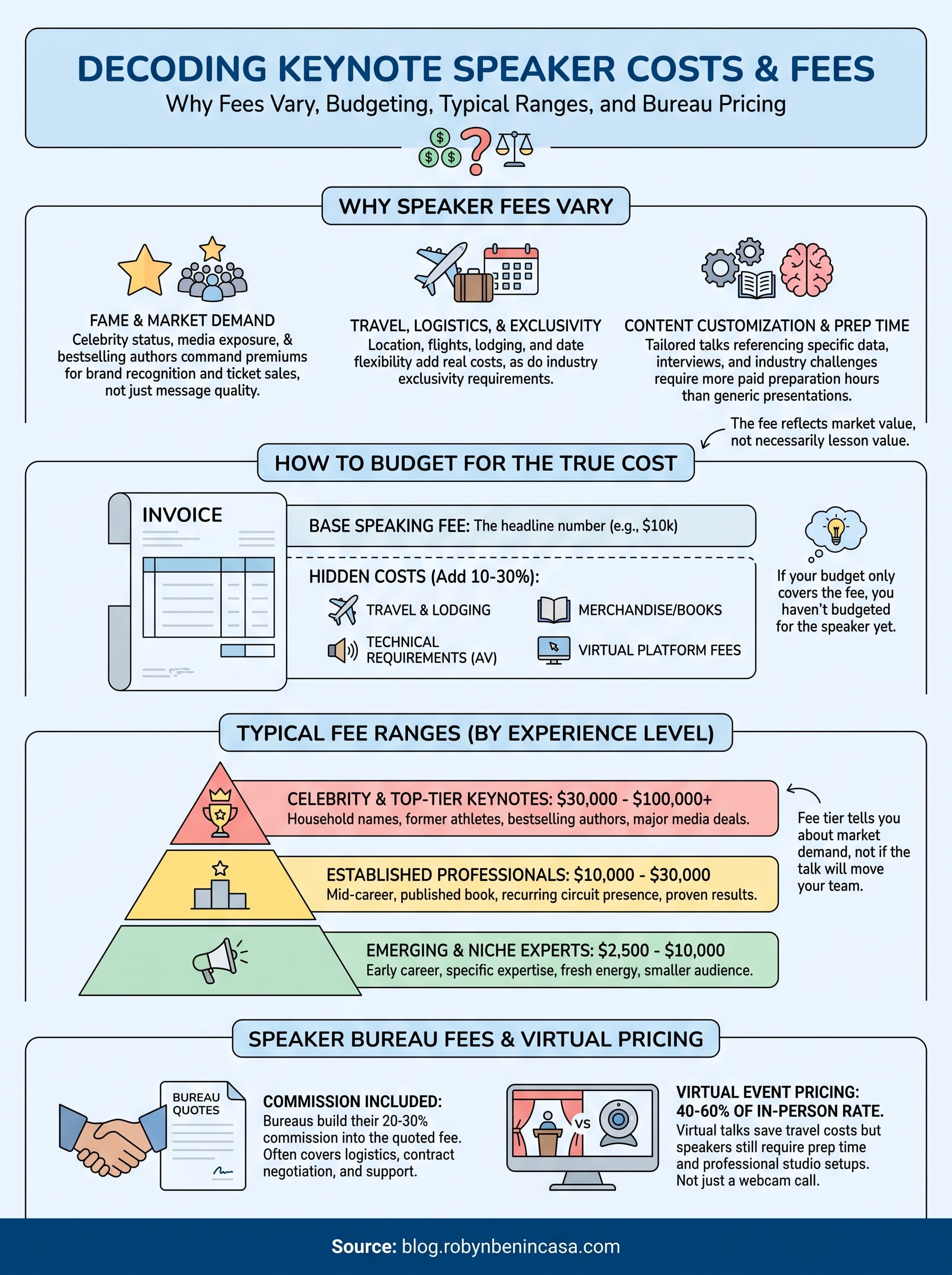
Ask five event planners what a keynote speaker costs and you’ll get five different numbers, because speaker fees aren’t set by a formula. They’re driven by a mix of name recognition, travel logistics, content customization, and plain old supply and demand. A speaker who fills a stadium commands a different price than one who fills a conference room, even if both deliver a genuinely great talk. Understanding these variables helps you stop guessing and start comparing apples to apples.
Fame and market demand
Celebrity status and media exposure push keynote speaker prices up fast. A speaker who’s been on a bestseller list, hosted a national show, or built a massive following commands a premium simply because their name sells tickets and drives attendance. This isn’t about the quality of the message. It’s about scarcity and brand recognition. A former Olympic athlete with a book deal and a documentary will typically cost more than an equally skilled speaker without that media footprint, even if the second speaker delivers more practical takeaways for your team.
The fee reflects the speaker’s market value, not necessarily the value of the lesson they teach.
Travel, logistics, and exclusivity
Location matters more than most planners expect. A speaker traveling from across the country, requiring flights, hotel nights, and ground transportation, adds real cost on top of the base fee. Some speakers also charge more for exclusivity within an industry or region, especially if your event is a direct competitor to another client they’ve worked with recently. Date flexibility plays a role too. Booking during a speaker’s peak season, like spring conference season or Q4 sales kickoffs, often means less room to negotiate.
Content customization and prep time
A speaker who shows up with a generic talk costs less than one who spends weeks studying your industry, interviewing your leadership team, and weaving your company’s specific challenges into the presentation. Custom content demands real preparation hours, and that time gets built into the fee. If you want a keynote that references your actual sales numbers, your merger, or your team’s specific friction points, expect to pay for that depth. Generic inspiration is cheaper than a tailored roadmap your team can actually use the Monday after the event.
How to budget for the true cost of a speaker
The number on the contract is rarely the number you actually pay. Hidden costs like travel, lodging, ground transportation, and audiovisual requirements can add 10% to 30% on top of the base fee, and planners who forget to budget for these get surprised at invoice time. Ask upfront whether the quote includes travel or if you’ll be billed separately, and get that answer in writing before you sign anything.
If your budget only covers the fee, you haven’t budgeted for the speaker yet.
What to build into your line item
Before you lock in a number, walk through the full cost picture with your finance team. Here’s what typically factors into the true cost of hiring a speaker:
- Base speaking fee: the headline number most bureaus quote
- Travel and lodging: flights, hotel, meals, and ground transport
- Technical requirements: staging, microphones, or custom AV setups
- Merchandise or book bundles: signed copies for attendees
- Virtual platform fees: if the event includes a livestream component
Missing even one of these can throw off a tight budget by thousands of dollars.
Questions to ask before you commit
Getting a clear answer to how much does it cost to hire a speaker for your specific event means asking direct questions early. Confirm whether the fee is flat or scales with audience size, whether a deposit locks in the date, and what the cancellation policy looks like if your event shifts. Speakers and their teams expect these questions, and a professional bureau or agent will answer them without hesitation. Vague or evasive answers about pricing structure are a warning sign worth taking seriously before you commit your budget.
Typical fee ranges by speaker experience level
Once you understand what drives the cost, the next question is simple: what should you actually expect to pay? Keynote speaker fees generally fall into tiers based on experience, reputation, and proven results, not just how polished someone sounds on stage. Knowing where a candidate sits in this hierarchy helps you sanity-check a quote before you negotiate.
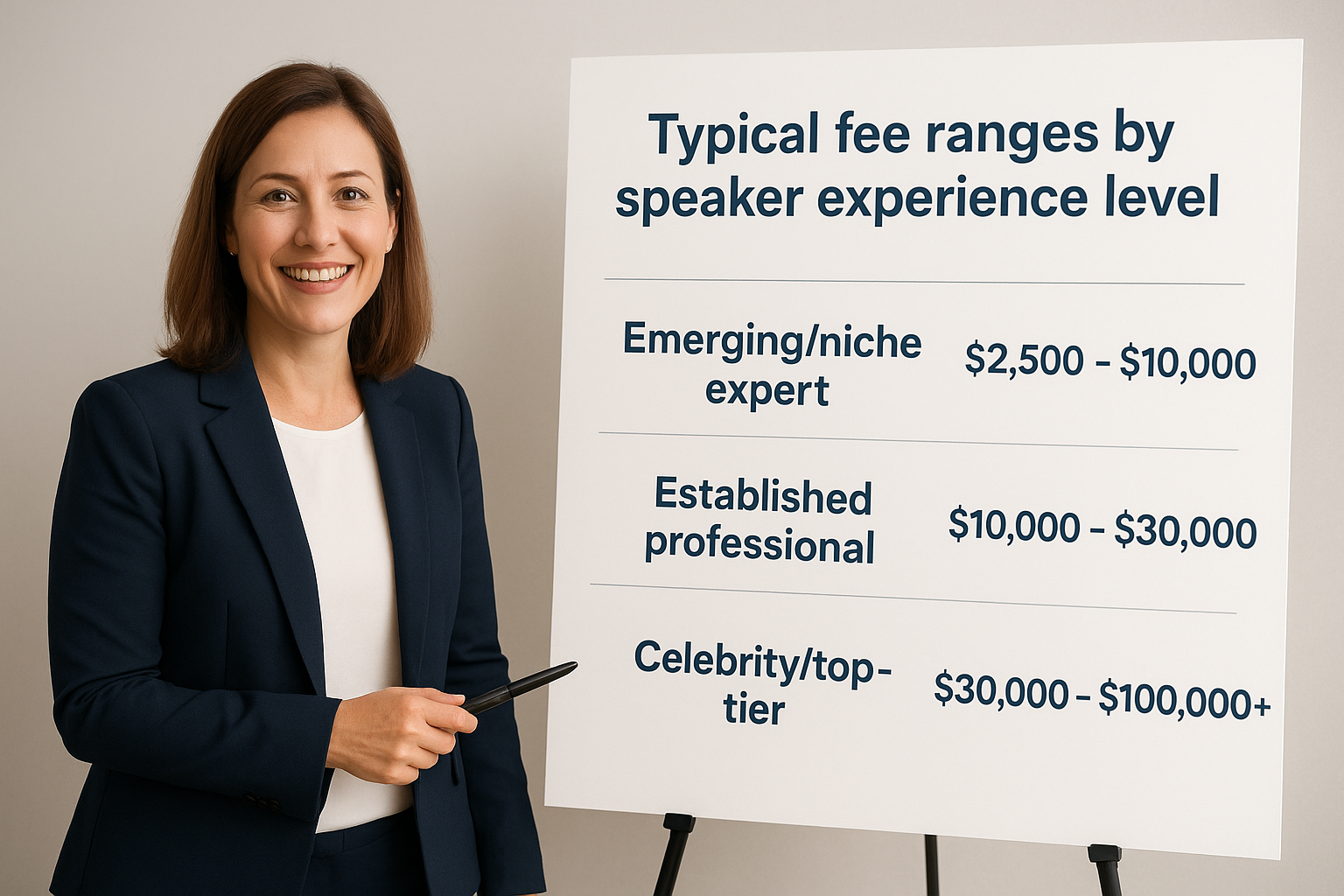
Emerging and niche experts
Speakers early in their careers, or those addressing a narrow niche audience, typically charge in the $2,500 to $10,000 range. They often bring fresh energy and specific expertise, but lack the track record or media exposure that pushes fees higher. This tier works well for smaller internal events or when budget matters more than brand recognition.
Established professional speakers
Mid-career speakers with a solid client list, a published book, or a recurring presence on the corporate circuit generally land between $10,000 and $30,000. This is where most seasoned business and leadership speakers sit, including those with real-world credentials like a documented performance turnaround or a compelling personal story tied to measurable outcomes.
Celebrity and top-tier keynote speakers
Household names, former athletes with major media deals, and bestselling authors with national name recognition often command $30,000 to $100,000 or more per engagement.
Fee tier tells you about market demand, not whether the talk will actually move your team.
| Experience Level | Typical Fee Range |
|---|---|
| Emerging/niche expert | $2,500 – $10,000 |
| Established professional | $10,000 – $30,000 |
| Celebrity/top-tier | $30,000 – $100,000+ |
Budgeting how much does it cost to hire a motivational speaker starts with picking the tier that matches your goals, not just your ceiling.
Speaker bureau fees and virtual event pricing
Working through a bureau changes how you see the number on the invoice. Speaker bureau fees aren’t a separate line item you pay on top of the speaker’s rate. Bureaus typically build their commission, often 20% to 30%, directly into the quoted fee, so the price you’re given already reflects that markup. This makes bureau quotes easy to compare at a glance, but it also means going direct to a speaker’s team doesn’t always save you money if the speaker still uses a bureau for booking logistics.
How bureaus structure their quotes
A reputable bureau will break out logistics separately from the base fee, covering things like travel coordination, contract negotiation, and rescheduling support. That service has real value when you’re managing a multi-speaker event or a tight timeline, since the bureau handles the back-and-forth you’d otherwise manage yourself. Ask any bureau directly whether their quote is all-inclusive or whether travel and AV get billed separately later.
Virtual keynotes cost less, but not as much as you’d think
Remote formats cut travel and lodging entirely, which trims the total cost, but speaker fees for virtual events usually run 40% to 60% of the in-person rate rather than dropping to a token amount. The speaker still spends the same hours preparing custom content, and many now invest in professional studio setups, lighting, and production support to make a virtual talk feel polished rather than like a webcam call.
A virtual keynote saves you a flight, not the speaker’s expertise.
Hybrid formats, where a speaker presents live to part of the audience and streams to the rest, typically land between the full in-person fee and the virtual rate, since they demand both travel and remote production coordination.
Matching your budget to the right speaker
Getting the right number for your event isn’t about finding the cheapest option or chasing the biggest name. It’s about matching keynote speaker costs to what your audience actually needs and what your organization can realistically absorb once travel, AV, and prep time get added in. A $10,000 speaker who nails your industry’s specific challenges beats a $50,000 name who delivers a generic talk your team forgets by Monday. Once you know the fee ranges, the hidden costs, and how bureau pricing works, you’re equipped to compare quotes with confidence instead of guessing.
If you’re looking for a speaker with a proven track record of turning team performance around through real leadership and adventure racing experience, not just a polished stage presence, explore Robyn Benincasa’s keynote topics and see which one fits your team’s goals.