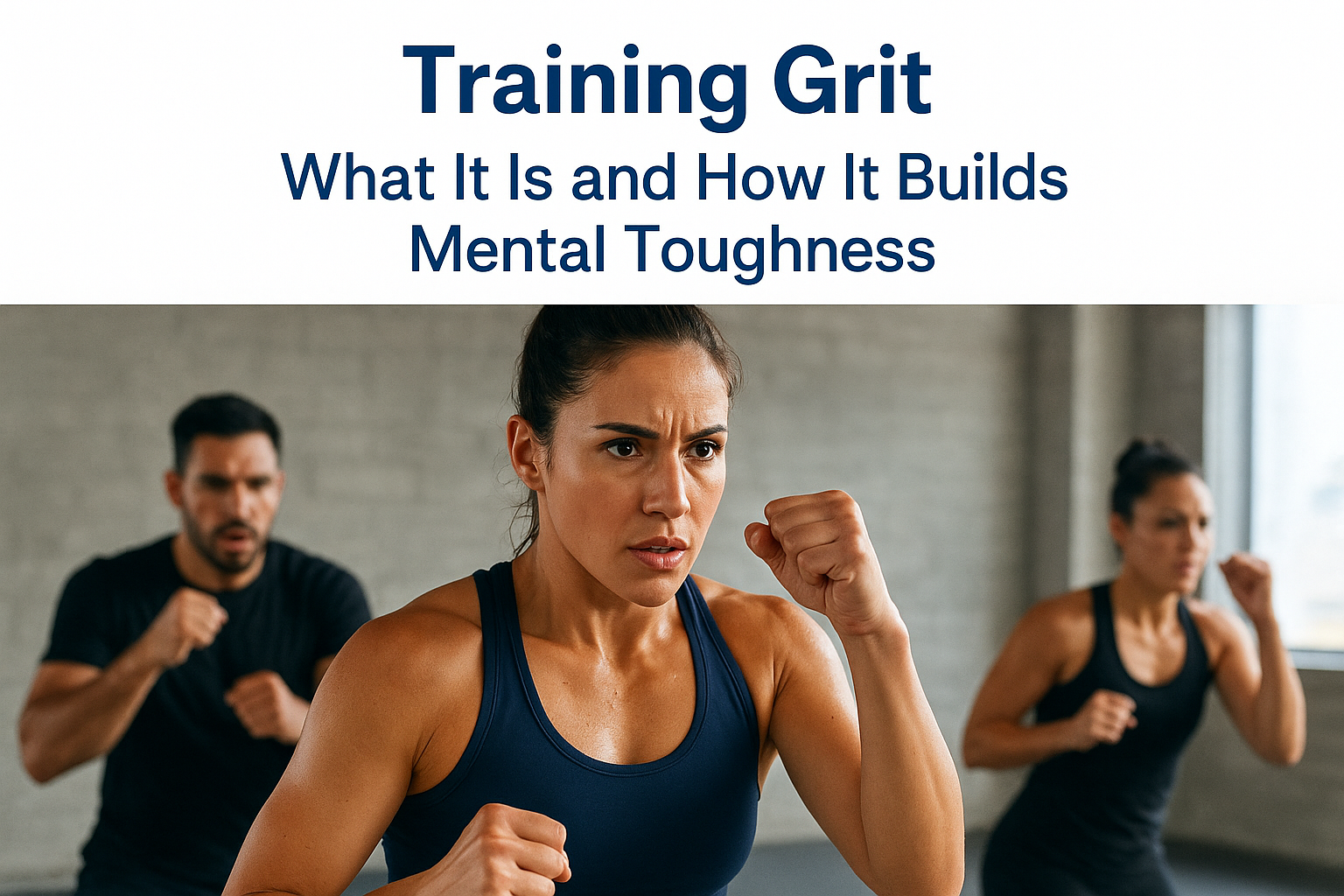
You’ve probably heard someone mention training grit at the gym or seen a class called GRIT on the schedule and wondered what it actually involves. Is it a workout, a mindset, or both? That question matters if you’re trying to build real toughness instead of just breaking a sweat.
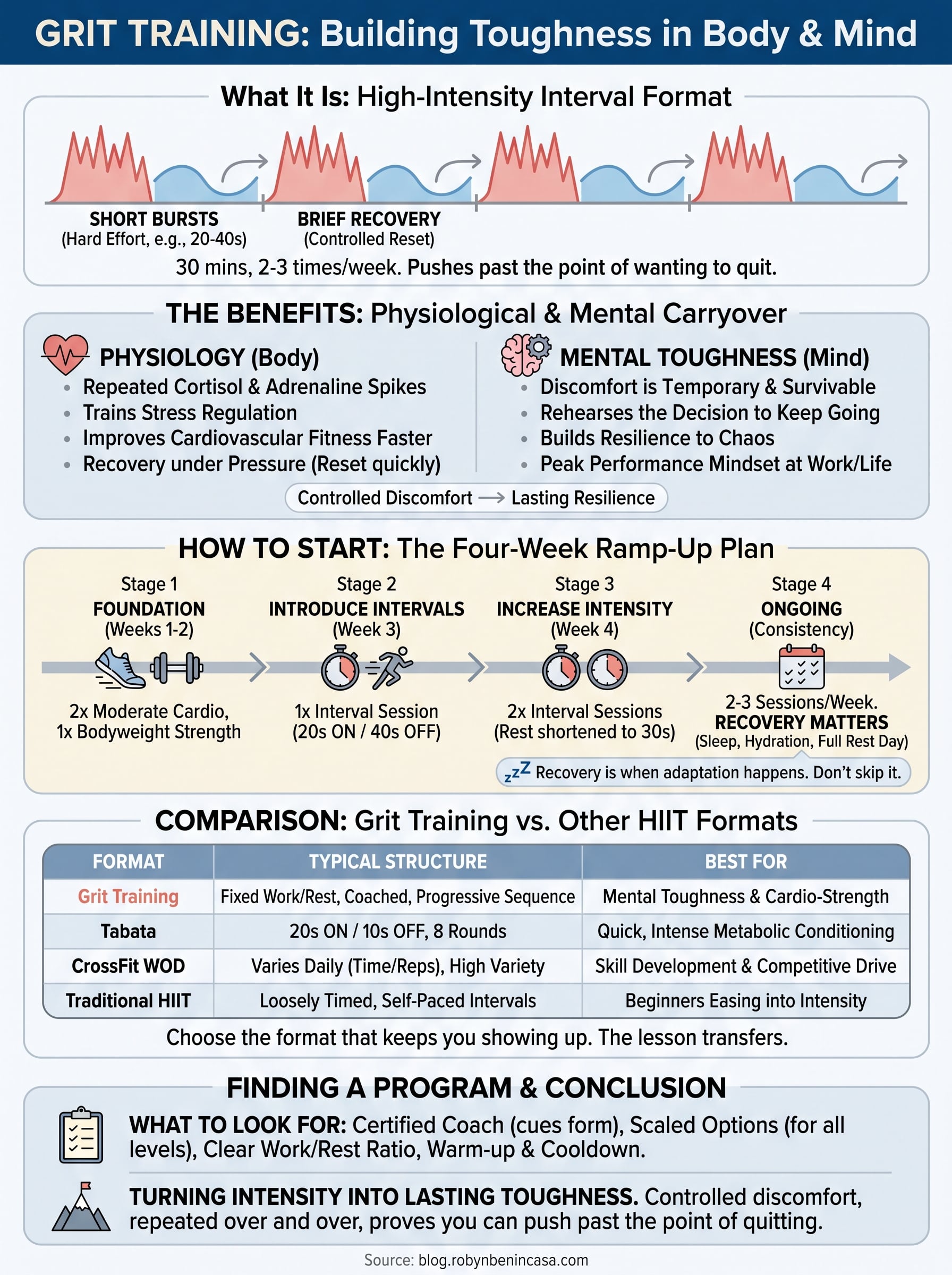
Here’s the short answer: grit training usually refers to a high-intensity interval format, popularized by programs like Les Mills GRIT, that combines short bursts of hard effort with brief recovery periods. Most grit training programs run 30 minutes, two to three times a week, and they’re built to push you past the point where your body wants to quit, which is exactly where mental toughness gets forged.
In this article, we’ll break down what grit training looks like in practice, the physical and mental benefits it delivers, and how often you should do it to see results. We’ll also connect the dots between physical grit and the kind of high performance culture that separates good organizations from great ones, a topic Robyn Benincasa has spent her career studying on adventure racing courses, in burning buildings, and on stages in front of teams who need to hear it.
Why grit training builds more than physical fitness
Grit training earns its name because it does more than torch calories. The stop-start structure of a HIIT workout forces your nervous system to practice recovery under pressure, teaching your body to reset quickly after maximal effort instead of shutting down. That skill, the ability to catch your breath and go again, is physical proof that discomfort is temporary and survivable, a lesson that sticks with you long after the class ends. Even five minutes of that rhythm teaches your brain more about handling pressure than an hour of steady, predictable cardio ever will.
The physiology behind mental toughness
Short, hard intervals spike your heart rate and flood your system with cortisol and adrenaline, the same stress hormones that surface during a tense negotiation or a missed deadline. Repeated exposure to that spike, followed by controlled recovery, trains your body to regulate stress more efficiently over time instead of staying stuck in fight-or-flight mode. Research on high-intensity interval training backs this up: the American Heart Association notes that HIIT improves cardiovascular fitness and stress resilience faster than steady-state cardio alone. A typical grit training program builds this adaptation through:

- Repeated bursts of near-maximal effort, usually 20 to 40 seconds long
- Short, incomplete recovery windows that keep your heart rate elevated
- Compound movements that demand full-body coordination while fatigued
- A finisher round designed to test what you have left when you think you’re empty
Grit training doesn’t just condition your muscles, it conditions your response to stress itself.
Why the mental carryover matters
Athletes and firefighters have known this for decades: the person who trains for chaos handles chaos better. Pushing through a brutal final round of intervals rehearses the exact mental sequence you need when a project falls apart or a team hits a wall, the moment where you decide to quit or keep working the problem. Robyn Benincasa has built an entire keynote career around this parallel, showing corporate teams that the discomfort tolerance built in a gym or on an expedition translates directly into a peak performance mindset at work. Ultimately, that’s the real payoff of grit training: you’re not just building endurance, you’re rehearsing the decision to keep going, a skill you need to build a high-performing team that holds together when conditions turn hard.
How to start grit training the right way
Jumping into a full grit training program on day one is the fastest way to get hurt or burned out before you see any benefit. Your body needs a base level of conditioning before it can handle repeated max-effort intervals, so give yourself two to three weeks of moderate cardio and strength work first. This isn’t about being cautious for its own sake, it’s about making sure the toughness you build actually sticks instead of getting derailed by a pulled hamstring in week two.
Build a foundation before you sprint
Start with movements you already know well, like squats, push-ups, and rows, so your form doesn’t break down when fatigue sets in. Once those feel automatic, layer in short intervals, 20 seconds of hard effort followed by 40 seconds of rest, and gradually shrink the recovery window as your fitness improves.
The goal isn’t to survive your first grit training class, it’s to still be standing for your tenth.
A simple four-week ramp-up
- Week 1-2: Two moderate cardio sessions plus one bodyweight strength session
- Week 3: One true interval session at 20 seconds on, 40 seconds off
- Week 4: Two interval sessions, shortening rest to 30 seconds
- Ongoing: Two to three sessions per week, no more, since recovery is when the adaptation actually happens
Recovery matters as much as the workout
Sleep, hydration, and at least one full rest day between sessions determine whether training grit builds resilience or just wears you down. Skipping recovery doesn’t make you tougher, it just delays the injury. Pay attention to nagging soreness that doesn’t fade within 48 hours, since that’s your body’s signal to scale back before pushing forward again.
Grit training versus other HIIT workouts
Not every high-intensity class is built the same, even though they all get lumped under the HIIT umbrella. Grit training typically follows a structured, coached format like Les Mills GRIT, with prescribed work-to-rest ratios and a specific sequence of strength, cardio, and plyometric moves designed by exercise physiologists. Other HIIT styles, like Tabata or CrossFit-based WODs, give you more variety session to session but less consistency in intensity curve, which matters if you’re trying to track progress over weeks rather than just show up and sweat.
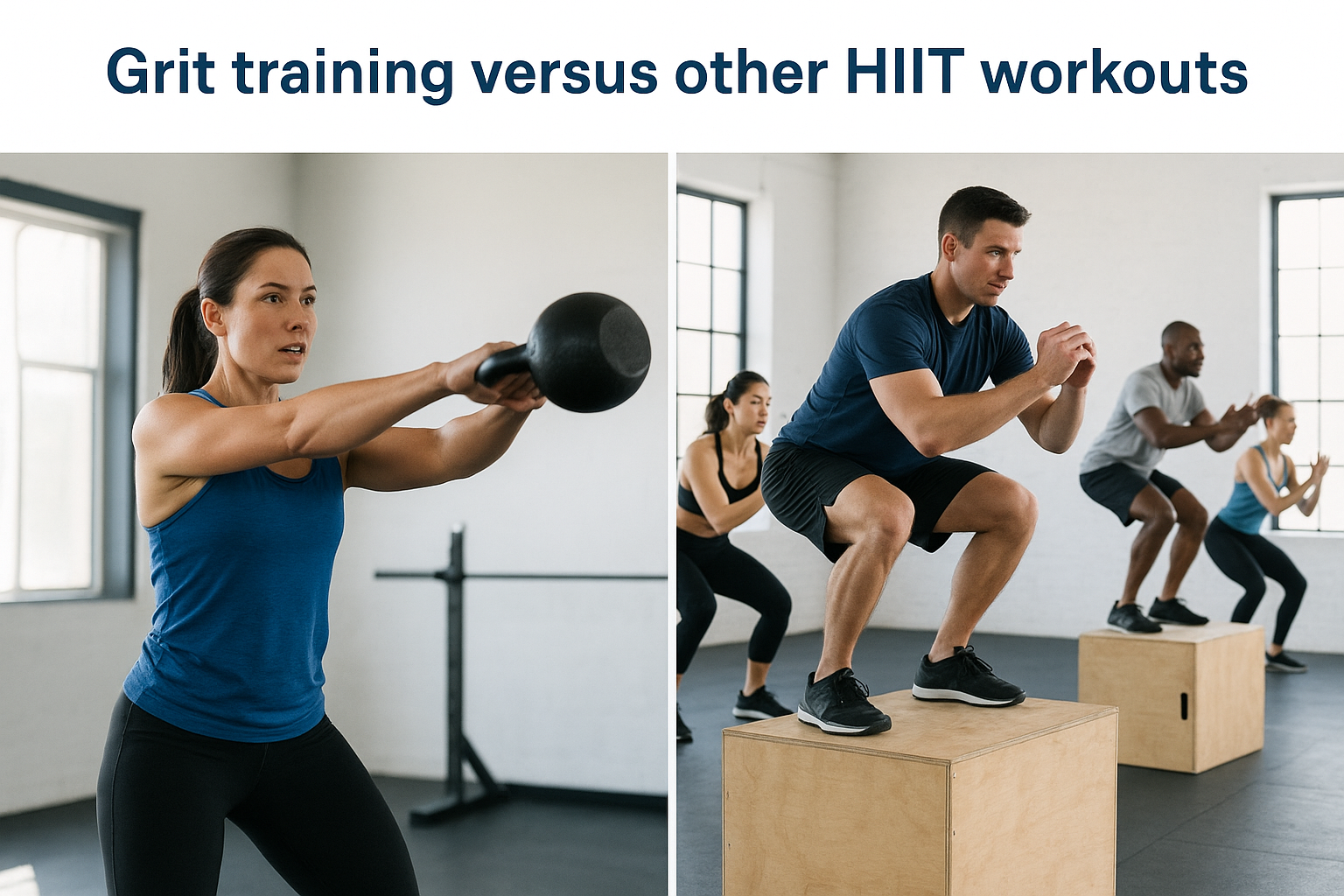
The format matters less than the consistency, but knowing the differences helps you pick a program you’ll actually stick with.
Understanding these distinctions helps you choose the right tool for your goal, whether that’s raw conditioning, skill development, or mental toughness specifically.
| Format | Typical structure | Best for |
|---|---|---|
| Grit training | Fixed work/rest intervals, coached, progressive | Building mental toughness and cardio-strength together |
| Tabata | 20 seconds on, 10 seconds off, 8 rounds | Quick, intense metabolic conditioning |
| CrossFit WOD | Varies daily, often for time or max reps | Skill variety and competitive drive |
| Traditional HIIT | Loosely timed intervals, self-paced | Beginners easing into intensity |
Selecting between these isn’t about which one burns more calories, since most deliver similar cardiovascular benefit when done consistently. The real question is which format keeps you showing up, because the toughness payoff only compounds with repetition. If you thrive on structure and coaching cues, grit training programs tend to hold people accountable better than open-ended workouts. If variety keeps you motivated, a rotating format might serve you longer. Either way, the underlying lesson, that discomfort is temporary, transfers regardless of which class you choose.
How to find a grit training class or program
Finding a quality grit training program starts with looking past the marketing and checking the actual structure behind it. Not every gym labels its high-intensity offering "GRIT," so search for terms like HIIT class, "conditioning circuit," or "interval training" if your local studio skips the branded name. Most major gym chains and independent studios run some version of this format, often built on the same work-to-rest principles as the licensed programs, so don’t rule out a class just because the name on the schedule looks different.
A program is only as good as the coach who can spot bad form when your legs are shaking.
What to look for before you sign up
Use this quick checklist before committing your money and your recovery days to a new class:
- A certified instructor who cues form corrections during the workout, not just before it
- Scaled options for every movement so beginners aren’t forced to match advanced athletes
- A clear work-to-rest ratio posted or announced before the session starts
- A warm-up and cooldown built into the schedule, not left to chance
Trying before committing
Almost every studio offers a free trial class or a discounted first week, which is the fastest way to judge coaching quality and class energy before buying a membership. Arrive early, introduce yourself to the instructor, and ask how they modify the workout for injuries or fitness levels, since their answer reveals a lot about how seriously the program takes safety.
Virtual and app-based options
Suppose your schedule or location rules out in-person classes. In that case, on-demand apps now offer structured interval programming you can follow at home, which works well once you already understand proper form and simply need the interval structure to push you.
Turning intensity into lasting toughness
Grit training works because it puts you in controlled discomfort on purpose, over and over, until your body and mind learn that hard moments end. That’s the whole point. Whether you’re chasing better conditioning or trying to build the kind of mental toughness that carries into your job, your relationships, or your team, the interval format gives you repeated proof that you can push past the point where you wanted to quit.
Organizations need that same lesson. Teams that fold under pressure rarely lack talent, they lack practice handling discomfort together. That’s the exact gap Robyn Benincasa addresses when she works with corporate teams, translating lessons from adventure racing and firefighting into frameworks leaders can actually use. If your organization needs that kind of resilience built deliberately rather than left to chance, see how the best motivational keynote speakers to hire bring these same principles to your team, well beyond the gym.