
You have a date, a room, and a theme. What you don’t have is someone to put on stage. Knowing where to find speakers for your event matters more than most planners expect, because a great keynote lifts the whole day and a weak one drags it down.
Here is the short answer. You can find speakers through five main channels: speaker bureaus, online directories, LinkedIn and your own network, industry associations, and direct booking through a speaker’s website. Free options exist and work well for small events. For a corporate keynote, expect to pay anywhere from a few thousand dollars to well into five figures, depending on the speaker’s profile and format.
Below, you’ll see how each option works, what it costs, and when it makes sense. I speak from the other side of the table as well. As a keynote speaker, Robyn Benincasa is booked by event planners, HR leaders, and executives every year, so this list reflects what makes a booking go smoothly for both sides. Use it to choose the right path for your budget, timeline, and audience.
1. Speaker bureaus and booking agencies
Agencies are the most common route when you need to find speakers for event keynotes and can’t vet dozens of strangers yourself. Think of a speaker bureau as a matchmaker with a contract department.

How it works
You send a brief with your date, audience size, budget, and theme. The agent returns a shortlist of three to five speakers and handles contracts, travel, and logistics.
Commission is how bureaus get paid, commonly 20 to 30 percent. It is usually built into the quoted fee, so you rarely see a separate line item.
Who it is best for
Large corporate meetings, sales kickoffs, and conferences with budgets above $10,000 benefit most. If you’re wondering how to find speakers for an event on a tight deadline, a good agent can turn around a shortlist in a day or two.
First-time planners also do well here, because someone else manages the paperwork and travel details that trip people up.
Typical cost
Fees depend on the speaker’s profile. These ranges reflect typical keynote speaker costs for in-person keynotes booked through a bureau.
| Speaker tier | Typical keynote fee |
|---|---|
| Emerging or regional | $2,000 to $7,500 |
| Established author or expert | $7,500 to $20,000 |
| Celebrity or headliner | $25,000 and up |
Travel, and sometimes a virtual-event surcharge, are usually extra. Always ask for a written quote that lists every expense before you sign.
Pros and cons
Bureaus save you time and shield you from a bad fit, but they come with trade-offs.
- Pros: vetted talent, fast shortlists, contract support, and backup if a speaker cancels.
- Cons: a higher effective price, less direct contact with the speaker, and a shortlist that may favor whoever the agency represents.
A bureau trades a little directness for a lot of protection, and for big events that trade is usually worth it.
2. Online speaker directories and marketplaces
Directories are the self-serve alternative to a bureau. You browse, filter, and contact speakers yourself.
How it works
Speakers post profiles with topics, fees, and video reels. You can filter by topic, location, and budget to find speakers for event themes in minutes, then contact them directly. Check three things before shortlisting:
- A demo reel from a live talk
- Reviews from verified clients
- A clear fee range
Who it is best for
Budgets under $10,000 and mid-size conferences suit this route well. Planners who enjoy research get the widest pool at no cost.
Expect to do the vetting yourself, so set aside a few extra hours.
Typical cost
Browsing is usually free. Fees follow the tiers above, and some platforms add a small booking fee on top.
Always confirm the all-in price and who pays platform fees before you agree to anything.
Pros and cons
Patience pays here, and skipped due diligence doesn’t.
- Pros: free to search, huge variety, direct contact, and often lower fees.
- Cons: uneven quality, self-reported claims, and no one to step in if a speaker cancels.
A directory gives you choice, but you carry the vetting a bureau would normally do for you.
3. Professional associations and speaker organizations
If you wonder how to find speakers for your event without paying a bureau, start with groups your industry already trusts. Trade associations and speaker organizations are full of people who present for a living.
How it works
Organizations like the National Speakers Association publish searchable member directories. Industry groups also keep past conference speaker lists, and staff will often recommend someone if you call. Ask which presenters earned the best ratings.
Who it is best for
Niche conferences, chapter meetings, and industry-specific events gain the most. Speakers from your field already know your jargon and regulations, so you spend less time briefing them.
Typical cost
Directories are often free to search, though some groups charge a membership fee for full access. Speaker fees follow the tiers above, and members sometimes offer friendlier rates to fellow association groups.
Pros and cons
This route rewards planners who already belong to the right circles.
- Pros: relevant expertise, peer-tested talent, and low search cost.
- Cons: a narrow pool, uneven availability, and little contract help.
A speaker who knows your industry beats a polished stranger who has to learn it on the day.
4. LinkedIn, social media, and TED-style talk platforms
Speakers who publish their work online let you judge them before you send a message. It is a free way to find speakers for event lineups, if you can put in the legwork.

How it works
Search LinkedIn for "keynote speaker" plus your topic, then read their posts and featured videos. On YouTube and TED-style platforms, watch a full talk to judge delivery. Then send a short message with your date, audience, and budget.
Who it is best for
Hands-on planners with flexible timelines and modest budgets get the most from this route.
Panels and fireside chats also suit it, because you can see a person’s style before you invite them.
Typical cost
Searching is free, and LinkedIn Premium is optional. Fees follow the tiers above, though speakers with a viral talk often price at the high end.
Independent speakers skip agency commissions, so ask about direct-booking rates.
Pros and cons
Public content shows you the real speaking style, but polish can hide weak fit.
- Pros: free, easy to preview, direct contact.
- Cons: time-intensive, unvetted claims, no contract support.
A talk you can watch beats a bio you have to trust.
5. Local networks, referrals, and free options
Some excellent speakers never appear in a directory. They get booked on word of mouth, and it costs you almost nothing to find speakers for event lineups this way.
How it works
Start by asking colleagues, board members, and past attendees who they have seen and loved. Then check local sources:
- Chambers of commerce and Rotary clubs
- University faculty and business schools
- Toastmasters chapters
- Local nonprofits and company leaders
Before you invite anyone, request a video and call one reference.
Who it is best for
Community events, nonprofit fundraisers, and school programs fit well, especially with tight budgets. Internal panels also work, since your own people often have stories worth telling.
Typical cost
Many local speakers talk for free or a modest honorarium, often $0 to $1,500. Offer travel costs, a meal, or a donation to their cause as thanks.
Pros and cons
Referrals carry built-in trust, but quality swings widely.
- Pros: low cost, personal trust, and local relevance.
- Cons: a small pool, uneven polish, and no backup if someone cancels.
A referral from someone you trust is worth more than any five-star listing.
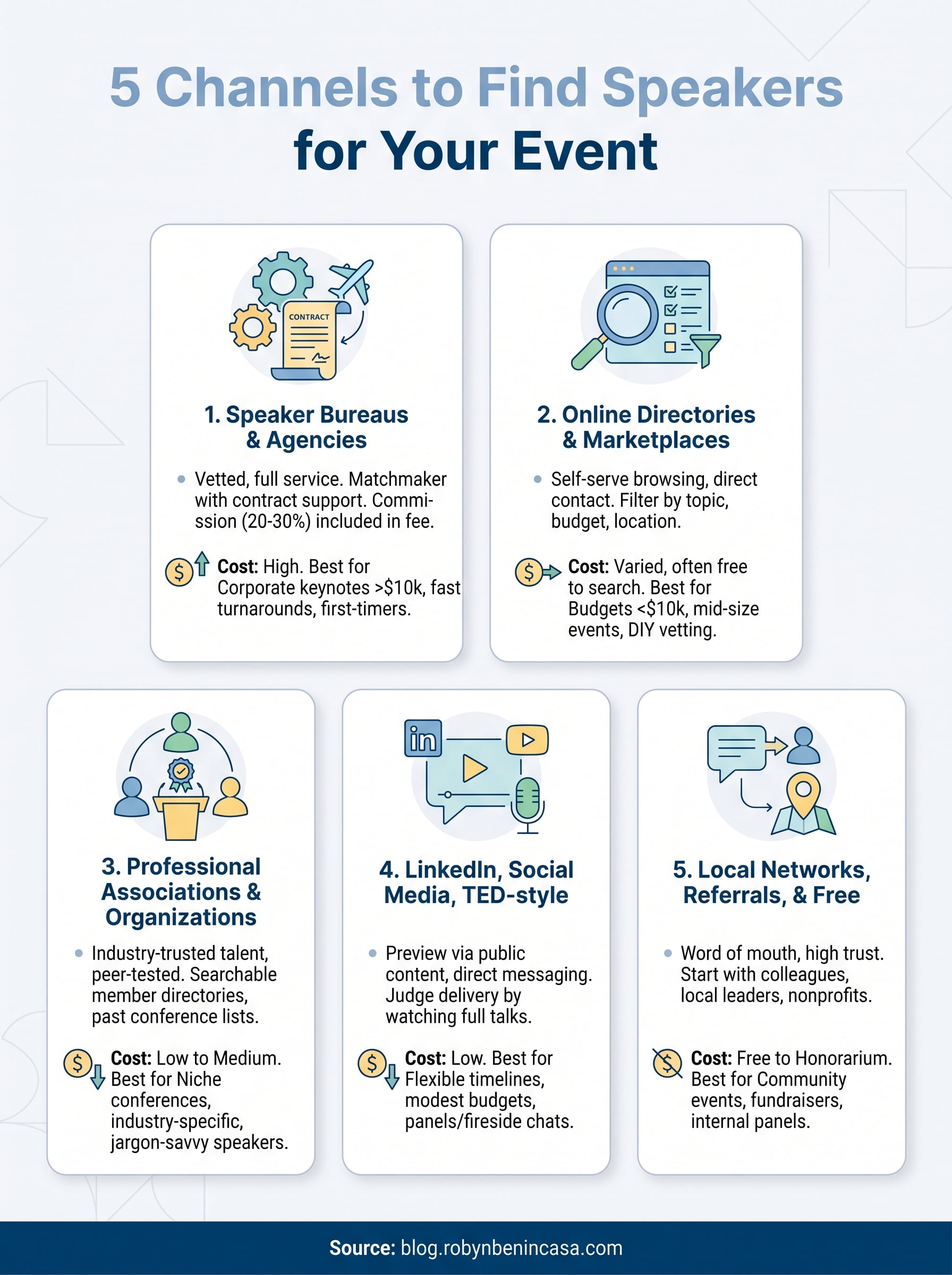
Choosing the right speaker for your event
Every option above can help you find speakers for your event, so the real decision comes down to budget, timeline, and risk. Big corporate meetings with money on the line usually justify a bureau. Smaller budgets point to directories, associations, LinkedIn, or local referrals.
Whichever channel you pick, the same habits protect you. Watch a full live talk, call a reference, and get every cost in writing before you sign. A speaker who fits your audience beats a famous name who doesn’t.
If your goal is a team that works better together, start with a speaker who has actually built one. Robyn Benincasa shares what 15 years of world championship adventure racing taught her about leadership, in person or virtually. See how she can energize your team culture and book Robyn Benincasa as your next corporate culture keynote speaker.