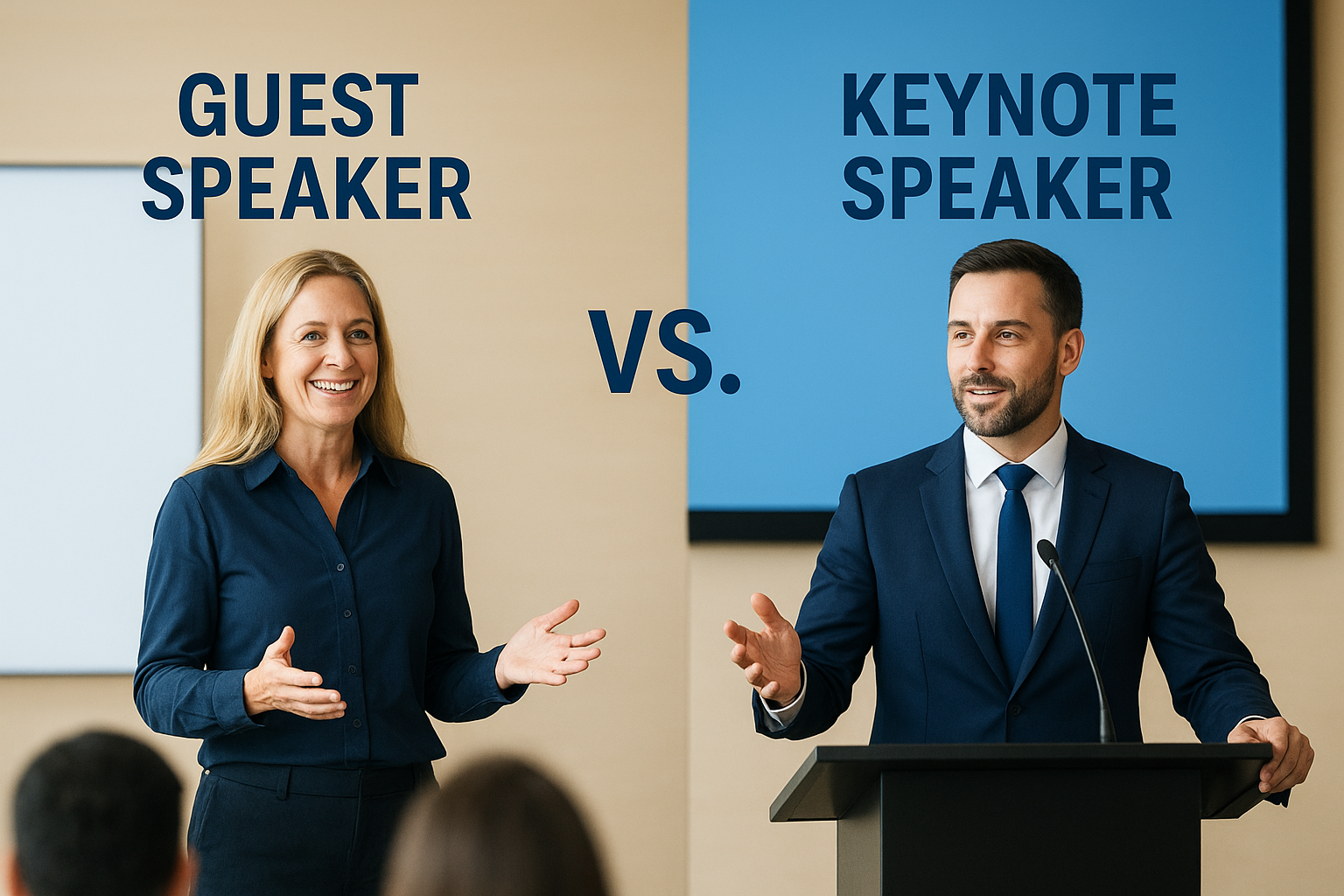
You’re planning a conference or sales meeting and the agenda has a slot for a speaker, but you’re not sure which title to use in the contract, or what the role of a keynote speaker at a conference should actually be. The guest speaker vs keynote speaker question trips up a lot of event planners, and getting it wrong can mean booking the wrong person for the wrong role, or paying keynote rates for a shorter, less central slot.
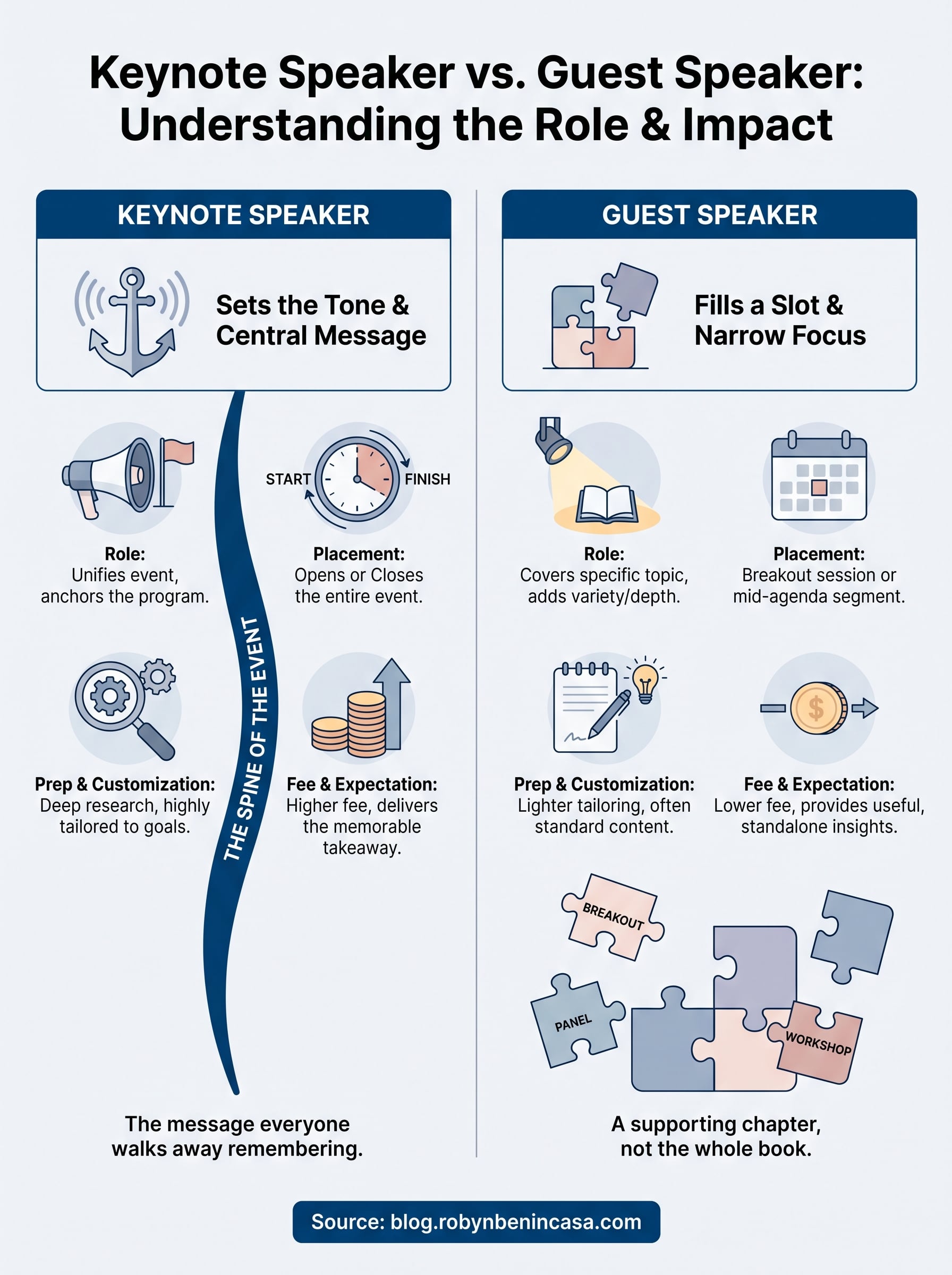
Here’s the short answer: a keynote speaker sets the tone for the entire event and delivers the central message everyone walks away remembering, while a guest speaker typically fills a supporting slot, breakout session, or add-on segment with a narrower focus. The distinction matters for budget, billing, and what you expect the speaker to deliver.
This article breaks down the real differences in role and responsibilities, how each fits into your event structure, and what to look for when you’re deciding which one your program actually needs. If you’re weighing options for a leadership summit, sales kickoff, or company offsite, you’ll walk away knowing exactly which booking makes sense.
Why the keynote-guest distinction shapes your event’s success
Getting the label right isn’t just semantics. It determines how your audience experiences the entire event, and it determines how much you should expect to pay. A keynote speaker, by definition, is booked to anchor the program: their message ties together every breakout, panel, and workshop that follows. When you hire someone for that role, you’re hiring them to set the emotional and strategic tone for the whole day, not just fill 45 minutes on the agenda. A guest speaker, by contrast, is brought in for a specific, narrower purpose, maybe to cover a niche topic, energize a single breakout track, or add variety to a longer agenda.

Book the keynote to set the direction of your event, and everything else on the agenda should support that direction.
This distinction has real budget consequences, and it’s worth knowing what a keynote speaker costs before you build the line item. Keynote speakers command higher fees because they’re expected to research your organization, tailor their talk to your specific challenges, and deliver a message with staying power. Robyn Benincasa’s approach, for example, involves understanding a client’s culture and business goals before she ever steps on stage, because a generic talk doesn’t move the needle for a sales team trying to climb from 17th to 1st in the country. Guest speakers, especially those filling shorter or more specialized slots, typically charge less because the scope of preparation and impact expected is smaller.
What happens when you mix up the roles
Confusing the two roles creates predictable problems on event day. If you book a guest speaker but expect keynote-level audience impact, you’ll end up with a talk that feels thin against the weight of your agenda. If you book (and pay for) a keynote speaker but slot them into a 20-minute afternoon breakout, you waste both budget and their ability to actually move the room. Here’s a quick look at how the mismatch plays out:
| Situation | What goes wrong |
|---|---|
| Guest speaker booked as closing keynote | Talk lacks the depth and audience-specific tailoring attendees expect from a closer |
| Keynote speaker slotted into a short breakout | Underuses their prep and fee, no room to build the full arc of the message |
| No clear brief given to either | Speaker’s content doesn’t connect to the rest of the agenda, feels bolted on |
| Keynote billed as "guest speaker" in marketing | Attendees undervalue the session, lower engagement before it even starts |
The audience experience angle
Audiences pick up on this mismatch even when they can’t name it. A keynote speaker vs guest speaker decision made without thinking through audience expectations often shows up as low energy in the room or attendees checking phones during a session that was supposed to be the highlight. Event planners who get this right treat the keynote slot as the spine of the day, the one talk that every other session references back to, while guest speakers fill in supporting content around that spine. Sorting this out before you finalize contracts saves you from awkward conversations about fees, timing, and what the speaker actually delivers on stage.
How to decide which type of speaker your event needs
Start with your agenda’s structure before you start calling speaker bureaus. Ask yourself what role this slot actually plays: is it the moment that frames everything else, or is it one piece of a bigger puzzle? A keynote speaker makes sense when you need a unifying message, something that ties your sales numbers, your culture initiative, or your merger integration into one story the whole room can rally around. A guest speaker makes sense when you’ve already got that spine in place and you need someone to add depth on a specific subtopic, like a breakout on negotiation tactics or a lunch session on wellness.
If you can’t name the one idea you want the whole room repeating at the bar that night, you need a keynote, not a guest slot.
Questions to ask before you book
Run through these before you sign a contract or start the process of hiring a keynote speaker, since they’ll tell you which role you actually need:
- Does this session open or close the event, or sit in the middle of a packed agenda? Opening and closing slots almost always call for a keynote.
- Do you need the speaker to reference other sessions, or can their content stand alone? Standalone content fits a guest speaker.
- What’s your budget ceiling, and does it match keynote-level customization? If you can’t afford the research and tailoring a real keynote requires, don’t bill it as one.
- Is there one central challenge (declining sales, low morale, a rocky merger) you need addressed head-on? That’s keynote territory.
- Are you filling out a longer conference with variety, or building toward one big takeaway? Variety points to guest speakers; one big takeaway points to a keynote.
Matching format to your goals
Your event’s goals should drive the decision more than habit or precedent. A sales kickoff built around hitting a specific number needs one of the speakers who can motivate a sales team, connecting performance to culture the way Robyn Benincasa’s talks link adventure racing lessons to sales teams climbing national rankings. A multi-track leadership summit with breakouts on communication, delegation, and conflict resolution can layer in several guest speakers under one leadership keynote umbrella. Weighing guest speaker vs keynote speaker against your actual agenda, rather than your budget alone, keeps you from underbooking the moment that matters most.
Keynote vs. guest speaker: key differences at a glance
Sometimes you just need the comparison laid out side by side instead of parsed through paragraphs. The table below captures how a keynote speaker and a guest speaker differ across the factors that actually affect your planning: fee, prep time, agenda placement, and audience expectations.
| Factor | Keynote Speaker | Guest Speaker |
|---|---|---|
| Agenda placement | Opens or closes the event | Fills a breakout, session, or add-on slot |
| Message scope | Ties the whole event together | Covers one topic or skill |
| Customization | Deep research into your organization’s goals | Lighter tailoring, often a standard talk |
| Typical fee range | Higher, reflects prep and central role | Lower, reflects narrower scope |
| Audience expectation | The talk people reference all day | A useful, standalone session |
| Booking lead time | Often months out, especially for in-demand names | Can be booked closer to the event date |
The keynote is the message your whole event is built around; the guest slot is a chapter, not the book.
Why the fee gap exists
Speaking fees reflect effort, not just reputation. A keynote booking usually involves pre-event calls, a review of company data or culture surveys, and a talk built specifically for that room, the kind of prep Robyn Benincasa puts into every keynote speaking engagement so the message lands for that specific sales team or leadership group. Guest speakers, especially those covering a defined skill or topic, can often reuse more of their existing material because the session doesn’t need to carry the whole event’s throughline.
Why the placement matters more than the title
Titles get misused constantly in contracts and marketing materials, so don’t rely on the label alone. Verify placement instead: if the session opens the day, closes it, or gets referenced by every other speaker afterward, you’re booking keynote-level work regardless of what the invoice calls it. Watching how a speaker’s content connects to the rest of your program tells you more about their real role than whatever title ends up on the printed agenda.
Where panelists, plenary speakers, and guests of honor fit in
Event programs often include roles that don’t fit neatly into the guest speaker vs keynote speaker split, and understanding how a keynote speaker differs from other speakers keeps you from mislabeling any of them. A panelist shares a stage with other experts, usually moderated, answering questions rather than delivering a single prepared talk. Panelists work well when you want multiple perspectives on one issue, like a discussion on hybrid work policy, but they don’t carry the unifying weight a keynote does. Booking a panel instead of a keynote for your opening session usually leaves attendees without the one clear message a strong event needs.

Plenary speakers cause similar mix-ups because the term sounds interchangeable with keynote. Technically, a plenary session is simply one that all attendees join together, as opposed to breakout tracks running in parallel. A plenary speaker fills that combined session, and often that speaker is also your keynote. But not every plenary slot needs keynote-level customization. A plenary might host a shorter guest speaker delivering a focused update, like a product launch briefing, without needing the full arc of a tone-setting keynote.
A title tells you where someone stands on stage. It doesn’t tell you what role they’re actually playing in your event’s story.
Guests of honor round out the list, and they’re the easiest to separate from the other roles. A guest of honor is recognized for who they are, an achievement, a retirement, a milestone, rather than booked to deliver a strategic message. They might speak briefly, but their presence is ceremonial, not structural. Confusing a guest of honor with a keynote speaker means expecting content depth from someone who was invited to be celebrated, not to teach.
Here’s a quick way to sort these roles when you’re building your program:
- Keynote speaker: Sets the throughline for the whole event.
- Guest speaker: Covers one topic in a supporting slot.
- Panelist: Shares a stage, answers questions, no solo throughline.
- Plenary speaker: Addresses the combined audience, may or may not be your keynote.
- Guest of honor: Recognized for their identity or milestone, not booked for content.
Matching the right speaker to your event
Sorting out guest speaker vs keynote speaker roles before you sign a contract saves you from mismatched budgets and flat audience reactions. A keynote anchors your event’s message and deserves the deeper prep and fee that go with that job. A guest speaker fills a defined slot with focused content, and that’s a good thing when your agenda already has its spine in place. Panelists, plenary speakers, and guests of honor each play their own part, but none of them replace the unifying role a strong keynote provides.
If your next event needs a speaker who can turn a room full of different teams into one focused group with a shared goal, that’s exactly the gap a keynote fills. Browse inspiring keynote speakers worth booking and see which message matches what your event needs to carry.