
You’ve got a conference date on the calendar, a budget line for talent, and a mandate to make this year’s event actually matter to the people sitting in the room. That’s the moment most planners realize they don’t quite know how to hire a keynote speaker who’ll deliver more than a nice photo for the recap email. Fees range from a few thousand dollars to six figures, agencies pitch you a dozen names, and everyone claims to be a fit for "leadership and teamwork."
This guide walks you through the actual process: how to define what your audience needs before you start browsing bios, what questions separate a professional keynote speaker from someone who just reads slides (and what a keynote speaker’s role actually is), and how booking a keynote speaker actually works from first inquiry to signed contract. You’ll also get a realistic look at typical fees and the red flags that signal a mismatch before you’ve wired a deposit.
Whether you’re planning a sales kickoff, a leadership offsite, or an annual conference, the steps here apply the same way. I’ll draw on what actually gets asked and negotiated when organizations like Allstate or Northrop Grumman book a keynote speaker for conference programs, so you can run your own search with the same confidence.
What to know before you hire a keynote speaker
Before you open a browser tab and start Googling names, get clear on a few realities of this market. Hiring a keynote speaker isn’t like booking a caterer where price maps neatly to quality. A $7,500 speaker can outperform a $50,000 name if the content is built for your industry and your audience actually remembers it a month later. Most planners overspend on reputation and underspend on relevance, then wonder why the post-event survey scores are lukewarm.
Fee ranges vary more than people expect
Generally, speaker fees fall into a few bands, and knowing what you’ll really pay to hire a keynote speaker helps you negotiate from an informed position instead of guessing.
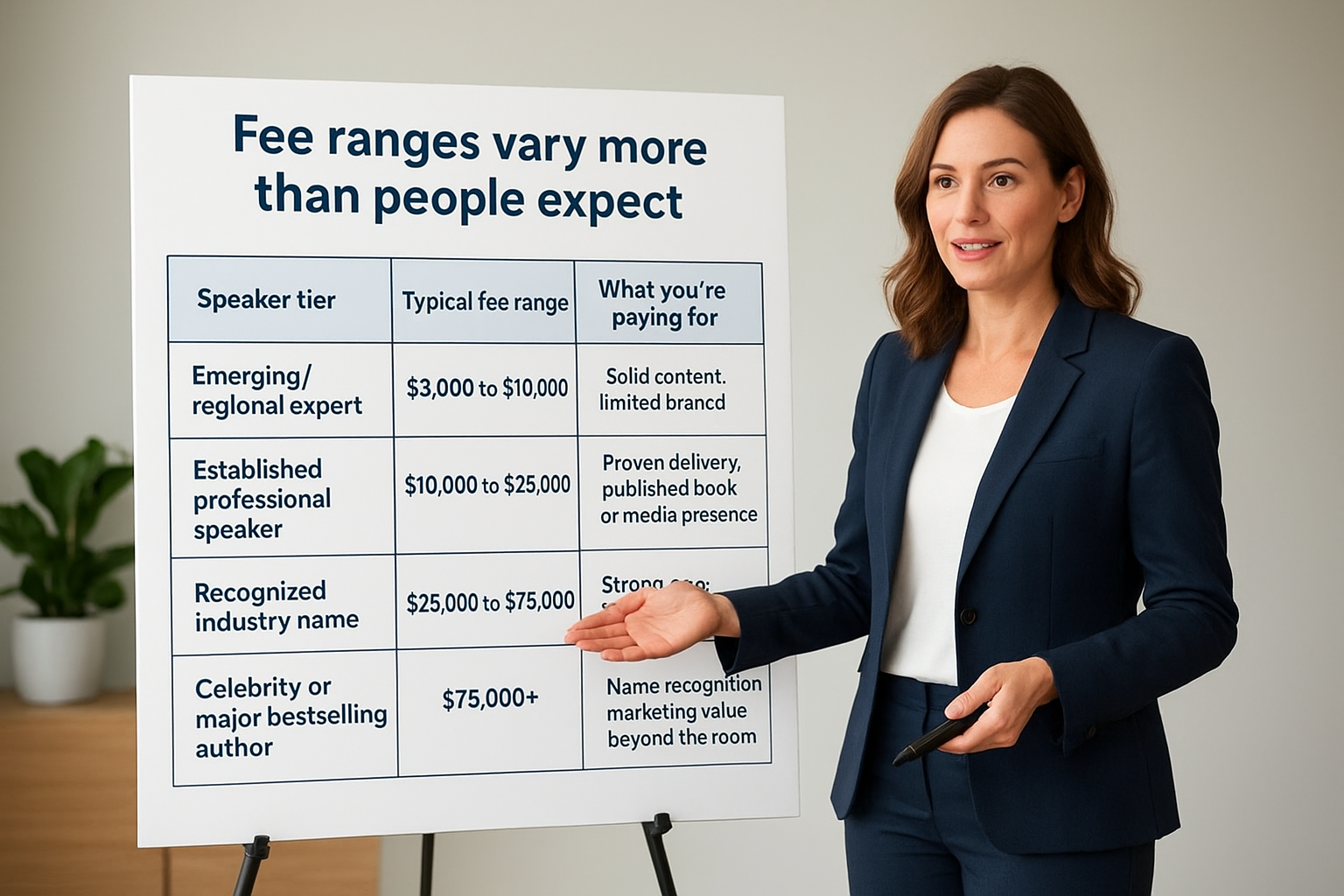
| Speaker tier | Typical fee range | What you’re paying for |
|---|---|---|
| Emerging/regional expert | $3,000 to $10,000 | Solid content, limited brand recognition |
| Established professional speaker | $10,000 to $25,000 | Proven delivery, published book or media presence |
| Recognized industry name | $25,000 to $75,000 | Strong draw, customized content, case study depth |
| Celebrity or major bestselling author | $75,000+ | Name recognition, marketing value beyond the room |
The right fee tier isn’t about status, it’s about whether the message actually changes behavior back at the office.
These numbers shift with format, location, and how much customization you request, so treat the table as a starting point for budget conversations, not a locked quote.
Live, virtual, and hybrid change the math
Once you know roughly what you can spend, decide on format, because it affects both cost and speaker selection. A keynote speaker for hire who commands the room in person doesn’t automatically translate to a strong virtual session, and vice versa. Virtual keynotes typically run 30 to 50 percent less than the in-person fee since travel and setup drop out of the equation, but they demand a speaker who’s genuinely rehearsed the format, not someone reading a deck to a webcam. If your event is hybrid, ask directly how the speaker adapts energy and interaction for the remote half of the audience. This is worth clarifying early, since it narrows your shortlist fast and keeps you from booking someone great in a ballroom who falls flat on Zoom.
Motivational versus practical content
Finally, separate motivational keynote speakers who deliver an emotional lift from speakers who leave your team with a usable framework. Both have a place, but they solve different problems. A sales kickoff chasing a specific number needs tools your reps can apply Monday morning. An all-hands meeting after a rough quarter might just need permission to feel good about the mission again. Neither approach is wrong, but conflating the two is how organizations end up with a standing ovation and zero measurable change three months later. If you’re evaluating a professional keynote speaker, and you understand how a keynote differs from other kinds of speakers, ask what participants are supposed to do differently after the talk, not just how they’re supposed to feel. That single question, asked before you shortlist anyone, will save you from the most common hiring mistake in this business: booking charisma and hoping it converts to results on its own.
Step 1. Define your event goals and audience
Before you contact a single agency, write down what success looks like for this specific event. Vague goals like "inspire the team" produce vague results, and they make it nearly impossible to brief a speaker or measure whether the keynote speaker booking was worth the fee. Get specific: are you trying to unify two departments after a merger, reset a sales team’s confidence after a missed quarter, or give a leadership offsite a shared framework for decision-making? Each of those needs a different speaker, different content, and a different tone in the room.
Get specific about the outcome you need
Start by writing a one-sentence goal statement, the kind you could hand to a speaker’s team as a brief. "We want our regional managers to leave with three tactics for reducing turnover" is usable. "We want people fired up" is not. This step matters more than most planners realize.
A speaker can only hit a target you’ve actually defined.
Once you have that sentence, test it against your budget and format decisions from the section above, since a highly specific, industry-tailored outcome usually points you toward the established-professional tier rather than a big name with generic content.
Map the audience before you search names
Next, build a quick audience profile. Knowing who’s in the seats changes which event keynote speaker actually fits, regardless of how impressive their client list looks.

- Seniority mix: Are you speaking to frontline employees, middle management, or a room of executives?
- Industry context: Does the speaker need direct experience in your sector, or does an outside analogy (adventure racing, sports, military) land better?
- Group size and setting: A 200-person ballroom keynote plays differently than a 40-person leadership retreat.
- Existing morale: Are you rebuilding trust after a rough year, or building momentum on an already strong team culture?
Writing these details down before you start browsing bios keeps you from getting swayed by a flashy reel that doesn’t actually match your room. It also gives you language to use in Step 2, when you’re comparing candidates against a real brief instead of a gut feeling.
Step 2. Find and shortlist keynote speakers
Now that you’ve got a written goal and an audience profile, start pulling names from more than one channel. Relying only on a single speaker bureau’s suggested list means you’re seeing candidates who pay that bureau a commission, not necessarily the best fit for your room. Cast a wider net and you’ll find better matches faster, plus you’ll have leverage when it’s time to negotiate fees later.
Cast a wide net across the right channels
Good sources rarely overlap, so work through several at once rather than settling for whichever list lands in your inbox first.
- Speaker bureaus: Useful for volume and vetted contracts, but ask who else they represent in your topic area so you’re not shown a narrow slice.
- Direct outreach: Many speakers, including Robyn Benincasa, list availability and a way to request a booking directly on their own site, which often moves faster than going through a third party.
- Peer referrals: Ask other HR leaders or event planners in your industry who they’ve booked and would book again. This is usually the highest-signal source you have.
- Association and conference recommendations: Industry groups often keep informal lists of speakers who’ve performed well at similar events.
A shortlist built from one source is really just someone else’s recommendation, not your own research.
Narrow to a workable shortlist
Once you’ve gathered names, cut the list down to three to five real candidates before you go further, using the same criteria you’d apply to choosing the best keynote speaker for a corporate event. Reviewing full speaker reels, reading their published content, and checking whether their topic actually matches your one-sentence goal will eliminate most of the list quickly. Skip anyone whose reel is all crowd shots and applause with no actual content visible, since that’s usually a sign the substance doesn’t hold up under scrutiny. Keeping the shortlist small also makes Step 3 faster, since you’re doing real due diligence on a handful of people instead of skimming twenty bios and hoping one sticks.
Step 3. Vet and evaluate potential speakers
With three to five names on your shortlist, it’s time to test them against reality instead of a highlight reel. This is where most planners get lazy, and it’s exactly where a bad keynote speaker hire gets caught before you sign anything. A polished demo video tells you almost nothing about how someone handles a live Q&A, adapts to a room that’s not laughing at the right moments, or customizes content for your industry instead of recycling the same talk they gave last month in a different city.
Watch full-length footage, not just the highlight reel
Ask every candidate or their team for a complete, unedited recording of a past keynote, not the two-minute sizzle reel built for marketing. A full talk shows you pacing, audience interaction, and whether the energy holds for 45 minutes instead of just the applause line. If a speaker or their agency can’t produce full-length footage, treat that as a real red flag rather than an oversight.
A highlight reel sells you a moment. A full recording tells you the truth.
Ask the questions that separate substance from polish
Get on a call with each finalist, or their representative, and ask direct questions before you move to contracts:
- How will you customize this talk for our specific goal and audience?
- Can you share two or three references from planners who booked you for a similar event?
- What’s your process for a pre-event discovery call with our team?
- How do you handle a room that’s not responding the way you expect?
- What do you want attendees to actually do differently afterward?
A strong candidate for hiring a keynote speaker answers these without hesitation and usually asks you questions back, since real customization requires understanding your organization first. Vague answers, or a pitch that sounds identical to what you’d hear for any other client, tell you the content isn’t built for your room. This step takes an extra week, but it’s the difference between a speaker who performs and one who actually moves the needle once everyone’s back at their desks.
Step 4. Negotiate fees, contracts, and logistics
Once you’ve picked a finalist, the fee you saw on their website is rarely the final number. Most professional keynote speaker rates have some flexibility, especially if you can offer a slower travel day, a shoulder-season date, or a multi-session add-on like a workshop the next morning. Ask directly whether the quoted fee includes travel, or whether that’s billed separately, since this is the most common source of budget surprises after a contract is signed.
Know what’s actually negotiable
Before you push back on price, understand which levers actually move. Speakers protect their headline fee because it affects every future negotiation, but they’re often flexible on the details around it.
- Date flexibility: Weekday or off-peak dates sometimes come with a lower fee than a Friday conference slot.
- Travel and lodging: Ask if these are included or billed at cost, and get the answer in writing before you compare quotes across candidates.
- Add-on sessions: A breakout workshop or VIP meet-and-greet booked alongside the keynote often costs less per session than booking it separately later.
- Multi-year or multi-event deals: If you’re likely to rebook, say so. Speakers will often price a return engagement lower than a one-off.
Negotiate the details around the fee, not the speaker’s core value, and you’ll get further with less friction.
Lock the logistics in the contract
Getting a contract in place protects both sides, and it should spell out more than just the date and dollar amount. Require confirmation of AV needs, run-of-show timing, introduction script, and a named point of contact for the event day. Specify cancellation and rescheduling terms up front, since weather and travel disruptions happen more often than planners expect. Include a clause on recording rights if you plan to use footage internally or for marketing, since this gets contentious after the fact if it isn’t addressed early. A clear contract turns hiring a keynote speaker from a leap of faith into a straightforward business transaction, with no ambiguity about who owns what once the applause fades.
Bringing the right voice to your stage
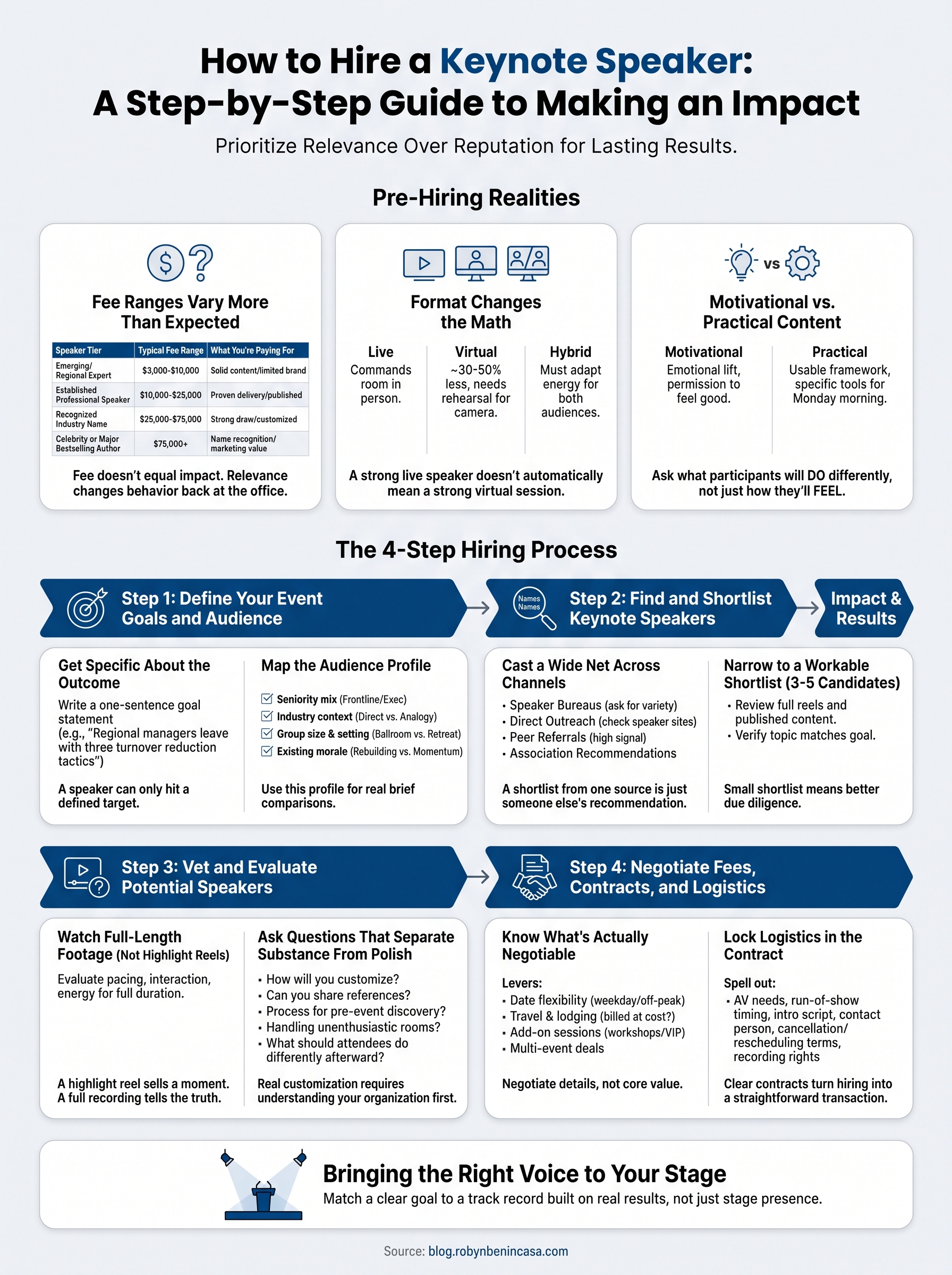
Getting this right comes down to sequence, not luck. Define the outcome you actually need, build a shortlist from more than one source, vet full-length footage instead of sizzle reels, and lock the logistics in writing before you sign. Skip any of those steps and you’re gambling a five-figure budget on a polished bio instead of a proven fit.
Organizations like Allstate and Northrop Grumman didn’t land on the right speaker by accident. They matched a clear goal to a track record built on real results, not just stage presence. That’s the standard worth holding your own search to, whether you’re planning a sales kickoff or a full leadership conference.
If you’re ready to compare finalists, start with the top corporate event speakers worth booking and see how a speaker who’s led actual world championship teams turns that experience into frameworks your people can use Monday morning.