You’ve probably heard soldiers talk about
Why army resilience training matters
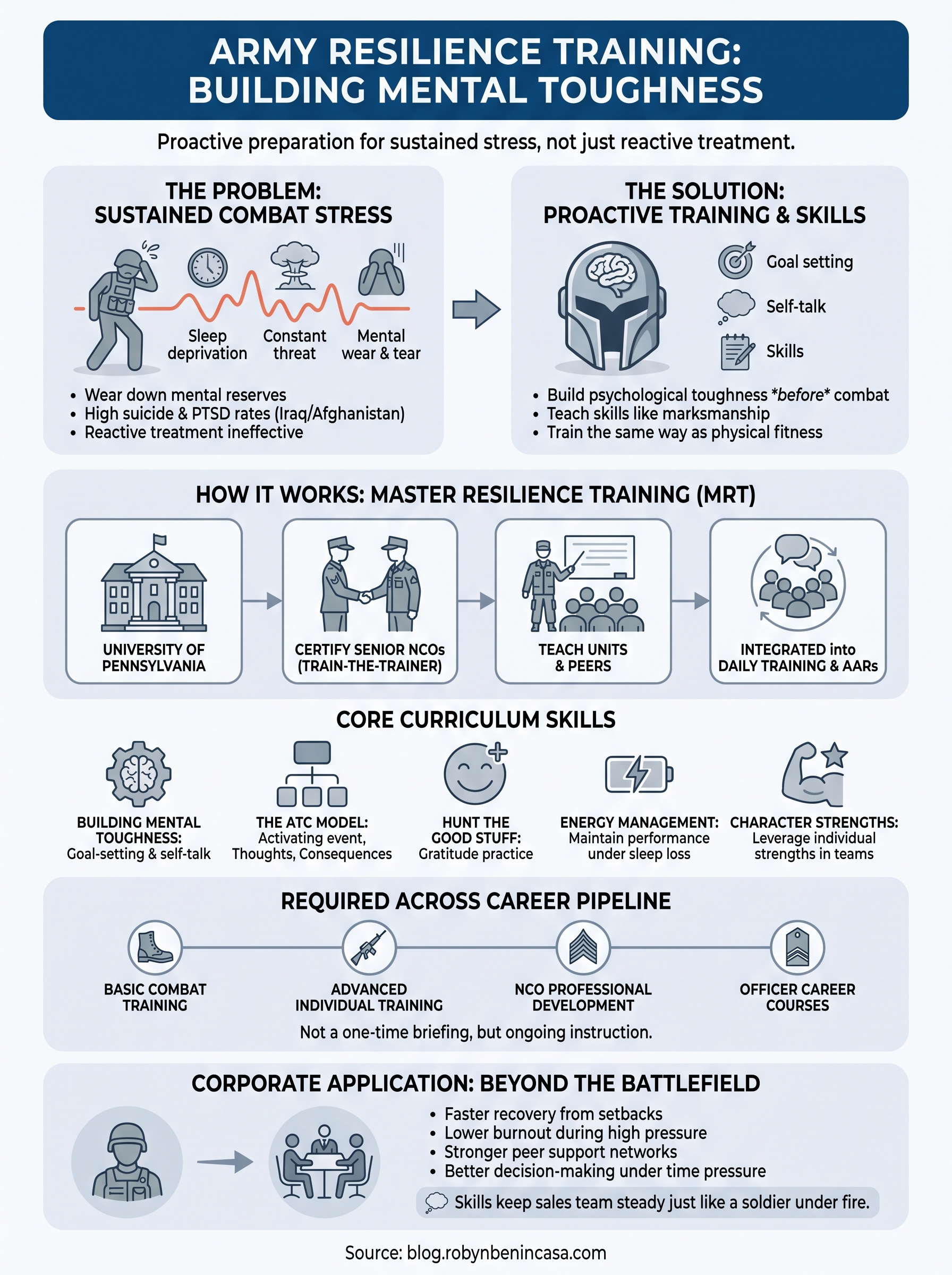
"Grit" or "staying frosty," and there’s a reason that language sticks, since training grit as a skill is exactly what the Army set out to do. Army resilience training exists because combat exposes soldiers to a level of sustained stress that most civilian jobs never approach. Deployments, sleep deprivation, and the constant threat of violence wear down a person’s mental reserves faster than physical training alone can prepare them for. The Army learned this the hard way during the wars in Iraq and Afghanistan, when suicide rates and post-traumatic stress diagnoses climbed sharply among returning troops. Leadership needed a systematic way to build psychological toughness before soldiers ever set foot in a combat zone, not just treat the damage afterward.
Before this program existed, the Army treated mental health reactively. A soldier struggled, got referred to a counselor, and hoped for the best. That approach left too many people falling through the cracks. Resilience training army-wide changed the model by teaching resilience skills proactively, the same way marksmanship or first aid gets taught before deployment rather than after an injury.
Resilience isn’t something you’re born with. It’s a skill you build the same way you build physical fitness.
The human cost of skipping it
Consider the numbers. Research from the Army’s own studies found that units receiving structured resilience instruction showed measurable drops in depression and anxiety symptoms compared to units that didn’t. The Department of Defense has continued funding programs like this because the alternative, treating breakdowns after they happen, costs more in lost personnel, medical care, and mission readiness. Sending someone into a high-stakes environment without mental preparation is like sending them into a firefight without body armor.
Why leaders outside the military should pay attention
Organizations facing mergers, layoffs, or market pressure deal with a milder but real version of the same problem. Employees who lack coping tools burn out, disengage, or quit. That’s part of why military resilience training concepts have migrated into corporate leadership development programs. The core insight transfers cleanly: teams that can regulate stress under pressure outperform teams that can’t, regardless of whether the pressure comes from enemy fire or a missed quarterly target. Companies that invest in building this capacity ahead of a crisis, rather than scrambling afterward, consistently come out stronger on the other side.
How army resilience training works
Master Resilience Training, the Army’s formal name for this program, works by certifying senior noncommissioned officers as trainers who then teach the material to their own units. This train-the-trainer model means soldiers learn resilience skills from someone who already knows their unit’s culture and challenges, not an outside consultant parachuting in for a weekend seminar. Army resilience training rolls out through a ten-day course at the University of Pennsylvania’s Positive Psychology Center, where selected soldiers study the science behind stress response before returning to teach peers.
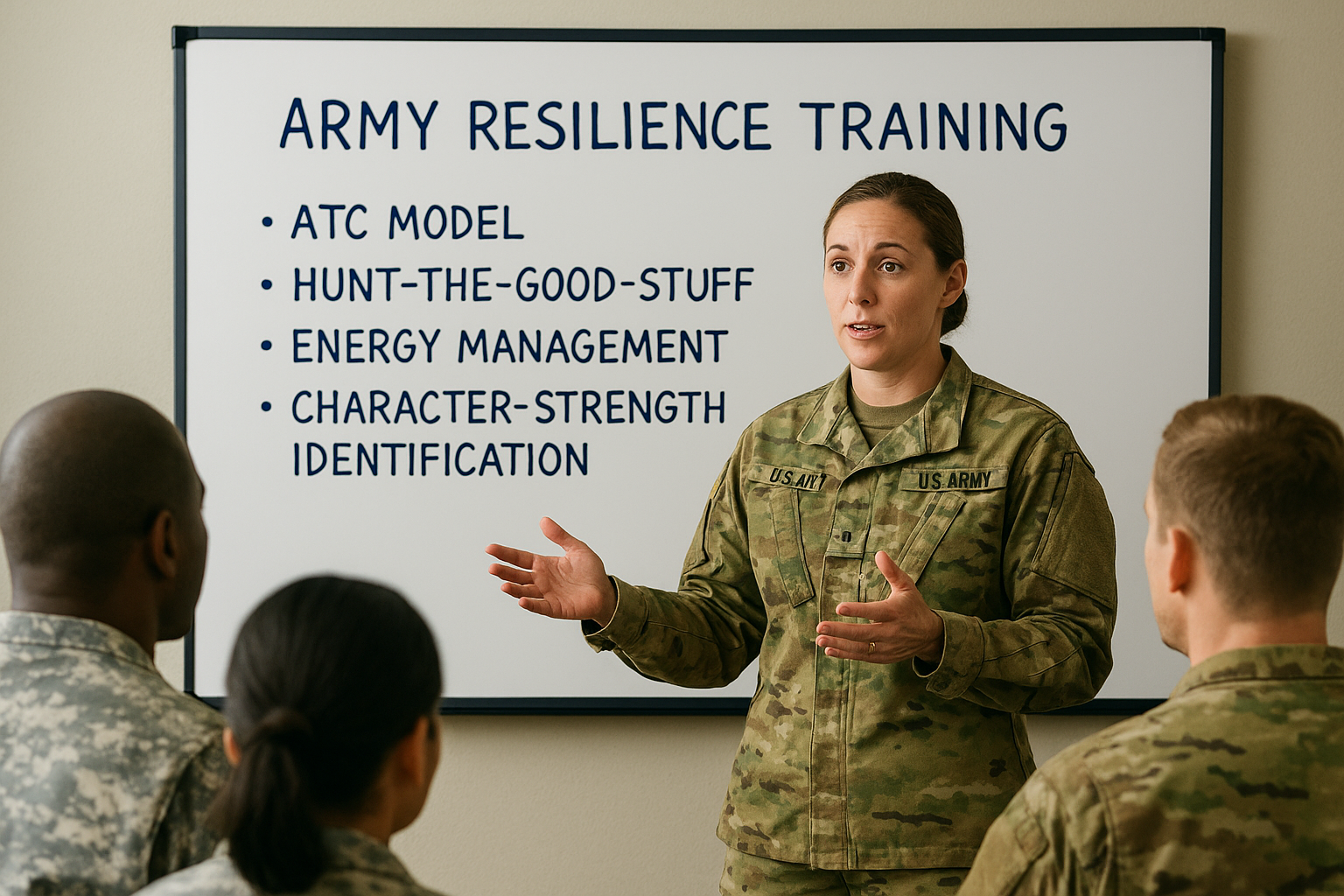
The curriculum breaks down into specific, teachable skills rather than vague pep talks. Trainees practice identifying automatic thoughts that spiral into panic, then learn to interrupt that spiral with evidence-based reframing. Key components include:
- Building mental toughness through goal-setting and self-talk exercises
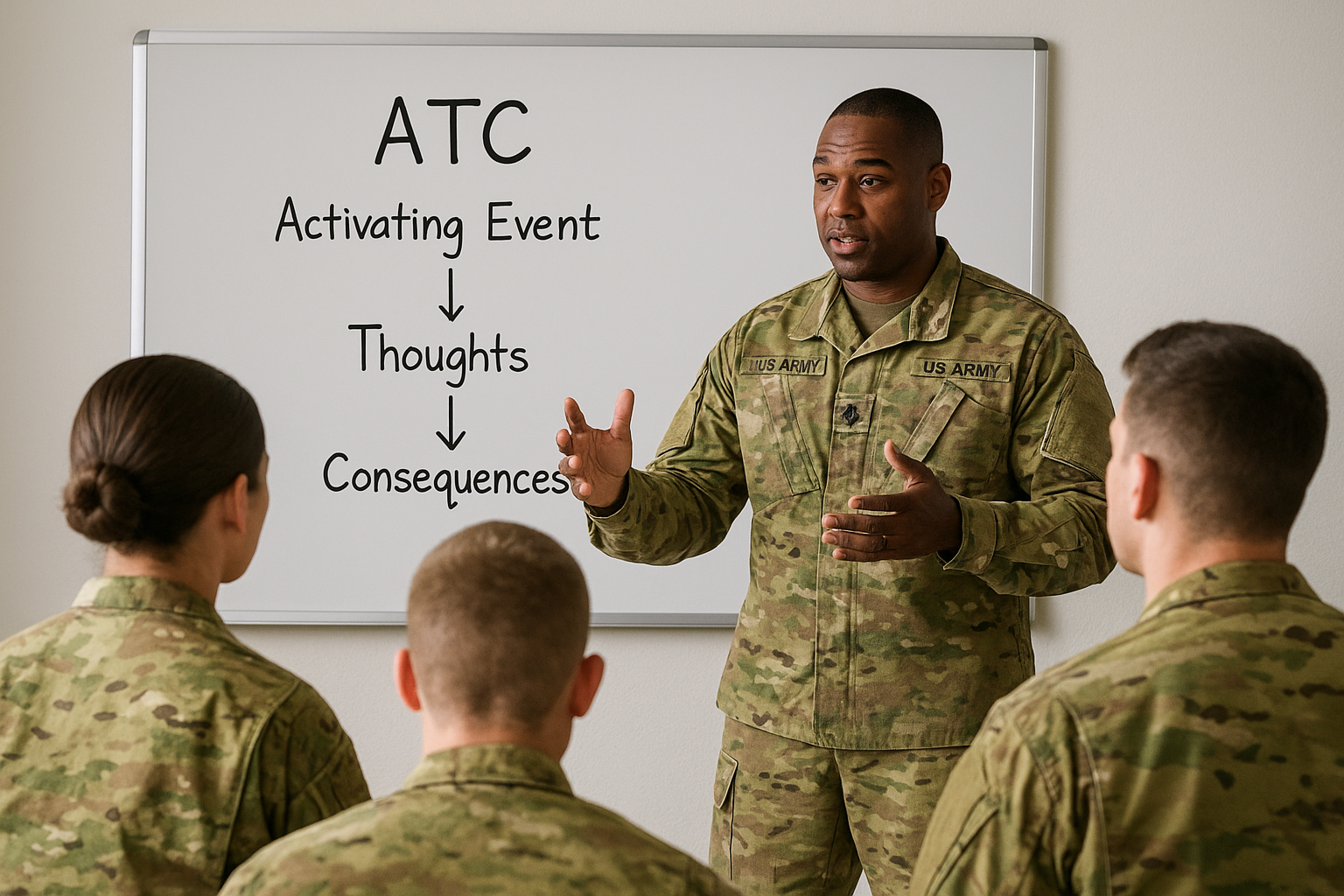
- The ATC model (Activating event, Thoughts, Consequences) for breaking down reactions in real time
- Hunt the good stuff, a gratitude practice shown to counter negativity bias
- Energy management techniques for maintaining performance under sleep loss
- Character strengths identification to leverage individual strengths in team settings
Resilience training works because it teaches soldiers to catch a spiraling thought before it becomes a spiraling decision.
Where it fits in the training calendar
Units typically integrate these lessons into existing physical training blocks rather than treating them as a separate class. Sergeants weave short resilience discussions into after-action reviews, so the skills get reinforced in context instead of forgotten after a single briefing. That repetition matters more than the initial lecture ever could, since skills fade fast without practical use in real scenarios soldiers actually face downrange.
Is army resilience training still required today?
Yes. The Army folded resilience instruction into its Ready and Resilient (R2) program, which absorbed the earlier Comprehensive Soldier and Family Fitness initiative. Soldiers still complete the Global Assessment Tool periodically to measure emotional, social, and family fitness, and certified Master Resilience Trainers remain embedded in units to deliver ongoing instruction rather than a one-time briefing. Resilience training army requirements now stretch across the entire career pipeline, starting in Basic Combat Training and continuing through professional military education courses that noncommissioned and commissioned officers must complete for promotion.
A program that only trains recruits and forgets sergeants isn’t a resilience program, it’s a checkbox.
Where the requirement shows up in career milestones
The Army has tied resilience content to specific career gates instead of leaving it optional. Expect exposure to this material at these points:
- Basic Combat Training, where new soldiers get introduced to core concepts like the ATC model
- Advanced Individual Training, reinforcing skills before soldiers reach their first unit
- NCO Professional Development courses, required for promotion eligibility
- Pre-deployment cycles, where units refresh skills before high-stress rotations
- Officer career courses, ensuring leaders can teach and model the material themselves
Why it hasn’t been phased out
Budget pressure eventually forces the military to cut programs that don’t show results, and this one has survived multiple review cycles. Internal Army assessments have continued to link resilience training to lower attrition and fewer behavioral health referrals, which keeps funding intact even as other initiatives get trimmed. That track record is the practical reason the program persists: it demonstrably reduces the cost of losing trained personnel to preventable breakdowns.
Applying military resilience skills beyond the battlefield
Businesses have started borrowing directly from this playbook, and for good reason. Resilience training military veterans receive translates almost word-for-word into corporate settings, since both environments demand quick recovery from setbacks and clear thinking under pressure. Sales teams facing a brutal quarter, hospital staff working double shifts, or executives navigating a merger all face the same core challenge: how to keep performing when stress spikes. The ATC model, gratitude practices, and character-strength identification work just as well in a conference room as they do in a forward operating base.
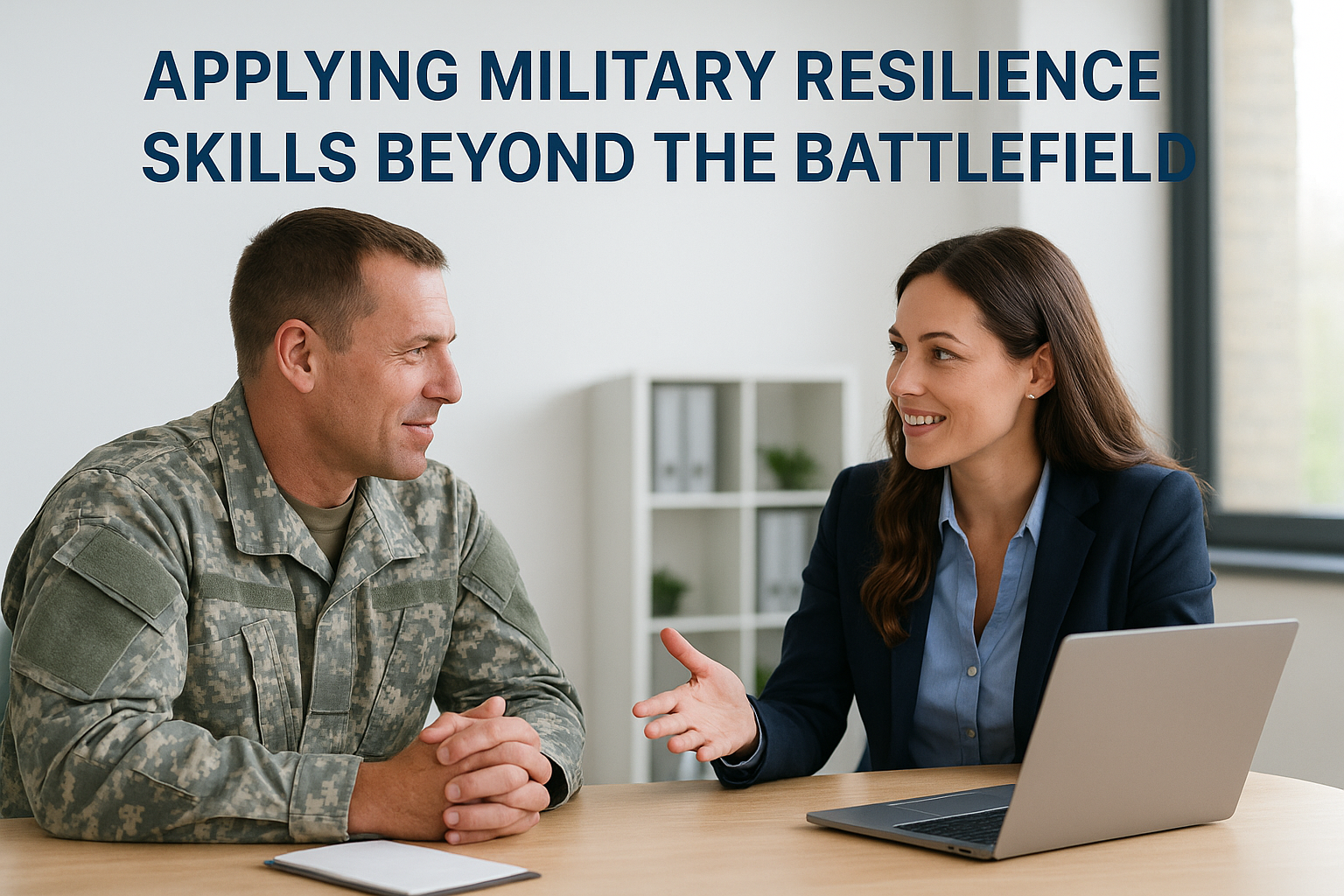
The skills that keep a soldier steady under fire are the same skills that keep a sales team steady under a missed quota.
Where the transfer shows up most clearly
Organizations that adapt these techniques, often through resilience training programs offered online, tend to see results in a few predictable areas:
- Faster recovery from failed pitches or lost accounts, since teams reframe setbacks instead of spiraling
- Lower burnout during high-pressure cycles like year-end close or product launches
- Stronger peer support networks, mirroring the buddy system built into military units
- Better decision-making under time pressure, a direct benefit of the ATC framework
Why leadership speakers keep referencing it
Robyn Benincasa draws on this exact parallel in her keynotes, having spent 20-plus years as a firefighter alongside her career as a world champion adventure racer. Her T.E.A.M.W.O.R.K. keynote walks audiences through the same kind of deliberate culture-building that military resilience programs rely on, minus the uniform. Executives booking her for a leadership offsite or sales kickoff aren’t hiring motivational filler; like the best speakers who motivate sales teams, she brings a framework built on people who’ve actually operated under real stakes, translated for a business audience that needs the same staying power without the deployment orders.
Building resilience that lasts
Army resilience training proves one simple thing: mental toughness isn’t a personality trait some people get and others don’t. It’s a trainable skill, built through repetition, feedback, and leaders who model it themselves. The Army didn’t stumble into Master Resilience Training by accident. It built the program because untrained soldiers broke down under pressure, and trained ones didn’t. That same logic applies to any team facing sustained stress, whether it’s a sales floor chasing quota or a hospital unit running on fumes.
Organizations that want this same staying power can’t just hand employees a pamphlet and call it done. Building resilience requires the same deliberate, repeated practice the military uses, taught by leaders who’ve actually lived it. If you’re planning a leadership offsite or sales kickoff and want that kind of proven framework in the room, see which leadership keynote speakers are worth booking in 2026 and give your team the same tools that keep elite units steady under fire.