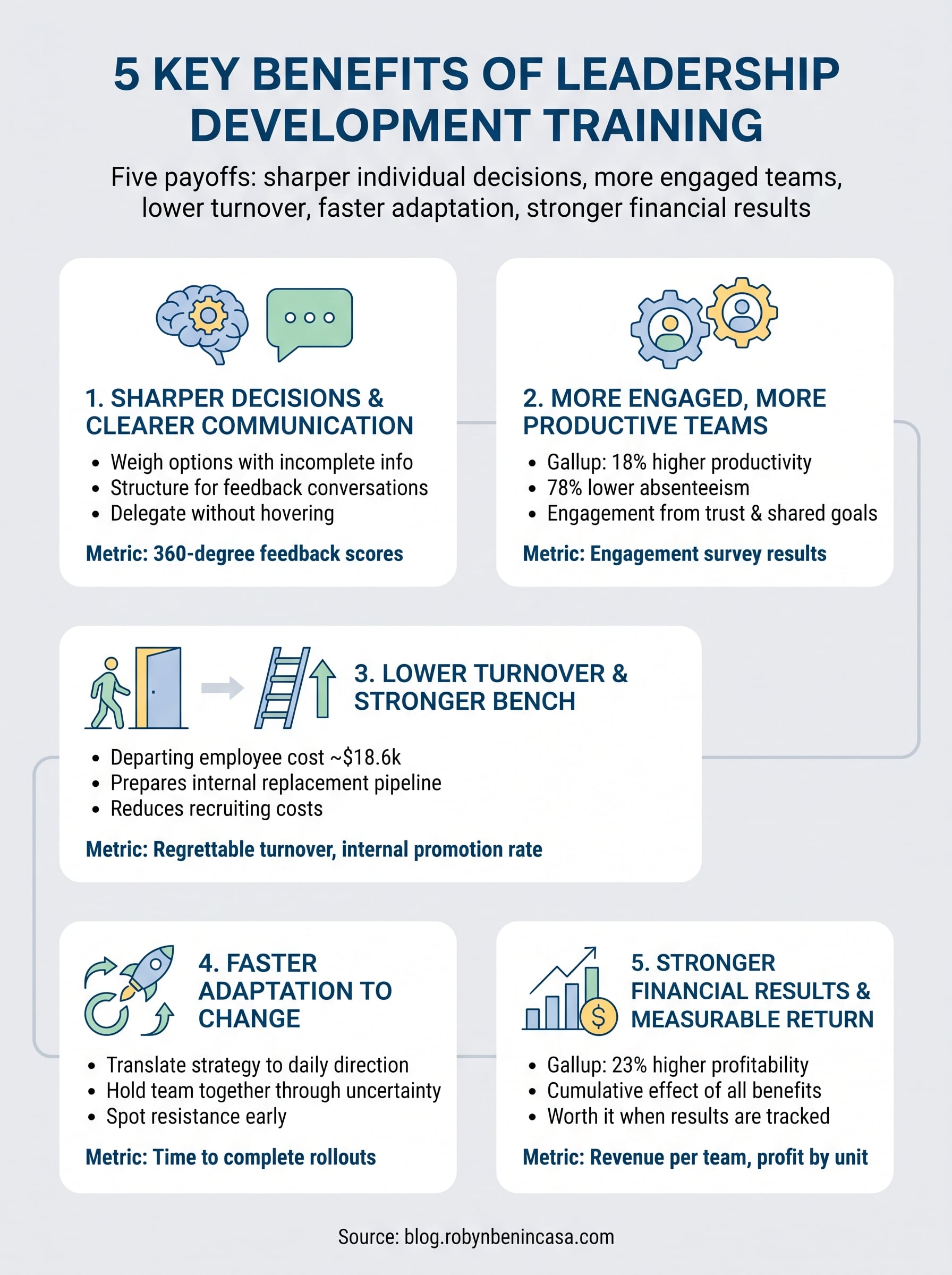
The benefits of leadership development training come down to five payoffs: sharper individual decisions, more engaged teams, lower turnover, faster adaptation to change, and stronger financial results. The best programs tie learning to real work and measure outcomes afterward. New managers gain the most from feedback and delegation skills. Senior executives gain the most from alignment and change leadership. HR buyers see the clearest return in retention.
Most organizations already agree that leaders matter. The harder question is whether the spend is worth it, especially when budgets tighten. Vague promises about "growth" rarely survive a finance review, so you need specific results you can name and track.
This article walks through five benefits of leadership training and development. Each comes with the evidence behind it and a practical way to capture it. Robyn Benincasa is a world champion adventure racer and a firefighter with 20+ years of service in San Diego. She has spent years teaching organizations how winning teams operate, so the examples reflect what leaders actually do under pressure.
1. Sharper decisions and clearer communication
Leadership development training first improves two things inside each leader: how they make decisions and how they explain them. Every other benefit on this list builds on these two skills.
What you get
Untrained leaders default to whatever worked when they were individual contributors. Training replaces that habit with tools. You get a way to weigh options when information is incomplete, a structure for feedback conversations, and a method for delegating without hovering.
Clear communication matters most under pressure. A firefighter on scene has no time to be vague, and a manager in a missed quarter has none either. Teams move faster when the leader states the goal, the constraints, and who owns what. In Center for Creative Leadership data covering more than 5,400 leaders, 86% reported significant improvement in their overall leadership effectiveness after completing a program.
Training turns a leader’s instincts into habits that other people can rely on.
How to capture it
Practice beats lectures. Choose leadership development training activities that make leaders rehearse real situations, then check whether behavior changed. Three methods work well:
Role-play a hard feedback conversation with a peer, then swap roles.
Review a recent decision as a group: what you knew, what you assumed, what you would change.
Have each participant commit to one behavior, and ask their manager to check in 30 days later.
2. More engaged, more productive teams
Trained leaders build teams that care more and get more done, because the manager shapes the daily experience of work more than any policy does. Engagement is where leadership development shows its effect earliest.
What you get
Gallup compared the top and bottom quartiles of business units by engagement. The most engaged units had 18% higher productivity and 78% lower absenteeism. Gallup also attributes roughly 70% of the variance in team engagement to the manager, which makes the leader the lever.
Engagement does not come from perks. It comes from trust, shared goals, and people knowing how their work fits. Robyn’s adventure racing teams dominated the sport for 15 years, and she credits a deliberate team culture of collaboration over individual talent. Her clients have seen results like a sales team moving from 17th to 1st nationally. The benefits of leadership training and development often start with that shift from individual effort to shared commitment.
Engagement is an output of leadership, not a separate HR program.
How to capture it
Start with managers, because they sit closest to the work. Teach them to build the conditions for employee engagement rather than chase it with surveys. Three habits make the difference:
State the team’s goal in one sentence that everyone can repeat.
Hold short weekly check-ins focused on obstacles, not status.
Recognize results the team earned together, not only top individuals.
3. Lower turnover and a stronger leadership bench
Leadership development training keeps good people longer and prepares the next group of leaders. Both cut the cost of replacing talent.
What you get
Gartner reports that each departing employee costs an organization $18,591 on average. A Conference Board survey found that 58% of workers say they are likely to leave if they do not receive leadership development opportunities. People want to see where they are going, and a development program is visible proof that the company plans to invest in them.
The second payoff is the bench. When you train people before they need the promotion, a vacancy no longer means months of scrambling. Internal candidates already know your customers and your culture. Promoting them also often costs less than an external search. Leadership training for new managers matters most here, since a bad first year in management pushes strong performers out.
Every promotion-ready employee is a replacement you will not have to recruit.
How to capture it
Treat the bench as a pipeline you can inspect, not a hope. Three steps keep it honest:
Identify first-time managers and high-potential employees early.
Train new managers within their first 90 days, not their first year.
Track regrettable turnover by manager, so weak spots show up in the data.
4. Faster adaptation to change
Organizations with developed leaders respond to change faster, because leaders translate a strategy shift into daily direction for their teams. This benefit matters most during mergers, reorganizations, and market pressure.
What you get
The Center for Creative Leadership found that 86% of companies with strategic leadership development programs say they can respond rapidly to an unpredictable business environment. Among companies with less mature programs, the figure was 52%. The gap is large, though the figures reflect association and not proof that training alone caused it.
The mechanism is simple. Change fails in the middle layers, where managers must explain a decision they did not make to people who did not want it. A trained leader can answer "why" honestly, hold the team together through uncertainty, and spot resistance early. Without that skill, silos harden and each team protects its own turf.
A strategy only moves as fast as the least prepared leader who has to explain it.
How to capture it
Connect training to a live initiative, not a generic curriculum. Leaders retain more when they apply lessons to a real problem that week. Include these elements:
Teach change leadership to managers at every level, not just executives.
Use a current project as the case for each session.
Bring cross-functional leaders into the same room, so silos break down during the training itself.
5. Stronger financial results and measurable return
Leadership development training pays off financially through the other four benefits, and you can measure the return if you decide on metrics before the program starts.
What you get
Gallup found that top-quartile engagement business units had 23% higher profitability than bottom-quartile units. Add the avoided cost of turnover, higher productivity, and quicker execution, and the business case builds from several directions. Be honest about the limits: these are comparisons across business units, not guarantees that any single program will repay its cost.
The answer to "are leadership development programs worth it?" is yes, when the program targets specific behaviors and someone tracks results. Programs fail when they are one-off events with no follow-up. The importance of leadership training and development shows up only when the training changes what leaders do on Monday.
A leadership program is worth what you measure afterward, not what you spend beforehand.
How to capture it
Pick a baseline metric for each benefit before the first session, then review it at 90 days and again at one year. This table pairs each benefit with a metric most organizations already collect:
Benefit
Metric to track
Decisions and communication
360-degree feedback scores, decision cycle time
Engagement and productivity
Engagement survey results, absenteeism, output per team
Retention and bench
Regrettable turnover, internal promotion rate
Adaptation to change
Time to complete rollouts, adoption rates
Financial results
Revenue per team, cost of turnover, profit by unit
Making the investment count
Leadership development training pays off when it improves how leaders decide, communicate, and build teams. Those changes lead to more engaged people, less turnover, faster change, and results you can track. The programs that deliver are tied to real work, led by people with credibility, and measured long after the last session.
If you want your leaders to hear how world-class teams build trust and win together, see how Robyn Benincasa brings these lessons to leadership keynotes and team events. Start by choosing the one benefit on this list that your organization needs most.
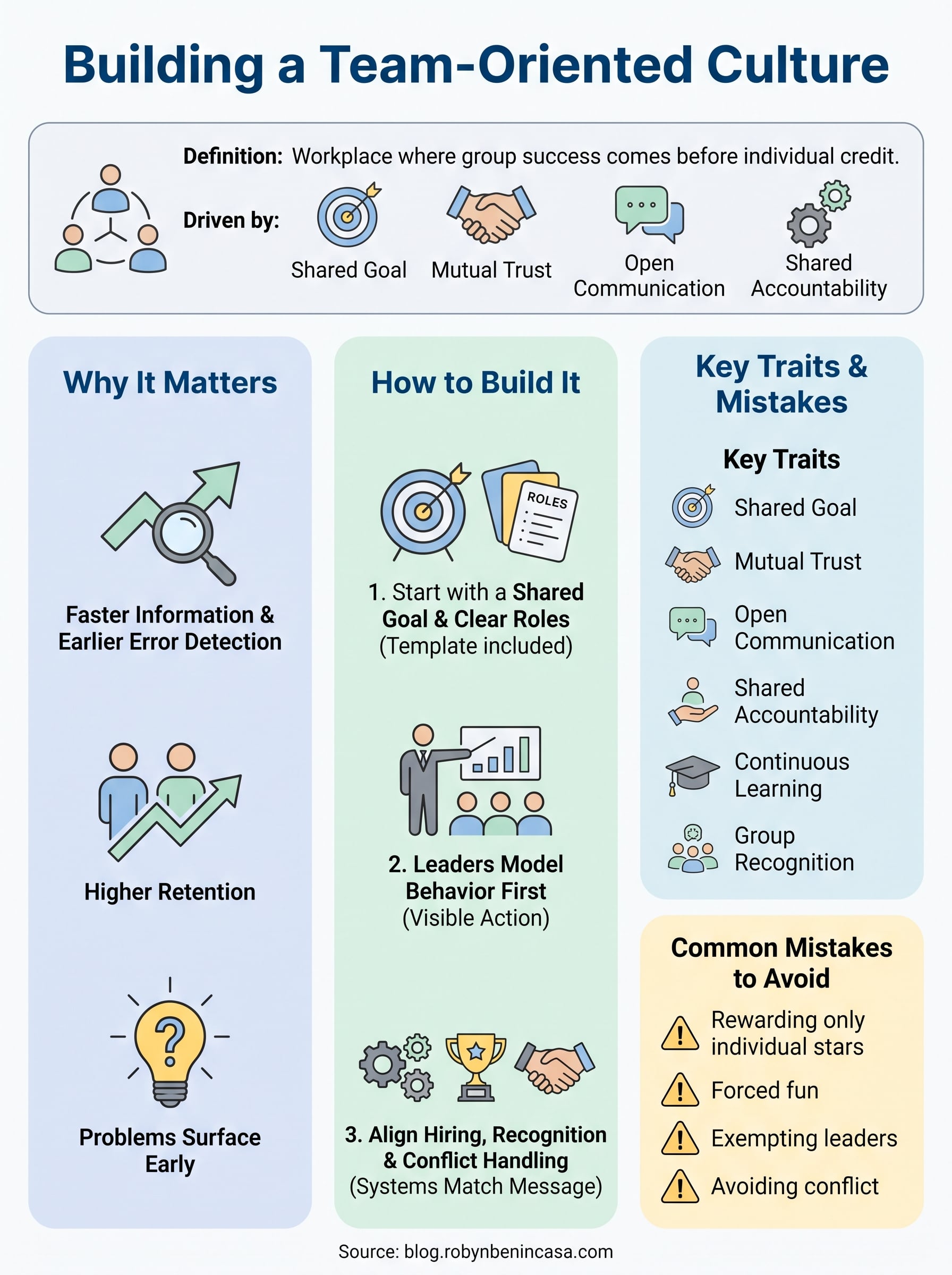
A team-oriented culture is a workplace where people put the group’s success ahead of individual credit, and where that belief shapes how goals are set, how work is shared, and how wins and mistakes are handled. In plain terms, people ask "what does the team need?" before they ask "what do I get?" The working definition has four parts: a shared goal, mutual trust, open communication, and shared accountability. If one of the four is missing, you have people who collaborate on good days, not a culture.
Robyn Benincasa has seen this from two angles. As a world champion adventure racer, she led teams that dominated the sport for 15 years. She also served as a San Diego firefighter for more than 20 years. In both worlds, the team’s culture decided the outcome more than any one person’s talent did.
This article covers why a team-oriented culture matters, how to build one step by step, the traits that define it, real workplace examples, and the mistakes that quietly undo it.
Why a team-oriented culture matters
A team-oriented culture matters because it decides whether people help each other before a problem becomes a crisis. When the culture is strong, information moves faster, errors get caught earlier, and good people stay. When it is weak, even talented teams stall.
What changes in day-to-day performance
The gains show up in small moments. A teammate flags a risk in week two instead of week ten. Someone takes a task they are good at because nobody is guarding turf. Problems surface early because raising them feels safe, and work moves faster because people hand off cleanly instead of protecting their own scorecard.
Leaders usually notice these changes first:
Fewer surprises at deadlines, because bad news travels early.
Faster onboarding, because experienced people teach new hires without being told to.
Better ideas, because people offer them without fear of being shot down.
Lower turnover, because people feel connected to the people beside them.
Retention deserves special attention. People leave a team where they feel needed less often than one where they feel invisible. Every departure costs you recruiting time, training time, and the knowledge that walks out the door.
Culture implications for team building
Culture sets the ceiling on every team building effort. If the daily rules reward individual stars, a ropes course or an escape room will not change behavior, because people return to the same incentives on Monday. Team building activities can practice a culture, but they cannot create one.
Team building events practice a culture. They cannot replace one.
Three implications follow. Leader behavior is the real curriculum, since people copy what the boss does, not what the poster says. Systems must match the message, so goals, bonuses, and recognition need to reward group results. And team building must be continuous, built into meetings and projects instead of saved for an annual offsite.
How to build a team-oriented culture
You build a team-oriented culture by making the group goal clear, having leaders model the behavior first, and then aligning hiring, recognition, and conflict handling to match. Expect it to take months, not weeks, because culture changes at the speed of repeated behavior.
Start with a shared goal and clear roles
Begin with one goal the whole group can repeat from memory. A shared goal gives people a reason to help beyond their own task list, and clear roles keep that help from turning into confusion. Write the goal in one sentence, then have each person add how their work contributes.
You can copy this template into your next team kickoff:
Our team exists to [outcome] for [who] so that [result].
This quarter, success means [measurable result].
My part is [role]. I need help from [names] on [task].
Review it at the start of every project and every quarter, so the goal stays alive instead of living in a slide deck.
Make leaders model it first
Leaders go first. If you want people to ask for help, ask for help in front of them. If you want peers to resolve conflicts, stop being the default referee. Visible modeling is the fastest lever you have, and admitting your own mistakes out loud gives everyone else permission to do the same.
Leaders do not announce a team-oriented culture. They demonstrate it until everyone else copies them.
Culture gets taught by watching. In a firehouse, a new crew member learns the real rules from how the officers treat the newest person on shift, not from the handbook. Your office works the same way.
Align hiring, recognition, and conflict handling
Once the goal and the modeling are in place, fix the systems that pull people back toward self-interest. Each of these four changes is small, and together they make the culture stick:
Hiring: ask candidates to describe a time they helped a teammate succeed at some cost to themselves.
Recognition: celebrate group results, and name the people who made others better.
Conflict: expect peers to try to resolve it directly before anyone escalates.
Training: cross-train so people understand each other’s work and appreciate it.
Key traits of a team-oriented culture
The core traits of a team-oriented culture are a shared goal, trust, open communication, shared accountability, continuous learning, and group recognition. You can spot each one by watching behavior, not by reading a values statement.
Six traits and how to spot them
The table below pairs each trait with what it looks like in practice and the warning sign that it is missing.
Trait
What it looks like
Warning sign
Shared goal
Anyone can state the team goal in one sentence
Everyone names a different priority
Mutual trust
People admit mistakes and ask for help
Information gets hoarded
Open communication
Bad news travels up and sideways fast
Problems appear only at the deadline
Shared accountability
The team owns a miss together and fixes it
Blame lands on one person
Continuous learning
People cross-train and teach each other
Knowledge sits with one expert
Group recognition
Wins are credited to the team and its enablers
Only the top individual gets named
Use the table as a quick audit. Pick three recent projects and ask which column each one fits. A single warning sign is normal, but a pattern across projects points to a culture problem, not a people problem.
You can see a team-oriented culture in behavior long before you can read it in a values statement.
What a team-oriented person looks like
A team-oriented person puts the group’s result first, shares information freely, and helps without waiting to be asked. They also receive help well, which is harder than it sounds, and they give credit specifically instead of vaguely. Team-oriented does not mean faceless. Strong teams use each person’s distinct strengths on purpose.
If you had to describe this culture in five words, choose trusting, open, accountable, supportive, and shared. Each one names a behavior you can observe, which makes them more useful than softer labels like "friendly" or "fun."
Team-oriented culture examples from real workplaces
Team-oriented culture examples appear wherever one person’s failure becomes everyone’s problem, including hospitals, fire crews, expedition races, and well-run sales teams. The common thread is that the system treats the group’s outcome as the score that counts.
Examples from high-stakes workplaces
Different industries express the same idea in different habits. This table shows what team orientation looks like in five settings, and what it protects against.
Workplace
Team-oriented behavior
What it protects against
Hospital unit
Outgoing and incoming nurses review each patient together at shift handoff
Information lost between shifts
Fire crew
Members check each other’s gear and call out hazards regardless of rank
One person’s error in dangerous conditions
Adventure racing team
Stronger members tow and carry gear for a struggling teammate
The whole team slowing down
Sales team
Reps share leads, tactics, and call lessons toward one target
Hoarding and internal rivalry
Construction crew
Trades coordinate sequencing and a lead reviews work against standards
Rework and missed defects
Adventure racing makes the logic plain. A team of four races nonstop for days and has to finish together, so the team moves at the pace of its slowest member. The best teams do not leave that person behind. They redistribute weight and tow, and the whole group gets faster. That is the same trade you make when a strong performer on your team stops to coach a struggling colleague.
Team orientation in organizational culture examples: what it sounds like
Culture is audible. You can hear it in how people talk when a deadline is close or a project goes sideways. Compare these everyday phrases:
"That’s not my department" becomes "Who else should be in this conversation?"
"I finished my part" becomes "What is blocking the rest of us?"
"Who dropped the ball?" becomes "What did we miss, and how do we fix it?"
"I need credit for this" becomes "Here is who made this possible."
Listen for these in your meetings for a week. The language people use tells you more than a survey, and the phrases that go unchallenged show you what your culture really allows.
Culture is what people say when they think it is normal.
Mistakes that undermine a team-oriented culture
The most common way to damage a team-oriented culture is to praise teamwork while rewarding individual heroics. People follow the incentives they see, not the values you state.
Four mistakes to avoid
These four errors cause most of the damage, and each one is fixable:
Rewarding only individual stars. Bonuses and promotions that ignore group results teach people to compete.
Forced fun. Mandatory social events without real collaboration at work feel like homework.
Exempting leaders or top performers. One high performer who belittles colleagues undoes a year of good messaging.
Avoiding conflict. Unspoken tension turns into silos, and silos turn into blame.
If the rules reward individual heroics, no amount of teamwork language will override them.
How to tell it is working
Track a few signals every quarter. People volunteer help without being asked, handoffs between teams get cleaner, new hires reach full speed sooner, and voluntary turnover drops. Add one or two statements drawn from organizational culture survey questions, such as "I can ask my teammates for help without feeling judged," and watch the scores over time.
Where to start
A team-oriented culture is a shared goal, trust, open communication, and shared accountability, made visible in daily behavior. It matters because it speeds up work, catches mistakes early, and keeps good people. You build it through clear goals, leaders who go first, and systems that reward the group.
Start small. Pick one behavior from this article, such as writing a one-sentence team goal or replacing blame questions with "what did we miss?" Practice it for 30 days, then add another.
If you want to go deeper on what makes winning teams work, read Robyn Benincasa’s guide on how to build culture in a team for more lessons drawn from adventure racing, firefighting, and leadership.
Most sales managers were promoted because they were great sellers. Nobody taught them how to coach, run a pipeline review that changes behavior, or hold a team together when quota pressure hits. If you are searching for sales leadership training programs, you probably already see that gap on your own team.
Here is the short answer. The best option depends on your goal. Self-paced online courses work for new managers who need fundamentals on a budget. Cohort-based or in-person programs work better when you need to change coaching habits across a whole sales organization. Free online leadership training options exist, but they rarely include practice or feedback, which is where skills actually stick.
Below, you will find 10 programs compared on format, cost, who each one fits, and what managers actually walk away with. We also note where leadership training for sales managers works best when paired with a culture-focused keynote, something Robyn Benincasa has seen move a sales team from 17th to 1st nationally. Use the list to narrow your choices fast.
1. Robyn Benincasa’s leadership keynotes for sales teams
Robyn’s keynotes are the one entry on this list that is a talk, not a course. That is deliberate. A keynote resets how your whole sales team thinks about working together, and it pairs well with any of the skill-based programs further down.
What it covers
Fifteen years leading adventure racing teams to world championships taught Robyn that collaboration beats individual talent. She also spent 20+ years as a San Diego firefighter, and she started her career as a pharmaceutical and hospital supply sales rep. She knows quota pressure from the inside.
Her signature topics each tackle a different team problem. Her book, the New York Times best seller How Winning Works, backs them up with eight leadership lessons from the toughest teams on earth.
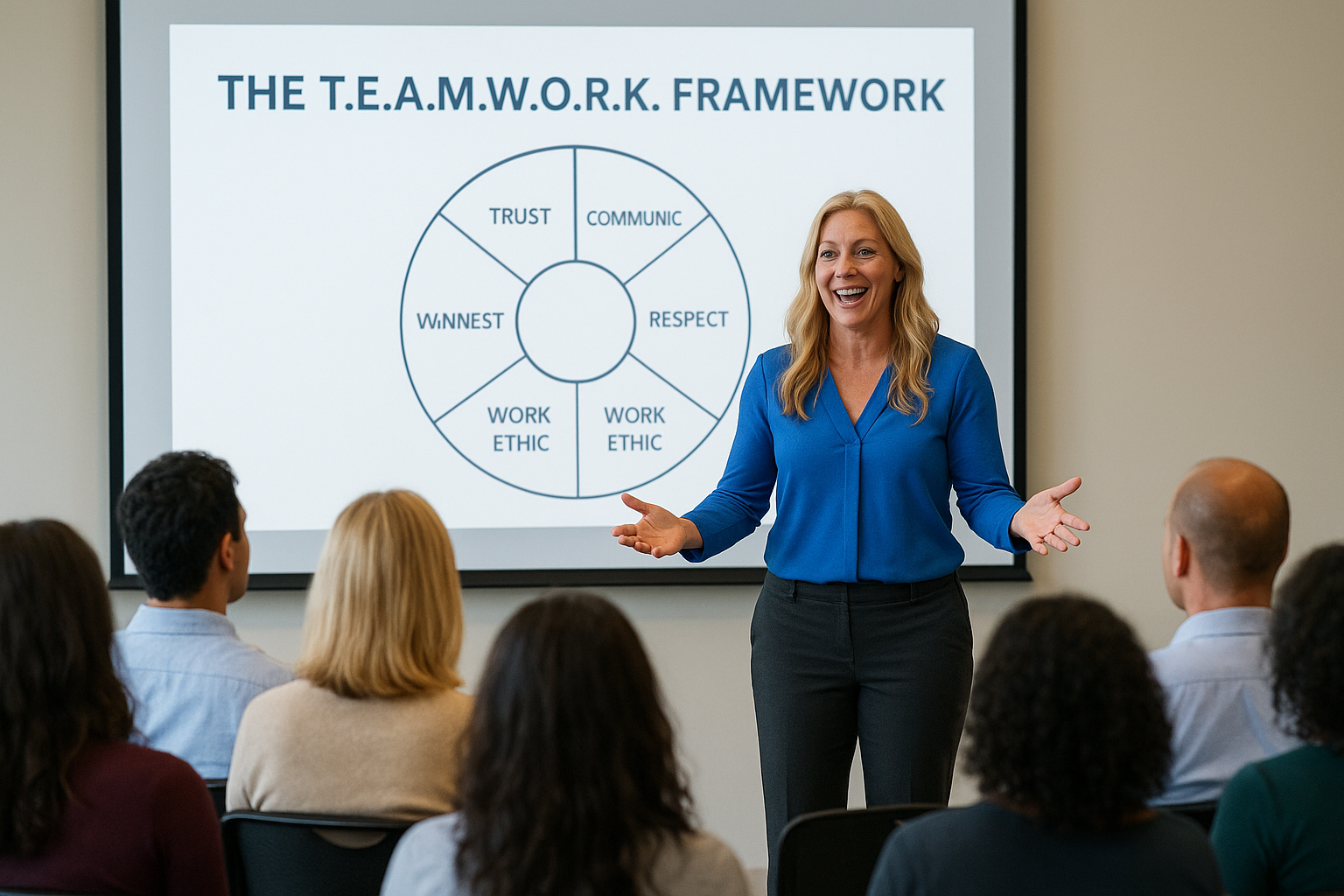
T.E.A.M.W.O.R.K.: the 8 essential elements of a world-class team culture
WIN AS ONE: unifying people around a shared goal
INSPIRING GREATNESS THROUGH G.R.I.T.: commitment when results get hard
WHY WINNERS WIN: the habits that separate top teams
Training builds a manager’s skills, but culture decides whether the team ever uses them.
Format and delivery
Keynotes run in person or virtually, so they fit a sales kickoff, a leadership offsite, or a conference main stage. Each one is a single session, not a multi-week curriculum.
Because of that, you need a follow-up plan. Many clients hand out the book or the free 18-page guide afterward, then let managers apply the ideas in their next pipeline reviews and one-on-ones.
Who it’s for
Sales VPs, HR leaders, and event planners get the most from it, especially when the team is navigating a merger, market pressure, or silos. It also works for groups with mixed tenure who need one shared goal. Past clients include Allstate, InterWest Insurance, Indivior, Boston Scientific, and Northrop Grumman. One sales team moved from 17th to 1st nationally.
Skip it if your managers need a specific method, such as forecasting or a CRM-driven coaching cadence. Choose one of the structured programs below for that.
Cost and how to book
Pricing is quoted per engagement and not published. It depends on format, date, travel, and how much customization you want. The guide is free, and the book is sold at standard retail.
To get an accurate quote fast, use the booking page and have these ready:
Event date and location, or virtual platform
Audience size and seniority mix
The one business outcome you want the session to support
2. Sandler sales management training
For managers who want a repeatable coaching system instead of inspiration, Sandler is the classic pick among sales leadership training programs. The company has been teaching its selling method since 1967.
What it covers
Sandler’s management track teaches managers to coach the Sandler Selling System the same way their reps sell it. That means up-front contracts, qualifying on pain, budget, and decision process, and holding reps accountable to behaviors, not just results.
Managers also learn to run structured pipeline reviews, set activity targets, and hire and onboard reps. The core idea is to coach the behavior that creates the number, because the number is a lagging result.
Sandler turns coaching from a conversation you hope to have into a process you run every week.
Format and delivery
Sandler delivers through independently owned local training centers, so the format varies. Expect a mix of in-person workshops, virtual sessions, and ongoing reinforcement over months, often with one-on-one coaching.
Because delivery is franchised, ask which trainer will lead your cohort before you sign. Quality depends heavily on that person.
Who it’s for
It suits mid-market and enterprise sales organizations that already use, or are willing to adopt, one shared methodology. New managers and veterans both benefit. It is a weaker fit for high-volume transactional sales, or if you want a light, one-off course.
Cost and how to book
Sandler does not publish a price list. Pricing is custom, set by the local center based on headcount, program length, and reinforcement. To request a consultation through Sandler’s website, have these ready:
Number of managers and reps
Your current sales process and CRM
The one coaching behavior you most want to change
3. RAIN Group sales management training
If your managers need to coach better buyer conversations, not just inspect the pipeline, RAIN Group is worth a look. The firm built its reputation on research into what top-performing sellers actually do, and its management training carries that data-first approach into coaching.
What it covers
The management content centers on coaching reps to run stronger buyer conversations. Managers learn to give specific, behavior-based feedback, hold coaching sessions on a steady cadence, and build habits that make new skills stick. Forecast and pipeline discipline are part of the picture, but the emphasis stays on the rep conversation.
A coaching skill only counts once a manager has practiced it with someone watching.
Format and delivery
Expect live virtual or in-person workshops, often paired with online learning and follow-up reinforcement after the sessions end. Programs for company cohorts are usually customized, so confirm the current course names and session length when you talk to the team. Practice and feedback are the parts to look for in the agenda.
Who it’s for
It suits mid-size to large sales organizations that want one coaching standard across many managers. It also fits teams that value research and want a clear rationale behind each skill. A single manager on a tight budget will likely find it too heavy. Start with a self-paced course instead.
Cost and how to book
Pricing is custom and quoted after a conversation, based on the number of managers, the format, and how much reinforcement you want. You book by requesting a consultation through RAIN Group’s website. Before that call, write down these three things:
How many managers you want to train, and their tenure
The coaching behavior you most need to change
Whether you need virtual, in-person, or both
4. Richardson sales leadership programs
Choose Richardson when you want coaching treated as a practiced discipline, not a motivational event. The firm has trained sales teams for decades, and its manager content is built around coaching conversations and skill reinforcement.
What it covers
The manager curriculum focuses on coaching reps through real deals. Managers learn to plan a coaching session, ask questions that make reps think instead of handing them answers, and give feedback tied to specific behaviors.
Programs also address how to reinforce training over time, so new skills survive past the workshop. Course names change, so ask for the current manager curriculum and a sample agenda.
Richardson’s bet is simple: reps change when their manager reinforces the skill every week.
Format and delivery
Expect instructor-led sessions, virtual or in person, combined with digital practice and follow-up reinforcement. Confirm how much of the schedule is live and how much is self-study.
Most engagements are built for company cohorts, so plan on a team rollout rather than a single enrollment.
Who it’s for
It suits mid-size to large sales organizations that want one coaching standard across many managers. It fits especially well if your reps already use Richardson’s selling skills.
A lone first-time manager on a small budget will find it oversized. Among sales leadership training programs, a self-paced course is the better starting point for that person.
Cost and how to book
Richardson does not publish a price list. Quotes are custom, based on headcount, format, and reinforcement length. Request a consultation through its website and bring these details:
Number of managers, and how long they have managed
Your sales methodology and whether reps are already trained
Preferred format: virtual, in person, or blended
5. Dale Carnegie Sales Leadership Excellence
Dale Carnegie is the people-skills pick among sales leadership training programs. The company has taught communication and relationship skills since 1912, and its sales content builds on that. Choose it when your managers sell well but struggle to motivate and influence the people who report to them.
What it covers
The program targets the human side of managing sellers. Expect work on communication, trust building, and motivating reps, plus how to run coaching conversations and deliver hard feedback without losing the relationship. It leans on interpersonal skill more than forecasting mechanics. Module names change, so ask for the current outline.
A manager who can’t earn trust will never get honest pipeline numbers, no matter how good the process is.
Format and delivery
Delivery runs through local franchise offices, with instructor-led sessions in person or live online. Programs are often spread over several weeks, which gives managers time to practice between sessions. Ask the local office who will facilitate your group and whether that person has sales management experience.
Who it’s for
First-time and mid-level managers get the most from it, especially promoted top sellers who led by personal drive and now need to lead through others. It also suits relationship-driven sales cultures. It is a weaker fit if you want a detailed selling methodology or data-heavy pipeline management. Pair it with a method-focused option like Sandler for that.
Cost and how to book
Dale Carnegie does not publish one standard price. Cost varies by location and by whether managers join a public session or you book a private corporate program. Request a quote through its website and have these ready:
Number of managers and their experience level
Preferred format and timeline
The one leadership behavior you most want to change
6. Harvard Strategic Sales Management course
Harvard is the name-brand pick among sales leadership training programs, and it earns a place here for one reason. It treats sales management as a strategic business problem, not just a coaching technique.
What it covers
Expect a focus on sales strategy and organization design. Typical topics include territory structure, compensation and incentives, and how sales aligns with marketing and product. Case-method discussion is the core of the experience. Topics shift from year to year, so ask for the current syllabus before you commit.
Harvard teaches you how to design the sales organization, not how to run Tuesday’s one-on-one.
Format and delivery
Harvard’s executive education offerings are usually short, intensive cohorts, delivered on campus or live online. You learn alongside senior leaders from other industries, which is a real perk. Formats and dates change, so check the current schedule. Time away from the field is the main hidden cost.
Who it’s for
Sales directors, VPs, and chief sales officers get the most from it, especially those who own headcount, pay plans, and go-to-market decisions. It is a poor fit for first-line managers who need weekly coaching skills. For that kind of leadership training for sales managers, Sandler or Richardson will serve them better.
Cost and how to book
Tuition is typically several thousand dollars per person, and travel adds to that if you attend in person. Confirm the current price and enrollment steps on the Harvard Business School Executive Education site. Before you apply, settle these points:
Whether you need a seat for one leader or a cohort
Your approval timeline, since many programs fill early
The specific strategic decision the course should help you make
7. Kellogg sales leadership executive education
Kellogg is the pick when you want a business-school program with a customer-centered view of selling. Among sales leadership training programs, it sits at the same level as Harvard, but it leans harder on marketing, value creation, and how leaders connect the sales team to the market.
What it covers
Northwestern’s Kellogg School of Management pairs sales leadership with go-to-market strategy. Expect topics like customer segmentation, value propositions, and leading a sales team through change. Faculty teach from research and real company cases. Program titles and content rotate, so ask for the current syllabus before you commit.
Kellogg trains leaders to ask what the customer values, then build the sales team around the answer.
Format and delivery
Programs are typically short, intensive sessions held on the Kellogg campus or live online. Some are open enrollment, and Kellogg also builds custom programs for company groups. Dates and formats change, so verify the current schedule. Either way, plan for time away from the field.
Who it’s for
Senior sales leaders, regional VPs, and high-potential directors get the most from it, especially leaders who shape strategy and positioning. You also gain a peer network across industries. First-line managers who need weekly coaching drills will be better served by Sandler or Richardson, because Kellogg stays at the strategy level.
Cost and how to book
Open-enrollment tuition typically runs several thousand dollars per person, and travel adds to that for in-person sessions. Custom programs are quoted individually. Confirm current pricing and enrollment steps on the Kellogg Executive Education site. Before you apply, settle these points:
Whether you are sending one leader or a full leadership cohort
Your budget for tuition, travel, and time out of the field
The strategic question you want the program to help you answer
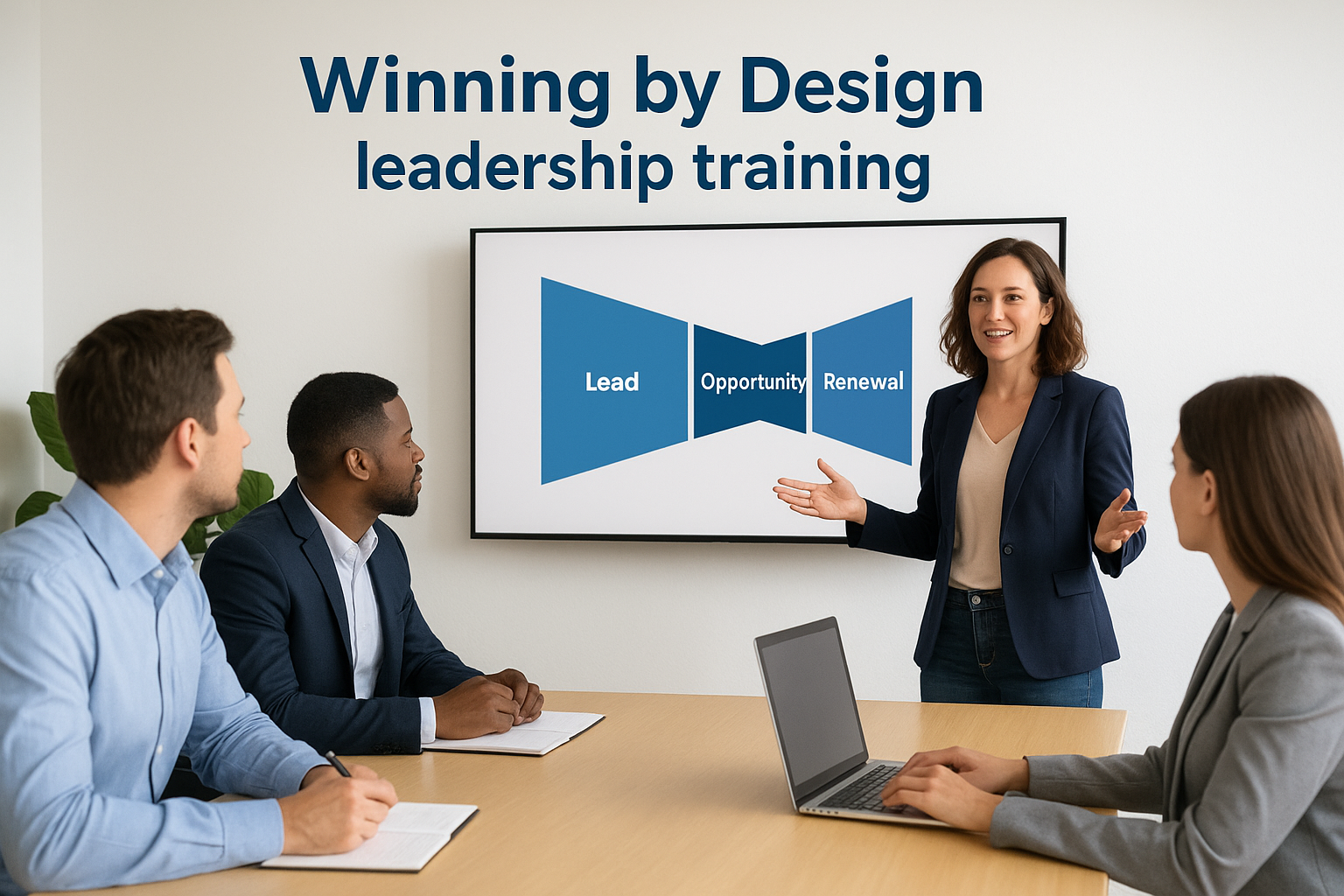
8. Winning by Design leadership training
Winning by Design is the specialist pick for SaaS and subscription businesses. Among sales leadership training programs, it is the one built around recurring revenue, where the first sale is only the start of the customer relationship.
What it covers
Its training is organized around the Bowtie funnel, a model that follows the customer from first contact through renewal and expansion. Managers learn to coach reps at each stage, read conversion data at every handoff, and align sales with customer success. Course titles change, so ask for the current manager track.
In recurring revenue, a manager who coaches only to the close is managing half the funnel.
Format and delivery
Offerings have included virtual workshops and on-demand modules, and some tracks lead to a certification. Confirm which sessions are live, and look for practice with feedback in the agenda, because a framework alone will not change how your managers run one-on-ones.
Who it’s for
Sales leaders at B2B software and subscription companies get the most from it, especially teams where renewals and expansion drive revenue. Newer managers will find the data focus useful. It is a weaker fit for one-time transactional sales. For pure coaching habits, pair it with Sandler or Richardson.
Cost and how to book
Price depends on the track and on whether you buy individual seats or a team program. Check the current options on the company’s website, and request a quote for a group. Before you do, have these ready:
Number of managers and their tenure
Your sales motion, such as new logo, renewal, or expansion
The funnel stage where deals stall most often
9. HubSpot Academy sales management certification
HubSpot Academy is the free pick among sales leadership training programs. It costs nothing to start, so it is the easiest way to give a new manager a solid baseline before you commit real budget.
What it covers
The sales management content walks through hiring, onboarding, coaching, and forecasting. It also shows managers how to set team goals and read pipeline reports inside a CRM.
Lessons are short videos that end with an exam. Course lists change, so check the current catalog before you assign anything.
Free training gives a manager the vocabulary, but only practice builds the habit.
Format and delivery
Everything is self-paced and online. Managers watch lessons, take quizzes, and earn a certificate when they pass.
There is no live instructor and no peer practice, so nobody gives feedback on how a manager actually coaches. Fill that gap with a weekly coaching conversation led by a senior leader.
Who it’s for
First-time managers and small teams get the most from it, especially if reps already work in HubSpot’s CRM. It is also a sensible refresher for managers who never had formal training.
Experienced directors will find it basic. If you need to change coaching behavior across a whole organization, choose a cohort-based program with practice built in. Sandler or Richardson fit that need.
Cost and how to book
The courses have been free to take, and you enroll directly on HubSpot Academy. Confirm current terms on the site, since offerings change. To get real value from a free course, set it up like a project:
Pilot it with one manager first
Set a completion date, such as two weeks out
Schedule a debrief where the manager applies one lesson to a real rep
10. LinkedIn Learning sales management courses
LinkedIn Learning is the flexible pick among sales leadership training programs when you want breadth on a small budget. It is a library, not a curriculum, so you build the learning path yourself from many short courses.
What it covers
The catalog includes courses on sales management, coaching, and team leadership, taught by independent instructors. Typical topics are running one-on-ones, giving feedback, setting goals, and managing remote teams. Quality varies by instructor, so preview a course before you assign it.
Because the library is general, you can mix sales and management skills in one path. Titles rotate, so search the current catalog rather than relying on a course name.
A library gives managers choices, but someone still has to decide which course comes first.
Format and delivery
Courses are self-paced video lessons, usually short, and some include quizzes. Managers earn a certificate of completion and can add it to their LinkedIn profile.
Mobile access makes it easy to learn between meetings. As with HubSpot, there is no live instructor or cohort, so nobody watches a manager coach. Close that gap with a weekly debrief.
Who it’s for
Individual managers and small teams on tight budgets get the most from it, especially new managers who need a first pass at fundamentals. It also suits companies that already hold a LinkedIn Learning license through HR.
It is a weak fit if you need to change coaching habits across an organization. For that kind of leadership training for sales managers, choose a cohort program with practice built in.
Cost and how to book
Access is through a monthly or annual subscription, and a free trial has typically been offered. Some employers and public libraries also provide free access. Confirm current pricing on LinkedIn Learning. To keep the spend worthwhile:
Pick three courses that match one coaching gap
Assign one per week with a firm finish date
Ask each manager to apply one lesson in a real one-on-one
How to choose the right program for your managers
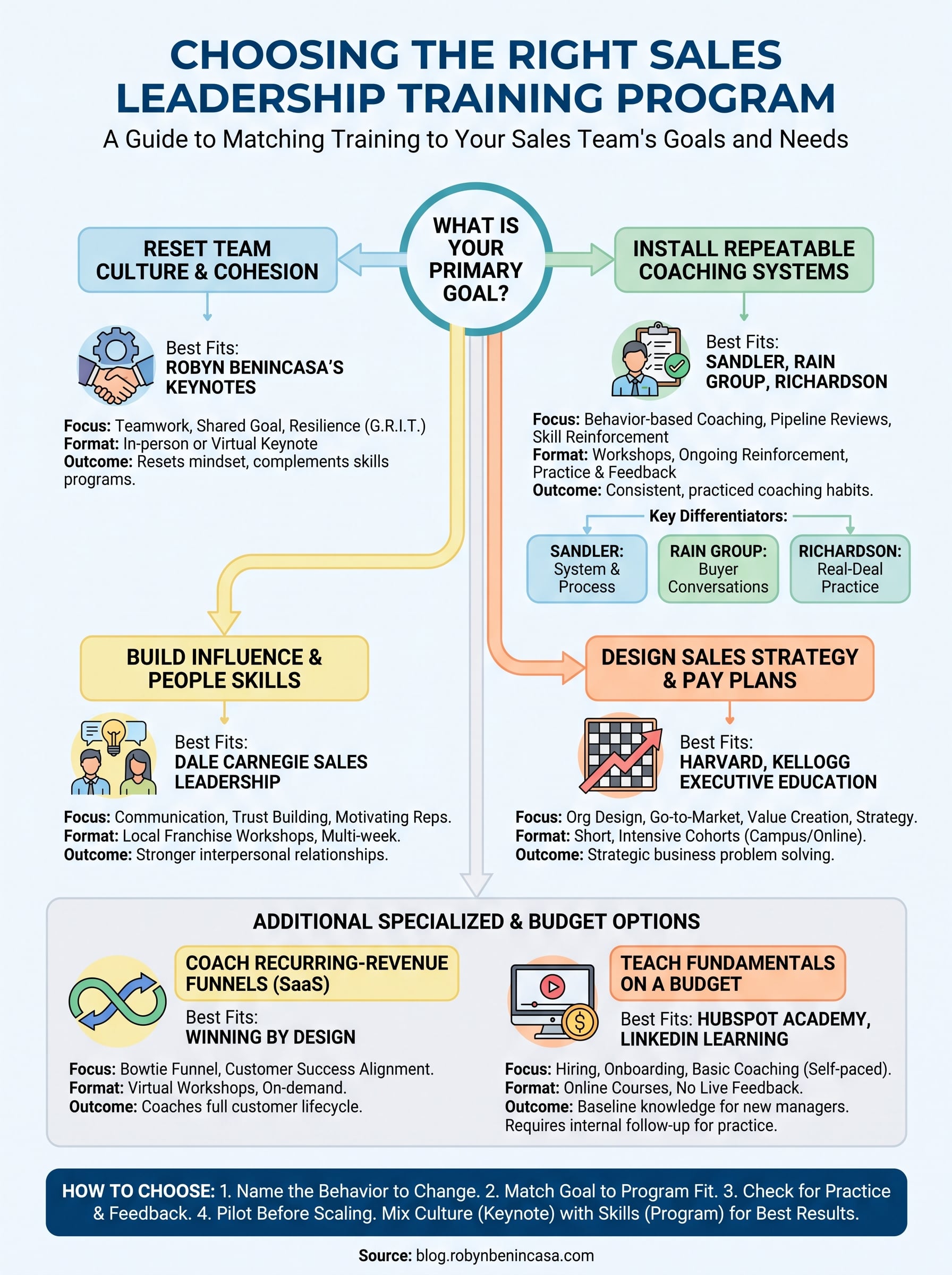
Start with the problem, not the brand. Name the one behavior you want to change before you compare sales leadership training programs. That answer should drive the decision more than price or prestige.
Match the program to your goal
Use this table to narrow the list from ten to two or three.
Your goal
Best fits
Reset team culture and cohesion
Robyn Benincasa keynote
Install a repeatable coaching system
Sandler, RAIN Group, Richardson
Build influence and people skills
Dale Carnegie
Design sales strategy and pay plans
Harvard, Kellogg
Coach recurring-revenue funnels
Winning by Design
Teach fundamentals on a budget
HubSpot Academy, LinkedIn Learning
Combinations often beat a single pick. A keynote sets the culture, and a skills program builds the habits that culture needs.
Check for practice and feedback
Whatever you choose, ask whether managers will practice coaching while someone watches. Videos teach vocabulary. Cohorts with role-play and follow-up change behavior.
Pick the program that changes what managers do on Monday, not the one that looks best on a slide.
Ask every vendor for a sample agenda. If you can’t find live practice in it, treat the program as a starting point, not a solution.
Pilot before you scale
Finally, test with a small group before you commit the whole budget. Two or three managers are enough to show you whether the content sticks.
Set one measurable coaching behavior, such as weekly one-on-ones held
Review it after 60 days with the managers and their reps
Expand only if the behavior changed, not just if people enjoyed it
This approach keeps budget risk low and gives you real evidence for the next approval.
Picking the program that fits your team
The right choice comes down to one question: what do you want your managers to do differently on Monday? The best sales leadership training programs share one trait. They give managers practice with feedback, not just ideas. Pick a method like Sandler or Richardson for coaching habits, a business school for strategy, or a free course for fundamentals.
Culture is the piece a skills program can’t supply alone. If silos, quota pressure, or a recent merger are pulling your team apart, a keynote can reset the shared goal that makes training stick. Robyn Benincasa has seen a sales team climb from 17th to 1st nationally by building that kind of team culture. To bring it to your next kickoff or offsite, compare the top sales motivational speakers, book Robyn Benincasa for your sales team, and pair her session with the skills program you chose above.
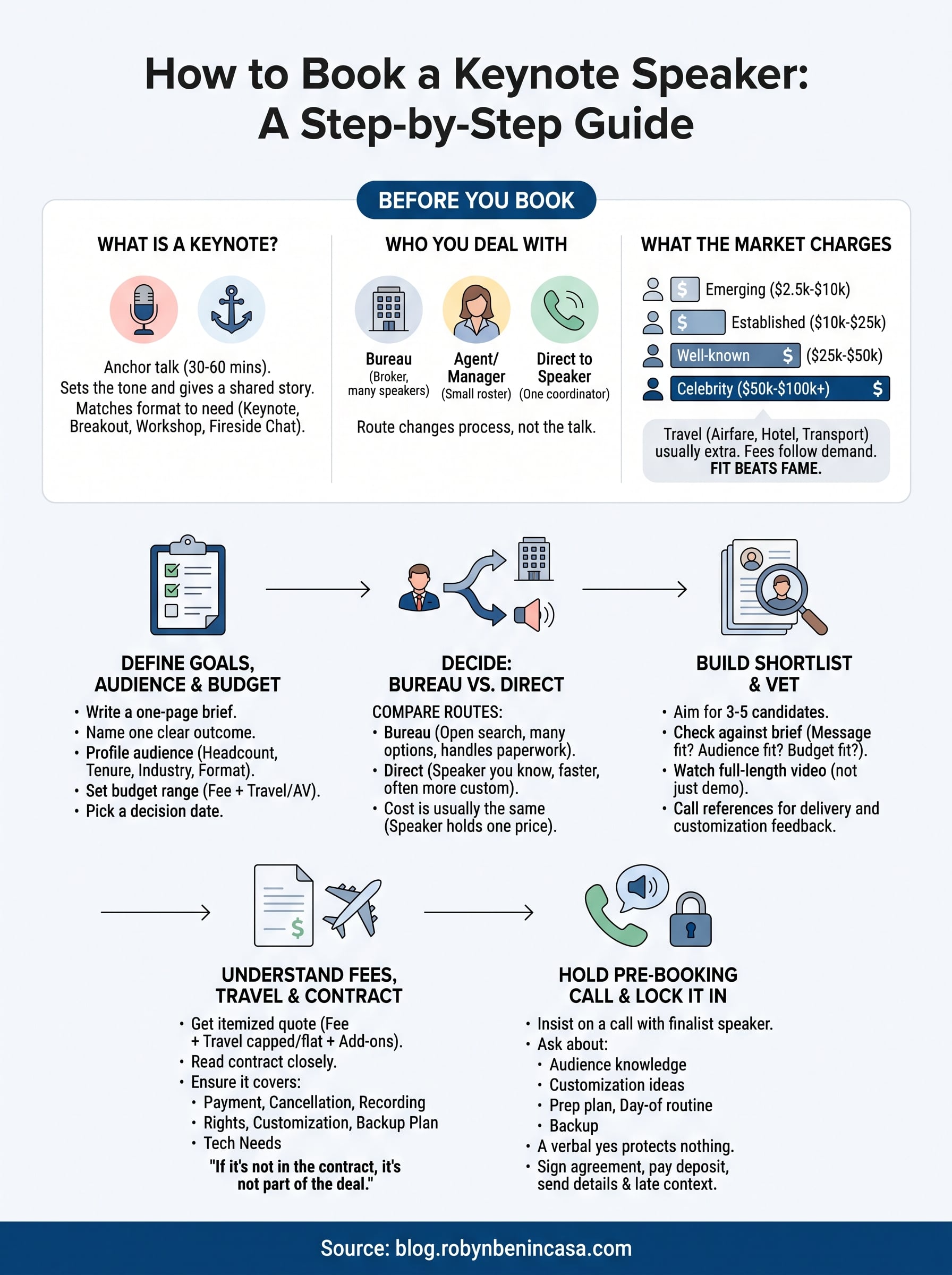
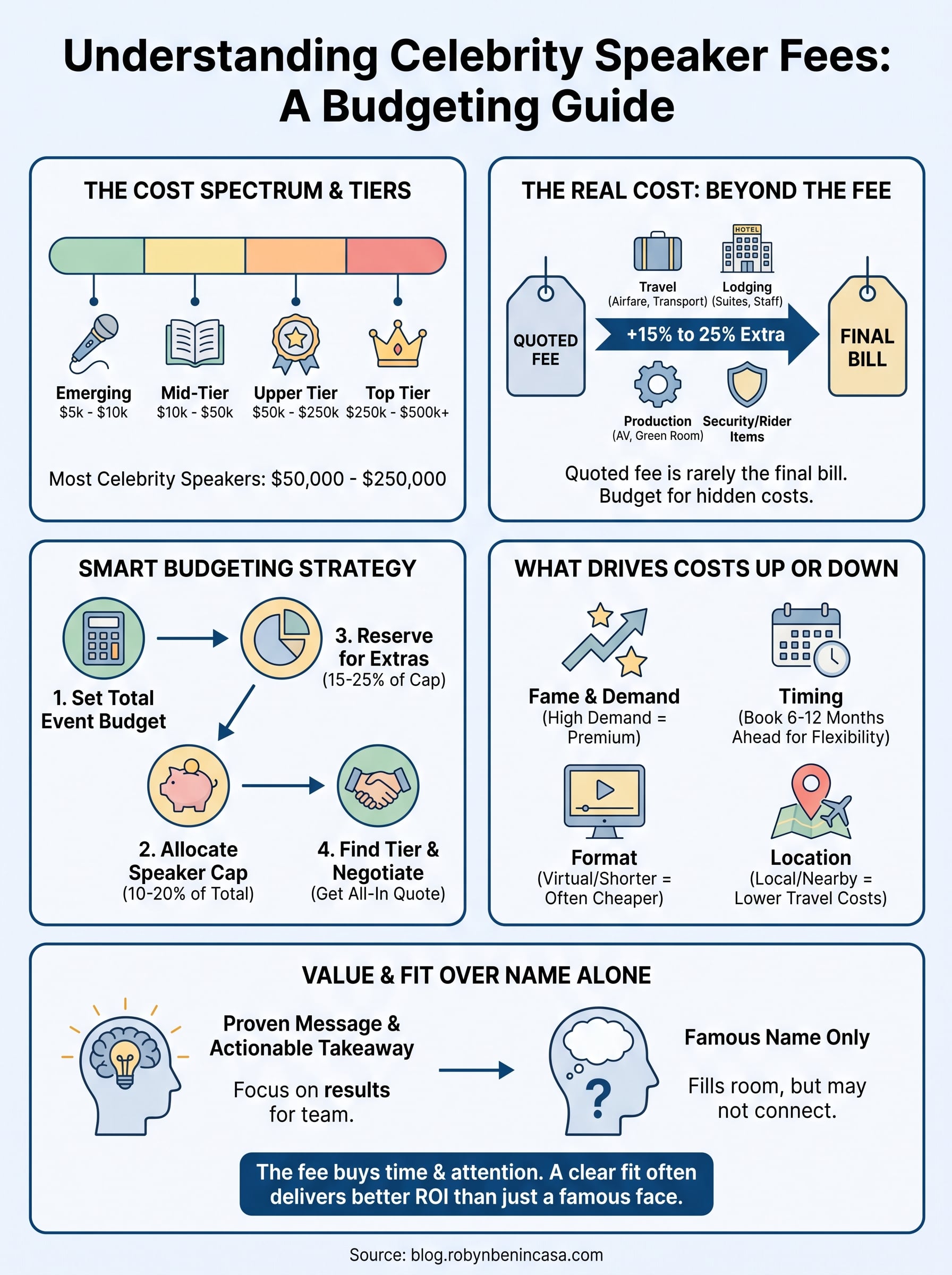
If you need to book a keynote speaker, the hard part is rarely finding names. It is knowing who fits your audience, what the speaker will really cost, and whether to go through a bureau or call the speaker directly. Get it wrong and you pay five figures for an hour your team forgets by lunch.
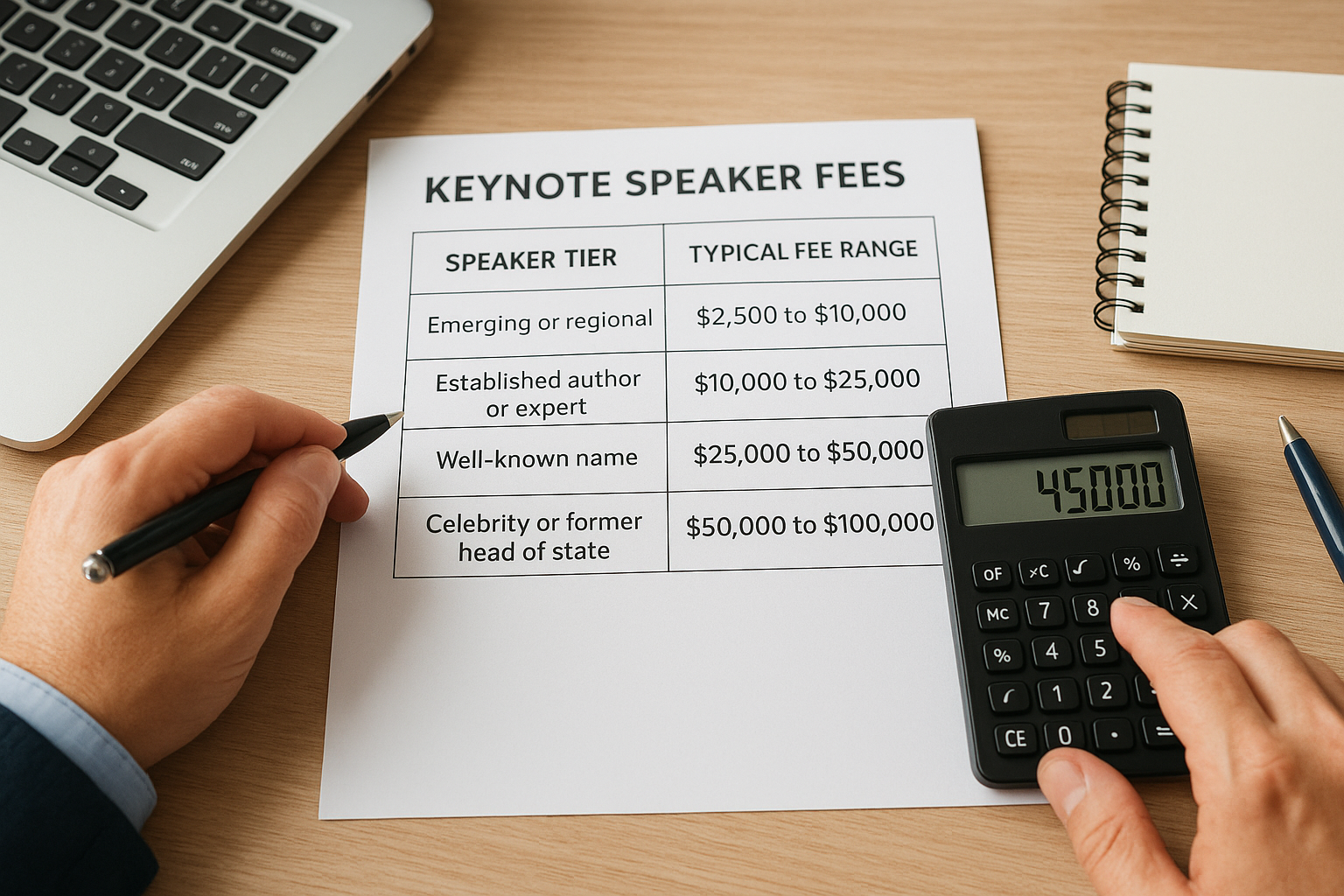
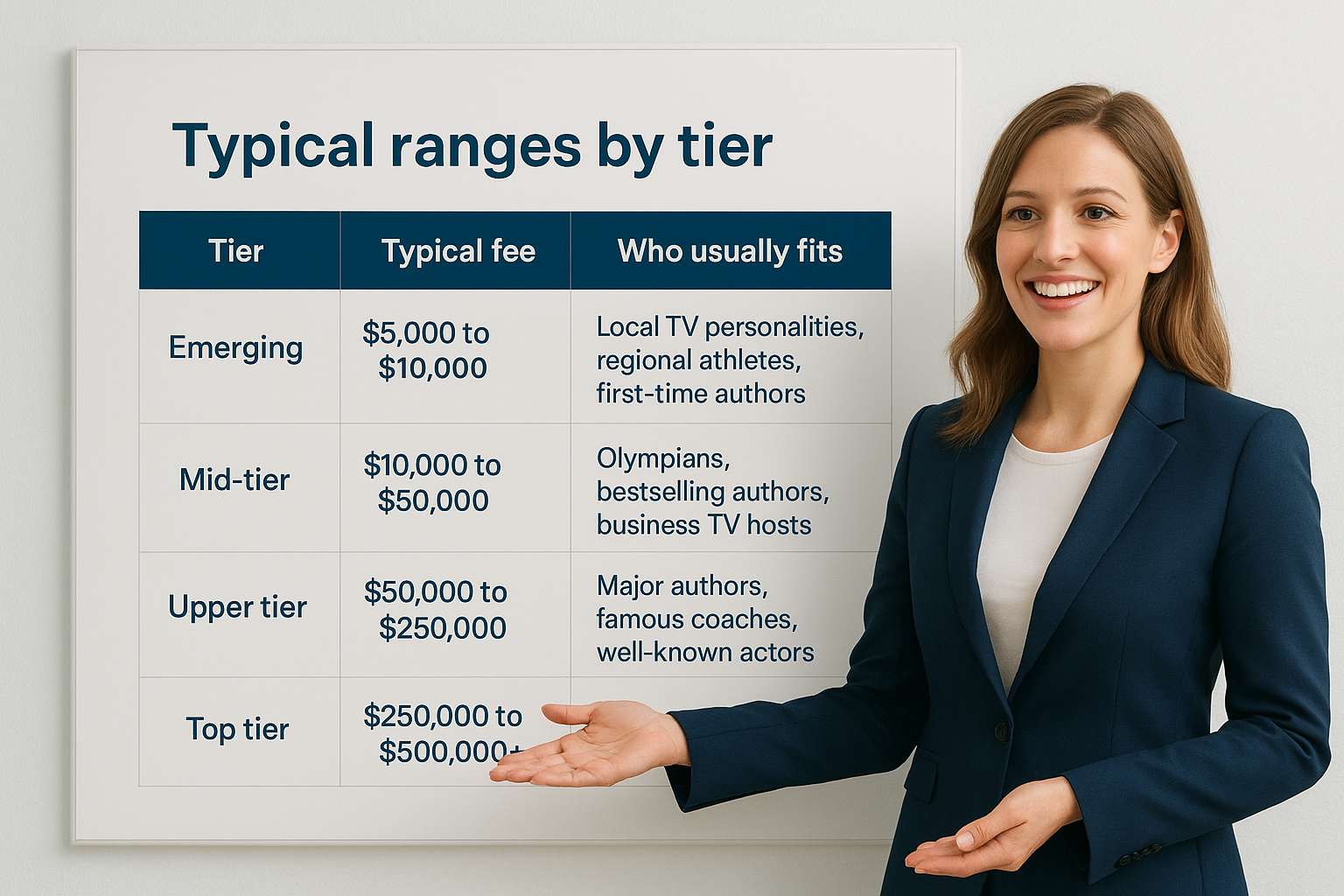
Here is the short answer. Start 9 to 12 months out for a large conference, and 3 to 6 months for a smaller meeting. Set your budget first. Fees run from about $5,000 for a emerging speaker to $50,000 or more for a celebrity, plus travel. A bureau costs you little or nothing, since the speaker’s fee usually covers its commission. Booking direct can be faster when you already know who you want.
Below, you will get the step-by-step booking process, a realistic cost breakdown, how bureaus compare with direct booking, and the contract details that protect you. I speak to corporate teams on leadership and teamwork, so I have seen this process from both sides of the table.
What to know before you book a keynote speaker
Before you open a single speaker profile, get three things straight: what a keynote speaker is, who you will deal with, and what the market charges. Ten minutes spent here saves you weeks of misdirected emails.
What a keynote is, and what it is not
A keynote is the anchor talk of your event. It runs 30 to 60 minutes and reaches everyone in the room at once. Its job is to set the tone and give your audience a shared story that the rest of the agenda can build on.
Many buyers blur the formats, and that is how they overpay or get the wrong session. Match the format to the need using this table.
Format
Typical length
Best for
Keynote
30 to 60 minutes
Setting a theme for the whole group
Breakout session
45 to 60 minutes
Going deeper with a smaller group
Workshop
2 to 4 hours
Building skills through exercises
Fireside chat
30 to 45 minutes
Interview style, lighter prep
Who you will deal with
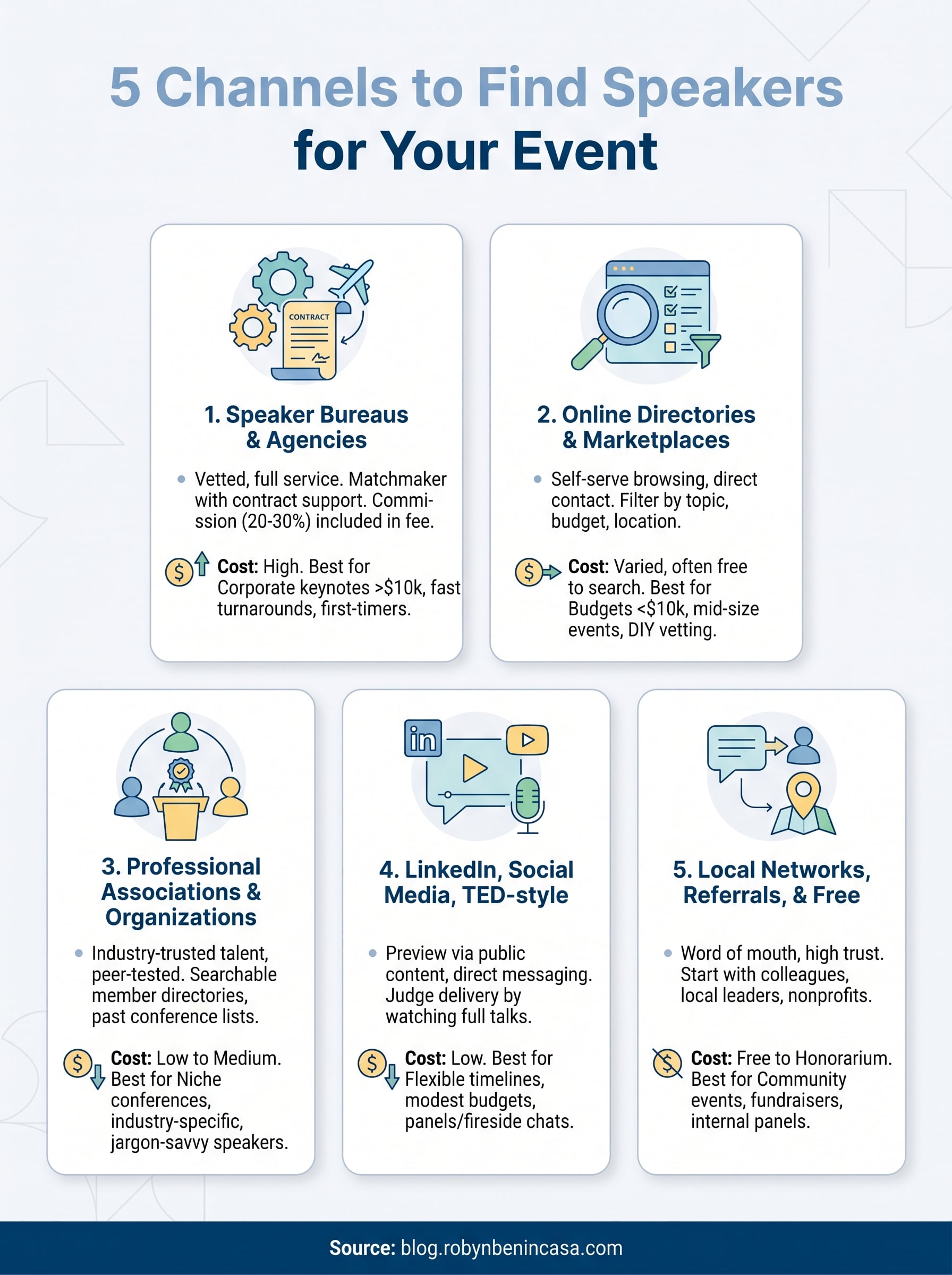
You can reach a speaker through three routes, and each one changes who answers your emails and who negotiates the fee:
Speakers bureau: a broker that represents many speakers and manages the paperwork.
Agent or manager: a rep for one speaker or a small roster.
The speaker’s own office: a direct line, often run by a single coordinator.
Step 2 compares these in detail. For now, just know that the route does not change the talk, only the process around it.
What the market charges
Fees follow demand, not talent. A great speaker with a small following can cost less than a famous one with a thin message. These keynote speaker fees are typical for in-person U.S. events, and they vary by speaker.
Speaker tier
Typical fee range
Emerging or regional
$2,500 to $10,000
Established author or expert
$10,000 to $25,000
Well-known name
$25,000 to $50,000
Celebrity or former head of state
$50,000 to $100,000+
Travel is usually extra. Expect to cover business-class airfare, hotel, and ground transport for the speaker, and sometimes a team member. Virtual keynote speakers often cost less because there is no travel, though top names rarely discount by much.
Price is the loudest signal in the market, but it is not the best one. Your audience will not remember the fee. They will remember whether the talk spoke to them.
Book for fit with your audience first, and let fame and price come second.
Hold that rule in mind as you work through the steps below.
Step 1. Define your event goals, audience, and budget
Every smooth booking starts with a one-page brief. Write it before you contact anyone, because vague requests get vague proposals. When you book a keynote speaker with a clear brief, a bureau or speaker can tell you in one reply whether they are a real fit.
Name the one outcome you want
Finish this sentence: "After the keynote, I want attendees to ___." Pick one outcome, not five. A sales meeting might need reps to share leads across regions. A merged company might need two cultures to see themselves as one team.
A speaker can only hit the target you hand them.
Profile your audience
Audience details shape the talk more than the topic does. A room of new hires needs a different message than a room of 20-year veterans, even when the theme is the same. Gather these facts, and share them with every speaker you talk to:
Headcount and seniority mix
Tenure, from new hires to long-time staff
Industry and current pressure, such as a merger or a missed quarter
Format: in person, virtual, or hybrid
Speakers they heard in the past two years
Set a budget that covers everything
Budget comes last, but it is not an afterthought. Set a range instead of a single number, and count more than the fee. My rule of thumb is to hold back 15 to 20 percent above the fee for travel, AV, and surprises. Then name a decision date, since the best speakers’ calendars fill early.
Put it all on one page you can paste into an email:
Event name:
Date and city:
Audience size and mix:
Desired outcome:
Format and length:
Budget range (fee + travel):
Decision date:
Step 2. Decide between a bureau and booking direct
With your brief done, choose a route. You can book a keynote speaker through a speakers bureau or go straight to the speaker’s office. Neither wins every time. The right pick depends on how much time you have and how well you know your options.
How the two routes compare
Factor
Bureau
Direct
Cost to you
Same quoted fee, commission built in
Speaker’s fee, rarely lower
Choice
Hundreds of speakers
One speaker
Speed
Several proposals in days
Fast if you know the name
Paperwork
Bureau handles contracts and logistics
You and the speaker’s office
Best for
Open search
A speaker you already chose
Bureaus typically earn 25 to 30 percent commission, and it comes out of the speaker’s fee, so you rarely pay extra. Many buyers assume going direct saves that money. It usually does not, because speakers hold one price to stay on good terms with their bureaus.
When a bureau makes sense
Choose one of the top speaker bureaus when you have no name in mind, need options at different price points, or lack time to vet people yourself. A good rep will ask about your audience, then send three to five matched options with video and fees. That saves you hours of searching.
Be aware that a bureau earns money when you book, so push for honesty. Ask, "Are these your best matches for my brief, or just who is available?" Also ask whether any speaker pays for placement in your results.
A bureau is a search service, and booking direct is a shortcut for when your search is already over.
When to go direct
Go direct when you have seen the speaker live, got a strong referral, or want to talk about customizing the content with the person who will deliver it. You skip the middleman and often get faster answers about what the speaker can tailor.
Start with the booking page on the speaker’s website. Send the one-page brief from Step 1 and expect a reply within a few business days. If you hear nothing in a week, follow up once, then move to your backup choice.
Step 3. Build a shortlist and vet speakers
Now you turn names into finalists. When you book a keynote speaker, this is where most mistakes happen, because a polished demo reel hides a lot. Aim for three to five candidates and no more, so you can give each one a fair look.
Check each candidate against your brief
Sort every name by three questions. Does the message support your one outcome? Has the speaker worked with audiences like yours? Does the fee fit your range? Cut anyone who fails two of the three. Then compare the survivors side by side in a simple spreadsheet, one row per speaker.
Vet what you can see and hear
Highlight reels exist to impress you. Ask for a full-length video of a recent talk, ideally 20 minutes or more, and watch how the speaker handles the room, not just the best story. Then run this checklist:
Is the footage from the past two years?
Does the speaker teach something, or just recite slogans?
Can you name one takeaway after watching?
Does the audience laugh, lean in, and respond?
Does the style suit your format, live or virtual?
Call the references
Video shows delivery. References show how the speaker works with clients. Ask for two past buyers with events like yours, and put four questions to them: Did the speaker return calls quickly? Did they customize the talk? Did people still mention it a month later? Did anything go wrong?
A reference who still quotes the talk a month later tells you more than any testimonial on a website.
Finally, keep one backup. Rank your finalists, and tell your bureau rep or the speaker’s office that you are holding a date while you decide. Good speakers book up fast, and a ranked list means a lost date does not send you back to square one.
Step 4. Understand fees, travel, and contract terms
Quotes rarely tell the whole story. When you book a keynote speaker, the fee is one line in a longer bill, and the contract decides what happens when plans change. Read both closely, and ask the bureau rep or speaker’s office to explain anything unclear.
Read the quote line by line
Ask for an itemized quote so you can compare finalists fairly. A $12,000 fee plus a flat $6,000 travel charge costs more than a $15,000 fee with travel billed at cost, which often runs $2,000 to $4,000. Use this table to check what each quote covers.
Cost item
Typical arrangement
Speaking fee
Flat amount for one talk
Airfare
Business class, billed at cost
Hotel and ground transport
Billed at cost, sometimes capped
Extra sessions (Q&A, VIP meet-and-greet)
Included or priced as add-ons
Recording or livestream rights
Often a separate fee
Before you sign, ask for a travel cap or a flat travel fee. It keeps your final invoice close to the number you approved.
Contract terms that protect you
Most disputes come from details nobody wrote down. Get every promise in writing, including the ones made on friendly calls. Look for these clauses:
Payment schedule: a 50 percent deposit at signing is common, with the balance due before or on the event day.
Cancellation and rescheduling: who owes what if you move the date, and what happens if the speaker cancels.
Recording rights: whether you can film the talk, and whether you can share it internally or publicly.
Customization: the pre-event calls and tailoring the speaker has agreed to.
Backup plan: what happens if illness or a travel failure keeps the speaker away, including a virtual fallback.
Tech needs: the microphone, stage, and slides the speaker expects.
If it is not in the contract, it is not part of the deal.
Have your legal or procurement team review the agreement, since terms vary by speaker and bureau. A reputable bureau or speaker will expect edits and will not take offense.
Step 5. Hold the pre-booking call and lock it in
Your last task before signing is a 20 to 30 minute call with the speaker, not just the rep. If you plan to book a keynote speaker for five figures, insist on this call with your top finalist. A speaker who won’t take one is telling you how the rest of the process will go.
Questions to ask on the call
Come with a short list and let the speaker talk. These five questions cover most of what matters:
What do you already know about our audience, and what would you like to learn?
What would you change in your talk for us?
How will you prepare with our leaders before the event?
What does your day-of routine need, such as arrival time, sound check, and Q&A?
What is your backup plan if travel or illness gets in the way?
Listen for specifics. A strong speaker asks you more questions than you ask them, and they offer concrete ideas for customizing the content. Vague answers like "I’ll tailor it" mean the talk is probably canned.
The call shows you what no demo reel can: whether the speaker will build the talk around your audience.
Lock it in
Once you have a clear winner, move quickly. Most speakers hold a date only until someone else signs, so a verbal yes protects nothing. Tell your runners-up thanks and keep their contact details for next year.
Then work through this checklist:
Confirm the fee, travel terms, and date in writing.
Return the signed agreement and the deposit.
Book a prep call two to four weeks before the event.
Send the agenda, run-of-show, venue details, and your tech contact.
Share any news that could change the room, such as layoffs or a big win.
That last item matters more than most buyers expect. Late context is what makes a keynote feel written for your team, and a speaker can only use what you tell them. Keep the line open until the day itself, and you will get far more than an hour on stage.
Putting your booking plan into action
Booking well comes down to order. Write the brief first, pick your route, vet three to five finalists, read the quote and contract line by line, and finish with a call to the speaker. Skip a step and you pay for it later, usually in fees you did not expect or a talk that misses your room.
Remember the rule from the start: fit beats fame. When you book a keynote speaker who understands your audience, the fee becomes an investment instead of a gamble, and your team leaves with something to act on.
If you are ready to start, I would be glad to hear about your event. See how I work with teams as a leadership keynote speaker on leadership and culture, then send me your one-page brief and we can talk about whether my keynotes fit your audience and goals.
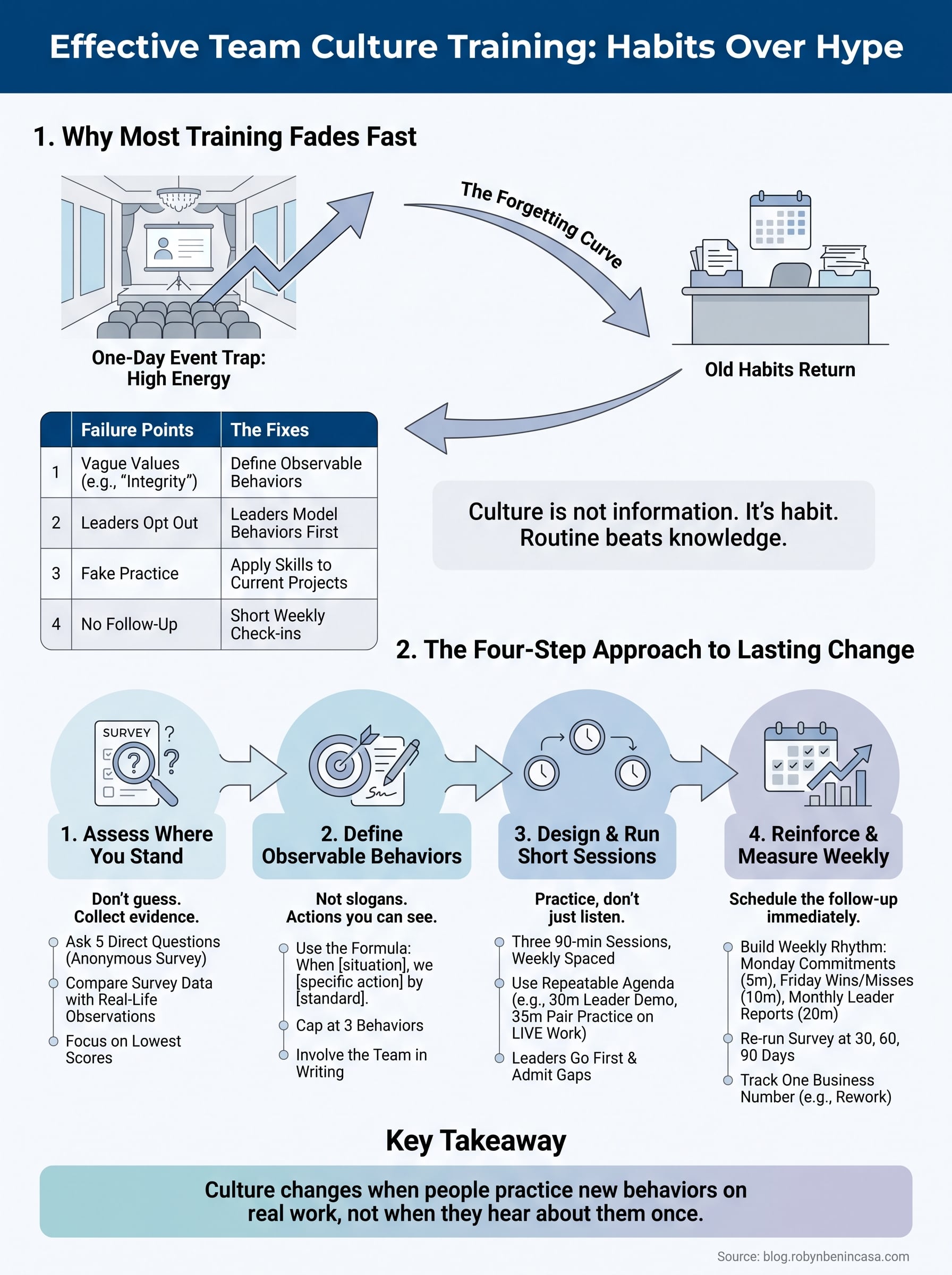
Most team culture training fails within a month. The team spends a day in a ballroom, leaves energized, and by the next Monday the old habits are back. If you have paid for that kind of day before, you know the frustration.
Here is the short answer. Training sticks when it is built around behaviors, not slogans, and when you reinforce it weekly after the session ends. That means agreeing on a few specific commitments, practicing them on real work, and holding each other accountable in short, regular check-ins.
This guide walks you through how to do it. You will learn how to assess where your culture stands today, choose the right format, run the session, and build follow-up routines that last. The approach draws on what Robyn Benincasa learned leading adventure racing teams for 15 years and working with organizations like Allstate and Boston Scientific. Teams win because they practice working together, not because they attend one great event.
Why most team culture training fades fast
Culture training fades for a predictable reason: it treats culture as information instead of habit. People leave a workshop knowing what good teamwork looks like. Then they return to the same calendar, the same deadlines, and the same meeting dynamics. Routine beats knowledge almost every time.
The one-day event trap
Most programs are built as events. A facilitator, a few exercises, a slide deck, a catered lunch. The energy in the room is real, but nothing in the following week asks anyone to behave differently. Managers go back to their inboxes, and the session becomes a pleasant memory.
Research on the forgetting curve shows that people lose much of what they learn within days unless they use it. Culture works the same way. A behavior you do not repeat is a behavior you will not keep, no matter how inspiring the day was.
Culture changes when people practice new behaviors on real work, not when they hear about them once.
Four failure points to watch for
When you look at programs that did not last, the same problems keep showing up. Check your own past efforts against this table.
Failure point
What it looks like
What fixes it
Vague values
Posters say "integrity" and "collaboration," but nobody can describe the behavior
Define observable behaviors
Leaders opt out
Executives open the day, then leave for meetings
Leaders go first and model the behaviors
Fake practice
Exercises use made-up scenarios
Apply skills to current projects
No follow-up
Nothing is scheduled after the event
Short weekly check-ins
Notice that none of these are about the quality of the facilitator. A great speaker cannot fix a missing follow-up system. Elite adventure racing teams treat teamwork as a skill to rehearse, not a value to announce, and your team needs the same mindset.
The rest of this guide is built to close each gap in that table. You will start by assessing where your culture really stands, because you cannot train the right behaviors until you know which ones are missing.
Step 1. Assess where your team culture stands
Before you plan any team culture training, find out what your culture actually is. Leaders usually guess, and their guess is rosier than what the team lives. Spend one week collecting evidence.
Ask five direct questions
Use an anonymous survey in Google Forms or Microsoft Forms. Ask everyone to rate these statements from 1 to 5, with five statements only so people actually finish it:
I can disagree with a teammate without worrying about consequences.
I know how my work connects to the team’s goal.
When someone is stuck, a teammate helps without being asked.
Our meetings end with clear owners and deadlines.
Leaders do what they say they will do.
Any average below 3.5 is a priority gap. Low scores on statements 1 and 5 point to a trust problem, so give that area the most training time.
Compare the numbers with what you see
Numbers tell half the story. Sit in on two or three regular meetings and notice who speaks, who stays silent, and what happens when someone raises a problem. Then hold 15-minute one-on-ones with four or five people and ask, "What is one thing we do here that slows us down?"
Look for gaps between the survey and the room. A team that scores itself 4.5 on openness but goes quiet when the boss disagrees has told you exactly what to train.
You cannot train the right behaviors until you have seen the real ones.
Finish by choosing the two or three lowest-scoring areas. Those become your focus in Step 2.
Step 2. Define the behaviors you want to train
Slogans do not change results in team culture training. Behaviors do. Take the two or three gaps from Step 1 and turn each one into an action someone could watch happen. If you could not film it, it is still a slogan.
Write behaviors as observable actions
Use one simple formula. It forces you to name the situation and the standard, so nobody can claim they were already doing it.
When [situation], we [specific action] by [time or standard].

Example: When we disagree in a meeting, we say it in the room,
not in chat afterward.
If an outsider could not see the behavior happen, it is not a behavior yet.
Match each gap to a behavior
Start from your survey results. Here is how each low score can translate into something trainable.
Survey gap
Behavior to train
Disagreeing feels risky
We state concerns in the meeting, not afterward
Goal feels unclear
Every kickoff opens with one sentence on how it serves the team goal
Teammates work alone
If stuck for 30 minutes, we ask in the team channel
Meetings drift
The last five minutes name an owner and a deadline for each item
Leaders slip
Leaders report on their own commitments first
Now cap the list at three behaviors. A team cannot practice ten things at once, and a long list guarantees none of them stick. Then ask the team to rewrite each behavior in its own words, because people defend what they helped write.
Step 3. Design and run the training sessions
Plan three short sessions instead of one long day. Give each session 90 minutes and one behavior from Step 2, and space them a week apart. The gap is the point, because it forces the team to try the behavior on real work between sessions.
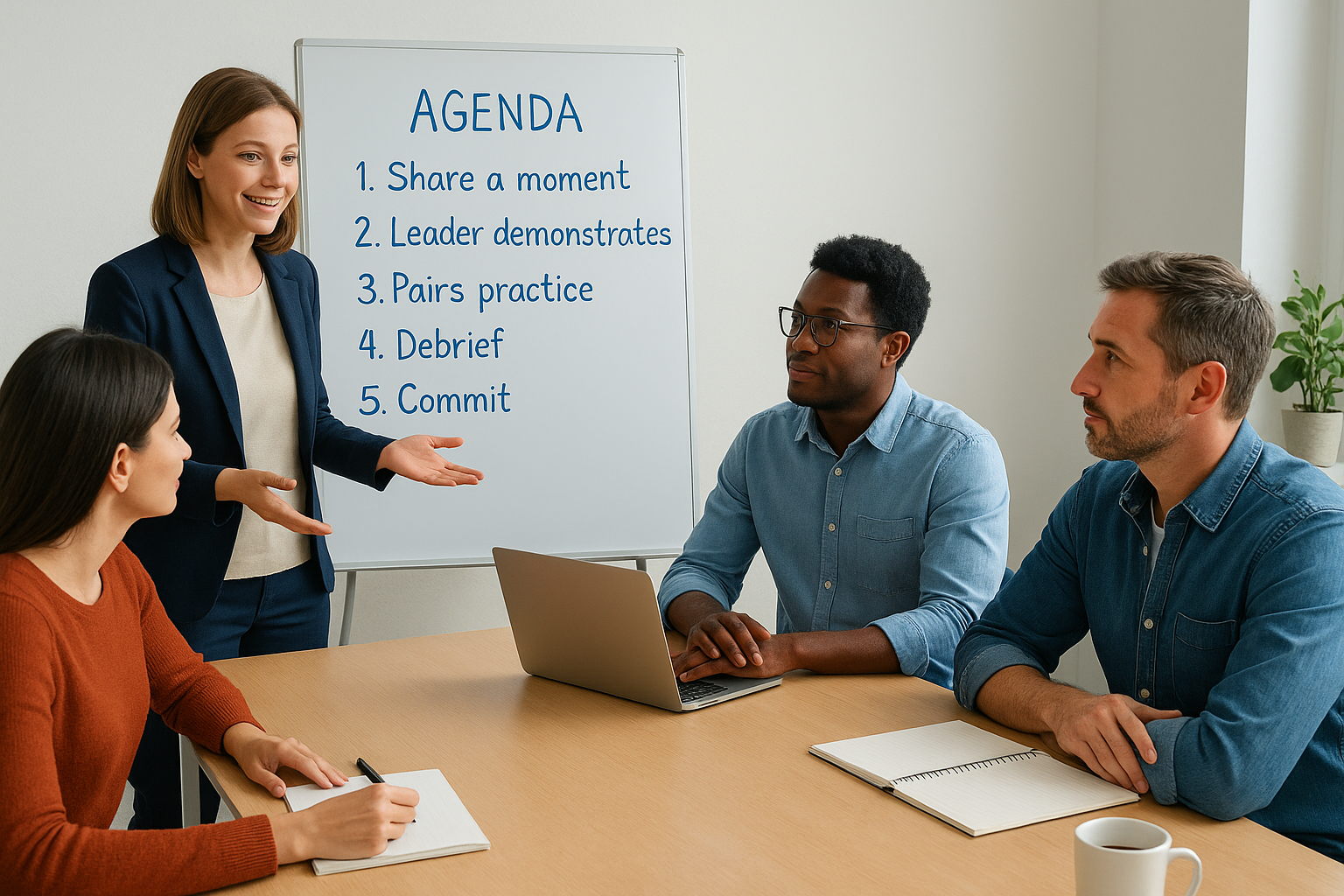
Use the same agenda every time
A repeatable format lowers anxiety and cuts your prep time. Run every team culture training session on this structure.
Minutes
Activity
Purpose
0-10
Share a recent moment when the behavior was missing
Make it concrete
10-30
Leader demonstrates the behavior
Set the standard
30-65
Pairs practice on a live project
Build the habit
65-80
Debrief what felt awkward
Surface obstacles
80-90
Each person commits to one use this week
Create follow-through
Let leaders go first
Leaders should speak first in the debrief and admit where they fall short. When a manager says, "I cut off two people on Tuesday, and here is what I will do differently," everyone else gets permission to be honest. Skip this and the team will watch the boss for cues and stay guarded.
Leaders who go first make it safe for everyone else to follow.
Keep the practice tied to current work. Use this week’s actual client issue or deadline, not a made-up case study. Adventure racing teams rehearse gear changes and handoffs before race day, so rehearse the hard conversation the same way, with real stakes and a real teammate.
Step 4. Reinforce, measure, and keep it going
The sessions are only the start. Team culture training lasts when you schedule the follow-up before the final session ends. Put three small routines on the calendar this week.
Build a weekly rhythm
Keep each routine short enough to survive a busy week, and attach it to a meeting you already hold so no new invite is needed.
Monday, 5 minutes: Each person names the behavior they will use this week.
Friday, 10 minutes: Everyone shares one win and one miss.
Monthly, 20 minutes: Leaders report on their own commitments first.
What you review every week is what your team treats as important.
Measure what changes
Re-run the five-question survey from Step 1 at 30, 60, and 90 days. Use the identical wording so the scores compare cleanly. Your target is to move every priority gap above 3.5.
Pair the scores with one business number the behaviors should affect, such as project handoff time, rework, or voluntary turnover. A rising survey score with a flat business number means the team is saying the right things but not yet changing how the work gets done.
If a score stalls, go back to Step 2. In most cases the behavior was too vague to practice, so rewrite it as a sharper action and run one more 90-minute session on it.
Making culture training last
Lasting team culture training comes down to one idea: culture is a set of habits, and habits need practice. Assess honestly, define three observable behaviors, run short sessions on real work, and review the results every week. Skip any of those steps and the old routines come back.
Start small. Send the five-question survey this week, write your first behavior by Friday, and book all three sessions before your calendar fills up. Leaders who go first set the pace for everyone else.
If you want a partner in building that kind of culture, or a corporate culture keynote speaker who gets your team energized to begin, explore Robyn Benincasa’s team building and leadership resources. Her lessons from 15 years of adventure racing and 20-plus years as a San Diego firefighter give your team a practical place to start.
If you work in pharma or life sciences, speaker bureau programs can sound like a simple idea that turns complicated fast. A company pays healthcare professionals to educate their peers about a product, and suddenly legal, compliance, and commercial teams all have a stake. One weak process can mean regulatory scrutiny and reputational damage.
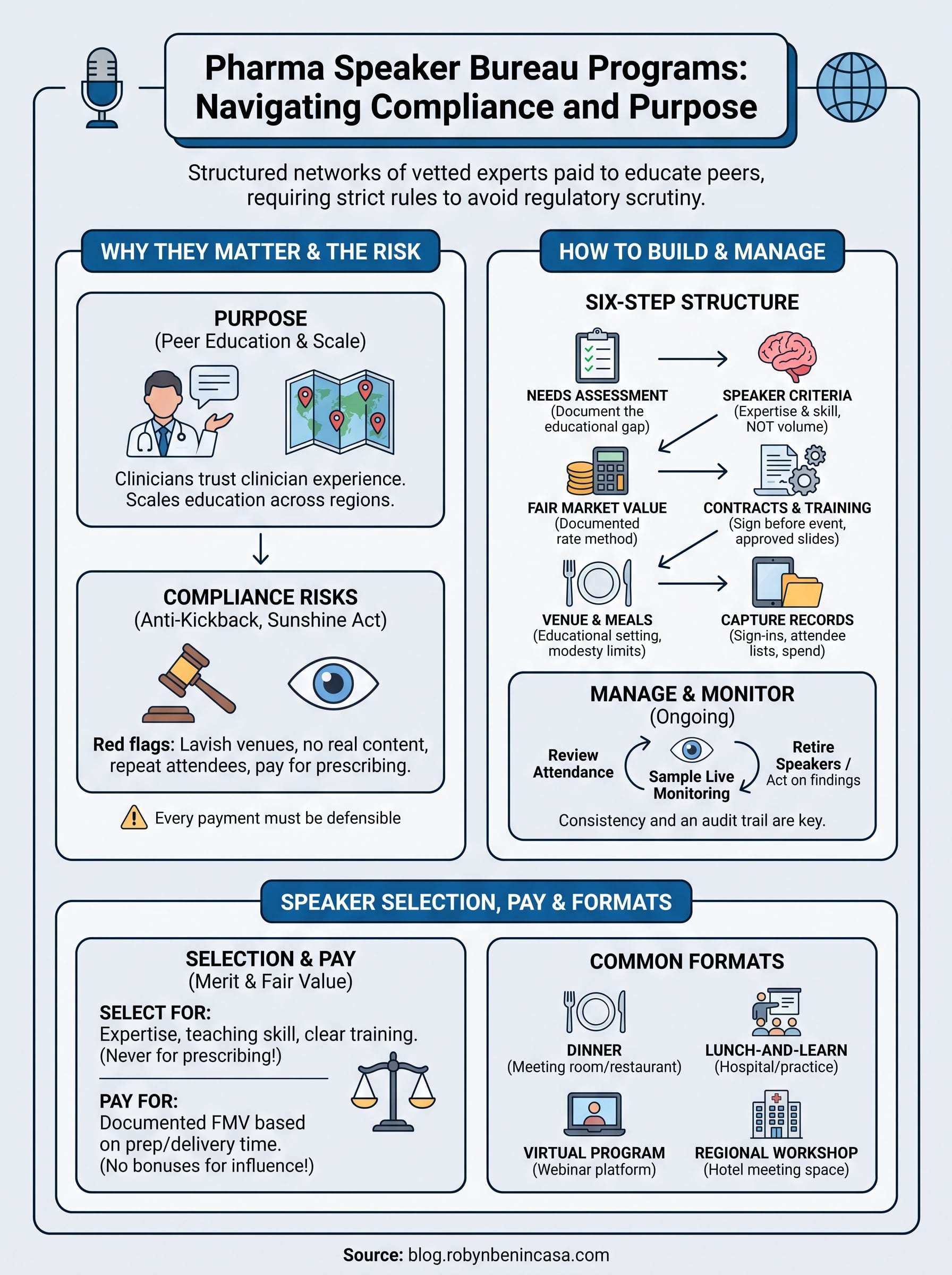
Here is the short answer. A speaker bureau program is a structured network of vetted experts who present on a company’s behalf, and in pharma it must follow strict rules. That means documented needs assessments, fair market value pay, approved content, attendance tracking, and clean records. Most companies either run this in-house or hire a specialized management provider to handle the logistics and audit trail.
This article covers how these programs work, the compliance risks that cause the most trouble, and what to look for when choosing a provider. I’m Robyn Benincasa, and as a keynote speaker who works with corporate teams, I see the other side too: the best programs treat speakers as partners in a team, not just names on a roster.
Why pharma speaker bureau programs matter
Peer education that reaches prescribers
Speaker bureau programs exist because clinicians trust other clinicians. A sales rep can explain a label, but a cardiologist describing how she manages a patient on a new anticoagulant carries different weight. That is the legitimate value of peer-to-peer education: real clinical experience, shared by someone who treats patients every day.
Companies also use these programs to scale medical education across regions. One well-trained speaker can present at dozens of dinners, hospital sessions, or virtual events in a year, which beats flying a medical expert to every market. A well-run speaker bureau program also gives you a bench of trained voices ready the moment a new indication launches.
Why regulators watch them closely
Yet the same structure that makes these programs effective makes them a magnet for enforcement. Money flows from a manufacturer to a prescriber, and that is exactly the pattern the Anti-Kickback Statute targets. In November 2020, the HHS Office of Inspector General issued a Special Fraud Alert on speaker programs warning that speaker payments can work as disguised inducements to prescribe.
The alert lists red flags that investigators look for first:
Little or no substantive medical information presented
Alcohol or lavish meals at venues that do not suit education, such as high-end restaurants
The same attendees returning for the same topic again and again
Attendees who are friends, family, or colleagues of the speaker with no real need for the content
Speakers chosen because of their prescribing volume rather than their expertise
A speaker program counts as education only when education is the point and every record proves it.
What is at stake
The consequences are concrete. In 2020, Novartis agreed to pay about $678 million to resolve federal allegations that included paying kickbacks to doctors through sham speaker programs. Cases like that is why compliance teams now treat every dinner, every honorarium, and every sign-in sheet as potential evidence.
Visibility adds pressure. Under the Sunshine Act, manufacturers must report payments to physicians, and the public can search them in the CMS Open Payments database. Your speaker fees are not private. Patients, journalists, and enforcement agencies can all see them, so every payment has to be defensible on its own.
That is why structure matters more than size. A small program with clean selection criteria, documented needs, and complete attendance records is safer and easier to defend than a large one run on habit. The next section shows how to build that structure.
How to build and manage a speaker bureau program
Building a speaker bureau program works best as a sequence, not a launch event. Each step creates a record that supports the next one, and together they form the audit trail you will need when someone asks why a program existed.
Start with the need, not the roster
Every program should begin with a written needs assessment. Document the educational gap, the audience that has it, and why a live speaker is the right format. If you cannot explain the gap in two sentences, you do not need another dinner. The number of speakers should follow the documented need, not a sales target.
Build it in six steps
Once the need is clear, work through these steps in order. Skipping one usually means rework later or a gap in your records that you cannot fill after the fact.
Write a needs assessment for each topic and audience.
Set speaker criteria based on expertise, training, and communication skill, never prescribing volume.
Pay a fair market value rate, calculated with a documented method.
Sign contracts before any event, then train speakers on approved slides only.
Approve venues and set meal limits that suit an educational setting.
Capture sign-in sheets, attendee lists, and spend for every event.
Manage it after launch
Launch is the easy part. Management is where programs drift. Review attendance and spend every quarter, compare each speaker’s event count against the need you documented, and retire speakers whose programs no longer serve a clear educational purpose.
You cannot defend a program you do not review.
Treat your speakers like a team, too. Run a short refresher whenever a label changes or a new indication launches, and ask what questions audiences really raise. Programs that listen to speakers catch content problems early and prevent off-label drift before it shows up in a talk.
How to keep speaker programs compliant
Compliance in speaker bureau programs is not a document you file once. It is a set of habits that show up at every event. Start with the rules that apply to you, then build controls that catch problems before an investigator does.
Know which rules apply
Federal law is only the start. The Anti-Kickback Statute and Sunshine Act reporting sit on top of the PhRMA Code for member companies and a patchwork of state laws. Some states cap meals, require disclosure, or limit what you can offer prescribers. Ask legal to map the rules for every state where you hold events, then write the result into your standard operating procedures.
Speakers also need clear limits on content. They present approved uses only, on approved slides, and they know what to do when an audience member asks an off-label question.
Monitor events, not just paperwork
Records show what was meant to happen. Monitoring shows what did happen. Send a trained monitor to a sample of live events and compare their notes against sign-in sheets and spend reports. This table gives you a workable rhythm:
Control
What to check
How often
Speaker audit
Event count against documented need
Quarterly
Live monitoring
Approved slides, meal limits, no off-label talk
Sample each quarter
Attendance review
Repeat attendees, family, non-clinical guests
Every event
Payment review
Honorarium matches contract and fair market value
Before payment
Training
Speaker attests to current slides and policy
Annually and at label changes
Paperwork shows what you planned, and monitoring shows what actually happened.
Act on what you find
Finding a problem is not the failure. Ignoring it is. Document each issue, assign a corrective action such as retraining or suspension, and track it to closure. A speaker bureau program that acts on its findings can show regulators it takes the rules seriously.
Keep the evidence, too. Retain contracts, slides, attendee lists, and payment records for the period your policy and counsel require, and remove repeat offenders from the roster without exceptions for top performers.
How to choose a speaker bureau management provider
Outsourcing makes sense when your team lacks the headcount to run speaker bureau programs across dozens of markets. A provider can take over logistics and record keeping. It cannot take over accountability. Your company still owns every decision, so pick a partner that makes your compliance team’s job easier, not one that hides the work.
What a provider should handle
Start by listing the tasks you want off your desk. Most providers offer the same core services, but depth varies a lot, so compare what each one actually delivers.
Capability
What good looks like
Speaker onboarding
Credential checks, contracts, and training attestations tracked in one system
Fair market value
A documented rate method applied the same way every time
Event logistics
Venue approval and meal caps enforced before booking
Attendance capture
Sign-ins reconciled against invitations and spend
Reporting
Spend data ready for Sunshine Act reporting and audit-ready exports
Monitoring support
Live event monitors and corrective actions tracked to closure
Questions to ask before you sign
Ask for evidence, not promises. A vendor that runs a clean speaker bureau program will answer these without hesitation:
Can you show an anonymized, audit-ready report from a current client?
How do you stop a venue or meal that breaks policy before the event is booked?
Who owns the data, and what happens to it if we leave?
What happens when a speaker exceeds the event cap you agreed on?
Have you supported pharma clients through an internal audit or government inquiry?
A provider should make your records stronger, not just your calendar fuller.
Red flags and a smart way to start
Walk away from vendors that pitch volume instead of controls. Be wary of anyone who ranks speakers by sales impact, or who cannot explain how they set fair market value. Those habits recreate the exact red flags the OIG warned about, only with a vendor’s name on the invoice.
Finally, run a pilot in one region or one product before you commit nationally. Review the pilot’s records the way an investigator would, and check whether you could rebuild every event from the paperwork alone. If you can, scale up. If you cannot, you have learned that cheaply.
Speaker bureau program formats and examples
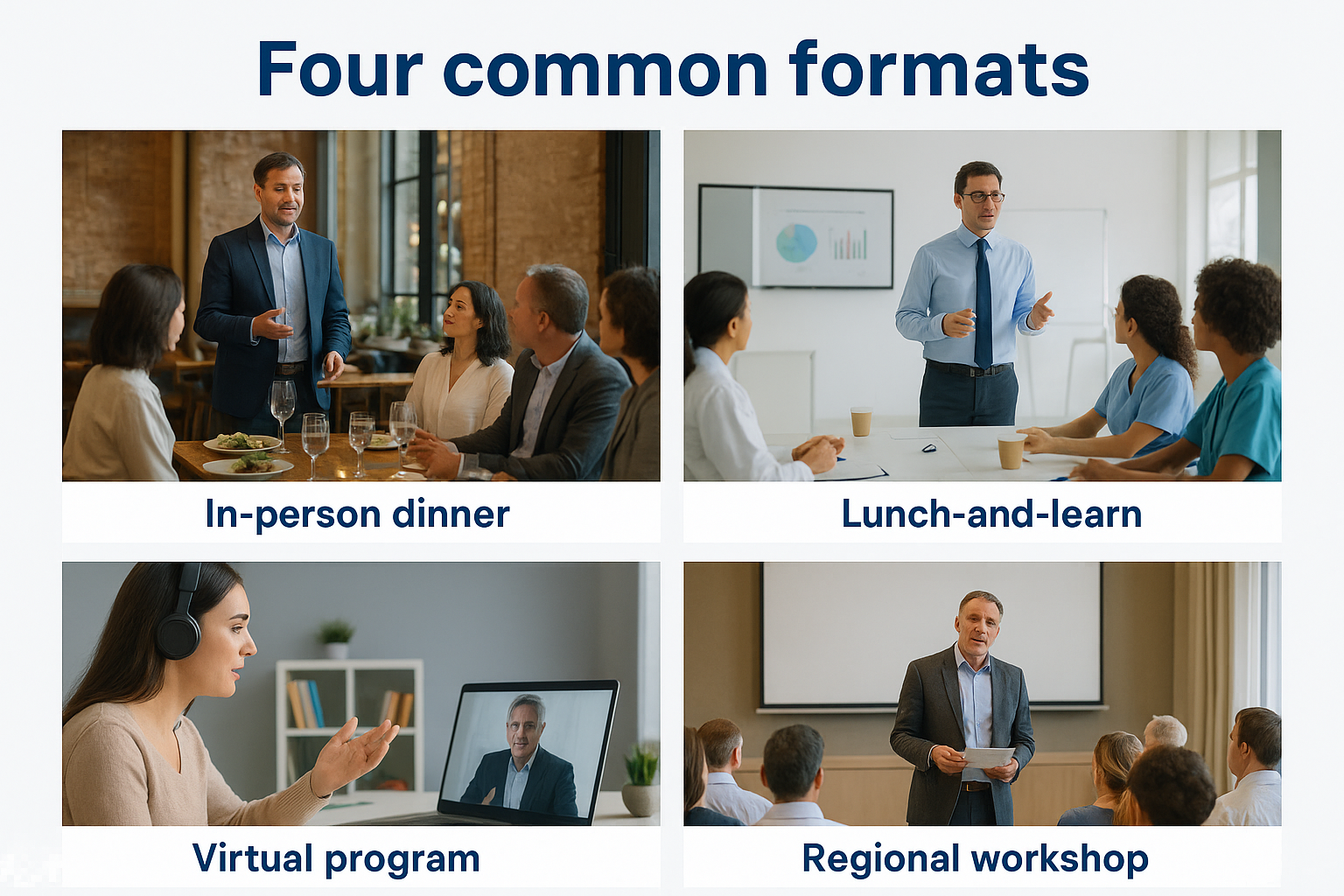
Four common formats
Most speaker bureau programs use a small set of formats, and each one carries its own risk. Choose the format that fits the educational need you documented, then build controls around its weak spot.
Format
Typical setting
Main compliance watch point
In-person dinner
Restaurant or meeting room
Venue and meal cost, repeat attendees
Lunch-and-learn
Hospital or practice
Modest food, only relevant staff attending
Virtual program
Webinar platform
Verified attendance, no unapproved recording
Regional workshop
Hotel meeting space
Agenda time spent on content, not recreation
The format matters less than your ability to prove that education happened.
A clean program in practice
Consider a hypothetical oncology launch. The company documents that community oncologists lack experience with a new dosing schedule. It recruits eight speakers chosen for clinical training and teaching skill, caps each at a few events per year, and runs virtual sessions and hospital lunch-and-learns instead of steakhouse dinners.
Every event then follows the same pattern. Speakers use approved slides, a monitor attends a sample, and sign-in sheets are reconciled against invitations. When one speaker’s event count climbs past plan, the team pauses that speaker for review rather than waiting for the quarter to end. Nothing here is fancy. It is just consistent, and consistency is what an investigator hopes to find.
Not the same as a keynote bureau
Outside pharma, the phrase means something different. A keynote speaker bureau is a booking agency that matches speakers with conferences, sales meetings, and corporate events. Planners use one to find a leadership or team culture speaker without vetting dozens of candidates alone.
That difference matters if you landed here from the planner side. The vetting, fee, and selection questions in the next section apply to both kinds of speaker bureau program, though the compliance stakes are far higher in pharma.
Speaker selection, pay, and getting on a bureau
Choosing speakers on merit
Selection is where speaker bureau programs most often go wrong. The rule is simple: pick people for what they know and how well they teach, never for how much they prescribe. Write down the reason for each choice before you make an offer. Strong candidates usually show:
Board certification or recognized expertise in the disease area
Hands-on experience with the patient population the product serves
A track record of teaching or presenting to peers
Completed training on approved content
No conflicts that would undermine their credibility
Paying speakers fairly
Fair market value means paying what a comparable expert would earn for comparable work, not whatever keeps a top performer happy. Build the rate from a documented method, such as tiers by expertise with hourly rates applied to preparation and delivery time. Then apply it to everyone in the tier, every time.
Pay only for work actually done. Set the rate in the contract before the event, release payment after attendance records are verified, and never add bonuses for popular talks. Prescribing data should stay out of every rate conversation.
Pay for the expertise and the time, never for the influence.
Getting on a bureau
Clinicians who want to join a pharma program should build a teaching record first: grand rounds, conference talks, society committees. Ask the company’s medical affairs team how it identifies speakers, and expect training and a signed contract before you ever present. If someone invites you because of your prescribing volume, treat that as a warning, not a compliment.
On the keynote side, a bureau wants a clear topic, a demo reel, and references from past clients. Bureaus typically earn a commission, often 20 to 30 percent, built into the keynote speaker fee. Planners should ask what the speaker will do beyond the stage, such as customizing content to the audience. A good speaker bureau program on either side rewards preparation and proof over polish.
Putting a program together
Strong speaker bureau programs come down to one idea: education has to be the point, and your records have to prove it. Start with a documented need, choose speakers on merit, pay fair market value, and monitor live events. Whether you run the program in-house or hire a provider, you own the outcome.
Consistency beats size every time. A small program with clean records and regular reviews is easier to defend than a big one built on habit, and it treats speakers as the partners they are.
If your work goes beyond pharma, or you want your teams to work as one, the same discipline applies to team culture. For practical lessons on leadership and teamwork from the adventure racing course and the firehouse, explore the Robyn Benincasa blog.
You have a event date, a budget line, and a short list of famous names. Now you need to know what they actually cost. Celebrity speakers fees vary more than almost any other line in an event budget, and most speaker bureaus will not quote a number until you have given them a date and a venue.
Here is the short answer. Most celebrity speakers cost between $50,000 and $250,000 per appearance, and a handful of A-list names, such as former presidents or global entertainers, go well beyond $500,000. Mid-tier celebrity speakers, including authors, athletes, and TV personalities, often land between $10,000 and $50,000. Travel, lodging, and format can add thousands more, so the quoted fee is rarely the final bill.
This article breaks down typical celebrity speakers prices by tier, explains what drives them up or down, and gives examples of specific fees. It also covers a question we hear often at Robyn Benincasa’s keynote practice: when a speaker with real leadership credentials and a proven message delivers more value than a famous name alone.
Why celebrity speaker fees matter for your event budget
Budget talks about speakers tend to start late, and that is a mistake. A headliner is often the single most visible spending decision you make, and the number you commit to early sets limits on everything that follows. Getting a realistic read on celebrity speakers cost before you fall in love with a name saves you from awkward rework later.
The speaker can take a large slice of the budget
The fee rarely looks big next to a venue contract, but it is the line with the widest swing between low and high. Here is an illustrative split for a $300,000 sales kickoff with one celebrity keynote. Your numbers will differ, but the proportions are typical.
Budget line
Example amount
Share
Venue and catering
$120,000
40%
Attendee travel
$60,000
20%
Celebrity speaker fee
$50,000
17%
AV and production
$45,000
15%
Marketing and contingency
$25,000
8%
Swap in a $150,000 speaker and the other lines have to give up $100,000. That usually means a cheaper venue, fewer attendees, or no contingency cushion.
One fee triggers other costs
Signing a famous name changes more than one line item. Travel, lodging, and production requirements often come with the contract, including first-class airfare, a hotel suite, and a travel companion. Some speakers also bring security staff or ask for a private green room.
Then there is the event itself. A well-known guest tends to justify a larger room, a better stage, and more promotion. Those choices are reasonable, but each one adds cost that never appeared in the original quote.
The fee buys time and attention, not just a name
Most celebrity keynotes run 45 to 60 minutes. At $100,000, you are paying roughly $1,700 for every minute on stage. That only pays off if the audience remembers something and acts on it afterward. A famous face can fill a room, but it cannot guarantee the talk connects with your sales team, your leadership group, or your newly merged departments.
A celebrity speaker fee is not the price of a name, it is the price of an hour of your audience’s attention.
That is why celebrity speakers prices deserve a hard look before you sign. Ask what the audience should do differently on Monday morning. If the answer is unclear, a lower fee and a sharper message will usually beat a bigger name.
How to estimate and budget for a celebrity speaker
Work backward from your total, not forward from a dream name. Set the speaker line first, then see which tier it can afford. That keeps celebrity speakers fees from steering the whole event.
Use a four-step formula
Set a speaker cap. Many planners hold the keynote to 10% to 20% of the total event budget.
Reserve 15% to 25% of that cap for extras. This covers travel, lodging, and production needs.
Treat what remains as your fee ceiling. Do not let a bureau talk you past it before you have seen the full quote.
Request quotes from three to five speakers in that tier. Give each the same date, city, and format.
Here is how it works on a $200,000 event. A 15% cap gives you $30,000. Setting aside 20% of that, or $6,000, for extras leaves $24,000 for the fee itself. That number points you toward mid-tier names, not A-list stars.
Decide what you can spend in total before you ask what any one speaker costs.
Build in room to negotiate
Keynote speaker fees are rarely fixed. Flexible dates often lower the price, especially if the speaker is already booked nearby and can add your event to an existing trip. Virtual or shorter formats can also cut the number sharply.
Get every quote in writing and itemized. Ask what is included, how long the quote stays valid, and who pays for travel. Comparing celebrity speakers cost on a like-for-like basis is the only way to see which offer is actually cheaper.
What drives celebrity speaker costs up or down
Four things move celebrity speakers fees more than anything else: who the person is, what you ask of them, when you book, and how flexible you are. Understand each one and you can steer the number instead of just accepting it.
Demand and name recognition
Fame sets the base price. A speaker with a current film, a recent title, or a bestselling book can charge a premium while demand is high. When the spotlight fades, the fee usually follows.
Stage skill matters too. Speakers with a proven track record in front of corporate audiences can hold their rates for years. Those who simply tell old stories often cannot.
Fees follow current demand and proven stage skill, not fame alone.
Event details that shift the price
The same speaker quotes different numbers for different events. This is how the main factors usually play out:
Factor
Pushes the price up
Pushes the price down
Date
Peak season, short notice
Off-peak, flexible dates
Location
International, remote
Local, near an existing trip
Format
Keynote plus Q&A or meet-and-greet
Virtual or shorter talk
Audience
Large, public, ticketed
Private, internal
Rights
Recording or exclusivity
No recording
Timing is the lever you control most. Booking six to twelve months ahead gives you room to negotiate, while a last-minute request can add a rush premium. Recording rights, ticket sales, and extra appearances also raise celebrity speakers cost, because the speaker is giving up more than one hour of the day.
Examples of celebrity speaker fee ranges by tier
Bureaus rarely publish celebrity speakers fees, so the numbers below are ranges built from industry quotes and press reports, not price lists. Use them to place a name in the right tier, then confirm with a written quote.
Typical ranges by tier
Tiers help you compare like with like. Each band assumes a standard 45 to 60 minute keynote, quoted before travel and extras.
Tier
Typical fee
Who usually fits
Emerging
$5,000 to $10,000
Local TV personalities, regional athletes, first-time authors
Mid-tier
$10,000 to $50,000
Olympians, bestselling authors, business TV hosts
Upper tier
$50,000 to $250,000
Major authors, famous coaches, well-known actors
Top tier
$250,000 to $500,000+
Former presidents, global entertainers
Reported fees for well-known names
Press reports and bureau listings give a rough picture of where household names land. Former U.S. presidents have reportedly commanded $200,000 to $400,000 or more, while top business authors such as Malcolm Gladwell are often reported at $50,000 to $100,000. Treat these as estimates, because real quotes shift with date, location, and format.
Notice the pattern. Price tracks reach and scarcity, not how well the talk fits your room. A bestselling author with a clear framework can cost a fraction of a former head of state and still hand your team something to use. When you compare celebrity speakers prices across tiers, ask what each fee buys beyond the name.
A bigger fee buys a bigger name, not a better outcome for your team.
Hidden costs and ways to get more value
The quoted fee is where the bill starts, not where it ends. Before you sign, ask for an all-in number that covers every expense the contract creates. Otherwise celebrity speakers fees can climb another 15% to 25% after the paperwork is done.
Ask for the all-in number, because that is the only price you will actually pay.
Costs that rarely show up in the first quote
Bureaus often list the fee on page one and bury the rest in a rider. Check the contract for these items, and get each one capped in writing:
Airfare, often first class or private charter, plus ground transport
Hotel suites for the speaker, an assistant, or security staff
Production demands, such as specific AV gear or a private green room
A deposit, commonly 50% at signing, with strict cancellation terms
Bureau commissions, if they are billed outside the fee
How to get more for the same money
Negotiate extras instead of chasing a lower headline number. Many speakers will add a short leadership Q&A, a small-group session, or a promo video at no charge, because those cost them little time. Ask about timing too. A speaker already traveling to your city may waive or split travel costs.
Finally, weigh the message, not just the name. A talk built on teamwork can turn one hour into lasting change if your people leave with something to apply. Robyn Benincasa’s clients, for instance, include a sales team that moved from 17th to 1st nationally. That kind of measurable result is what a fee should be buying.
Planning your speaker budget with confidence
Once you know the drivers, celebrity speakers fees follow a predictable pattern. Set your cap first, match it to the right tier, and ask every bureau for an itemized, all-in quote. Most surprises come from travel, rights, and rider items, not the headline number. Compare offers on the same date, city, and format, and you will see what each one really costs.
Remember what the fee actually buys. An hour on stage costs the same whether the talk changes your team or just fills a room. Fit and message matter as much as fame, and a lower fee paired with a clear takeaway often delivers the stronger return on your budget.
If your audience needs a message on leadership and teamwork, look for leadership keynote speakers who can show results, not only recognition. You can explore Robyn Benincasa’s keynote speaking options and start a conversation about your date, your goals, and your budget.
You have a date, a room, and a theme. What you don’t have is someone to put on stage. Knowing where to find speakers for your event matters more than most planners expect, because a great keynote lifts the whole day and a weak one drags it down.
Here is the short answer. You can find speakers through five main channels: speaker bureaus, online directories, LinkedIn and your own network, industry associations, and direct booking through a speaker’s website. Free options exist and work well for small events. For a corporate keynote, expect to pay anywhere from a few thousand dollars to well into five figures, depending on the speaker’s profile and format.
Below, you’ll see how each option works, what it costs, and when it makes sense. I speak from the other side of the table as well. As a keynote speaker, Robyn Benincasa is booked by event planners, HR leaders, and executives every year, so this list reflects what makes a booking go smoothly for both sides. Use it to choose the right path for your budget, timeline, and audience.
1. Speaker bureaus and booking agencies
Agencies are the most common route when you need to find speakers for event keynotes and can’t vet dozens of strangers yourself. Think of a speaker bureau as a matchmaker with a contract department.
How it works
You send a brief with your date, audience size, budget, and theme. The agent returns a shortlist of three to five speakers and handles contracts, travel, and logistics.
Commission is how bureaus get paid, commonly 20 to 30 percent. It is usually built into the quoted fee, so you rarely see a separate line item.
Who it is best for
Large corporate meetings, sales kickoffs, and conferences with budgets above $10,000 benefit most. If you’re wondering how to find speakers for an event on a tight deadline, a good agent can turn around a shortlist in a day or two.
First-time planners also do well here, because someone else manages the paperwork and travel details that trip people up.
Typical cost
Fees depend on the speaker’s profile. These ranges reflect typical keynote speaker costs for in-person keynotes booked through a bureau.
Speaker tier
Typical keynote fee
Emerging or regional
$2,000 to $7,500
Established author or expert
$7,500 to $20,000
Celebrity or headliner
$25,000 and up
Travel, and sometimes a virtual-event surcharge, are usually extra. Always ask for a written quote that lists every expense before you sign.
Pros and cons
Bureaus save you time and shield you from a bad fit, but they come with trade-offs.
Pros: vetted talent, fast shortlists, contract support, and backup if a speaker cancels.
Cons: a higher effective price, less direct contact with the speaker, and a shortlist that may favor whoever the agency represents.
A bureau trades a little directness for a lot of protection, and for big events that trade is usually worth it.
2. Online speaker directories and marketplaces
Directories are the self-serve alternative to a bureau. You browse, filter, and contact speakers yourself.
How it works
Speakers post profiles with topics, fees, and video reels. You can filter by topic, location, and budget to find speakers for event themes in minutes, then contact them directly. Check three things before shortlisting:
A demo reel from a live talk
Reviews from verified clients
A clear fee range
Who it is best for
Budgets under $10,000 and mid-size conferences suit this route well. Planners who enjoy research get the widest pool at no cost.
Expect to do the vetting yourself, so set aside a few extra hours.
Typical cost
Browsing is usually free. Fees follow the tiers above, and some platforms add a small booking fee on top.
Always confirm the all-in price and who pays platform fees before you agree to anything.
Pros and cons
Patience pays here, and skipped due diligence doesn’t.
Pros: free to search, huge variety, direct contact, and often lower fees.
Cons: uneven quality, self-reported claims, and no one to step in if a speaker cancels.
A directory gives you choice, but you carry the vetting a bureau would normally do for you.
3. Professional associations and speaker organizations
If you wonder how to find speakers for your event without paying a bureau, start with groups your industry already trusts. Trade associations and speaker organizations are full of people who present for a living.
How it works
Organizations like the National Speakers Association publish searchable member directories. Industry groups also keep past conference speaker lists, and staff will often recommend someone if you call. Ask which presenters earned the best ratings.
Who it is best for
Niche conferences, chapter meetings, and industry-specific events gain the most. Speakers from your field already know your jargon and regulations, so you spend less time briefing them.
Typical cost
Directories are often free to search, though some groups charge a membership fee for full access. Speaker fees follow the tiers above, and members sometimes offer friendlier rates to fellow association groups.
Pros and cons
This route rewards planners who already belong to the right circles.
Pros: relevant expertise, peer-tested talent, and low search cost.
Cons: a narrow pool, uneven availability, and little contract help.
A speaker who knows your industry beats a polished stranger who has to learn it on the day.
4. LinkedIn, social media, and TED-style talk platforms
Speakers who publish their work online let you judge them before you send a message. It is a free way to find speakers for event lineups, if you can put in the legwork.
How it works
Search LinkedIn for "keynote speaker" plus your topic, then read their posts and featured videos. On YouTube and TED-style platforms, watch a full talk to judge delivery. Then send a short message with your date, audience, and budget.
Who it is best for
Hands-on planners with flexible timelines and modest budgets get the most from this route.
Panels and fireside chats also suit it, because you can see a person’s style before you invite them.
Typical cost
Searching is free, and LinkedIn Premium is optional. Fees follow the tiers above, though speakers with a viral talk often price at the high end.
Independent speakers skip agency commissions, so ask about direct-booking rates.
Pros and cons
Public content shows you the real speaking style, but polish can hide weak fit.
Pros: free, easy to preview, direct contact.
Cons: time-intensive, unvetted claims, no contract support.
A talk you can watch beats a bio you have to trust.
5. Local networks, referrals, and free options
Some excellent speakers never appear in a directory. They get booked on word of mouth, and it costs you almost nothing to find speakers for event lineups this way.
How it works
Start by asking colleagues, board members, and past attendees who they have seen and loved. Then check local sources:
Chambers of commerce and Rotary clubs
University faculty and business schools
Toastmasters chapters
Local nonprofits and company leaders
Before you invite anyone, request a video and call one reference.
Who it is best for
Community events, nonprofit fundraisers, and school programs fit well, especially with tight budgets. Internal panels also work, since your own people often have stories worth telling.
Typical cost
Many local speakers talk for free or a modest honorarium, often $0 to $1,500. Offer travel costs, a meal, or a donation to their cause as thanks.
Pros and cons
Referrals carry built-in trust, but quality swings widely.
Pros: low cost, personal trust, and local relevance.
Cons: a small pool, uneven polish, and no backup if someone cancels.
A referral from someone you trust is worth more than any five-star listing.
Choosing the right speaker for your event
Every option above can help you find speakers for your event, so the real decision comes down to budget, timeline, and risk. Big corporate meetings with money on the line usually justify a bureau. Smaller budgets point to directories, associations, LinkedIn, or local referrals.
Whichever channel you pick, the same habits protect you. Watch a full live talk, call a reference, and get every cost in writing before you sign. A speaker who fits your audience beats a famous name who doesn’t.
If your goal is a team that works better together, start with a speaker who has actually built one. Robyn Benincasa shares what 15 years of world championship adventure racing taught her about leadership, in person or virtually. See how she can energize your team culture and book Robyn Benincasa as your next corporate culture keynote speaker.
You need a team outing that people actually enjoy, fits your budget, and works for a group that may include new hires, veterans, and a few skeptics. Houston has plenty of options, but most lists dump names on you without telling you what each one does for a team. This one is different.
Here are corporate team building activities in Houston worth booking, from escape rooms and cooking classes to outdoor outings and competitive games. Each pick includes what it is best for, so you can match the activity to your goal, whether that is better communication, faster trust, or simply a morale boost after a hard quarter.
I have spent 15 years leading world championship adventure racing teams and more than 20 years as a San Diego firefighter. The pattern is consistent. Shared challenges build teams, but only when the group has to rely on each other. Below you will find eight picks, plus a quick note on how to choose the right one for your size, schedule, and culture.
1. Robyn Benincasa keynote and team-building session
What the experience looks like
Let me be upfront: this one is mine. I put it first because it works differently from the rest of the list. You get a keynote built on the T.E.A.M.W.O.R.K. framework, eight essential elements of a world-class team culture, drawn from my years of adventure racing and firefighting. Your people hear real stories, then leave with specific behaviors to try on Monday morning.
Other topics include WIN AS ONE, INSPIRING GREATNESS THROUGH G.R.I.T., and WHY WINNERS WIN. Clients like Allstate, Boston Scientific, and Northrop Grumman have used them to break down silos and reset culture. One sales team I worked with moved from 17th to 1st nationally.
A game gives your team a good afternoon, but a shared playbook changes how they work together afterward.
Who it is best for
This suits leaders who want lasting culture change, not just a fun day out. It fits teams facing a merger, market pressure, or a performance slump, and groups where new hires and veterans need a common language. If your people roll their eyes at trust falls, this is a good fit, because the content is practical and the stories are tested.
Group size and format
Both live and virtual delivery work, so you can reach a ballroom in Houston or a remote team spread across time zones. The session also pairs well with any activity below, such as a cooking class or a volunteer day that follows the keynote.
Format
Best use
In-person keynote
Conferences, sales meetings, leadership offsites in Houston
Virtual keynote
Remote or hybrid teams, short-notice events
Keynote plus activity
Full-day offsites where ideas get practiced right away
Cost and how to book
Fees for hiring a keynote speaker depend on the format, date, travel, and how much customization you want, so I quote each event individually rather than posting one flat rate. Book early if your date is fixed, since peak conference season fills up. To start, use the booking page on this site and tell me your group size, goals, and timing. If you want a preview first, grab the free 18-page guide that summarizes my team building principles.
2. Escape rooms and outdoor escape games
What the experience looks like
Your team gets locked in a themed room, or sent through a downtown neighborhood with a phone app, and has about 60 minutes to solve linked puzzles. Nobody wins alone. One person finds the clue, another cracks the code, and the group has to share information fast.
Afterward, run a five-minute debrief. Ask who led, who went quiet, and what to change. That is where the learning happens.
Mixed-tenure groups do well here because the puzzles level the field. A junior analyst often spots what the director missed.
Skip it if you want deep culture change. It is one of the lighter corporate team building activities in Houston, good for short-term rapport rather than shared norms.
Group size and format
Most rooms fit small squads, so bigger groups split up and race each other. Book outdoor games for spring or fall, because Houston summers are brutal.
Type
Typical squad size
Best for
Indoor escape room
4 to 10
Groups under 40, any weather
Outdoor escape game
4 to 8
Larger groups, mild weather
Cost and how to book
Expect roughly $30 to $50 per person, though pricing varies by venue and date. Ask these three questions before you pay:
Can all squads play at the same time?
Is there a private space for the debrief?
What is the cancellation policy?
3. Cooking classes and culinary competitions
What the experience looks like
Your team splits into small groups and cooks a full meal together, usually with a chef guiding each station. Some sessions are relaxed. Others become a Chopped-style competition where teams get a mystery basket and a time limit.
Everyone has a job, from chopping to plating, and the timing has to work or dinner runs late. Then you all sit down and eat what you made. That makes this one of the easiest corporate team building activities in Houston to pitch to skeptics.
You cannot fake coordination when dinner is on the line.
Who it is best for
Hands-on groups that like food and conversation will love this. It suits mixed-tenure teams and client events, because a kitchen is a low-pressure place to talk.
Check dietary needs early. Good venues handle vegetarian, halal, and gluten-free menus, but they need advance notice and an accurate allergy list.
Group size and format
Most kitchens handle 10 to 40 people at once. Larger groups can book a full buyout or run several competing stations.
Format
Typical size
Feel
Chef demo
10 to 40
Relaxed
Hands-on class
10 to 30
Collaborative
Competition
12 to 40+
Competitive
Cost and how to book
Expect roughly $75 to $125 per person, with competitions at the higher end. Pricing varies by menu and date. Evening slots go fast, so book four to six weeks ahead. Before you pay, ask:
Is alcohol included or sold separately?
Can the chef tailor the menu to our dietary needs?
4. Laser tag and Battlefield Houston
What the experience looks like
Your team splits into squads and plays objective-based missions, such as capturing a flag or defending a base. Venues like Battlefield Houston use tactical arenas with barriers and cover, so it feels closer to a real mission than an arcade game.
Squads that win usually agree on a plan before the buzzer and assign roles. In adventure racing, that is the whole game. Watch who calls the plays and who adapts, then bring it up in your debrief.
The best laser tag teams win on communication, not on who has the best aim.
Who it is best for
Competitive, high-energy groups love this, especially sales teams and active, younger staff. It is one of the more physical corporate team building activities in Houston, so ask about options for anyone with mobility limits. A good venue will give them a role without sidelining them.
Group size and format
Most venues run games in rounds, which lets you rotate squads and keep everyone playing. Confirm capacity before you book.
Group size
How it usually works
Under 20
Two squads, several short rounds
20 to 50
Multiple squads, bracket-style rounds
Cost and how to book
Budget roughly $20 to $40 per person for a standard session, with private events and food packages costing more. Pricing varies by venue and date, so request a group quote. Ask these questions first:
Is gear and a safety briefing included?
Can we reserve the arena privately?
Is there space for food and a debrief afterward?
5. Adventure parks and ropes courses
What the experience looks like
Your team clips into harnesses and works through low challenge elements, high ropes, and zip lines with a trained facilitator. On the high elements, one climber goes up while teammates belay and coach from the ground.
That split is the point. Climbers feel nervous, and the people below learn to support someone without taking over.
Trust is easy to talk about and hard to fake when a teammate’s weight is on your rope.
Who it is best for
Groups that need trust and mutual support get the most from this, such as new project teams or departments after a reorg. It is one of the more memorable corporate team building activities in Houston for people who sit at desks all week.
Be honest about fear of heights. Pick a course with low and high options so participation stays voluntary and nobody feels pushed.
Group size and format
Most facilitated courses rotate groups through stations, so larger teams stay busy. Book spring or fall, or early morning slots in summer, because Houston heat can shut down outdoor sessions.
Format
Typical size
Time
Half-day course
10 to 30
2 to 3 hours
Full-day outing
30 to 60
4 to 6 hours
Cost and how to book
Budget roughly $40 to $90 per person for a facilitated half day, with full days and catered packages costing more. Pricing varies by venue and season, so ask for a group quote. Before you commit, confirm:
Is a facilitator included, or just equipment?
What is the rain and heat policy?
How are waivers handled for a large group?
6. Scavenger hunts around downtown Houston
What the experience looks like
Teams use a phone app or clue sheet to race through downtown on foot, stopping at spots like Discovery Green, Market Square Park, and the Theater District. Each stop adds a trivia question, photo, or small challenge that earns points.
Winning squads split the clues, name a captain, and check in often. Skip that and you get four people arguing at a crosswalk.
Mixed groups do well here, since walking is the only physical demand. It is one of the easiest corporate team building activities in Houston for varied fitness levels, and it suits out-of-town teams who want a look at the city.
Ask the organizer about accessible routes. A good hunt can skip stairs and long blocks so everyone plays.
Group size and format
Squads of four to six work best. Providers can run big events by sending many squads out at once. Pick spring or fall, or start early in summer and plan water and shade breaks.
Group size
Typical setup
10 to 30
Several squads, one finish point
30 to 200
Staggered starts, live leaderboard
Cost and how to book
Expect roughly $25 to $60 per person, depending on app features and prizes. Pricing varies by provider and date, so request a group quote. Ask:
Is a host at the finish line included?
Can the route include our office or brand?
What is the rain plan?
7. Art, pottery and creative workshops
What the experience looks like
Your team picks up brushes or clay and makes something together. Formats include a group mural, pottery wheel sessions, and guided paint nights. In a mural, each person owns a section, but the final piece only works if the colors and themes match.
Nobody needs talent. That is the appeal for people who say they are not creative, and it gets quiet colleagues talking over a shared project.
A shared canvas shows you how a team blends individual work into one result.
Who it is best for
Introverts, cross-functional groups, and teams recovering from a crunch get the most here. It is a calm option among corporate team building activities in Houston, ideal for low-pressure bonding without a scoreboard.
Skip it if your group craves adrenaline. Also ask about studio accessibility, since wheel throwing needs sitting and steady hands.
Group size and format
Studios often host 10 to 40 people, and some bring the instructor to your office or venue. Clay pieces need firing, so ask when finished work comes back to you.
Format
Typical size
Time
Paint night
10 to 40
About 2 hours
Pottery wheel
8 to 20
2 to 3 hours
Group mural
15 to 50
2 to 4 hours
Cost and how to book
Expect roughly $40 to $85 per person, with pottery at the higher end. Pricing varies by studio and date, so request a group quote. Ask:
Are materials and aprons included?
Can we take pieces home, and when?
Is food or drink allowed in the studio?
8. Volunteer projects with Houston nonprofits
What the experience looks like
Your team spends a half day working side by side for a local cause. Typical projects include sorting and packing food at a food bank, repairing homes with a housing nonprofit, or assembling school supply kits. The tasks are simple, so the shared purpose does the heavy lifting.
People bond fastest when they work on something bigger than the team itself.
Debrief over lunch. Ask how the group divided the work and who naturally kept the line moving.
Who it is best for
Values-driven companies, teams after a merger or layoffs, and groups that dislike competitive games fit well here. It is one of the most meaningful corporate team building activities in Houston, and it leaves a visible benefit for the community.
Physical demands vary. Ask the coordinator for seated or lighter tasks so everyone contributes comfortably.
Group size and format
Shifts are usually scheduled by the nonprofit, so you fit their calendar, not the other way around. Confirm capacity before you promise a date to your team.
Project type
Typical size
Time
Food sorting and packing
10 to 50
2 to 3 hours
Home repair or build
8 to 25
Half to full day
Kit assembly
10 to 100
1 to 2 hours
Cost and how to book
Many nonprofits host groups free or at low cost, though some ask for a donation or a per-person fee to cover supplies. Contact the volunteer coordinator six to eight weeks ahead, since group slots fill quickly. Ask:
What are the age minimums and dress requirements?
How are waivers handled for a large group?
Can we take team photos and share them internally?
Picking the right activity for your team
Start with the goal, not the venue. Match the activity to the outcome you want. Escape rooms, laser tag, and scavenger hunts build quick rapport. Cooking, art, and volunteer days suit quieter groups. Ropes courses test trust. Whatever you pick, run a short debrief, because that conversation turns a fun afternoon into better habits.
Then check the practical limits: group size, budget, Houston weather, and accessibility. The best of the corporate team building activities in Houston is the one your whole team can join comfortably, not the flashiest one on the list.
One last point from my years of racing and firefighting. Games give you a good day, but shared norms hold up under pressure. If you want that kind of lasting change, learn how to build culture in a team, then book Robyn Benincasa for your next team event and start with a keynote your people will use long after the outing ends.
You want to learn how to support a struggling coworker, teammate, or employee, and you keep seeing the term resilience first aid training. Before you pay for a course, you need to know what it actually teaches, how long it takes, and whether to take it online or in person.
Here is the short answer. Resilience First Aid (RFA) is a strength-based course that teaches you to support someone’s mental health in everyday moments, using listening, perspective, and practical coping steps rather than clinical diagnosis. Most programs run from a few hours to a full day, and they come in online, blended, and in-person formats. The right choice depends on your schedule, your team size, and how much practice you want with other people.
Below, you will find what RFA covers, how each format compares, how long certification usually takes, and what to look for in a provider. I have spent years leading high-stakes teams as an adventure racer and firefighter, and I have seen that resilient teams are built by people who know how to show up for each other under pressure.
Why resilience first aid training matters
The gap between noticing and helping
Most people can tell when a teammate is off. They go quiet in meetings, miss a deadline they never miss, or snap over something small. Noticing is the easy part. What stalls people is not knowing what to say next, so they say nothing, or they offer a quick "let me know if you need anything" and move on.
Firefighters learn this early. You train for the medical call long before you run one, because nobody improvises well at 3 a.m. Mental health support works the same way. Resilience first aid training gives you a practiced approach and a few reliable steps, so you act instead of freezing.
The business case for supporting people early
The World Health Organization estimates that 12 billion working days are lost every year to depression and anxiety, costing the global economy close to US$1 trillion in lost productivity. A single course will not fix that. But people who spot strain early and respond well change what happens next on a team.
Here is how the day-to-day looks different once managers and peers have practiced these skills.
Without training
With training
Strain gets ignored or avoided
Someone checks in early and directly
Well-meant advice and quick fixes
Listening first, then options
Help is offered only at the crisis point
Early referral to an EAP or professional
Every conversation lands on HR
Support is spread across the team
For HR leaders, a formal resilience first aid certification also gives you something concrete to point to. You can show who has completed the course, what they practiced, and where employees should turn when a conversation goes beyond what a peer can handle.
Why the strength-based approach works
Strength-based means you start with what a person is already doing right, not with what is wrong. That sounds soft until you see it work. In a multi-day adventure race, a teammate who is falling apart does not need a lecture on mental toughness. They need someone to name what they have already gotten through and then shrink the problem to the next hour.
The same principle carries into an office, a hospital unit, or a sales floor. People open up when they feel respected, and they stay engaged when they leave a conversation with a small, doable next step. Resilience first aid builds that habit on purpose, which is why it fits so naturally into leadership and team culture work.
Resilience first aid does not make you a therapist. It makes you the person who notices, listens, and connects someone to the right help.
That boundary matters. Good programs are clear that you are not diagnosing or treating anyone. You are the first responder in a conversation, and the course teaches you when to stay with someone and when to bring in a professional.
How to choose the right resilience first aid format
The content of a course matters more than the delivery, but delivery decides whether people finish it and use it. Pick the format that fits how your people learn and how much live practice you want, because the skill you are building is a conversation. Reading about a conversation is not the same as having one.
Online, blended, and in-person at a glance
Every resilience first aid certification path should teach the same core skills. What changes is how much time you spend talking with other people and who sets the pace.
Format
Best for
Trade-off
Online, self-paced
Individuals, remote staff, shift workers
Little live practice, easy to put off
Blended (online plus live session)
Most teams and departments
The live portion needs scheduling
In-person
Managers, leadership cohorts, crews
Travel, higher cost, fixed dates
A live virtual session sits between blended and in-person. It works well for distributed teams, as long as the group is small enough for everyone to practice out loud.
Match the format to your situation
Start with who is taking the course and what they will do afterward. A few rules of thumb from my own work with teams:
One person on a tight schedule: self-paced online resilience training is fine, as long as you find a colleague to practice with.
A department of 20 to 100: blended keeps costs and calendar pain down while still giving everyone live practice.
Managers and team leads: in-person or live virtual, because these are the people who will have the hard conversations.
Remote or hybrid teams: live virtual sessions with breakout groups beat a stack of recorded videos.
The best format is the one that gives you the most practice talking with a real person.
Firefighters do not learn patient care from a slideshow, and you should not expect to learn supportive conversations that way either. Whatever you choose, confirm that live role-play or guided practice is part of the course before you enroll. If a provider offers an online course with no practice component, treat it as an introduction, not full training.
Finally, check how the hours are delivered. Some programs spread the same material over several short sessions, and others compress it into one long day. Shorter sessions over a few weeks usually stick better, and the next section shows what those hours should contain.
What the 14-hour curriculum covers
Fourteen hours sounds like a lot until you see what has to fit. The course has to teach you to notice, listen, respond, and refer, and you need time to practice each step out loud. Provider outlines differ in wording, so treat the breakdown below as the typical shape of a 14-hour resilience first aid training program, not a universal syllabus.
What the hours usually cover
Module
What you learn
Approx. hours
Stress and resilience basics
How stress shows up, and the strength-based mindset
2
Noticing and connecting
Spotting behavior changes, opening a conversation
2.5
Active listening
Listening without fixing, reflecting back what you hear
3
Strengths and coping
Naming past wins, shrinking a problem to the next step
3
Referral and boundaries
Scope of your role, EAP, crisis resources
2
Self-care and review
Your own recovery, final scenarios
1.5
Look at where the weight sits. Listening and strengths-based coping take about 43 percent of the time, and that is correct. Those are the skills that break down first when a real person is upset in front of you.
Practice is the real curriculum
Most of the learning happens in scenarios, not slides. You rehearse a hard opening line, you listen to a partner for three minutes without offering advice, and you get feedback. Role-play feels awkward for about ten minutes, and then it becomes the part people say they use most.
Fourteen hours should leave you able to hold a hard conversation, not just define one.
Before you enroll, ask to see the outline and confirm it includes these three things:
Live or guided practice in every major module, not only at the end
A clear section on when to refer and how to hand someone off
Self-care for the helper, since supporting others drains you too
If any of those is missing, you are buying information rather than a skill. Sorting that out now saves you from a certificate that looks good and changes nothing on your team.
How long certification takes and how long it lasts
Time from first session to certificate
The 14 hours of resilience first aid training is contact time, not calendar time. How fast you finish depends on how the provider schedules the hours. These are the common patterns, so you can match one to your calendar.
Schedule
Typical pattern
Calendar time
Intensive in-person
Two 7-hour days
2 days
Spaced live sessions
Four sessions of about 3.5 hours
2 to 4 weeks
Blended
Self-paced modules plus one live practice session
2 to 6 weeks
Self-paced online
Modules on your own time
A few weeks, depending on you
Some courses also require a short assessment or a completed practice scenario before they issue the certificate. Ask whether that assessment is counted inside the 14 hours or added on top, so you can plan around the full time commitment.
How long the certificate lasts
Validity is where providers differ most. Many issue a certificate with a stated expiration, commonly one to three years, while others hand out a certificate of completion that never expires. I can’t give you one number that applies everywhere, so get the policy in writing before you pay.
A certificate proves you finished the course. Only practice proves you can still do it.
That gap matters because skills fade. If you rehearsed a hard conversation twice in a classroom and never used it again, you will be rusty within a year. An expiration date is a useful nudge, not a flaw in the program.
Questions to settle before you enroll
A few quick questions will tell you what your resilience first aid certification is really worth:
Does the certificate expire, and if so, when?
Is there a refresher course, and what does renewal cost?
Are assessments included in the 14 hours?
Will you receive a verifiable record that HR can file?
For teams, I suggest scheduling a yearly refresher or peer practice session rather than waiting for certificates to lapse. Treat it like recertifying for CPR. A short, regular tune-up keeps the skills sharp for the day someone actually needs you.
Who benefits most from the training
Anyone who works alongside other people can use this training, but some roles get a bigger return than others. The common thread is regular contact with people under strain, whether that happens on a sales floor, in a hospital unit, or at a fire station.
Roles that gain the most
Look at who people actually turn to when things get hard. It is rarely a counselor first. It is the supervisor, the veteran coworker, or the HR partner down the hall, and those are the people to train first. A resilience first aid course gives them a practiced way to respond instead of improvising.
Role
Why it helps
Managers and supervisors
They notice changes first and hold the hard conversations
HR and people leaders
They can build referral paths and a shared language
Healthcare, public safety, and military teams
High stress and repeated exposure to trauma
Sales and customer-facing staff
Constant pressure and rejection
Educators and nonprofit staff
They carry other people’s stress every day
Teams facing change and pressure
Mergers, layoffs, and missed targets raise stress for everyone at once. Teams in those periods benefit because the skills spread across many people rather than landing on one overloaded manager. When 15 colleagues can listen well and refer wisely, support no longer depends on a single person’s calendar.
The people closest to the strain are the ones best placed to help.
Individuals gain too. If you are a parent, a volunteer, or a friend whom others lean on, the same steps work outside the office. You do not need a title to benefit. You need a willingness to practice listening and the honesty to admit when someone needs more help than you can give.
How to compare providers and what to ask before enrolling
Two providers can both sell resilience first aid training and deliver very different courses. A polished landing page tells you little. Ask for specifics in writing, then compare the answers side by side, the way you would compare bids from two contractors.
Check who built and teaches the course
Start with the instructors. Look for facilitators with real field experience, such as clinicians, crisis responders, or leaders who have supported teams through hard events. Slides can be copied. The judgment to handle a messy practice scenario cannot. Then ask who developed the curriculum, and whether the resilience first aid certification carries weight with your employer, industry body, or insurer.
Questions to ask before you pay
Use this table as a checklist when you talk to each provider.
Question
Good answer
Warning sign
How many of the 14 hours are live practice?
A clear number, with practice in every module
"It depends"
What is the class size?
Small groups with breakout practice
100 people on one call
What do you get afterward?
Workbook, refresher option, verifiable record
A PDF and nothing else
Can you see a sample outline or talk to a past client?
Yes, within a day or two
Vague or no answer
What is the total cost?
One itemized price
Fees for assessment or renewal appear at checkout
Class size matters more than most buyers expect. In my experience, groups above 25 leave little room for feedback, and feedback is where the skill gets built. If a provider can’t say how practice is supervised, assume it isn’t.
If a provider can’t tell you what happens in the room, don’t expect the course to change what happens on your team.
Weigh cost against value
Price alone misleads. Divide the fee by the hours of live, instructor-led practice, not by total hours, and you will see which course actually gives you more. For a team, also ask about group rates and on-site delivery, since bringing an instructor to you often costs less than sending 30 people elsewhere. Finally, ask for a short call before you commit. A good provider welcomes it.
How to put resilience first aid skills into practice
Skills fade unless you use them, so plan your first real conversations before the course ends. Keep it small. You do not need a crisis to start, just a teammate who seems off and ten quiet minutes to check in.
A simple conversation framework
Most resilience first aid training programs teach some version of the same sequence. This is the one I carry into every hard conversation:
Notice and open. "You’ve seemed stretched lately. How are you holding up?"
Listen first. Let them finish. Do not fix anything for the first few minutes.
Name a strength. "You got through the audit last quarter with half the staff."
Shrink the problem. Ask what one thing would help in the next day or week.
Refer when needed. Point to your EAP, a clinician, or a crisis line.
Follow up. Check in again within a week.
Step six is the one people skip. A follow-up message takes thirty seconds and tells the person you meant what you said. It also shows you whether the next step you agreed on actually helped.
The conversation that matters most is the second one, the follow-up.
Build the habit in 30 days
Within the first week, hold one low-stakes check-in with a colleague, even if nothing seems wrong. That makes your opening line familiar, so it does not feel strange when the stakes are higher.
By week four, trade practice scenarios with a classmate or coworker for 15 minutes, the way crews run drills. Take turns listening for three minutes without advice, then swap feedback. Short, repeated reps beat one long refresher.
Know where your role ends
Your job is to support, not treat. If someone mentions harming themselves, stay with them and connect them to help right away. In the U.S., you can call or text 988 to reach the Suicide & Crisis Lifeline. Afterward, look after yourself too, because helpers need recovery time as much as anyone.
Choosing your next step
Resilience first aid training comes down to one skill: having a supportive conversation before a struggle becomes a crisis. Pick the format that gives you real live practice, confirm the hours and the certificate policy in writing, and ask each provider about class size. Those checks separate a course that changes behavior from one that only adds a line to a résumé.
Then use what you learn. Practice within the first week, follow up with the people you check in on, and refresh your skills every year. A certificate shows you finished. Your next hard conversation shows whether it worked.
If you want a team where people look out for each other, this course is a strong start. For more on leadership, team culture, and how winning teams support one another under pressure, explore Robyn Benincasa’s leadership and team building skills resources and take the next step with your team.